Whether you’re coming back to education after some time away, aiming to boost your qualifications, or starting a completely new chapter, this guide is here to help you make the most of your university experience.
Co-written with mature students and university support services, this guide is packed with advice, insights, and practical tips. We know that mature students bring a wealth of life experience, skills, and perspectives to university life, and that’s something we truly value. At the same time, we understand that balancing study with family, work, and other commitments can be challenging.
This guide is designed to give you tailored information and support as you return to education, including ways to tackle some of the common challenges mature learners face along the way.
Meet Callum
“Hi, I’m Callum and I’m studying a Business degree. I honestly didn’t know that much about Edge Hill when I decided to attend – I just stepped onto campus, and I remember that gut feeling that I was making the right decision. The buildings were big, but it felt really safe and I could feel this giddy excited feeling that this was somewhere I could leave my mark, learn a lot, and start the next stage of my journey.”
Researching and applying to university
UCAS (the Universities and Colleges Admissions Service) is the system used to apply for most undergraduate courses in the UK. UCAS also provides tools to help you explore universities, courses, entry requirements, and support options which is especially useful if you’ve been out of education for a while.
They may invite you for interviews, (if your course interviews) or just make you an offer
You may be invited to an Offer Holder Day where you can explore the university and your course in greater detail.
Writing your Personal Statement
The Personal Statement is an important part of the application process, but mature students are often well placed to write a strong application because they can draw on a wealth of life and work experience. The UCAS personal statement now uses a structured format, with applicants responding to three questions about their motivation for studying, their preparedness for university, and the skills and experiences they can bring to their chosen course. Experiences gained through work, caring responsibilities, volunteering, and personal interests can provide excellent examples of resilience, commitment, and problem-solving. Many mature applicants also have clear goals and a strong sense of purpose, helping them create focused and authentic responses that demonstrate both their enthusiasm for the course and the strengths they will bring to their studies.
UCAS timeline
Pre- September: Research, open days, plan application
September 2026: UCAS cycle opens for application
Mid October 2026: Oxbridge Medicine, Dentistry, Vet Science deadline
Mid January 2027: UCAS application deadline
May 2027: Receive offers back from universities
June 2027: Deadline to make final choices
June – August: Confirmation of place, Clearing Adjustment
September 2027: Start university!
What if you don’t meet the entry criteria?
Fair Entry Criteria (Contextual Admissions) – Foundation Year – Contextual offers are reduced offers that are made to individual students who fulfil certain criteria. Our Contextual Offers are made as part of our Fair Entry Criteria. This is a policy that means that you may receive an offer that is 2 grades lower than the advertised entry requirements if you complete one of our Access programmes, or belong to an underrepresented student group at the university.
Foundation Year – Foundation Years are another way of accessing Higher Education if you do not have the entry requirements for the degree you are interested in as the entry requirements are lower for Foundation Years. A foundation year is an extra year of study at the start of a university degree course and also may be a good option for those you want to study something new but may need to renew their subject knowledge and skills.
Access to HE Diploma – The Access to HE Diploma is a course that can be taken online or at your local Further Education College. It is usually run over one academic year, (September to June) and successful completion can fulfil the entry requirements for most degree programmes.
Equivalency Tests – At Edge Hill we also offer Equivalency Test for GCSEs in English, Maths and Science, and Literacy and Numeracy at Level 2. Both options are offered either as tutor led revision courses or exam only options. Pricing and details can be found on our website.
Fastrack Programme – a free of charge, intensive, seven-week preparation for higher education programme. The programme consists of study skills and subject sessions and we have intakes in October and June. Successful completion can lead to progression onto a relevant undergraduate course at Edge Hill. This programme is designed for applicants who have been out of compulsory, full-time education or training for at least three years and do not hold relevant Level 3 academic qualifications.
Applying for Student Finance
Managing student finance can feel daunting at first, especially if you’re juggling other responsibilities, but you’re not alone. There’s a wide range of loans, grants and allowances available, many of which don’t need to be repaid. The key is to explore your options early and make sure you apply for everything you’re eligible for.
Student Loans
Tuition Fee Loans: Unless you are self funding, your Tuition Fee Loan covers the full cost of your course fees, from lectures and seminars to access to university facilities. This loan is paid directly to your university by the government, so you don’t need to worry about arranging any payments yourself.
Maintenance Loans: The Maintenance Loan is designed to help with your everyday living costs while you study – things like rent or mortgage payments, food, travel, and bills.
This loan is part means-tested and part non-means-tested, which means that part of what you can borrow depends on your household income. If you have a partner, children, or other financial responsibilities, this can be taken into account when you apply.
Paying back the loans: Both loans are repayable, but you’ll only start paying them back once you’ve left university and you’re earning over £25,000 a year. The amount you repay depends on how much you earn, not how much you owe, so this helps to keep your repayments manageable and based on your income. How much you repay depends on your income – the amount you earn (including things like bonuses and overtime) before tax and other deductions.
If you have a disability or specific learning difference, you may be eligible for support to meet your individual needs through the Government’s Disabled Students’ Allowance. You can apply for DSA as part of your Student Finance application.
Disabled Students’ Allowances are worth up to £27,783 for eligible students in academic year 2025/26. These allowances help with the cost of specialist equipment, extra travel costs, or other support necessary to enable your studies.
If you feel you have a support requirement, we encourage you to arrange a chat with our Inclusion Team.
Adult Dependants Grant: Means-tested support of up to £3,545 a year if you have to care for an adult dependant. This is someone who is not your grown-up child (subject to eligibility).
Childcare Grant: Means-tested support designed to contribute up to 85% towards your childcare costs. If you have a dependent child/children in the care of an Ofsted-registered childcare provider while you study, you may qualify for this grant. Childcare grants for academic year 2025/26 are worth up to a maximum of £199.62 per week for one child only. This goes up to £342.24 per week for two or more children (subject to eligibility).
Parents’ Learning Allowance: Means-tested support of up to £2,024 a year if you have children who are wholly or mainly financially dependent on you. You can apply for these allowances and grants as part of your Student Finance application.
If you’re studying for a degree in a healthcare-related subject, such as nursing, midwifery, physiotherapy, or speech and language therapy, you may be eligible for additional funding through the NHS Learning Support Fund.
For full-time students, this can include:
A Training Grant of £5,000 per year – completely non-repayable
A Special Subject Payment of £1,000 for certain eligible courses
A Parental Support Grant of £2,000 per year if you have at least one dependent child under 15 (or under 17 if they have special educational needs).
Managing student finance can feel daunting at first, especially if you’re juggling other responsibilities, but you’re not alone. There’s a wide range of loans, grants and allowances available, many off which don’t need to be repaid. The key is to explore your options early and make sure you apply for everything you’re eligible for.
Scholarships
Edge Hill offers a range of scholarships designed to recognise and celebrate the achievements of our students. These awards honour determination, commitment and success in many forms—whether that’s outstanding academic performance, significant accomplishments outside your studies, overcoming personal challenges, or making a positive impact on others. Scholarships are open to students from all backgrounds, and mature students are encouraged to explore the options available to support and celebrate their journey.
The Student Opportunity Fund provides financial support for career‑enhancing projects that help build your skills and enrich your university experience. Eligible UK undergraduate students can apply for up to £1,000 for UK opportunities or £2,000 for overseas projects. arranged through approved University partners.
Up to £1,000 per year bursary for eligible care leavers (for up to 3 years). Once you are on-course and at the start of the academic year, the Student Support Team will contact you if you are eligible. The team will then let you know when the portal for the bursary application is open and can help you with any other guidance you may need to apply.
At Edge Hill we have a great deal of support for students with experience of care, you can find out more on our Student Services webpages.
Our Money Advice Team are also on hand to offer guidance on all money related matters including student funding, personal finances and advice on how to apply to the Student Support Fund – a non-repayable, discretionary financial support for students who are experiencing significant financial hardship.
Callum’s experience
I think scholarships are the best financial asset for Edge Hill students. There’s a dedicated page on the university website that outlines each of them and who’s eligible.
The one thing I really need to say is that you shouldn’t let anybody put you off if you do decide to go for a scholarship. When I’d almost completed my application and only needed the academic and non-academic references, I mentioned it in passing to my friend group and one of my friends said that they didn’t want to discourage me, but that scholarships are incredibly competitive and that some of the previous scholars’ stories on the website are amazing.
I abandoned my application until the deadline day when somebody from the Scholarships team chased me up – something I’m so grateful for. I rushed and managed to get both of my references in that day, and I won a £2,000 scholarship.
Getting started at Edge Hill
The first few weeks are about settling in – attending Welcome Week, finding out more about your course, meeting your Personal Tutor, and exploring campus. This is also the perfect time to familiarise yourself with the student support teams that are available in the Catalyst. Find out more about our Student Services teams
Induction
You will be provided with an Induction Week timetable which provides all the information you need during your first week, including where you need to be and when. There are a range of activities planned for you, including sessions where you will meet your academic department staff, overviews of student support, and activities designed to help you get to know people you’ll be studying with. It’s a lot of information, but it will set you up for success at Edge Hill!
As well as your timetable sessions, check out the Catalyst Induction Toolkit resource which is a one-stop shop for all of the support you can access at Edge Hill.
Welcome Week
Welcome Week is a set of events and activities held at the start of term to help new (and returning) students settle in, get to know the university, meet people, understand what support is available, and generally kick off university life!
A key part of the week is the Students’ Union Freshers Fair which is your one-stop shop for everything student life. You can grab freebies from local and national brands, meet societies, and find out how to get involved in campus activities. Whether you’re into sport, nightlife, culture, or something completely different, there’s a society for you.
Mature students choose a variety of living arrangements while studying. Some live in university accommodation, while others continue to live at home or in private housing and commute to campus. There is no one “right” way to experience university, and many students successfully balance their studies alongside family, work, and other commitments. Whatever your circumstances, it’s worth exploring your accommodation and travel options early so you can find the approach that best suits your needs, budget, and lifestyle.
Accommodation
Finding the right place to live while studying is a big part of feeling settled and confident at university, especially for mature students who might have different priorities to school-leavers. At Edge Hill University, our Accommodation Team is here to help you find the option that best suits you.
Many mature students choose to live at home while they study, balancing their studies with work, family, or other commitments, but there are plenty of great options available if you’d prefer to move away.
If you’d like to live on campus, we offer a range of comfortable, modern rooms with everything you need close by, ideal if you want to immerse yourself in student life or minimise travel time, we also have some 21yr+ accommodation options too. If you’d rather have something quieter, our team can also support you in finding off-campus accommodation, such as private rentals in the local area.
Whatever your circumstances, we’ll work with you to help you make your living arrangements fit your lifestyle, budget, and study needs, helping you feel right at home from day one.
Nearly half of our first year students choose to commute rather than living on campus, so we make sure commuters feel like part of our community from day one with:
Free “Commuters Breakfast” on Tuesdays and Thursdays – meet other commuting students over a muffin and a brew
Access to our Commuter Hub with fridges and microwaves – a place to store your lunch and make a hot drink in between study
Access to study and relaxation spaces across campus
Free EdgeLink bus between Ormskirk and campus
Free parking permit* and Car Share programme
Student life portal / Campus Connectors – Find out what’s going on in and around campus from staff and students in our Student Life team.
*Subject to eligibility.
Academic Skills support
Returning to study is an exciting step, but it can also bring some understandable worries, particularly if you’ve been away from education for a while. Many mature students feel the same way, so at Edge Hill we offer a range of support services to help you adjust, feel confident, and make the most of your time as a student.
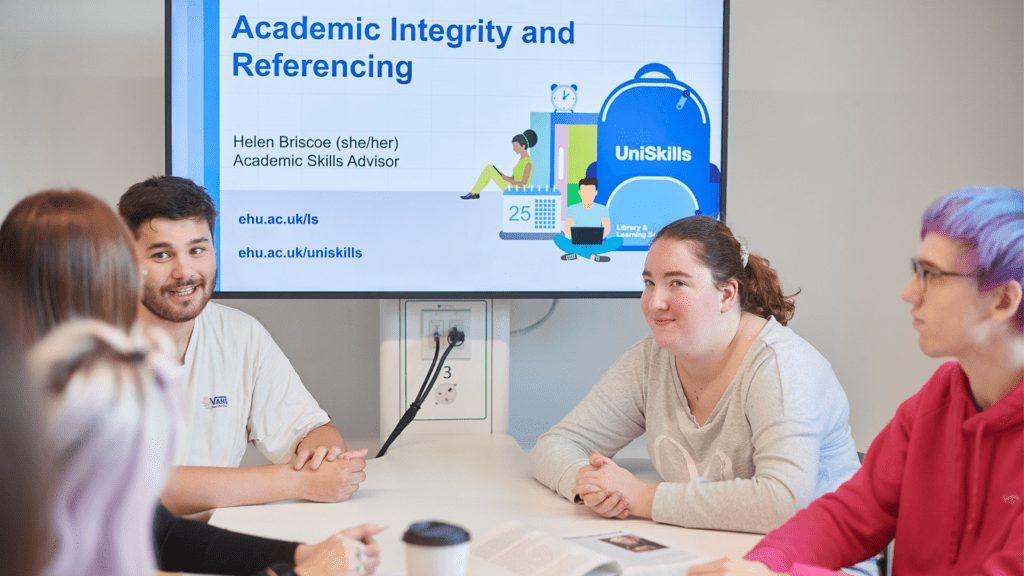
Uniskills
Our friendly programme of workshops, online resources, and one-to-one support is designed to help you refresh your study techniques, boost your confidence, and make a smooth transition into university life. Whether you’re balancing study with work or family, or simply looking to develop your academic skills, UniSkills gives you the tools and support you need to succeed — at university and beyond.
Whether you are completely new to university, in your final year, or returning to postgraduate study, why not come along and share your experiences? Each session is facilitated by both an Academic Skills Advisor and a Student Advisor, and offers you the opportunity to:
Meet other Returning to Learning students
Share any concerns about returning to academic study at university
Learn how others in this situation have adapted to Higher Education
Suggest tips for effective learning
Develop your academic resilience
We also have our UniSkills Toolkits which are a suite of online, interactive learning resources which focus on a specific academic skill or topic. Our Catalyst Induction Toolkit will answer any questions that you have about the support that is available for students and how to access it.
Inclusion and Specific Learning Difference Support Team
If you have a disability, long-term health condition, mental health need, or a specific learning difference (such as dyslexia, dyspraxia or ADHD), support is available to help you make the most of university life.
You don’t need a diagnosis or an EHCP to get started, just contact the Inclusion Team or SpLD Team. They can discuss your situation, advise on any evidence needed, and suggest helpful adjustments or support.
This may include a Student Support Plan, extra exam time, specialist equipment, one-to-one study support, and guidance on applying for Disabled Students’ Allowance (DSA).
Inclusion team
Our Inclusion Team makes sure every student has the support they need to succeed. They offer information, guidance, and practical help for applicants and students with disabilities or long-term health conditions. This can include
Autism (this includes Asperger’s Syndrome)
mental health
visual impairment, deafness, or a hearing impairment
physical/mobility difficulties
Their aim is to make your time at university as accessible and rewarding as possible.
Our SpLD (Specific Learning Differences) team can help if you think a learning difference is impacting on your studies. We support students with dyslexia, dyspraxia, dyscalculia, ADHD, and other learning differences. The team can offer advice, dyslexia assessments (once you have enrolled on course), and practical strategies to help you build confidence and do well at university.
The library, based in the Catalyst, offers a supportive and flexible environment for studying, accessing resources, and finding help when you need it. There are a variety of study spaces available, including quiet areas and group zones, as well as laptops you can borrow using your student ID. The building is open 24/7 during term time, making it easy to fit study around your other commitments.
You can use Discover More to search for books, e-books, and journals online. If you’re unsure how to get started or need support, the friendly staff at the ground floor helpdesks are always available to guide you.
Extensions and mitigating circumstances
Sometimes things happen that can make it hard to meet a deadline, and that’s completely understandable. If you experience illness, personal difficulties, or anything else that affects your studies, you can apply for an extension or mitigating circumstances.
Your Personal Tutor is the best person to talk to first. They can explain the process, help you apply, and make sure you get the support you need. Asking for help won’t affect your grades. These systems are in place to make sure everyone has a fair chance to succeed.
For many mature students, university is an opportunity not only to gain a qualification but also to start a new career, change direction, or progress in their current profession. Alongside your studies, you may choose to take on part-time work to build experience, develop transferable skills, and earn extra income. Your university’s careers and employability team can support you at every stage, from exploring career options and finding work opportunities to writing applications, preparing for interviews, and planning your next steps after graduation. Whether you are looking to advance in your existing field or pursue a completely new path, there is support available to help you achieve your goals.
Careers
Coming to university as a mature student is an exciting step, and at Edge Hill, our Careers team is here to make sure you get the most out of it! Our Careers Team are dedicated to helping you build confidence, enhance your employability, and gain experience that fits around your life and goals. Whether you want to upskill, change career paths, or explore new opportunities, they’ll support you in developing transferable skills through Work-Integrated Learning, volunteering, or part-time work. All appointments with our Careers Advisers are confidential, and they offer private spaces for one-to-one chats tailored to your circumstances.
You may also be eligible for our Student Opportunity Fund, which provides financial support for activities that boost your employability and self-belief. Plus, support doesn’t end at graduation — you can access Careers advice and resources for up to three years after you finish your degree.
Our dedicated Careers Advisers can offer you ‘Get Ahead’ appointments in order to offer you personalised, one-to-one support. You can also speak to a Careers Adviser linked to your subject area or faculty, who can help you find opportunities and career paths that match your goals. They can support you with everything from career planning and job searching to interview preparation and applications.
Working on campus
There are a range of on-campus job opportunities that can be flexible around your studies, offering a practical way to earn extra income while building valuable skills and confidence.
One popular option is the Student Guide role. In this position, you’ll represent the university at events such as open days and welcome activities, helping prospective and new students feel informed and supported. As a mature student, you are also eligible for a guaranteed interview for this role. Recruitment typically takes place in September and early October—visit the Student Recruitment job opportunities page for details and application information.
There are also paid opportunities to work as a Student Advisory Panel Member. As a panel member, you’ll take part in guided group discussions on key topics that impact students. Working alongside university decision-makers and other students, you’ll draw on your own experiences to help shape and enhance services, policies, and the overall student experience at Edge Hill.
Another opportunity is to become a Campus Connector within the Student Life team. In this role, you’ll support campus events and help foster a strong sense of community among students. It’s a great way to get involved, meet others, and develop transferable skills.
In addition to these roles, the university’s Careers vacancy portal advertises a wide variety of part-time jobs throughout the year, both on and off campus. These can offer further flexibility and may be particularly suited to balancing work alongside your studies and other commitments.
Postgraduate Study
If you’re considering postgraduate study, speaking to a Careers Adviser can help you explore the options available and identify the pathways that best align with your interests, experience, and career goals. They can provide tailored advice on further study opportunities, entry requirements, funding, and how postgraduate qualifications may support your future plans. We encourage you to book an appointment to discuss your options and make informed decisions about your next steps.
My absolute favourite thing I’ve done here so far is an unpaid 4-week internship I had at our Medical School over summer. They expected a lot, but they treated me with respect, and I learnt skills like Power Automate to the point where I was able to teach others after the first two weeks. By the end, I had a letter of recommendation that outlined everything I’d done, and I was able to say on my CV that I’d automated key processes for a UK medical school.
It always amazes me how few students know about this – is the Extra Edge Award programme, our employability award. I know so many people who’ve already hit the requirements for an Extra Edge Award, but they haven’t even heard of it and wouldn’t know where to find it. You complete extracurricular or work experience tasks to meet the target of the Bronze, Silver, and Gold pathways, and then you get a certificate for each level that employers will highly value.
Both opportunities, I found on the Careers portal via the Students section of the Edge Hill University website. If you seek them out, there are loads of resources you can use to elevate your CV.
Health and wellbeing
Looking after your health and wellbeing is an important part of your university experience, particularly when balancing study, work, and other commitments. It’s important to make time for self-care, whether that’s staying active, getting enough rest, or connecting with others.
The university offers a range of wellbeing and support services, including counselling, mental health advice, and practical guidance, to help you manage challenges and maintain a healthy balance. Reaching out for support early can make a big difference, and there are teams available who understand the diverse needs and experiences of students.
Physical health
Taking care of your physical health can make a big difference to how you feel day to day.
You may wish to make use of the university Sports Centre, which offers a range of facilities, classes, and flexible membership options to help you stay active in a way that fits around your routine.
The Social Prescribing team also run lots of activities to help you stay active, meet new people, and boost your wellbeing. These include things like wellbeing walks and outdoor activities to help you unwind and connect with nature. You don’t need to be sporty or experienced—it’s all about having fun, feeling good, and finding what works for you.
Mental Health and Wellbeing team
Here to offer advice and support to all of our students on issues related to university and those arising from wider life circumstances. This includes appointments with our Mental Health and Wellbeing team, lots of self-help resources, groups and workshops and Counselling.
We also offer Edge Well 24/7 – a free, confidential support service available anytime, day or night, all year round. Edge Well 24/7 offers confidential and free support to help students navigate a range of personal, emotional and practical challenges and is available 24 hours a day, every day of the year via phone, live chat, email or video call. Edge Well also offers Lived Experience Matching where you can ask to speak with someone who shares or understands your background.
Student Support Team
Everyone’s university journey is different, and our Student Support Team is here to make sure you never have to face challenges alone. We offer friendly, tailored support for all students, and are the dedicated team for students who have experience of care and estrangement, students with caring responsibilities, Transgender students, and new or expectant parents; helping you feel supported and confident throughout your time here.
University is about more than just lectures and assignments. Feeling connected to your university community can make a positive difference to your university experience. As a mature student, you’ll have opportunities to meet new people through student societies, events, support networks, and your course. Building these connections can help you feel more confident, supported, and part of your university community from day one.
Students’ Union
Once you join Edge Hill University as a student, you’re automatically enrolled as a member of our Edge Hill Students’ Union (EHSU). Located within the heart of our beautiful campus, your Students’ Union is the perfect place to find like-minded people and meet your Edge Hill family. The Edge Hill Students’ Union (EHSU) is run by students, for students. Your elected Student Union officers are committed to supporting and engaging you during your time studying with us.
Mature Students’ Society
Joining the Mature Students’ Society is a great way of meeting other mature students when you get to university. They offer support, guidance and plenty of social opportunities to meet like minded people.
Faith and Community
Our Faith and Community Team offer a welcoming space for reflection, conversation, and support. They’re here to listen, provide pastoral care, and help you explore questions of faith and spirituality. Whatever your beliefs or background, you’ll find an inclusive community and support for your personal or faith journey.
The Arts Centre offers a welcoming environment where students of all ages can relax, socialise, and enjoy high‑quality cultural experiences. Performances include everything from stand‑up comedy and National Theatre Live screenings to talks from inspiring guest speakers and lively musical theatre events.
There are plenty of opportunities to get involved—whether you want to take part in performances, join a society, try an Open Mic Night, or simply enjoy an evening out with your friends.
Edge Hill Sport offers a welcoming and accessible space for all students to stay active and look after their wellbeing. The centre includes an 80‑station fitness suite, a varied programme of exercise classes, a 20‑metre swimming pool, a running track and a wide range of bookable facilities such as courts, grass pitches and 3G pitches. Whether you’re returning to exercise, trying something new, or maintaining an existing routine, Edge Hill Sport provides plenty of options to support a healthy and enjoyable student experience.
Honestly, the best advice I could give is to try to say yes to as many opportunities as you can – even if they seem irrelevant or outside your comfort zone. It’s the rule I’ve lived by since day 1, because I knew I needed to get as much value as possible from the degree, and I’ve done things now that I never would have thought were possible 2 years ago.
It’s also important to try to build rapport with the staff, from both the union and the university. If staff know you and they know you’ll follow through well with a task or project, you’ll find you get offered a lot more opportunities, or they’ll tell you about opportunities that you might just not have heard about otherwise.
Finally, don’t put too much pressure on yourself to find your people on day 1 – I met people in my first week who I’d have called friends for the first few weeks, but we drifted and the strong, firm friends I do have are mostly people I met later through group assignments, societies, and existing friends.
Get in touch
For more information about the support we offer students and any activities and programmes we run, please get in touch with our dedicated team. They will be happy to assist you.