Paramedic Practice BSc (Hons)
UCAS code: BB95
Experience clinical scenarios and frontline service with emergency ambulance crews. Become a qualified paramedic on a degree taught primarily at St James’ in Manchester in collaboration with the North West Ambulance Service.
Ranked 1st in England, and 2nd in the UK (The Guardian University Guide 2026 – Paramedic Science).
Closed to applications for September 2026 entry.
Overview
| Course length: | 3 years full-time |
|---|---|
| Start dates: | September 2027 |
| Location: | Edge Hill University or St James’ (Manchester) |
| Subject(s): | Paramedic Practice |
| Faculty: | Health, Social Care and Medicine |
| Department: | Allied Health, Social Work and Wellbeing |
You’re at the scene of a serious incident. The pressure is intense. You stay composed, drawing on your training, education and experience to deliver potentially life-saving care. But being a paramedic is more than emergency response. It’s about presence.
- Can you sit quietly and listen?
- Offer empathy and compassion when someone is facing the hardest moment of their life?
- Can you remain calm, focused and kind, no matter the situation?
- Could you provide high-quality care in an unpredictable, unfamiliar, and rapidly-changing environment?
If so, you may have what it takes to be a paramedic.
This degree prepares you to deliver exceptional, high quality care across a diverse range of situations, whether fast-paced and critical, to emotionally complex, or gentle and supportive. You’ll develop the clinical, intellectual, and communication skills that make a real difference when it matters most. Every day is different. Every incident is unique and brings new challenges.
What You’ll Learn
- Core principles of paramedic practice, including professional duty of care, patient diversity, and legal frameworks
- How to recognise early signs of clinical deterioration and respond with timely, effective intervention
- How to assess, evaluate, diagnose, and manage the clinical and personal needs of patients of all ages
- How to apply clinical judgement and critical thinking in complex situations
- Confidence in performing essential clinical assessments and procedures
You’ll be equipped to respond to a wide range of emergency and non-emergency scenarios, from cardiac arrests to chronic conditions and mental health crises, from major trauma to minor injuries. This degree is more than a qualification, it’s a commitment to courage, compassion, and clinical excellence. You’ll graduate as an effective capable, confident clinician ready to make a meaningful impact in the lives of others, every single day.
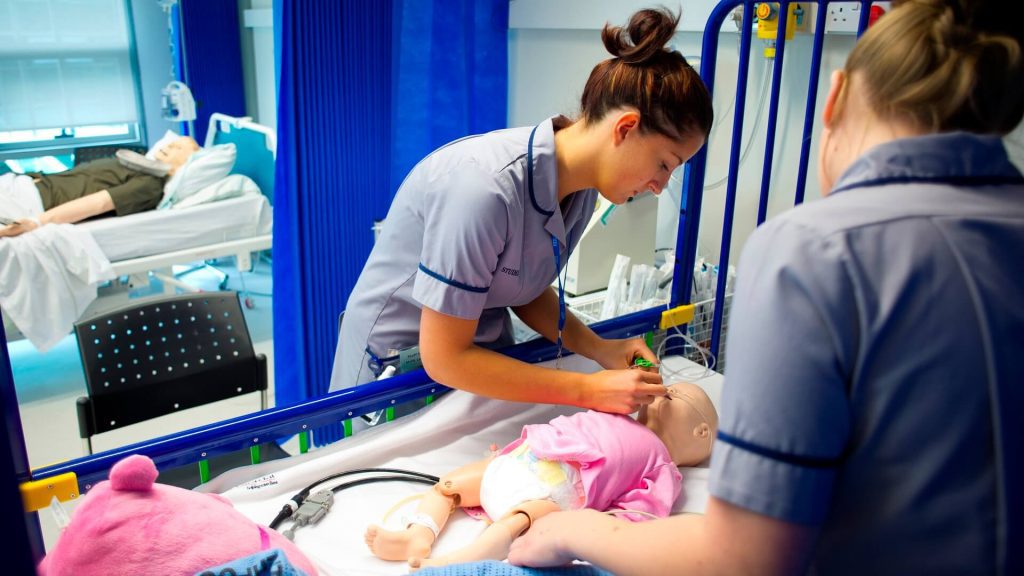
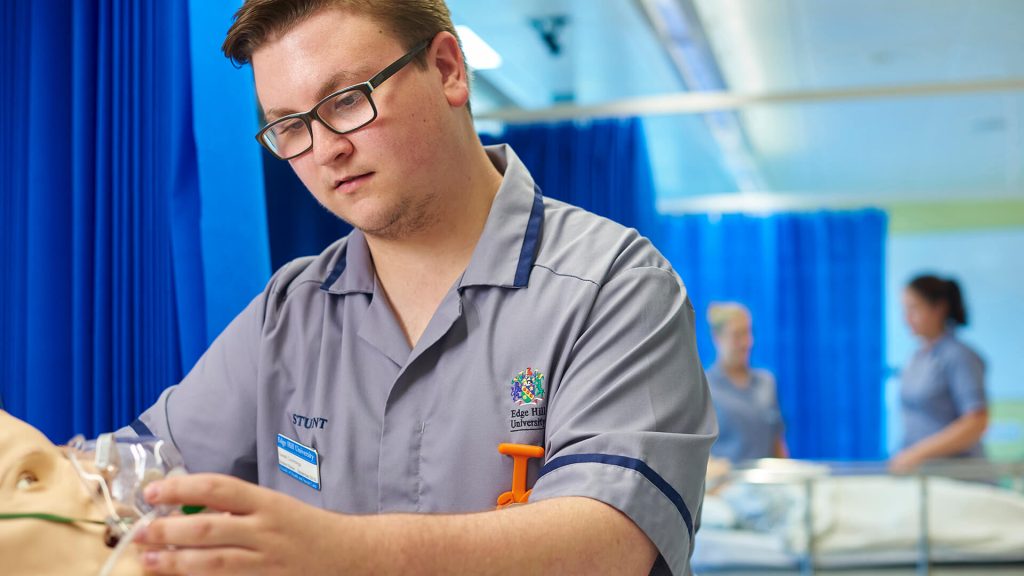
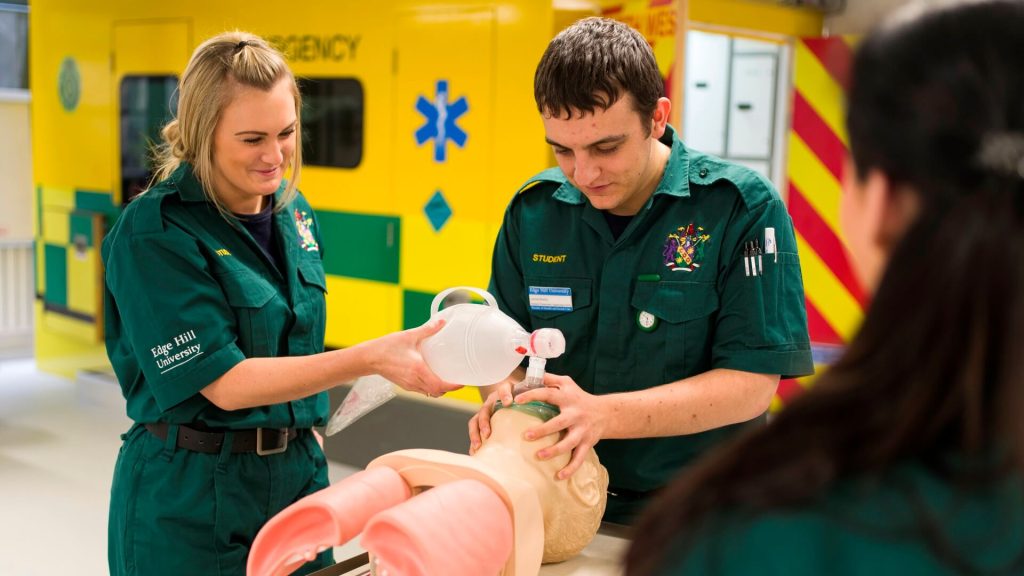
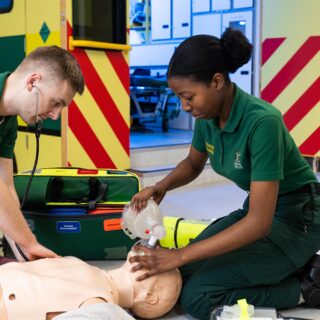
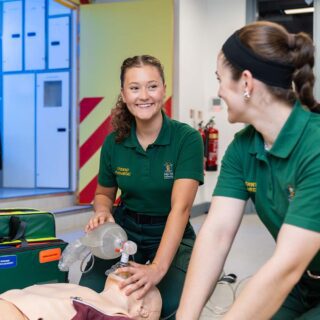
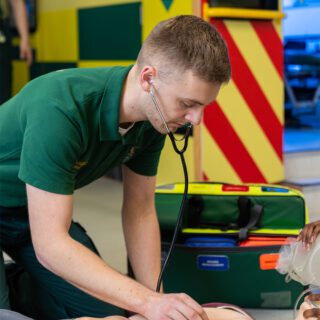
Your learning will be based primarily at our St James’ campus in the heart of Manchester. Here, you’ll build confidence and competence through hands-on clinical scenarios in our immersive skills and simulation suite.
Throughout the course, you’ll gain extensive frontline experience alongside emergency ambulance crews. Our wide-ranging placements span urgent and emergency care settings, as well as broader health and social care environments across the North West.
You will be required to attend a small number of taught sessions, assessments, and learning opportunities at our Ormskirk campus throughout the programme.
An approved degree
Following graduation, you’ll have the skills that enable you to apply for registration with the Health and Care Professions Council (HCPC) as a qualified paramedic.
 Health & Care Professions Council
 Top 10 - Paramedic Science - Complete University Guide
 Top 10 - Social Work - Complete University Guide
Course features
-
Professional accreditation
-
Professional practice placements
What you'll study
Our paramedic practice degree provides a high-quality start to your career. In Year 1 we’ll provide the fundamentals in bioscience, clinical practice and the principles of assessment and management in paramedic practice to develop a solid academic base. This theoretical content complements practical experience, introduced in simulated scenarios. Much of your learning will happen through exposure to, and reflection on, these practical exercises. You’ll also develop a solid academic base and build professional competence.
Can you make informed decisions under pressure? Simulations will teach you how to gather and analyse relevant information. We’ll also challenge your subject specific skills, such as the ability to identify, assess, implement and evaluate patients’ healthcare needs. Learn how to recognise signs of deteriorating disease and when you need to step in with a timely intervention. The weeks you spend out on placement will pull your new skills and knowledge into shape.
In Year 3 of your paramedic practice course, you’ll spend your time on placement, enhancing your skills, reflecting on your experiences, and building your first hand understanding of the broader clinical environment in which paramedics work. You will develop a deeper insight into the role of the paramedic and the professional requirements across a wide spectrum of clinical settings. All the while working towards becoming an autonomous practitioner with strong leadership and mentoring skills.
How you'll study
The course is delivered in weekly blocks of theory and practice placements throughout each year. While the majority of classes will take place at St James’, a small number of taught sessions, assessments and learning opportunities will take place at the Ormskirk campus of Edge Hill University. Some modules may also involve studying at other sites where you will be responsible for travel and parking costs.
Theory
To ensure that you are competent both academically and professionally, a wide range of learning experiences, teaching and assessment methods will be used, including: keynote lectures, group discussion and debate, student-led seminars, structured reflection, directed study, enquiry-based learning, skills teaching, and learning in practice. You will need to be responsible for your practice, be able to recognise the limits of your expertise and be capable of challenging practices and initiating care, which is patient-focused and based upon appropriate evidence.
Placement
Hospital placement areas are located across Greater Manchester while ambulance placements are located across the North West of England, with a main hub placement being with emergency ambulance crews. Practice learning will meet your learning needs and give you supportive and diverse experiences across the health and social care provision. These include main hub placements at ambulance stations and bespoke placements in NHS hospitals, community trusts, social care services and the independent sector. Placements will include weekends, early mornings, evenings and night work to ensure a full range of practice experiences. You will be responsible for travel and parking costs while on placement.
You are expected to be flexible during placement weeks to ensure that you can experience the full range of learning opportunities and shift patterns in clinical practice.
Placement Structure: Hub and Spoke Model
Your placement will follow a Hub and Spoke model, offering a broad and enriching experience across emergency and non-emergency care settings.
Hub Placements
– Located across the North West of England
– Delivered with emergency ambulance crews
– You will be assigned to a group of stations, with shifts scheduled across all locations within that group
– You are expected to travel to each station during your placement weeks
Spoke Placements (Specialist Placement Opportunities for Knowledge Exchange)
– Bespoke experiences across Greater Manchester
– Hosted in NHS hospitals, community trusts, social care services, and the independent sector
Learning Opportunities
Both Hub and Spoke placements are designed to:
– Provide supportive and diverse practice learning
– Expose you to a wide range of health and social care environments
– Help you meet your individual learning needs and develop professional competence
Placement Expectations and Responsibilities
During your placement, you will be scheduled for a variety of shifts—including weekends, early mornings, evenings, and overnight work—to ensure exposure to the full spectrum of clinical practice. This diverse scheduling is designed to provide comprehensive learning experiences across different care settings and patient needs.
Please note:
– Travel and Parking: You are responsible for covering your own travel and parking expenses throughout the placement period.
– Flexibility: You are expected to remain flexible during placement weeks to accommodate the range of shift patterns and learning opportunities available. This flexibility is essential for gaining a well-rounded understanding of clinical practice.
How you'll be assessed
The assessment process includes written essays, case studies, written assignments, practical examinations (Objective Structured Clinical Examinations), student presentations and practice assessment documentation.
Who will be teaching you
The main teaching team for this programme are registered paramedics. In addition, nurses, allied health and medical professionals, and other academic members will be involved in elements of teaching and assessment. In the workplace you will be supported by paramedic mentors, practice supervisors and qualified paramedics who will guide and supervise you during your placement. The programme team will support you through the provision of a module leader, personal tutor and link teacher who are able to offer academic and pastoral support as required.
Entry criteria
Typical offer 120 UCAS Tariff points, for which no specific subjects are required, plus GCSE English Language and Mathematics at Grade C or Grade 4 or above (or equivalent).
Applicants must be aged 18 years or over at the start of the course and have permanent UK resident status.
Applicants must possess a full manual UK driving licence with no more than 6 points on commencement of the course, with provisional Category C1 Provisional licence at point of entry to the programme.
Eligible candidates must provide evidence of study within the five years prior to application. An interview forms the selection process.
If you’re offered a place on this course, you must meet two key requirements before and during your studies:
1. Occupational Health Clearance
– You must undergo a health screening to confirm your physical and mental fitness for the course.
– If your screening is unsatisfactory, your offer may be withdrawn.
– If your health status changes or clearance is revoked during the course, you may be required to withdraw, even if you’ve already started.
2. DBS Enhanced Disclosure
– You must apply for a Disclosure and Barring Service (DBS) Enhanced Disclosure.
– This confirms you meet the legal criteria for working with children and/or vulnerable adults.
– Further instructions will be provided after you accept the offer.
What This Means for You
Your place is conditional, not guaranteed, until both checks are complete and satisfactory.
It’s essential to respond promptly to health screening and DBS requests.
Example offers
| Qualification | Requirement |
|---|---|
| A Level | BBB. |
| UCAS Tariff points | 120 points. |
| BTEC Extended Diploma (or combination of BTEC QCF qualifications) | Distinction, Distinction, Merit (DDM). |
| T Level | Overall grade of Merit. |
| International Baccalaureate (IB) | We are happy to accept IB qualifications which achieve the required number of UCAS Tariff points. |
| Access to Higher Education Diploma | 45 credits at Level 3, of which 30 credits must be graded Distinction and 15 credits graded Merit. |
Please note, the above examples may differ from actual offers made. A combination of A Level and BTEC awards may also be accepted.
If you have a minimum of two A Levels (or equivalent), there is no maximum number of qualifications that we will accept UCAS points from. This includes additional qualifications such as Extended Project Qualification (EPQ), AS Levels that haven't been continued to A Level, and General Studies AS or A Level awards.
Our new Fair Entry Criteria is a Contextual Admissions Policy that takes an applicant’s personal and educational background into account. This policy will allow eligible applicants to receive up to a two-grade reduction in their entry requirements for this course. Find out more and see if you qualify.
How to apply
Apply full-time
Read our guide to applying through UCAS to find out more about the application process.
Closed to applications for September 2026.
Please note, we do not accept deferred entry for this programme.
Should you accept an offer of a place to study with us and formally enrol as a student, you will be subject to the provisions of the regulations, rules, codes, conditions and policies which apply to our students. These are available at www.edgehill.ac.uk/studentterms.
If you join a full time undergraduate degree at Edge Hill University, we will guarantee you the offer of a room in our halls of residence for the first year of your course.
Discover our accommodation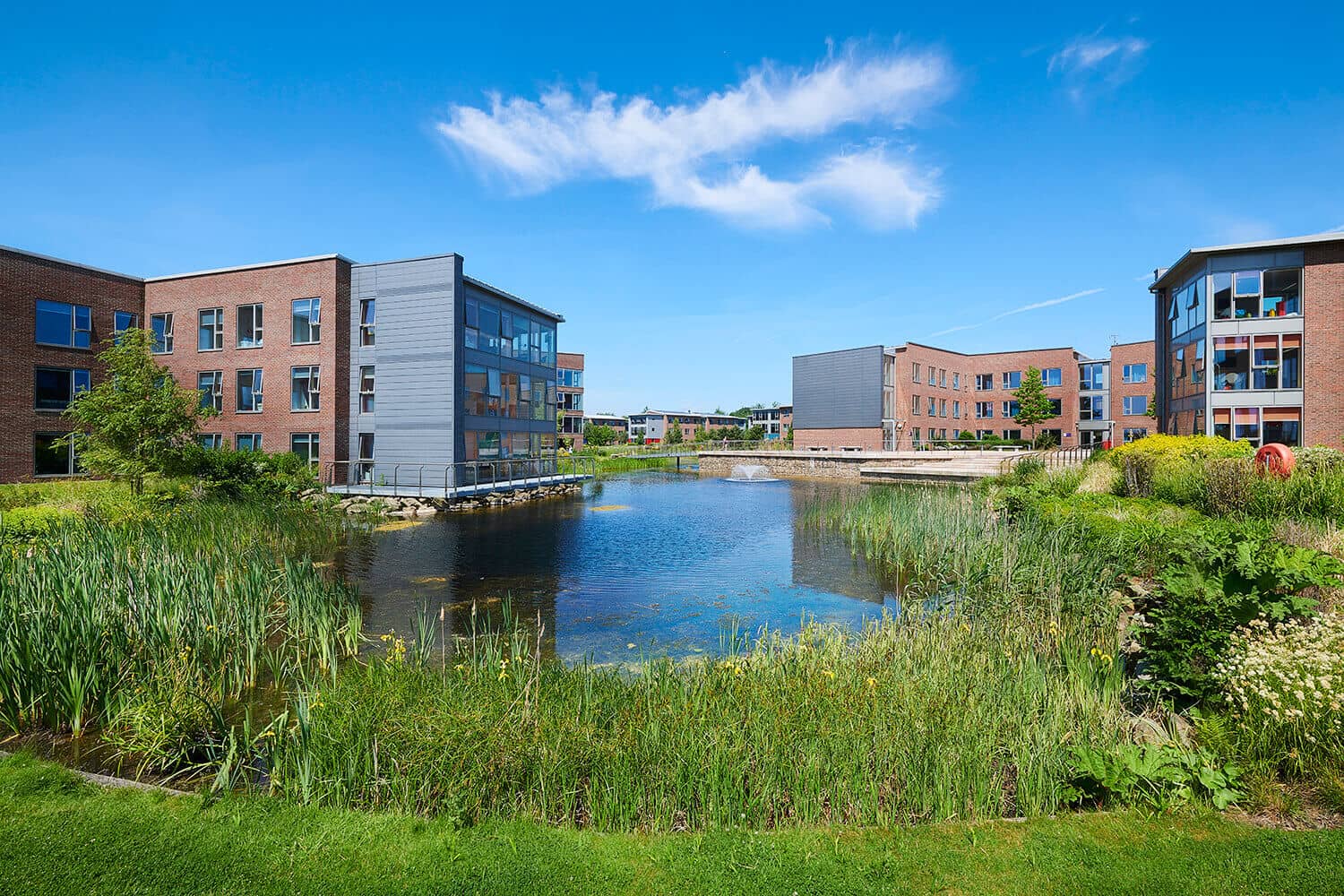
Facilities
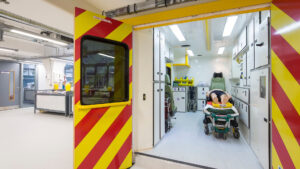
The course is primarily delivered at St James’ in central Manchester where the clinical skills facilities include an ambulance simulator.
A limited number of sessions will also take place in the Faculty of Health, Social Care and Medicine at Edge Hill University, focusing on particular specialist subjects such as maternity care.
Where you'll study
Learning resources

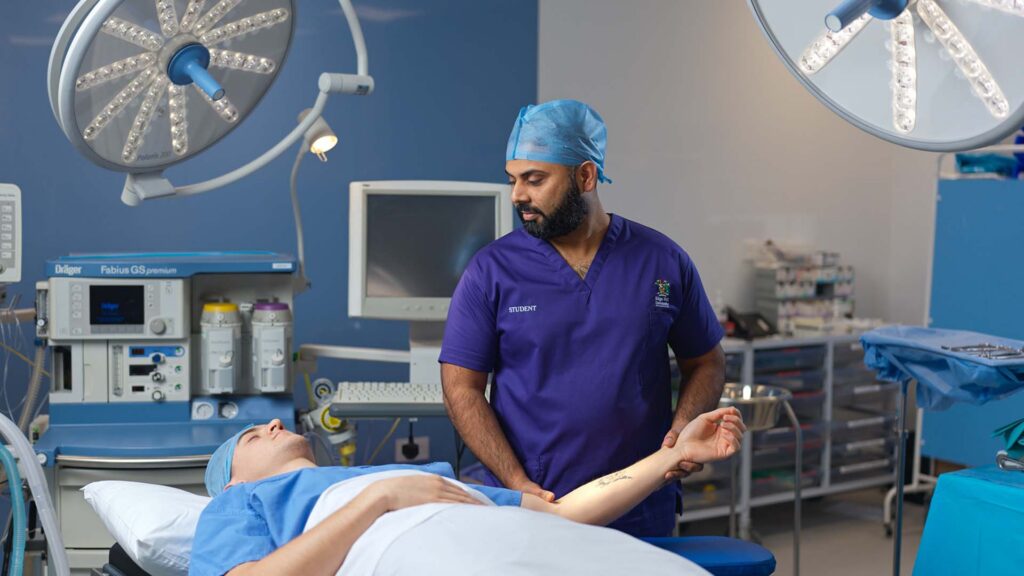
St James’ provides an extensive modern clinical simulation suite, including a mock operating theatre, ambulance simulator and clinical skills stations. A 3D immersive simulation suite enables you to practice clinical scenarios in a realistic, supportive and safe environment. Additional facilities include an open plan library and IT resources. The Clinical Skills and Simulation Centre on the main Ormskirk Campus offers a variety of simulated environments from home, through primary and emergency care, to secondary care and beyond. The flexible and adaptable facilities include a ward environment, operating theatre, an anatomy and ultrasound resource centre, a ‘Better at Home’ suite, clinical skills area and consultation rooms.
Finance
Tuition fees
UK Full-Time
£9,790
a year
EU/EEA and Swiss students who have settled or pre-settled status under the EU Settlement Scheme, as well as Irish nationals, may be eligible for the UK tuition fee rate.
Financial support
Subject to eligibility, UK students joining this course can apply for a Tuition Fee Loan from the Government to cover the full cost of tuition fees. UK students enrolling on the course may also be eligible to apply for additional funding to help with living costs.
Scholarships
We offer a range of scholarships, which celebrate the determination, commitment and achievement of our students. Many of our scholarships are awarded automatically. There are some however, where you will need to be involved in an application or nomination process. To find out more about our scholarships and check your eligibility, please visit our dedicated scholarships pages.
Money Matters
Please view the relevant Money Matters guide for comprehensive information about the financial support available to eligible UK students.
EU/EEA and Swiss students who have settled or pre-settled status under the EU Settlement Scheme may be eligible to apply for financial support. Irish nationals can ordinarily apply to Student Universal Support Ireland (SUSI). Please see our EU student finance page for further details.
Tuition fees
UK Full-Time
£9,535
a year
EU/EEA and Swiss students who have settled or pre-settled status under the EU Settlement Scheme, as well as Irish nationals, may be eligible for the UK tuition fee rate.
Financial support
Students on this course may be entitled to the NHS Learner Support Fund if eligible. Visit the NHS Business Services Authority website for further information.
EU/EEA and Swiss students who have settled or pre-settled status under the EU Settlement Scheme may be eligible to apply for financial support. Irish nationals can ordinarily apply to Student Universal Support Ireland (SUSI). Please see our EU student finance page for further details.
Your future career
Qualified paramedics are highly sought after. Graduates typically kickstart their career in the ambulance service as newly qualified paramedics, but during their careers also go into other roles such as:
- Consultant Paramedic
- Senior Paramedic
- Advanced Paramedic
- Senior Lecturer
- Research Paramedic
- Advanced Clinical Practitioner
Some graduates stay within the ambulance service, moving through various senior clinical routes or into primary and urgent care. Edge Hill graduates have worked in:
- North West Ambulance Service
- Ambulance services across the UK
- NHS Trusts
- Higher Education Institutions
- GP and Urgent Care Centres
Alternatively, after graduation you may want to continue your studies and complete a postgraduate qualification.
Course changes
Every effort has been made to ensure the accuracy of this information, however our courses are subject to ongoing review and development. Changing circumstances may necessitate alteration to, or the cancellation of, courses.
Changes may be necessary to comply with the requirements of professional bodies, revisions to subject benchmarks statements, to keep courses updated and contemporary, or as a result of student feedback. We reserve the right to make variations if we consider such action to be necessary or in the best interests of students.