A former sports scientist at The Football Association, Professor Greig has worked closely with England’s youth pathway, supporting players who have progressed into today’s senior international setup.
With the 2026 FIFA World Cup in the USA, Canada and Mexico bringing renewed focus on player welfare in extreme weather conditions, Professor Greig offers an expert perspective on the growing role and wider implications of in-game hydration breaks.
When FIFA introduced in-game cooling or hydration breaks, the primary objective was clear, to protect player welfare in challenging environmental conditions.
FIFA’s guidelines permit these breaks when the Wet Bulb Globe Temperature (WBGT) exceeds 32°C, recognising the significant risks posed by heat stress, dehydration and their associated impact on both health and performance. At face value these pauses in play, which are three-minute intervals, one in each half, serve a straightforward physiological function.
They allow players to rehydrate, regulate body temperature and mitigate the cognitive and physical decline associated with fluid loss.
Even relatively small levels of dehydration can impair decision making, reduce concentration and increase the likelihood of errors that influence match outcomes, including goals conceded, mistimed challenges and risk of injury.
However, what is particularly interesting at the 2026 World Cup is that hydration itself is only part of a much broader picture.

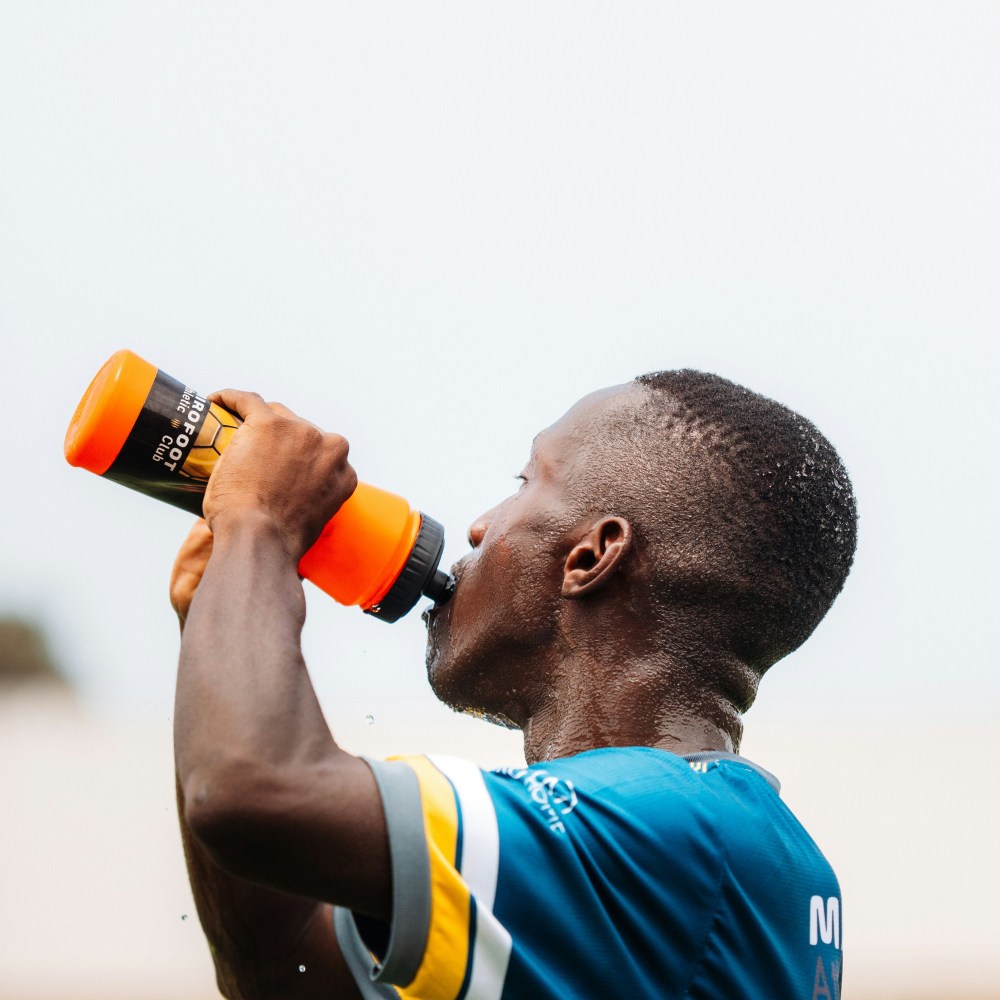
From a sports science perspective, the conversation around fluid intake is more nuanced than simply “drinking water.” Players lose not just fluid through sweat, but also electrolytes, which are critical for maintaining performance and function.
Hypotonic drinks formulations are designed to be absorbed more rapidly than water and are often more effective in restoring hydration status. Despite the availability of a vast range of scientifically developed products, we still frequently observe players reaching for cold water.
This raises an intriguing question, is this driven by physiology or psychology, or simply habit? There is a strong behavioural component to hydration, where cold water is instinctively perceived as the most effective solution.
Practical considerations also come into play, including team preferences, supply logistics and sponsorships, and even budget constraints across different nations which might influence individual player needs. The result is a blend of science and habit that continues to shape what we see on the pitch.
Alongside hydration, cooling strategies have become a visible feature of these breaks. Ice vests, cold towels and targeted cooling around high blood-flow areas such as the neck are well-established interventions. These are not new innovations, but their application within structured in-game intervals enhances their effectiveness.
Interestingly we have seen limited use of shade during these breaks, despite the potential benefits to reducing heat stress, which raises questions about how consistently these opportunities are being maximised.
Equally notable is the role of the stadium environment itself. Many of the World Cup venues in the United States are designed with advanced climate control in mind, including air circulation systems, misting technologies and in some cases retractable roofs.
These features can significantly moderate playing conditions, yet they have received relatively little attention in broader discussions about heat management. Presumably for consistency, even games played in environmentally controlled conditions still have the hydration break.
Where the conversation becomes particularly compelling is in how these breaks have evolved beyond their original medical intent. What we are witnessing is a shift from purely player welfare interventions to multi-disciplinary performance opportunities.
In those three-minute windows, a wide range of support staff step onto the pitch including sports scientists, medical teams, analysts and coaches, each contributing to a rapid and coordinated intervention to make a positive difference on their team’s performance for the remainder of the half.
In football, momentum is really important and often framed as something intangible, something that cannot easily be interrupted once a match is underway.
These breaks fundamentally challenge that notion and several managers have already said so in their post match press conferences. They provide coaches with a structured opportunity to influence the game in real time, effectively reintroducing tactical control during open play.

Typically this coaching intervention is restricted to the traditional half-time interval, and these pitch side breaks could be highly efficient, and coaches and support staff will have prepared for how best to maximise these additional breaks. Communication is immediate, targeted and often distilled into two or three key messages.
This input is informed by live data and performance analysis, enabling adjustments to shape, pressing strategy or individual roles before the next phase of play.
We are also seeing leadership dynamics emerge within teams during these moments. Senior players take on responsibility for reinforcing messages, guiding younger teammates and maintaining composure. This shared ownership of decision-making reflects the evolving complexity of the modern game.
From a tactical standpoint, the implications are significant. Breaks can disrupt opposition momentum, provide relief to teams under pressure and create opportunities to reset defensive structures or refine attacking plans.
They also influence substitution strategies, allowing coaches to better manage player load, particularly important in tournament settings where match frequency and squad rotation are critical considerations.
Rugby Union has introduced the concept of “starters” and “finishers”, with replacement used to change the physical and or tactical game plan. With these structured and regulated hydration breaks, and the number of substitutions allowed, players can better regulate their own efforts and coaches can plan for rotation.
There are however broader consequences to consider. The introduction of these breaks subtly alters the rhythm and flow of football. Matches begin to take on a more segmented structure, with pundits likening it to a “four-quarter” format.
This has implications not only for players and coaches but also for fans, whose experience of the game becomes more orchestrated and arguably less continuous.
Beyond the pitch, the commercial dimension cannot be ignored. These scheduled pauses present valuable opportunities for broadcasters and sponsors, enabling targeted advertising and content delivery to global audiences.
In a tournament hosted in a major commercial market such as the United States, this alignment between sport and media strategy is particularly pronounced.
This raises an important question about the future. If hydration breaks deliver welfare benefits and significant commercial value, will they be retained for future tournaments, and will this be driven by factors beyond player health?
And if so, how should the game balance these competing interests? Ultimately, the hydration break has evolved into something far more complex than its name suggests. It is a convergence point for physiology, psychology, medical, coaching, analysis and commercial strategy.
While its foundation remains rooted in protecting players, its impact now extends across nearly every aspect of the modern game and really highlights the multi-disciplinary nature of player support.
As the tournament progresses, it will be fascinating to observe how teams continue to adapt. It is entirely plausible that a critical moment whether tactical, physical or psychological emerges from one of these intervals and proves decisive in determining the outcome of a match or even the tournament itself.
The question then is not simply whether hydration breaks are necessary, but who truly benefits from them and whether they represent a genuine evolution in player care or a broader transformation in how football is played, managed and consumed.
Find out more about studying Sports Coaching at Edge Hill University.
July 1, 2026