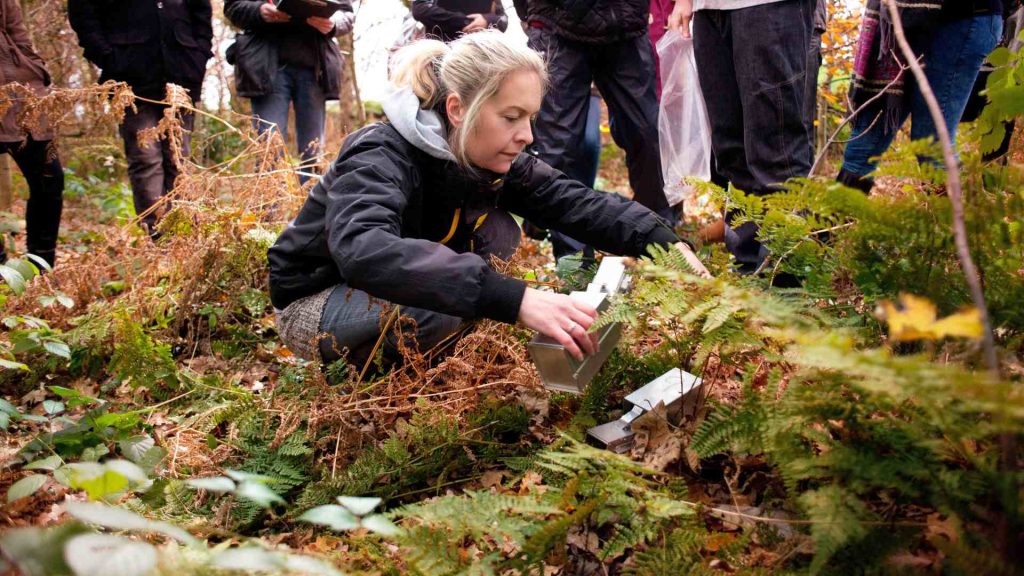
Our Green Flag–awarded campus and surrounding nature reserves provide a diverse living laboratory for ecological fieldwork — spanning grassland, woodland, ponds, hedgerows, coastal dunes, peatland, and post-industrial habitats.
What you can do here
Our ecology resources support fieldwork, biodiversity monitoring, and ecological research across a wide range of habitats, both on campus and across the wider region. Whether you need access to study sites, field survey support, or a collaborative monitoring partner, we can discuss options to suit your project.
Biodiversity monitoring
Vegetation surveys, invertebrate monitoring, and habitat assessment across diverse on-campus and off-site habitats.
Botanical survey & recording
Plant identification, quadrat surveys, and vegetation mapping across grassland, woodland, hedgerow, and wetland habitats.
Invertebrate survey
Pitfall trapping, sweep netting, and invertebrate identification across terrestrial and freshwater habitats.
Soil, water & plant physiology
Field measurement of soil and water properties alongside in situ photosynthetic activity monitoring, supporting habitat assessment, land management research, and plant stress studies.
On-campus habitats
Our campus provides a surprisingly diverse range of habitats within walking distance of our laboratories, making it an ideal base for teaching fieldwork, pilot studies, and long-term monitoring projects.
Grassland & Hedgerows
Extensive grassland areas and established hedgerows across the campus grounds support a range of plant and invertebrate communities. These habitats are used regularly for botanical survey training, invertebrate monitoring, and vegetation studies.
Ponds & freshwater
Campus ponds support freshwater invertebrate communities and aquatic plant assemblages. Used for freshwater ecology fieldwork, water quality assessment, and macroinvertebrate sampling.
Woodland
Ruff Wood is a managed woodland sitting directly on the campus boundary, owned by the local council but effectively on our doorstep and regularly used for woodland ecology fieldwork. It supports a range of woodland flora, invertebrates, and birds. Smaller woodland areas also exist across the campus grounds itself.
Nature on our doorstep
Our location in Lancashire gives us easy access to a remarkable range of habitats within a short distance of campus — extending the breadth of ecological fieldwork we can support well beyond what the campus itself offers.
Coastal sand dunes
Internationally important coastal dune systems are within easy reach of campus, supporting rare and specialist plant communities, invertebrates, and ground-nesting birds. Used for botanical survey, dune ecology research, and biodiversity monitoring.
Post-industrial landscapes
The wider Lancashire region includes a range of post-industrial sites — former quarries, collieries, and reclaimed land – that now support distinctive and often surprising plant and invertebrate communities. These habitats offer excellent opportunities for restoration ecology and long-term biodiversity monitoring.
Wetlands & estuaries
The Lancashire and Merseyside region is exceptionally rich in wetland habitats, from internationally important estuaries and coastal marshes to inland wetland reserves and freshwater reedbeds. These habitats support excellent opportunities for wetland ecology research.
Limestone & upland grasslands
The region offers access to two distinct and botanically rich grassland types. Limestone pavement and grassland in the Arnside & Silverdale area supports a specialist flora, rare butterflies, and notable invertebrate assemblages. Further north, upland grasslands within the Forest of Bowland and the West Pennine Moors provide a contrasting upland context for vegetation survey, plant physiology fieldwork, and biodiversity monitoring.
Lowland raised bogs (mosses)
Lancashire and North Merseyside hold some of the UK's most significant remaining fragments of lowland raised bogs. These rare and ecologically important habitats support specialist sphagnum moss communities, sundews, rare butterflies such as the large heath, and characteristic invertebrate assemblages. Many sites are actively managed for restoration, making them excellent locations for peatland ecology, restoration, and long-term biodiversity research.
Rewilding & landscape-scale restoration
The wider northern England region is home to several ambitious landscape-scale rewilding and nature recovery projects — encompassing floodplain restoration, native woodland establishment, wildflower meadow creation, and the reintroduction of keystone species. Our ecology team has active experience working within this kind of project context, supporting long-term biodiversity monitoring and habitat assessment.
Working with us
Beyond providing access to our own field sites, we welcome collaborative monitoring projects with land managers, conservation organisations, and environmental consultancies. Our researchers and students are experienced in delivering field surveys across a wide range of habitats nationally, and we are well equipped for seasonal fieldwork programmes — particularly during the summer period when student support is available.
Off-site habitat monitoring
We are happy to travel to your site to carry out habitat monitoring, biodiversity surveys, and ecological assessments as part of a collaborative project. This kind of partnership — bringing academic rigour and student support to applied land management questions — is something we actively pursue and have experience delivering at sites across the UK.
Field equipment and expertise
Our researchers bring both specialist ecological expertise and field equipment to collaborative monitoring projects. We can discuss bespoke survey programmes tailored to your land management objectives, habitat type, and target species groups.
Interested in a collaboration? Whether you are a land manager, conservation body, or environmental consultancy, we’d be happy to discuss how we might support your monitoring or research objectives.