Studying biology gives you the skills and opportunities to advance human knowledge and understanding in today’s world, in order to make a difference to tomorrow’s world. A background in biology gives you many skills and increases your career options so that you can adapt to the world changing around you.
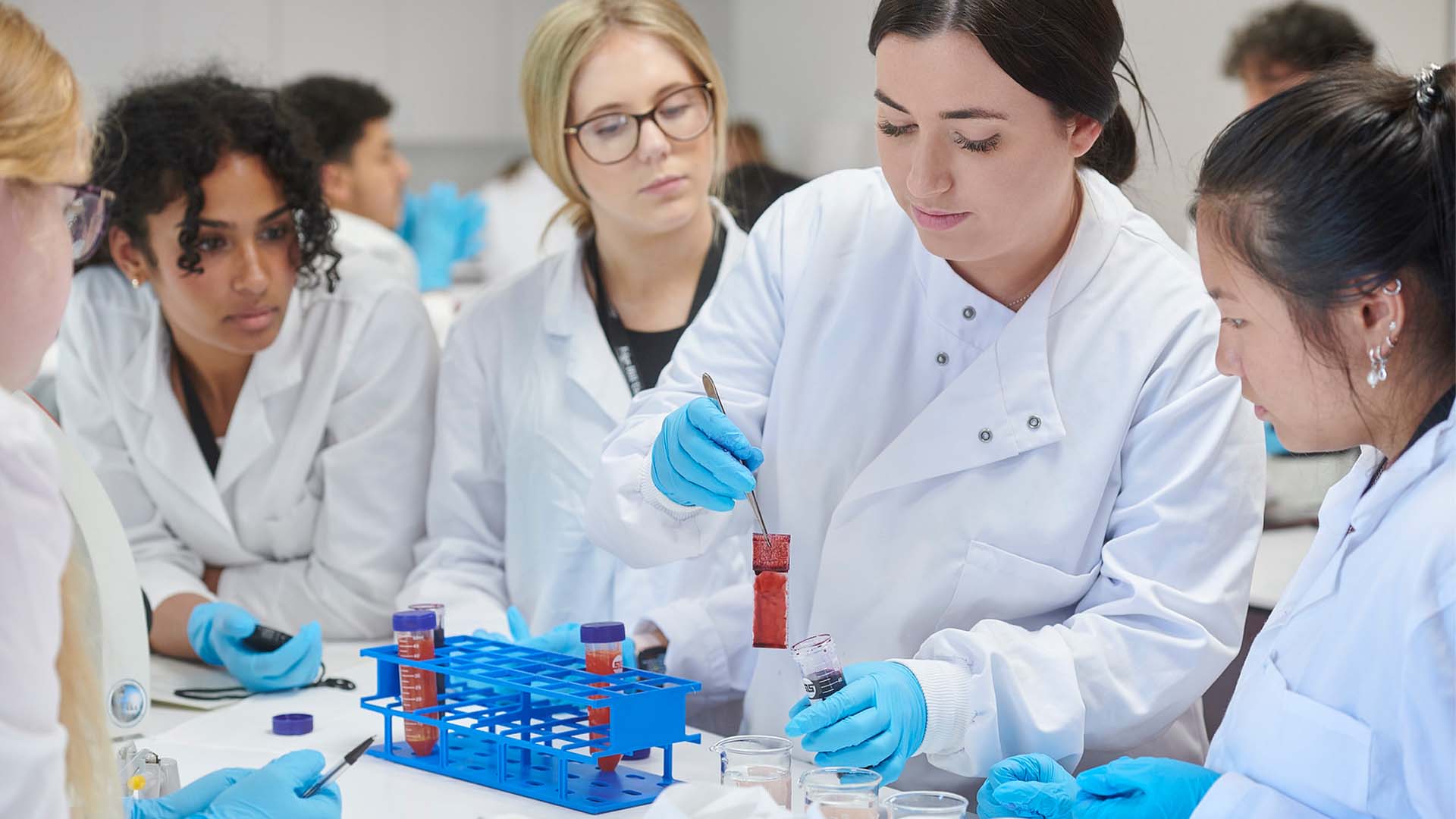
Our courses are taught in small, friendly groups in a supportive environment by experienced lecturers. Excellent teaching facilities are located in a modern, purpose-built and well-equipped building.
We have an excellent reputation for quality and in an external QAA audit, the department scored 23 out of 24 for its Biology provision for students, one of the highest scores in the country.
Being a small department is one of our key assets – our students appreciate being part of a close-knit community where everyone knows one another and they are treated as individuals rather than just a number. This also helps our team of tutors to provide high-quality support and guidance by developing an understanding of how each student is progressing with their studies and enjoying their academic experience.
If you are interested to study with us, please see our course range, exceptional facilities and get in touch with us should you need more information.
Facilities
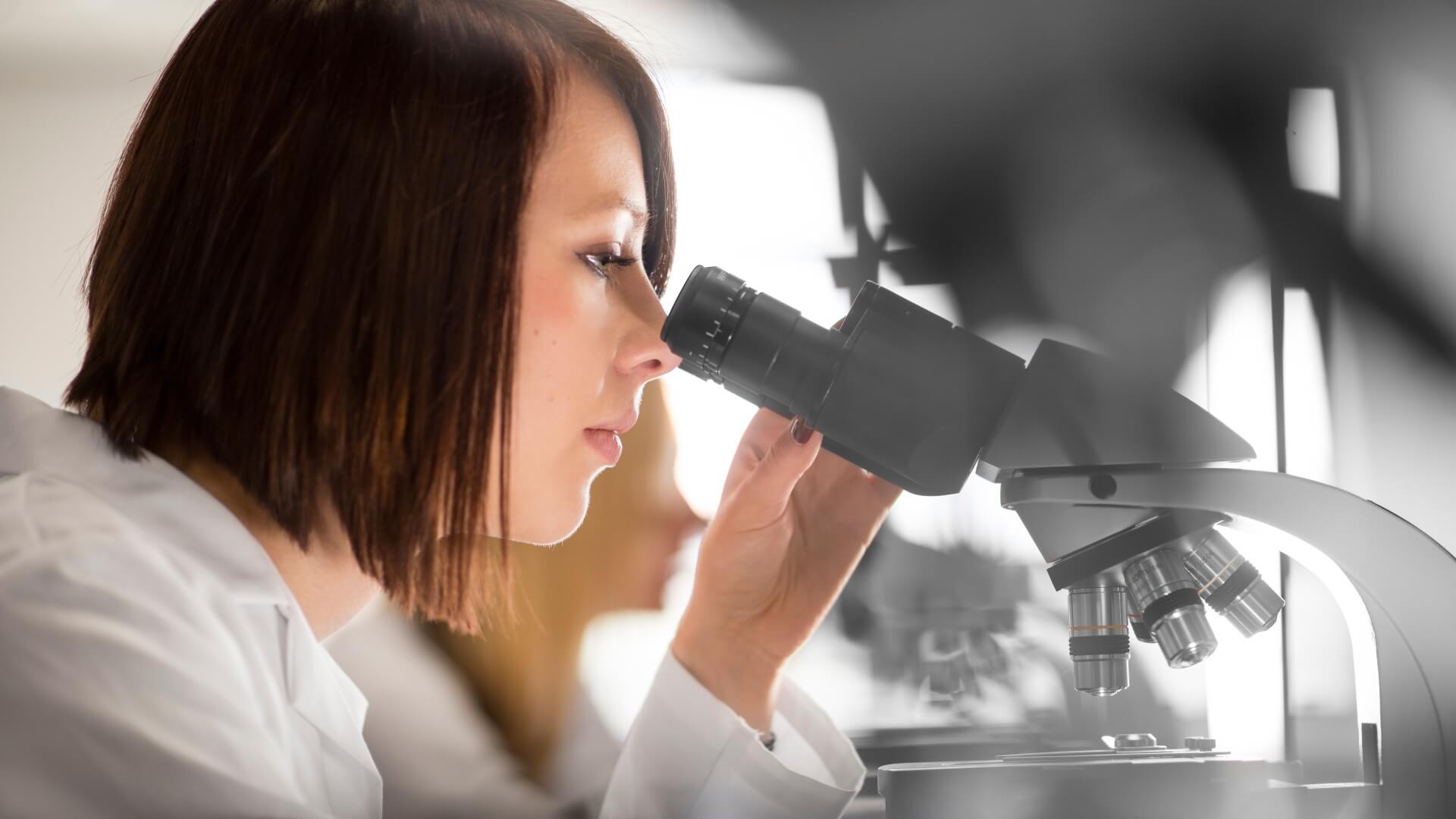
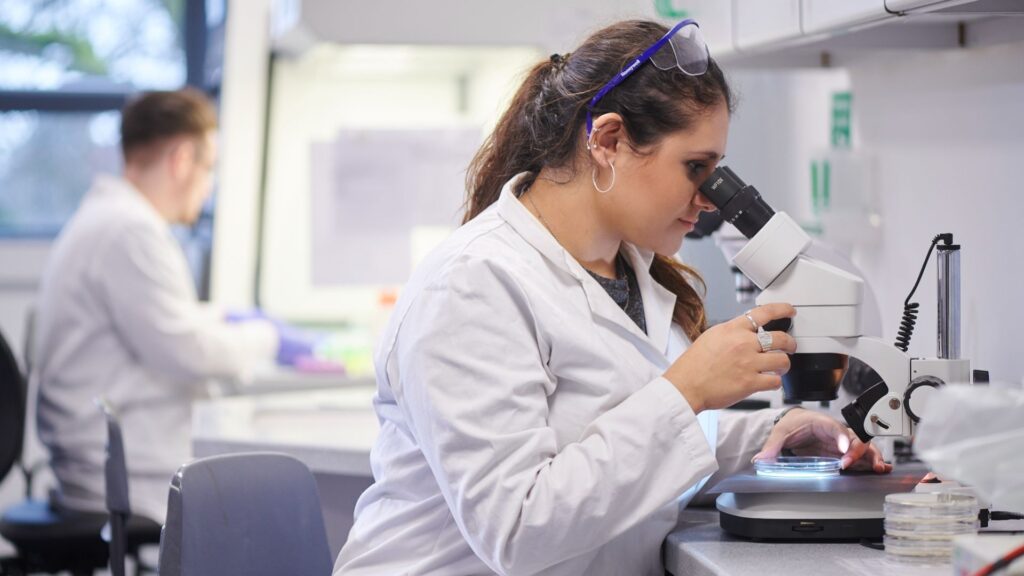
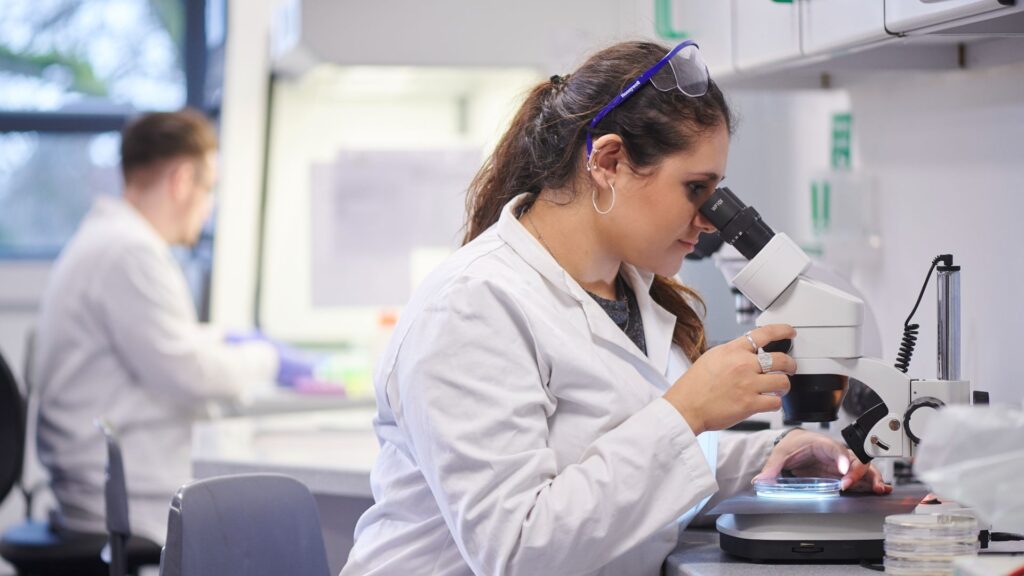
The majority of the department’s teaching takes place in our well-equipped biosciences building which features excellent ICT facilities, a range of laboratories (which are available to be booked by our students) and prep rooms.
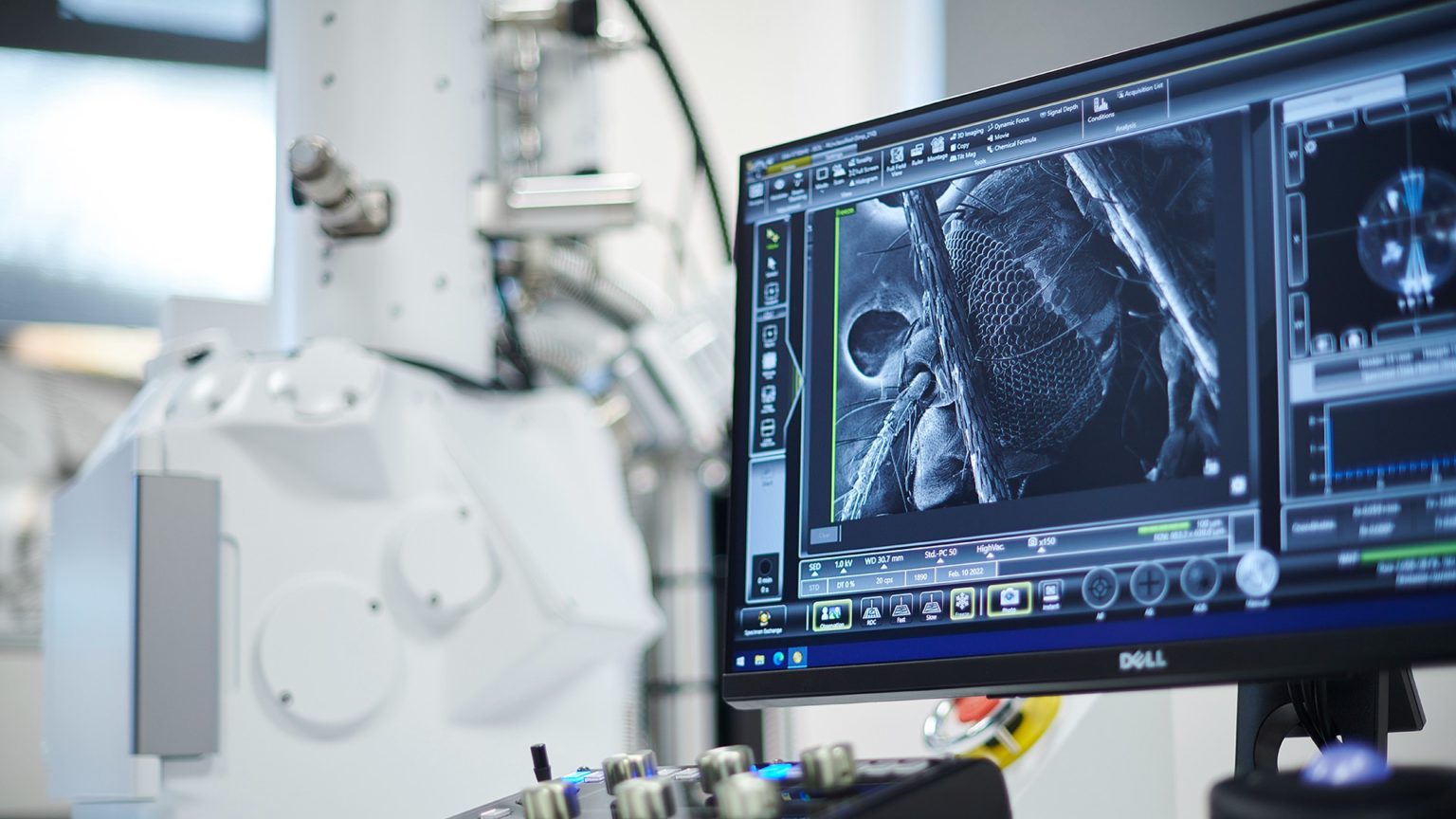
Students also have access to equipment such as Scanning Electron Microscopes, polymerase chain reaction (PCR) machines (for use in DNA analysis), and climate-controlled insectaries.
Use our virtual tour to explore the biosciences building:

Fieldwork

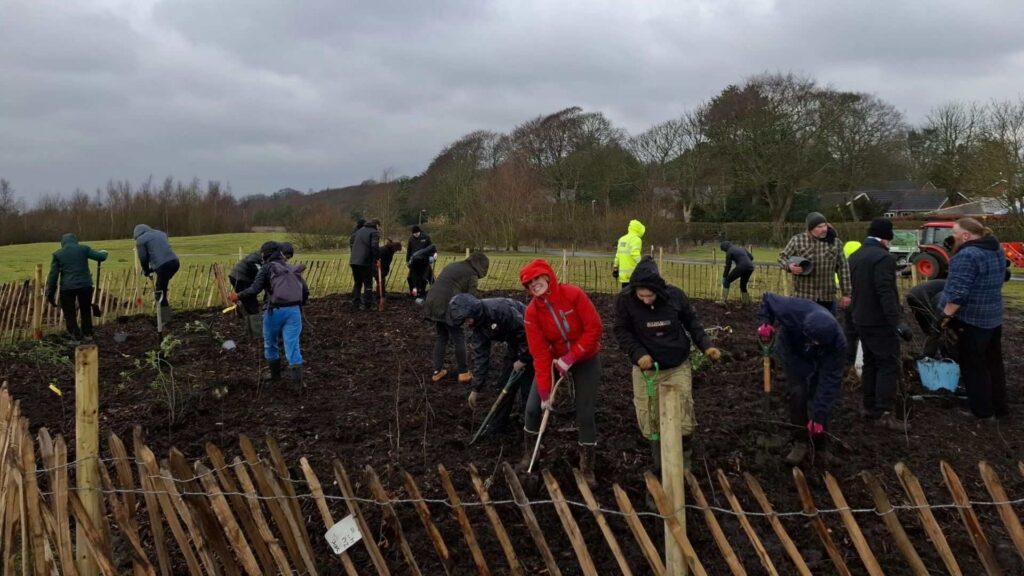
The local area has a wide range of terrestrial and aquatic habitats for fieldwork. Several modules have residential field courses, including a trip to Cyprus in the first year of our undergraduate courses (the cost of this trip and all compulsory field trips are included in fees).
You will be taught within a short travelling distance of impressive field sites such as one of the finest saltmarsh and dune systems in Europe, restored mires of international importance, hay meadows and limestone woodlands. Near to the University is a farm sympathetically managed for biodiversity and a mixed woodland.
Fieldwork is an engaging and important aspect of all our programmes, giving the degrees real-world value and developing teamwork skills. Each excursion provides the opportunity to learn and apply a range of fieldwork techniques and methodologies in a field environment.
Things you need to know
News
The splice of life
Gregor Mendel, a monk with a passion for science, described his pea plants experiments and his observations on characteristic inheritance in 1866, he was largely ignored. 35 years later, his work is rediscovered, ushering in what has been termed “the century of genetics”
Read more
Life Thru a Lens
Researcher and lecturer in Ecology Dr Thom Dallimore is responsible for Fluorescence and Scanning Electron Microscopy within the department. He’s showing us around the Scanning Electron Microscope (SEM) facilities within the Department of Biology.
Read more
Edge Hill academics shortlisted for supporting PhD students
Two Edge Hill University academics have been shortlisted for their support as supervisors with PhD students.
Read more
Volunteering helps green-fingered Edge Hill graduate pursue career in conservation
Volunteering was crucial to honing skills allowing an Edge Hill University graduate to pursue his dream career in conservation.
Read more
Scrub never sleeps
The Sefton Coast Landscape Partnership said in a recent post, ‘Scrub never sleeps’. Never have truer words been spoken! Until I started my volunteer placement, I did not appreciate how much time over the winter months (December to February inclusive) is spent by the reserve staff and the volunteers removing scrub on both the open dune habitat and within the pine plantation coupes.
Read more
Quality of Edge Hill’s research recognised in latest evidence
Edge Hill University has had more than half of its research classed as ‘world-leading’ or ‘internationally excellent’ in the Research Excellence Framework (REF) 2021.
Read more
Major boost for biosciences research as Edge Hill opens state of the art JEOL Imaging Centre
Edge Hill University has opened a state-of-the-art facility which will allow scientists to take detailed images at 100 times the level of a normal microscope.
Read more
Ferns: the houseplants that reveal how tropical rainforests are responding to climate change
In a new article for The Conversation Lecturer in Biology Sven Batke reveals what the humble fern can tell us about climate change.
Read more
Ferns: the houseplants that reveal how tropical rainforests are responding to climate change
In a new article for The Conversation Lecturer in Biology Sven Batke reveals what the humble fern can tell us about climate change.
Read more
Get in touch
Find us:
Department of Biology
Edge Hill University
St Helens Road
Ormskirk
Lancashire
L39 4QP
United Kingdom