Biomedical Science BSc (Hons)
UCAS code: B910
Cut to the heart of health and disease. Learn to understand the biological and medical principles of life, how diseases develop and are diagnosed, as we ask: how can we create new therapies? All on our biomedical science degree.
Overview
| Course length: | 3 years full-time 6 years part-time |
|---|---|
| Start dates: | September 2026 September 2027 |
| Location: | Edge Hill University |
| Example offers: | BBC-BBB (A Level) or DMM (BTEC)112-120 UCAS tariff points View full entry criteria |
| Subject(s): | Biology and Biosciences |
| Faculty: | Arts and Sciences |
| Department: | Biology |
How do our cells and organs tell us when something’s wrong? And how can we understand and eliminate the illness at its source? Our biomedical science course covers a broad range of disciplines, including anatomy, biochemistry, pathology and immunology. With good molecular and macroscopic knowledge of the human body, you’ll be able to research new therapies or work in medical technology.
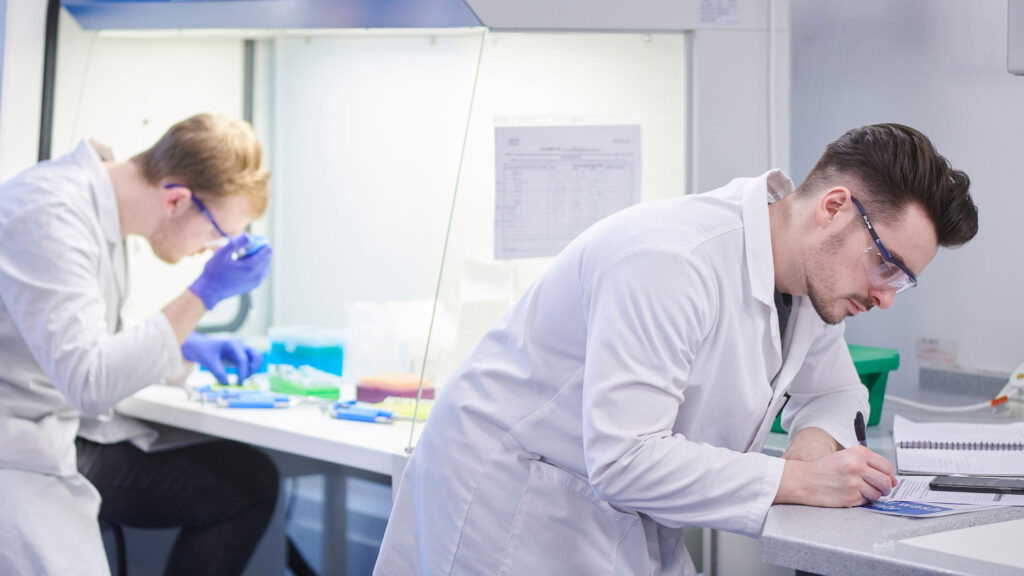
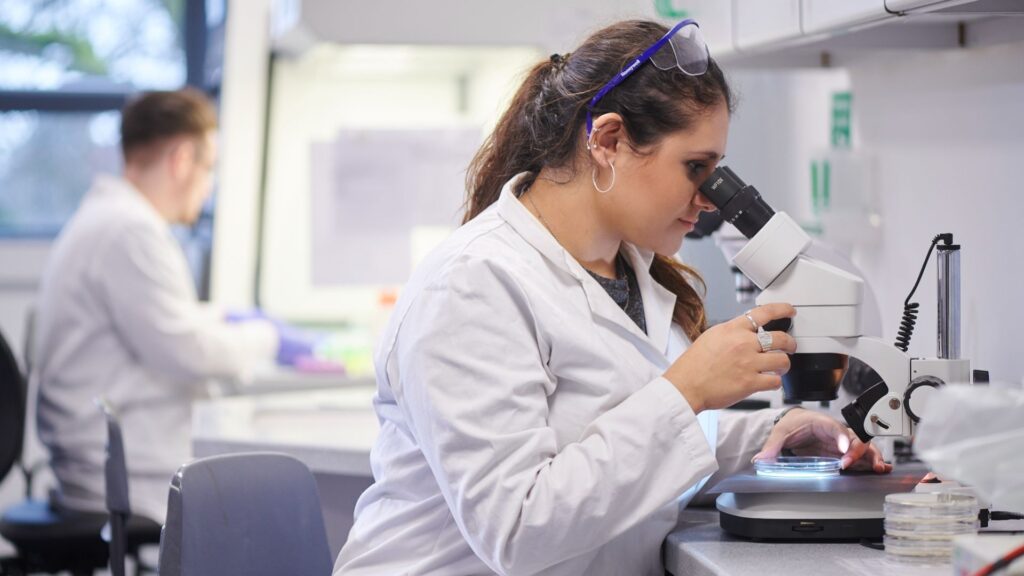
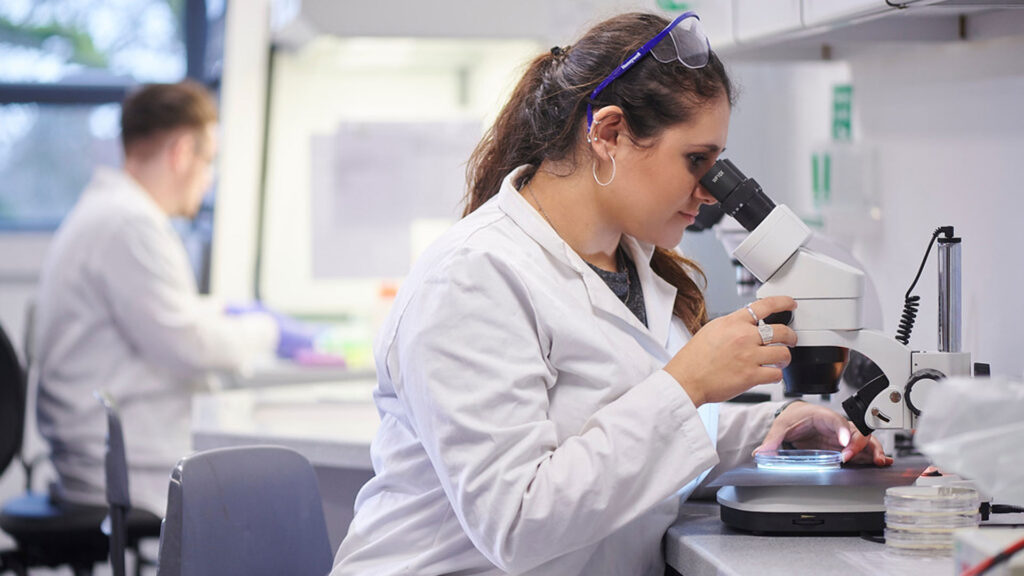
From your very first week at Edge Hill, you’ll be putting theory into practice and your time in the laboratory will help you develop an expansive range of professional skills. During lab work, you’ll learn key research techniques that will be essential to independent study in your final year.
Our small class sizes mean you’ll feel confident speaking up, asking questions and getting the support you need to thrive. And with employer-informed practical training sessions built into your timetable from day one, you’ll be developing real-world skills that match exactly what industries are looking for. We provide learning that feels relevant, personal, and focused on your future – and as a result, we’re in the top 10 in the UK for Student Satisfaction (Complete University Guide 2027 – Biomedical Sciences).
Everything you learn on this course will help you take your first steps after graduation. Especially if you’re looking for work in a hospital laboratory, biotechnology, or the pharmaceutical industry.
Course features
-
International students can apply
-
Sandwich year option available
What you'll study
Discover the fundamentals of biomedical science, from genetics, cell biology to anatomy. A comprehensive laboratory training week will introduce you to the hands-on skills you will need to thrive during your degree.
In your second year, you’ll dive into specialist biomedical science topics, from biochemistry and metabolism to advanced human genetics and immunology. You’ll take on an independent mini‑project, sharpening the lab techniques that set you apart. At the end of the year, you can choose to embark on a 12‑month work placement, gaining real‑world experience before your final year.
In your final year, you’ll develop deep expertise in clinical subjects, including pathology, epidemiology and clinical biochemistry. You’ll complete a major independent research project using our laboratories, exploring a topic that inspires you. Throughout the process, you’ll be supported by our expert academic advisers.
How you'll study
Modules are assessed by a mixture of coursework and examinations. A wide range of coursework is employed, from practical write-ups and essays to laboratory log books.
Some Year 2 and 3 modules teach key clinical subjects central to a biomedical science programme. Therefore, they are classed as ‘pass‑all‑elements’, requiring students to pass every component.
How you'll be assessed
Modules are assessed by a mixture of coursework and examinations. A wide range of coursework is employed, from practical write-ups and essays to laboratory log books and even a biochemistry animation.
Who will be teaching you
Edge Hill University has over 30 years’ experience in delivering Biosciences degrees and has a wealth of experienced tutors, technical staff and field and laboratory equipment to support the study of biomedical science. The Biology department is friendly and approachable and of a size that enables us to know our students personally.
You will be taught by research-active experts in biomedical sciences who take pride in the quality of their teaching and academic studies. The programme team are up-to-date with current developments in their areas of interest, with expertise in areas such as cystic fibrosis, placental biology, disease vector biology and the genetic basis of skin conditions. Staff frequently share this knowledge by directly engaging students in their research.
An extensive network of relationships has been established with relevant biomedical organisations and other universities in the UK and overseas, ensuring a rich, diverse and rewarding student experience. Visiting speakers assist in the delivery of the programme, often presenting unique or novel aspects of subjects.
Where your course includes optional modules, these are to provide an element of choice within the course curriculum. The availability of optional modules may vary from year to year and will be subject to minimum student numbers being achieved. This means that the availability of specific optional modules cannot be guaranteed. Optional module selection may also be affected by timetabling requirements. Some restrictions on optional module choice or combinations of optional modules may apply.
Entry criteria
Typical offer 112-120 UCAS tariff points, preferably to include Biology or a related subject, such as Chemistry or Applied Science plus GCSE Mathematics and GCSE English Language at Grade C or Grade 4 or above (or equivalent).
Example offers
| Qualification | Requirement |
|---|---|
| A Level | BBC-BBB. |
| UCAS Tariff points | 112-120 points. |
| BTEC Extended Diploma (or combination of BTEC QCF qualifications) | Distinction, Merit, Merit (DMM). |
| T Level | Overall grade of Merit. |
| International Baccalaureate (IB) | We are happy to accept IB qualifications which achieve the required number of UCAS Tariff points. Subject-specific requirements at Higher Level (HL) Grade 5 may apply. |
| Access to Higher Education Diploma | 45 credits at Level 3, for example 15 credits at Distinction and 30 credits at Merit or 24 credits at Distinction and 21 credits at Merit. The required total can be attained from various credit combinations. |
Please note, the above examples may differ from actual offers made. A combination of A Level and BTEC awards may also be accepted.
If you have a minimum of two A Levels (or equivalent), there is no maximum number of qualifications that we will accept UCAS points from. This includes additional qualifications such as Extended Project Qualification (EPQ), AS Levels that haven't been continued to A Level, and General Studies AS or A Level awards.
English language requirements
International students require IELTS 6.0, with a score no lower than 5.5 in each individual component, or an equivalent English language qualification.
Fair Entry Criteria
Our new Fair Entry Criteria is a Contextual Admissions Policy that takes an applicant’s personal and educational background into account. This policy will allow eligible applicants to receive up to a two-grade reduction in their entry requirements for this course. Find out more and see if you qualify.
How to apply
Apply full-time
Read our guide to applying through UCAS to find out more about the application process.
International
Please see our international student pages for further information about how to apply as a prospective international student.
Should you accept an offer of a place to study with us and formally enrol as a student, you will be subject to the provisions of the regulations, rules, codes, conditions and policies which apply to our students. These are available at www.edgehill.ac.uk/studentterms.
At Edge Hill, we believe Clearing is a new beginning - a chance to choose a university that believes in your ambition, invests in your future and supports you every step of the way. Our Clearing team is here to help you take the next step.
Apply through ClearingFind out about Clearing
Facilities
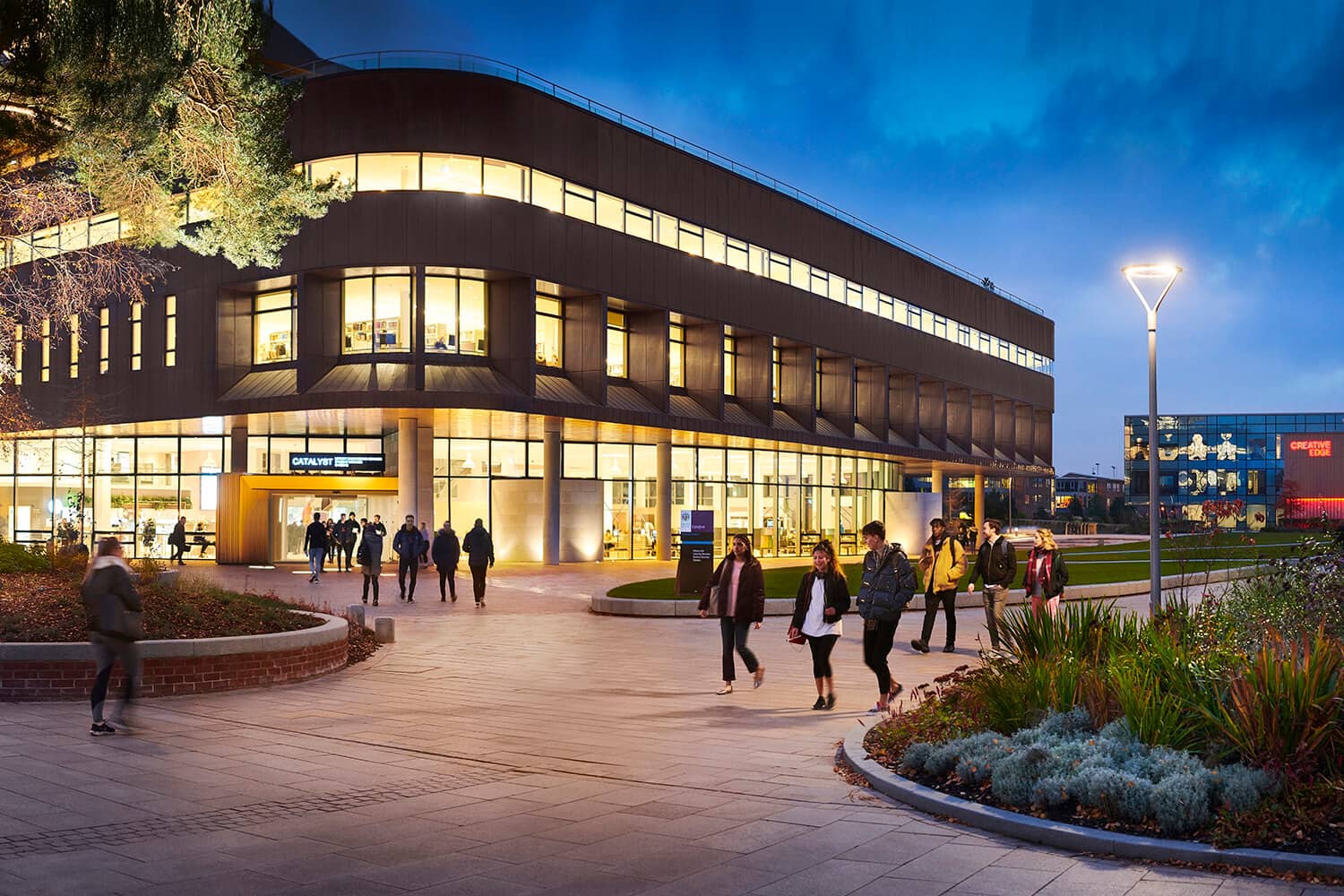
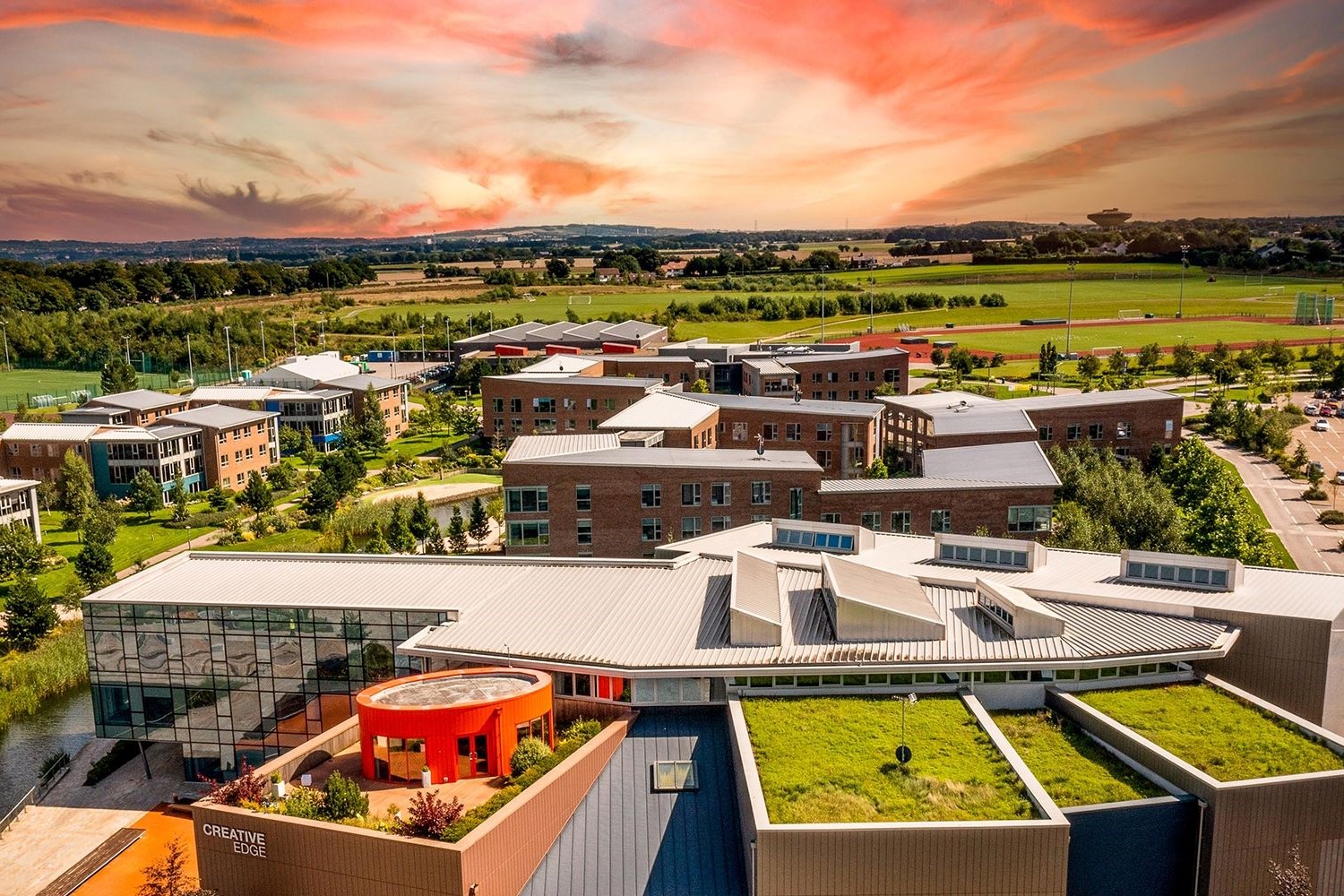
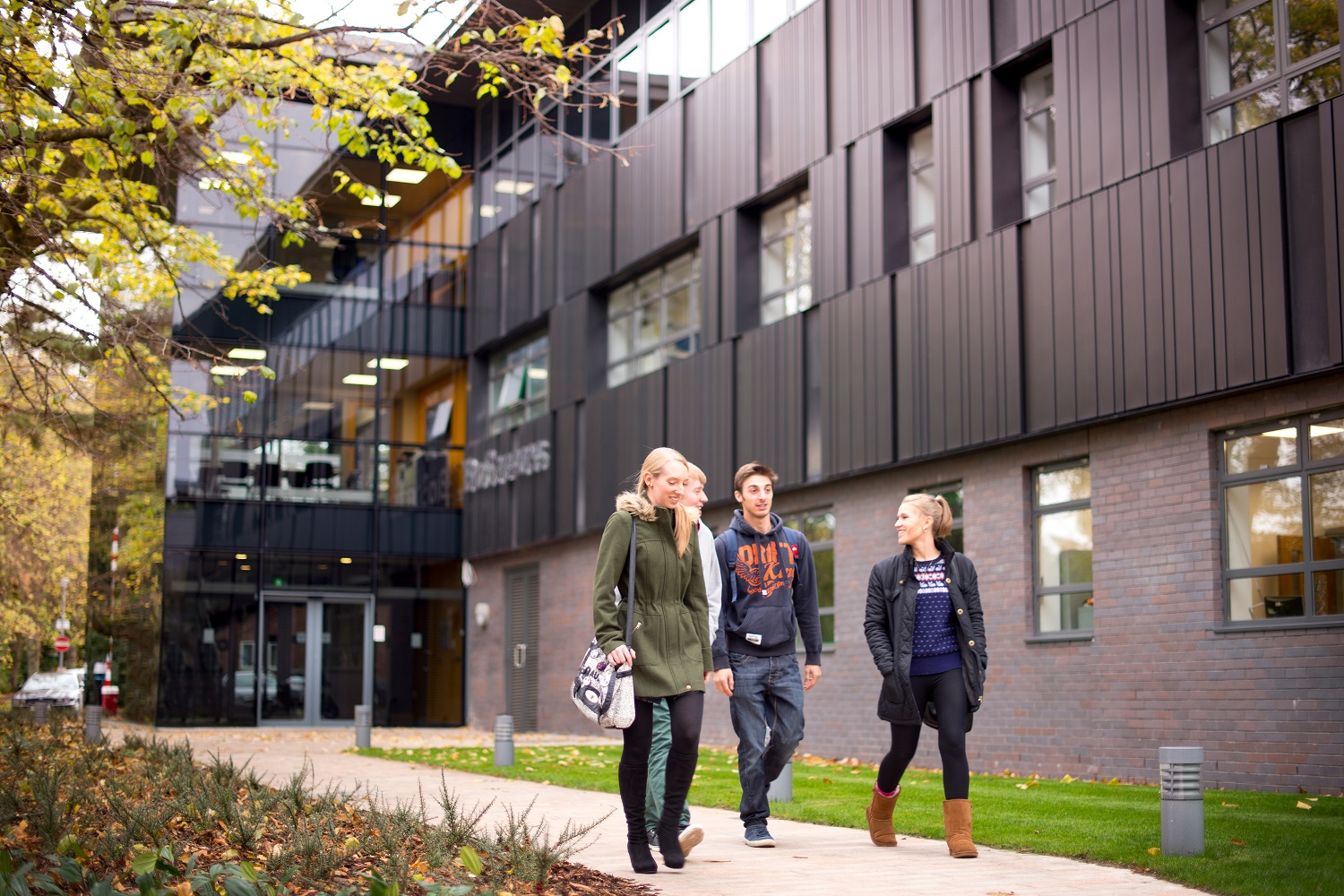 Our BioSciences building incorporates impressive, modern laboratories, offering exciting and highly relevant practical experience in some of the best equipped facilities in the country. Resources include fluorescence and scanning electron microscopes, DNA extraction and analysis equipment, and climate controlled insectaries.
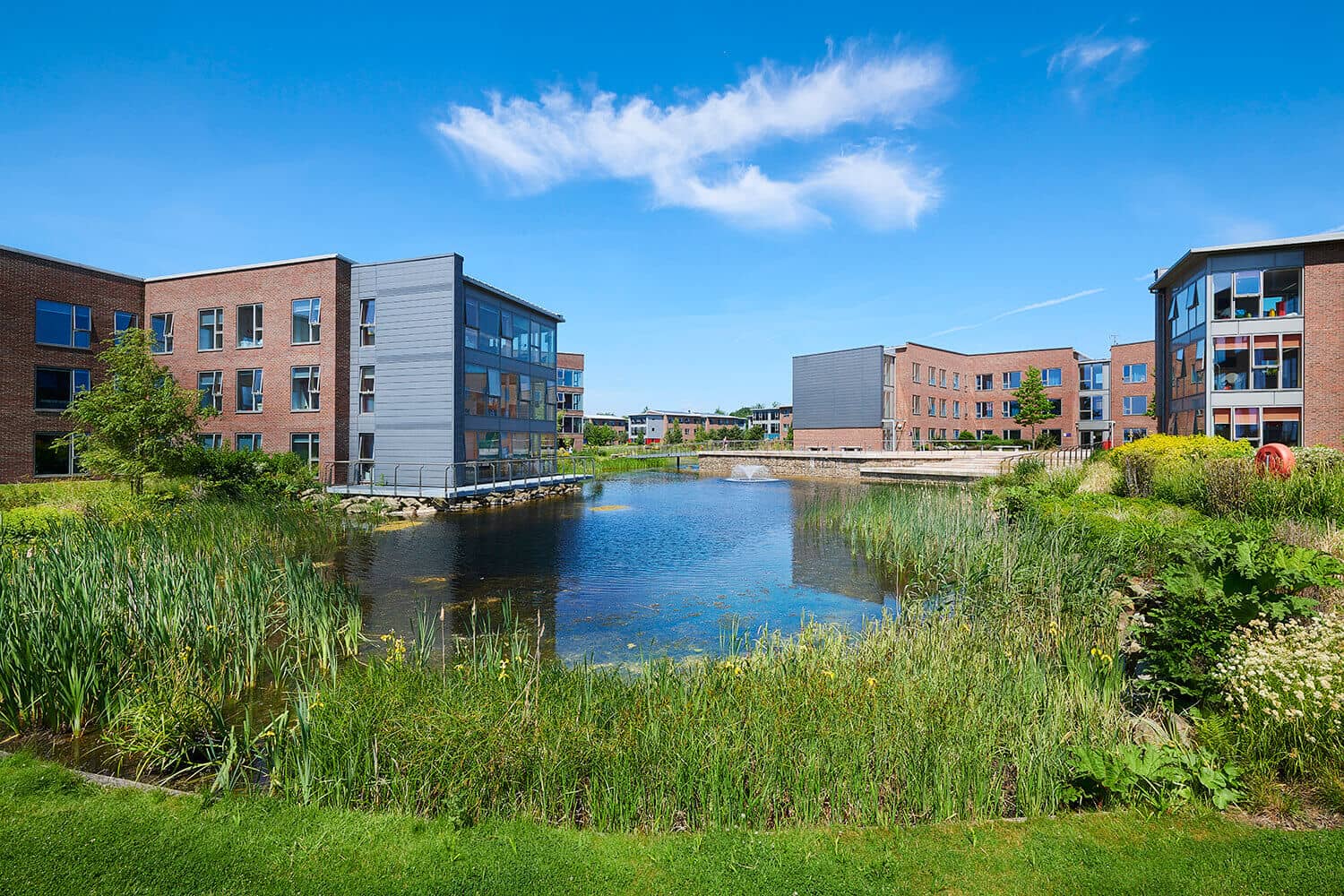
You will benefit from our brand-new £17.4m Life Sciences building, featuring dedicated student research labs for learning advanced cell culture and histology techniques.
Where you'll study
Finance
Tuition fees
UK Full-Time
£9,790
a year
UK Part-Time
£81.50 per credit
for 360 credits
International
£14,500
a year
EU/EEA and Swiss students who have settled or pre-settled status under the EU Settlement Scheme, as well as Irish nationals, may be eligible for the UK tuition fee rate.
Financial support
Subject to eligibility, UK students joining this course can apply for a Tuition Fee Loan from the Government to cover the full cost of tuition fees. UK students enrolling on the course may also be eligible to apply for additional funding to help with living costs.
Scholarships
We offer a range of scholarships, which celebrate the determination, commitment and achievement of our students. Many of our scholarships are awarded automatically. There are some however, where you will need to be involved in an application or nomination process. To find out more about our scholarships and check your eligibility, please visit our dedicated scholarships pages.
Money Matters
Please view the relevant Money Matters guide for comprehensive information about the financial support available to eligible UK students.
EU/EEA and Swiss students who have settled or pre-settled status under the EU Settlement Scheme may be eligible to apply for financial support. Irish nationals can ordinarily apply to Student Universal Support Ireland (SUSI). If you are an EU student who does not have settled or pre-settled status, or are an international student from a non-EU country, please see our international student finance pages.
Your future career
Our graduates take on industry and academic roles such as, medical laboratory assistant, and clinical trials research practitioner. They also work for the likes of Perfectus Biomed and Eurofins Forensic Services, as well as with the NHS.
We have also seen our graduates working in industrial, educational and academic research. Some have taken on roles in diagnostics and entry level teaching. Others are now working in medical writing, support and advisory roles, or even scientific training programmes within the NHS.
This biomedical science course provides you with high-standard lab skills, including cell culture training. These skills will help strengthen your applications for roles in research, education, and diagnostics, in industrial and academic workplaces.
You might also consider pursuing postgraduate study after completing this course. This is something many of our graduates have done. You can find them on Masters of Research (MRes) and PhD courses in biomedical sciences and other similar subjects.
Course changes
Every effort has been made to ensure the accuracy of this information, however our courses are subject to ongoing review and development. Changing circumstances may necessitate alteration to, or the cancellation of, courses.
Changes may be necessary to comply with the requirements of professional bodies, revisions to subject benchmarks statements, to keep courses updated and contemporary, or as a result of student feedback. We reserve the right to make variations if we consider such action to be necessary or in the best interests of students.