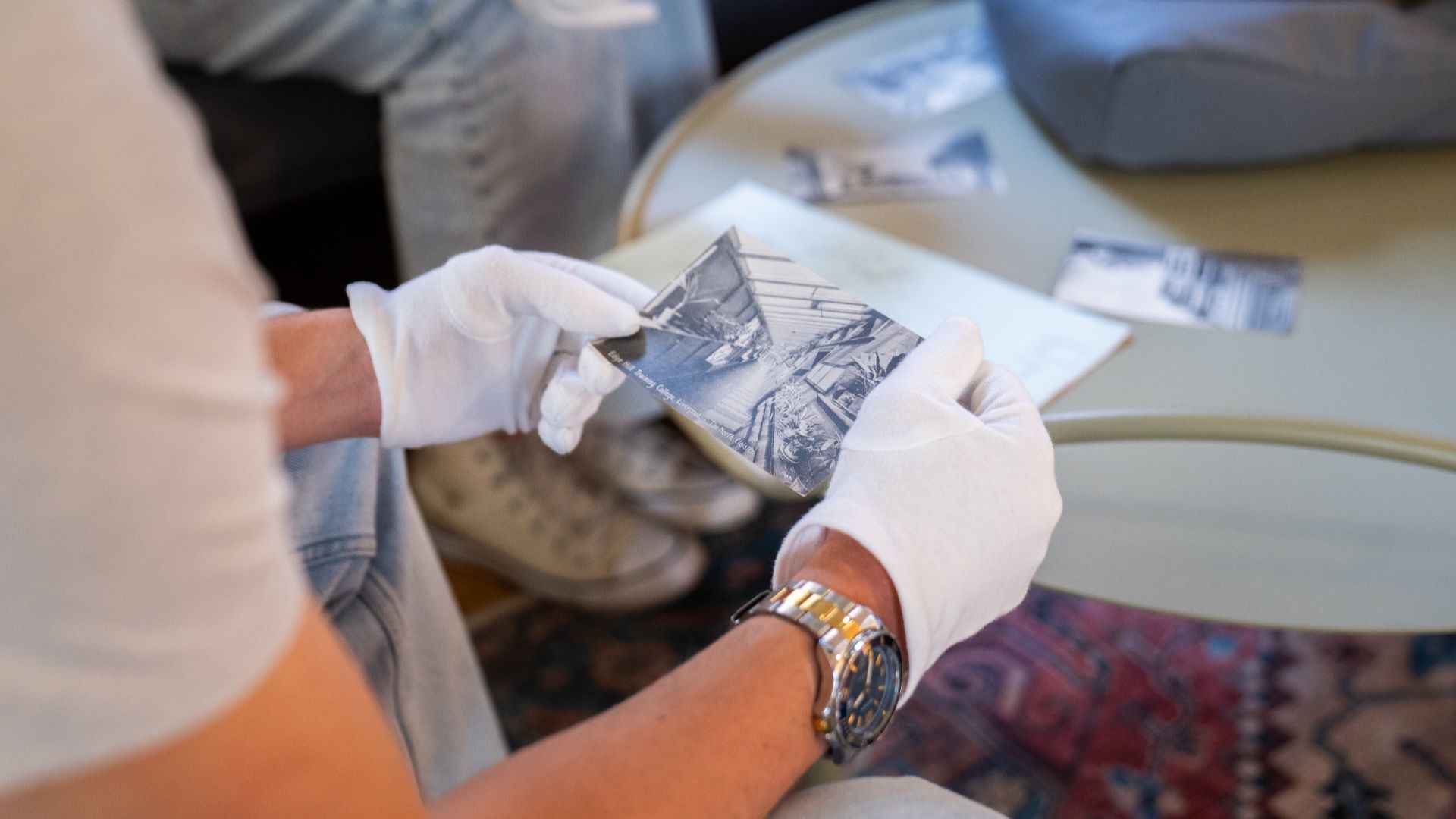
Our graduates go on to build diverse and rewarding careers that reflect the ongoing importance of history and heritage in today’s world. From roles in cultural institutions to careers in business, education, law and technology, employers value History graduates for their strong analytical, communication and critical thinking skills.
So why is our History programme so well-placed to set you up for success?
Since its launch in 1976, BA (Hons) History at Edge Hill University has continued to evolve, adapting to a changing world and equipping students for life beyond university. As the course prepares to celebrate its 50th anniversary, it’s the perfect time to explore how this dynamic degree continues to break new ground and make the past meaningful for your future.
Proud past
The rich depth of today’s History programme is rooted in Edge Hill University’s own heritage.
History has been part of our academic fabric since our founding in 1885, but 1976 marked a pivotal moment with the creation of BA (Hons) History. Under the leadership of the subject’s first head, Francis Stacey, and his assistant Walter Edge, the department took a visionary approach, rethinking how history was studied and used, and shaping a degree with a clear sense of purpose and direction.
From the outset, the curriculum challenged convention. When British and European history dominated the discipline, we expanded our focus to the rich histories of Asia and Africa alongside early courses in Women’s Studies and examinations of race, crime and punishment. Radical for its time, this approach offered new ways to understand how the past shapes today’s social, political and cultural landscapes.
Innovation gathered pace in the 1980s and, today, we’re at the forefront of teaching history through digital technologies and training students to become public historians through research-led learning and real-world experience.
Ground-breaking present
Research-led learning
Today, our lecturers follow in the footsteps of their predecessors, continuing what Dr Sarah Fox describes as a long‑standing tradition of research‑led, socially relevant teaching, uncovering hidden histories and re‑examining familiar events.
Professor James Renton’s internationally recognised research into antisemitism and Islamophobia informs a specialist third-year module, while Professor Alyson Brown brings real‑world insight to modules including Histories of Crime, Policing and Punishment alongside her research into the Dartmoor Prison Riot of 1932 which informs the third year module, Gender & Power. Dr Thomas Ellis brings modern history to life through modules including The Global Cold War while Dr Lindy Brady offers critical insights through The Medieval World and Early Modern England. This research‑led approach also extends into innovative digital scholarship: Dr Bob Nicholson’s expertise in cutting‑edge digital research techniques underpins our Digital Detectives module, where students explore how new technologies are transforming our understanding of the past, while Dr Fox’s research into society, culture and lived experience further enriches the curriculum.

Research‑led teaching also creates opportunities that extend beyond the classroom, transforming academic study into real‑world engagement. This was demonstrated when third‑year History students organised a series of international conferences on the origins of the Israel‑Palestine conflict. Based on their studies of this history with Professor James Renton, students liaised with world‑leading scholars in North America, Europe and the Middle East, and chaired all of the events. Videos of the series, which includes a participant in the Madrid Peace Conference of 1991, Rashid Khalidi, are available on the EdgeHist YouTube channel.
Together, our lecturers shape a programme that connects past and present to global affairs and pressing social issues, and ensures your learning remains relevant, challenging and forward-looking.
Real-world experience, real-world connections
But gaining knowledge is only part of the story. Engaging audiences with the past lies at the heart of our academics’ philosophy and is a skill they are keen to develop in you, their students.

As Dr Nicholson explains, it starts with a simple but powerful question: Who is this history for and how do we share it in ways that resonate with diverse audiences?
This question shapes both classroom learning and opportunities beyond the university. Off campus, our historians apply their knowledge and experience through professional practice, public engagement and collaborative partnerships, including major heritage initiatives such as Lincoln Castle Revealed, alongside advisory work for the Civil Service. Their expertise also reaches global audiences through the BBC, Channel 4, Sky History and Al Jazeera with contributions to documentaries including Britain Behind Bars: A Secret History and Births, Marriages and Deaths as well as internationally recognised podcasts such as Killing Victoria. Crucially, these experiences feed directly into your learning, bringing fresh insight and real-world relevance into every module.
“This is where it really gets exciting for students,” explains Dr Nicholson. “We can take that expertise and turn it into real opportunities.”
Trailblazing futures
Trailblazing futures start with opportunity, and the right experience. Through History in the Making, you benefit first hand from your lecturers’ professional experience, networks and expertise in an employability‑centred module designed to help you become career‑ready through project‑ and placement‑based learning.
This approach is reflected in the practical, creative projects that you can undertake as part of your second year. History in the Making draws on Dr Nicholson’s experience working on BBC podcast Killing Victoria, showing you how to pitch, script and produce your own podcasts and documentary content. With academic guidance, you also have the opportunity to create engaging and accessible historical content for public audiences through platforms such as YouTube and TikTok. You further benefit from talks by visiting industry experts including David Musgrove, content director of History Extra, National Trust curators and the Finds Liaison Officer for the Portable Antiquities Scheme.
Alongside this, our history staff support you to arrange placements where you can gain hands-on experience with organisations ranging from local archives and schools to national institutions such as the National Trust, the Imperial War Museum and the House of Commons. Recent placements have included museum work at Tullie House, St George’s Hall and the Museum of Liverpool, archive work at both Sefton and Lancashire Archives, digital content design for schools and heritage organisations including Dunham Massey. These experiences empower you to pursue your interests, build networks, and communicate history in ways that are engaging, responsible and impactful, skills that will be relied upon far beyond university.
Looking ahead
The Edge Hill experience doesn’t end at graduation. It provides the perfect foundation for the careers our History graduates go on to build.
Employability is embedded throughout the degree, encouraging you to think about how historical knowledge can be applied beyond university, whether that’s through public engagement, professional practice or further study.
For BA (Hons) History graduate Sophie Bradburn, now a Learning and Engagement Facilitator at Imperial War Museum North, the degree opened unexpected doors.
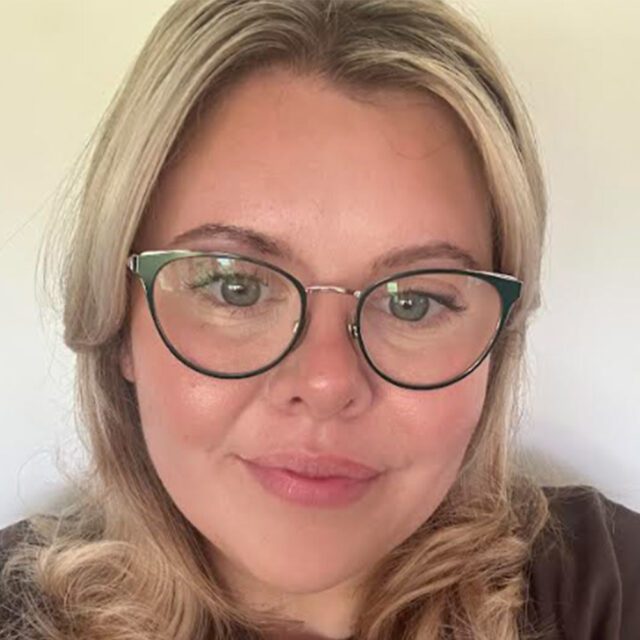
“I did not just learn the ‘facts’ of history,” she explains. “I acquired the skills needed to become an effective historian. Edge Hill supported me in understanding how these skills could be transferred to various job roles and opened my mind to career opportunities that I did not even know existed!”
These experiences are echoed across the course, where learning is applied through ambitious projects and placements. Graduate, Megan, used her History in the Making project to design exhibition materials for Dunham Massey while Jamie reenacted the Oscar Wilde trials. Both then progressed onto further study. More recently, after completing placements at both Lancashire and Edge Hill Archives, one of our current third-year students has been offered a place on a highly competitive MA in Archives and Record Management. Together, these examples demonstrate how placement and project-based learning can open clear pathways into competitive postgraduate study.
As we celebrate 50 years of History at Edge Hill University, the degree continues a journey rooted in its past and firmly focused on what comes next.
From research-led teaching and widening perspectives to public engagement and professional skills, BA (Hons) History connects what happened then with what matters now, preparing you not just to study history, but to question it, share it and use it to shape your future.
Find out more about BA (Hons) History at Edge Hill University and discover how you can make history your future.
May 11, 2026