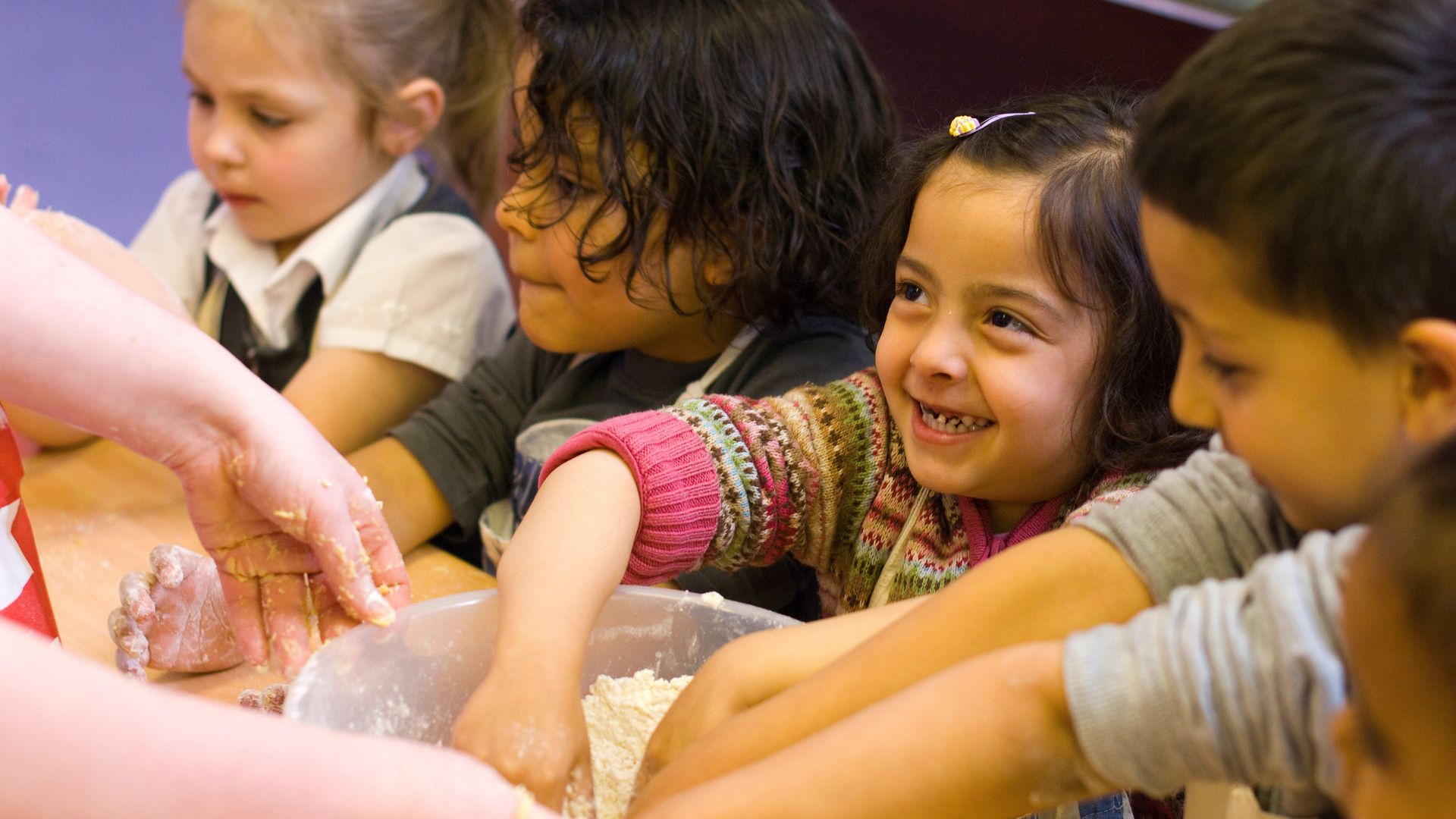
Read on to find a range of research studies done on children and their families, from the effects of dance movement therapy on children on the autism spectrum to community enhancement projects in schools.
Children and young people in England often face long waits and significant travel burdens before accessing mental health support, especially in the north west. The e-Arts-for-the-Blues project aims to tackle these barriers by creating an engaging, web-based platform that delivers remote, arts-based group therapy, co-designed with children and therapists.
Mental health challenges, particularly depression, affect thousands of children and young people across England, with children in the North West region among those facing some of the longest waits.
Young people can often be waiting for up to two years before they can access support, and delays are further compounded by the long distances many must travel to attend sessions. This contributes to the emotional and physical fatigue and poses a barrier to timely care.
The NIHR i4i FAST-funded project e-Arts-for-the-Blues aims to address these issues by providing therapists with an engaging, web-based resource designed specifically for remote group therapy with children.
The platform will offer a range of organised digital creative activities including videos, gifs, interactive games, and tools that help children express themselves and build connections.
For example, children can create digital drawings to build relationships, write and share songs to express emotions, or engage with superhero-themed activities to identify personal strengths and problem-solving skills.
Edge Hill University’s development of e-Arts-for-the-Blues builds upon their original Arts for the Blues model which is an evidence based creative psychotherapy approach for depression.
This new platform will be co-designed with input from children and therapists through Public and Patient Involvement groups, ensuring it is both practical and appealing to its young users and their clinicians.
The project will initially be tested with a small group of children and therapists to evaluate its effectiveness before wider trials. Ultimately, e-Arts-for-the-Blues will be unique in the marketplace as the only arts-based tool designed to support remote group therapy for children struggling with mental health conditions.
For this ground-breaking project, the research team is working with Alder Hey Hospital, Health Innovation North West Coast and the University of Salford.
Many children and young people need mental health support, but they do not receive the right support at the right time. We know that creative therapies can support relationships and improve young people’s wellbeing, but they are not fully used yet. We also know that children and young people have a real interest in using creative approaches to support their mental health. Given how important this area is, we want to develop and test the impact of creative therapies on mental health carefully through high quality research.
What will we do?
We will ask 60 children and young people (9-13 years old) from mental health services in three hospitals to join the study. We will separate primary from secondary school students. The first ten in each group will get a random number between 1 and 10. Depending on their number, half will join a creative therapy group, called Arts for the Blues, that uses drawing, moving, creative writing, drama and music-making. They will also continue to have usual mental health support. The other half will receive usual mental health support and a box of art materials. This process will be repeated until all 60 children and young people are part of one of the two options.
All children and young people will complete questionnaires three times during the study. We will ask them if they understood and liked the questionnaires they completed. We will also ask those who joined the creative therapy groups to tell us which creative activities they liked. We will check how easy it was for the groups to start, what aspects of the study worked well, how many sessions children and young people attended, whether therapists supported the groups as agreed and whether there were difficult moments that needed attention. We will also work with children and young people to help us plan these steps.
Did children and young people offer advice?
When we were preparing for this study: (i) we met with youth groups from two hospitals and parents/carers from a charity and (ii) we sent a questionnaire to children and young people, parents/carers and therapists asking them about their preferred type of therapy and whether they would welcome creative therapy. These groups will be our lived-experience experts.
What will happen to the findings?
We will share our findings through video clips on youth-friendly sites like TikTok and Instagram, as well as through events, conferences and academic journals. If this study is successful, we will do a larger study to find out if this creative therapy can be offered more widely, so a greater number of children and young people can benefit.
Our practitioners
Mersey Care NHS Foundation Trust
Manchester University NHS Foundation Trust
Community enhancement project in schools.
Collaborating institutions: EHU, Royal Shakespeare Company, The Blackpool Grand, Hope University.
Co-researchers: Prof Helen Newall, Karen Jaundrill-Scott.
Community reminiscence project.
Playscript, schools consortium productions, Chester Cathedral, October 2015.
Book & lyrics by Prof Helen Newall. Music: Matt Baker.
The study focused on the outcomes of arts therapies as perceived by children.
In this study by PhD student Zoe Moula, drama, dance, music and arts psychotherapists offered support to 64 children with emotional or behavioural issues across a number of mainstream schools.
Research team: Zoe Moula, Prof Vicky Karkou, Dr Joanne Powell.
Collaborating institutions: EHU and mainstream schools in Liverpool and Ellesmere Port
Publication links:
Moula. Z., Karkou, V., Powell, J. (2019) A pilot cross-over randomised controlled trial of child-focused process and outcome evaluation of arts therapies at primary mainstream schools: study protocol. Arts & Health p1-16 https://doi.org/10.1080/17533015.2019.1703198. https://www.tandfonline.com/doi/abs/10.1080/17533015.2019.1703198
Moula, M., Aithal, S., Karkou, V., Powell, J. (2020) A systematic review of child-focused outcomes and assessments of arts therapies delivered in primary mainstream schools. Children and Both Services Review, Vol 112. https://www.sciencedirect.com/science/article/pii/S0190740919313040?via%3Dihub
The study explores the effects of dance movement on children on the autism spectrum.
This mixed-methods doctoral research explored the contribution of dance movement psychotherapy towards the wellbeing of children on the autism spectrum and their caregivers. This research focused on using dance or creative movements along with play as a therapeutic medium to support children on the autism spectrum and their caregivers, based on the evidence of a systematic review and a preliminary study, undertaken in India.
Publication links:
- Aithal.S., Moula.Z., Karkou.V., Karaminis.T, Makris.S (under review, 2020). A systematic review on the contribution of dance movement psychotherapy towards the wellbeing of children on the autism spectrum. Submitted for publication in the Review Journal of Autism and Developmental Disorders. Protocol published in PROSPERO (2018) CRD42018087912 Available from: http://www.crd.york.ac.uk/PROSPERO/display_record.php?ID=CRD42018087912
- Aithal.S., Karkou. V., Gnanavel. K. (under review, 2020). Resilience Enhancement in Caregivers of Children with an Autism Spectrum Disorder through Dance Movement Psychotherapy. Submitted for publication.
- Aithal.S., Gnanavel.K., Karkou.V., Pushpavathi.M. (2019). Backing the backbones – A feasibility study on the effectiveness of dance movement psychotherapy on parenting stress in caregivers of children with Autism Spectrum Disorders. Arts in Psychotherapy, 64,69-76. https://www.sciencedirect.com/science/article/abs/pii/S0197455618300832?via%3Dihub
- Aithal.S., Karkou.V., Powell. J., Makris.S., Karaminis.T. (invited book chapter, 2020). The Eternal Dance of Windmills- – Development of a Dance Movement Psychotherapy Intervention Protocol for the Caregivers of Children with an ASD. Submitted for publication as a chapter in the book by European Consortium for Arts Therapies Education on the theme Imagining Windmills: trust, truth and the unknown in the arts therapies.
- Aithal.S., Powell. J., Karkou.V., Karaminis.T., Makris.S. (abstract accepted, article in preparation, 2020) A Dance Movement Psychotherapy Intervention for the Wellbeing of Children with Autism Spectrum Disorders: A Pilot Intervention Study. Submitted for publication in Frontiers in Psychology
- Aithal.S., Powell. J., Karkou.V., Karaminis.T., Makris.S. (in preparation, 2020). The Unknown Steerer of the Windmill: The Role of Dance Movement Psychotherapy for the Caregivers of Children with ASD.
- Aithal. S, (2019). “Trapped in the Labyrinth- Movement Response and Critical Reflection on Making Special Educational Needs School Setting a Therapeutically Safe Zone” presented at 2nd International Arts in health Care Event, Pratt Institute, New York, USA.
- Aithal. S, (2019). The unknown steerer of the windmill: The role of dance movement psychotherapy with the caregivers of children on the autism spectrum –presented at 15th ECArTE Conference, Madrid, Spain.
- Karkou. V., Aithal. S., Moula. Z. (2018). Dance Movement Therapy (DMT) Across Modalities and Disciplines: Alleviation of Discomfort or Support for Wellness? -Presented at 3rd EADMT conference, Athens, Greece
- Karkou. V., Aithal. S., Moula. Z. (2018). Researching the arts therapies -Presented at HAN International conference, Nijmegen, Netherlands
- Aithal. S, (2018). Seesaw: The game of life -presented at the PhD Symposium: Improving and understanding health, Ormskirk, England.
Supritha’s research study employed artistic inquiry process, which enabled her to have a dialogue with creative data. This led to the exploration of the data from an aesthetic lens and indulge in a creative process for the analysis and interpretation.
Supritha is choreographing a solo 40 minutes dance theatre piece in collaboration with an English poet and Indian musicians. This research-oriented performance uses the techniques and movement vocabulary of Bharatanatyam dance style, which is one of the classical dance forms of India.
Collaborating Institutions: EHU and special schools in Liverpool and Manchester
UK Research team: Supritha Aithal, Prof Vicky Karkou, Dr Joanne Powell, Dr Stergios Makris, Dr Themis Karaminis.
India Research Team: Supritha Aithal, Prof Vicky Karkou, Dr K Gnanavel, M. Pushpavathi
The Learning Machines Lab studies learning in humans and in machines from developmental, neurocognitive, computational and educational perspectives.
The Lab is based at the Department of Psychology at Edge Hill University and focuses on individual differences in learning related to neurodiversity and autism, with an interest in cross-linguistic differences. The ultimate aim is to apply knowledge from the study to education and everyday life.
The current research project for the Lab I predict therefore I am!: The predictive social mind, prior knowledge and autism, involved neuroscience workshops for children aged 6-18, offering them the chance to take part in scientific research in a fun and engaging way, working on creative and additional activities.
Co-researchers from EHU: Dr Themis Karamisis, Dr Louise Lawrence, Ms Rebecca Wallwork
Research done into the subjective experiences of women being treated for postnatal depression using dance movement.
The perinatal period is transitory and transformational for the mother, both emotionally and physically, and the study is interested in the use of body-based therapy to address perinatal mental health problems. The project aims to give a voice to women and to better understand how the intervention may be developed further for this patient group.
Research Team: Emma Perris, Prof Vicky Karkou