Community and civic engagement
The Centre for Social Responsibility works with communities, practitioners and organisations to explore social issues, strengthen participation and create opportunities for people to shape research, policy and practice.
Our approach to civic engagement is collaborative. We are not only interested in undertaking research about communities, but also in creating spaces where different forms of knowledge and experience can be shared. Our activities bring together academics, community organisations, practitioners, policymakers, students and members of the public around issues including inequality, social justice, health and wellbeing, place and belonging.
Collaboration Cafés
CSR’s Collaboration Cafés provide informal spaces for people from different sectors and disciplines to meet, exchange ideas and identify possibilities for future research and action. Recent Cafés have explored racism, violence against women and girls, food insecurity, flooding and watery places. These conversations have helped to develop new relationships and emerging programmes of collaborative work.
The Edge Hill Labyrinth
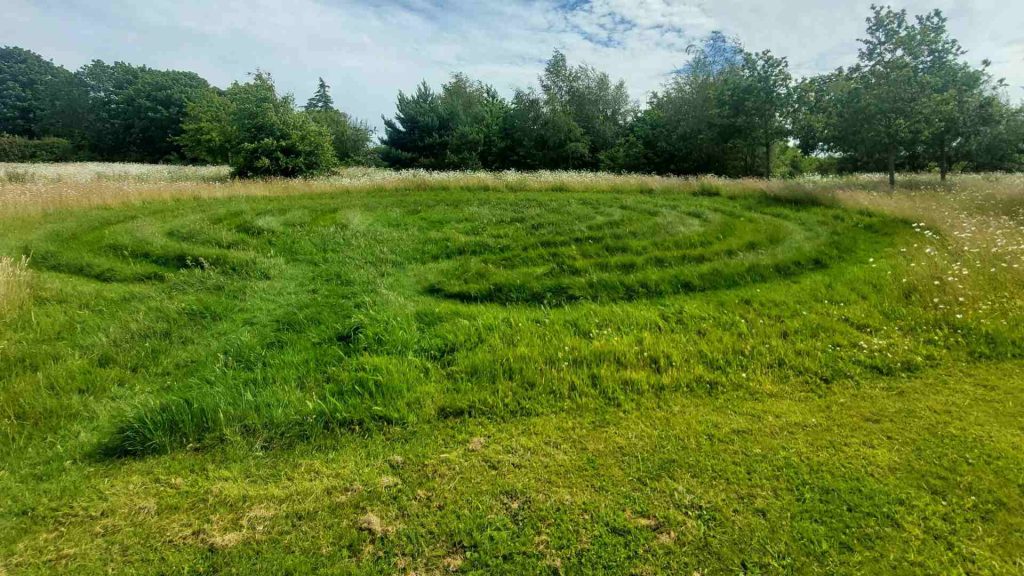
The labyrinth is a distinctive community resource on the Edge Hill campus. Unlike a maze, a labyrinth has a single winding path leading to and from its centre. Walking it offers an opportunity to slow down, reflect and pay attention to our surroundings.
CSR is developing the labyrinth as a space for staff, students and community partners, including guided walks and activities exploring reflection, wellbeing, creativity, place and connection. It also offers possibilities for developing contemplative and creative approaches to research and knowledge exchange.
Connecting people, place and nature
Community engagement also runs through CSR’s work around health, wellbeing and the natural environment. Our partnership activity has included public and practitioner events at RHS Bridgewater and work exploring green social prescribing and access to nature. Our 2025–26 RHS Bridgewater event focused on children, young people and nature and attracted around 110 participants from academic, health, practitioner and community settings. The event forms part of a developing long-term partnership between CSR and RHS Bridgewater.
National Civic Impact Accelerator (NCIA)
Through the National Civic Impact Accelerator (NCIA), CSR has explored how universities can work with communities in more participatory, creative and place-based ways.
In Skelmersdale, we worked with community partners to develop approaches that created opportunities for local people to contribute their knowledge, experiences and ideas. This included creative public engagement in the Concourse shopping centre ahead of the 2024 General Election, where passers-by were invited into conversations about voting, democracy and participation.
Working with theatre-for-social-change organisation Collective Encounters and other partners, we experimented with creative ways of engaging people in everyday public spaces rather than expecting them to attend conventional consultation events. The activity contributed to Edge Hill University becoming the first university to achieve Citizens UK Gold Voter Registration Champion status.
Learning from this work led to the co-produced A Guide to Creative Engagement in Public Spaces, a freely available practical resource sharing methods that other organisations can adapt when engaging communities.
The work reflects CSR’s wider approach to civic engagement: valuing community knowledge, creating accessible spaces for conversation and developing approaches that enable people to participate in discussions about the places and issues that affect them.
Supporting small local enterprises in Skelmersdale: The role of anchor institutions
This participatory research project, resourced by Research England’s QR Strategic Priorities Funding, explored some of the contributions that the small local enterprise sector makes and looked at how it might be enabled and developed, particularly through its links with anchor institutions. It also aimed to understand some of the challenges involved in establishing and maintaining small local enterprises in Skelmersdale.