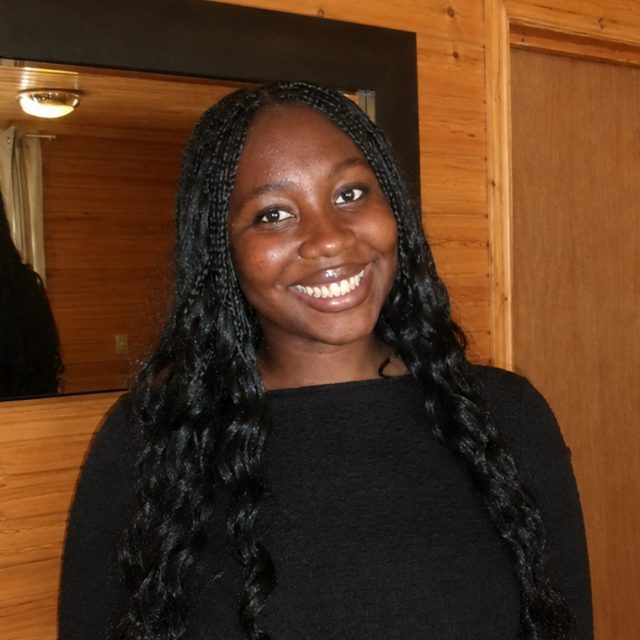
Oluwadamilola Emitola
MbChB Medicine - research internship student
It was an amazing opportunity to gain practical experience in medical research while also developing skills that are directly relevant to medicine.
I wanted to join the Summer Internship Programme to gain experience outside of the usual medical school environment and develop a better understanding of research and how it contributes to clinical practice. I was hoping to improve my research skills, gain more confidence working independently and learn from people with more experience in the field. I also wanted to gain experience that would be useful for my future career in medicine.
My internship focused on contributing to a systematic review investigating posteromedial rotatory instability and complex elbow fracture-dislocations, with the aim of comparing operative and non-operative management and determining which approach produces better patient outcomes.
As part of the project, I learned how to systematically source relevant research articles, screen titles and abstracts, obtain and assess full-text articles, and categorise studies according to specific inclusion and exclusion criteria. I also learned how to use Rayyan, which was completely new to me, and became increasingly confident using the software to screen and organise studies and collaborate with my teammate.
One of the main highlights of the internship was learning more about posteromedial rotatory instability and different types of elbow fractures and fracture-dislocations. I found it particularly interesting learning about the differences between radial and humeral fractures, simple and complex injuries, and posteromedial versus posterolateral instability.
It was also interesting to understand how these different injuries can affect patients, the mechanisms by which they occur, the types of surgical procedures used to manage them, and the differences in recovery and rehabilitation. Learning about the patient populations that are more commonly affected and the wider considerations around treatment, including anaesthesia, medication and recovery time, helped me appreciate the clinical impact of these injuries beyond simply understanding them from a textbook.
One of my biggest challenges was learning how to use Rayyan, as it was completely new to me. I also initially found it challenging to screen research articles effectively, particularly when working through abstracts and full-text papers and trying to identify the information that was relevant to the systematic review.
Another challenge was sourcing the appropriate articles and becoming familiar with the process of identifying which studies met the requirements of the review. At the beginning, it took some time to become confident with what I was looking for. However, once I understood the research protocol and became more familiar with the inclusion and exclusion criteria, the process became much easier and I became more confident and efficient.
The internship helped me understand what to look for when critically reviewing research articles, including identifying relevant patient populations, interventions, comparators and outcomes, and understanding why clear inclusion and exclusion criteria are important in a systematic review. I also gained a much better appreciation of how research evidence is gathered and assessed before it can contribute to clinical decision-making.
My main goal is to become a doctor, potentially pursuing a career in surgery. I also feel that research is extremely important in medicine because healthcare is constantly developing, and doctors need to be able to understand and apply new evidence to improve patient care.
I would like to continue developing my research skills throughout medical school and my future career. In the long term, I would love for research to give me opportunities to collaborate with people and contribute to research projects across different countries and healthcare systems. I feel that this internship has been an important step towards that goal and has significantly increased my confidence, knowledge and interest in medical research.
I would definitely recommend the internship to other students. It was an amazing opportunity to gain practical experience in medical research while also developing skills that are directly relevant to medicine. The team were incredibly supportive, and the mentors were very helpful and always willing to explain things and answer questions. I felt that I could ask for help when I needed it while still being given the opportunity to work independently and develop my confidence.
Overall, the internship helped me understand what research actually involves, improved my confidence in working with research literature and introduced me to new skills and software that I had never used before. I think it would be particularly valuable for students who are interested in research, surgery or simply want to challenge themselves and gain experience outside the usual medical school curriculum.