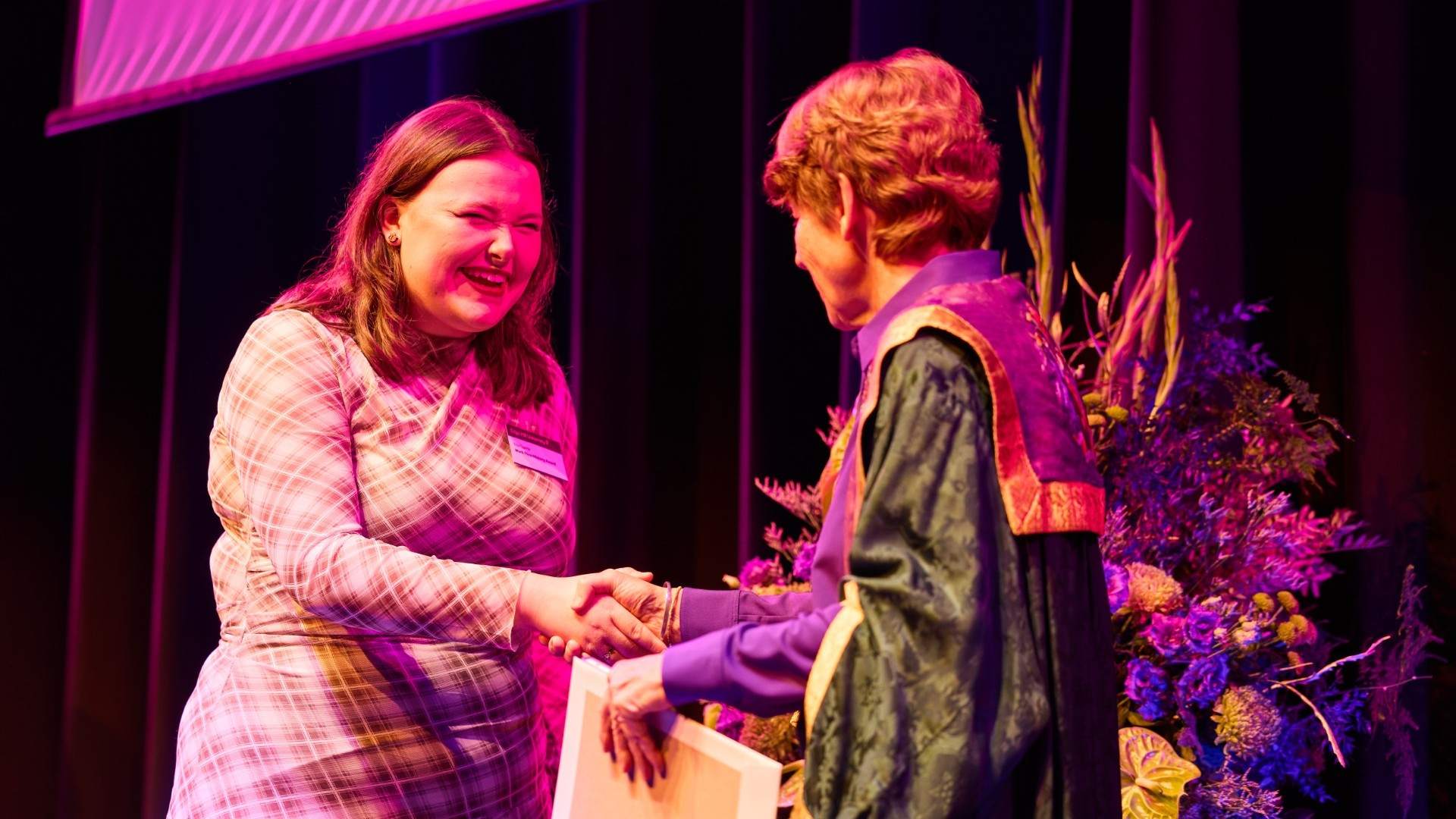
BA (Hons) History student Ella Currie has won the prestigious Mark Flinn Scholarship award for her research into the history of obsessive-compulsive disorder.
The award recognises students who have developed their research skills through projects that use extensive historical evidence and demonstrate their potential for further development as researchers.
Ella, from Burscough, Lancashire, wrote a dissertation exploring the under-researched history of obsessive-compulsive disorder and its continuing influence on modern stigma.
Her research used nineteenth-century asylum records, combined with contemporary perspectives, to improve the understanding of mental health.
Ella explained how receiving the award filled her with an “immense sense of gratitude” and allowed her to gain valuable experience in an archival setting.
Sharing how her interest in the topic arose after living with OCD, which was the catalyst for her desire to find out more through her own research and studies.
Ella said: “As someone who has first-hand experience of OCD and living with it, I have always been curious and intrigued to learn as much as I possible and, through my own personal research outside of academia, I noticed a lack of writing on the history and evidence of such a disorder before the 20th century.”
Explaining how she hopes her research opens more discourse and dialogue around understanding the condition and the stigmas currently linked to it, she added:
“I also feel that this disorder should be more widely discussed, as discussion is a crucial tool in understanding and dismantling the stigmas surrounding it and the people who deal with it on a daily basis.
“The aim of this research is to add to the historical discourse surrounding mental illness in Victorian society, as well as to understand how research and treatment have shaped the development of the disorder and influenced stigmas that still persist in modern society.”
The judging committee was impressed by how Ella demonstrated strong analytical skills, ethical awareness and archival expertise while planning research at Bethlem Museum of the Mind and Lancashire Archives.
Alongside studying BA (Hons) History, she has served as a course representative, contributed to the student panel for Vice-Chancellor recruitment and supported University open days.
Ella also spoke about her experience as a student at Edge Hill, describing the campus as “homely” and feeling a “strong sense of community” among staff and students.
“Studying at Edge Hill gave me the opportunity to stay close to my family while pursuing my goals in higher education. I also liked the smaller classes in my studies, which allowed my lecturers to get to know me personally, creating a much more personalised experience,” she continued.
“There’s a real sense of community on campus that I first experienced at the open days I attended and then throughout my time at university. This has been proven time and time again, with me even meeting my partner in my first week here.”
Ella aims to continue making a meaningful contribution to the field and plans to complete a master’s degree in history after graduation.
Looking to the future, she hopes to secure funding for a PhD exploring historical perceptions of mental health before pursuing a career in academia, with a particular focus on public history.
Find out more about studying at Edge Hill or come along to our next Open Day on Saturday 21 November.
November 19, 2026