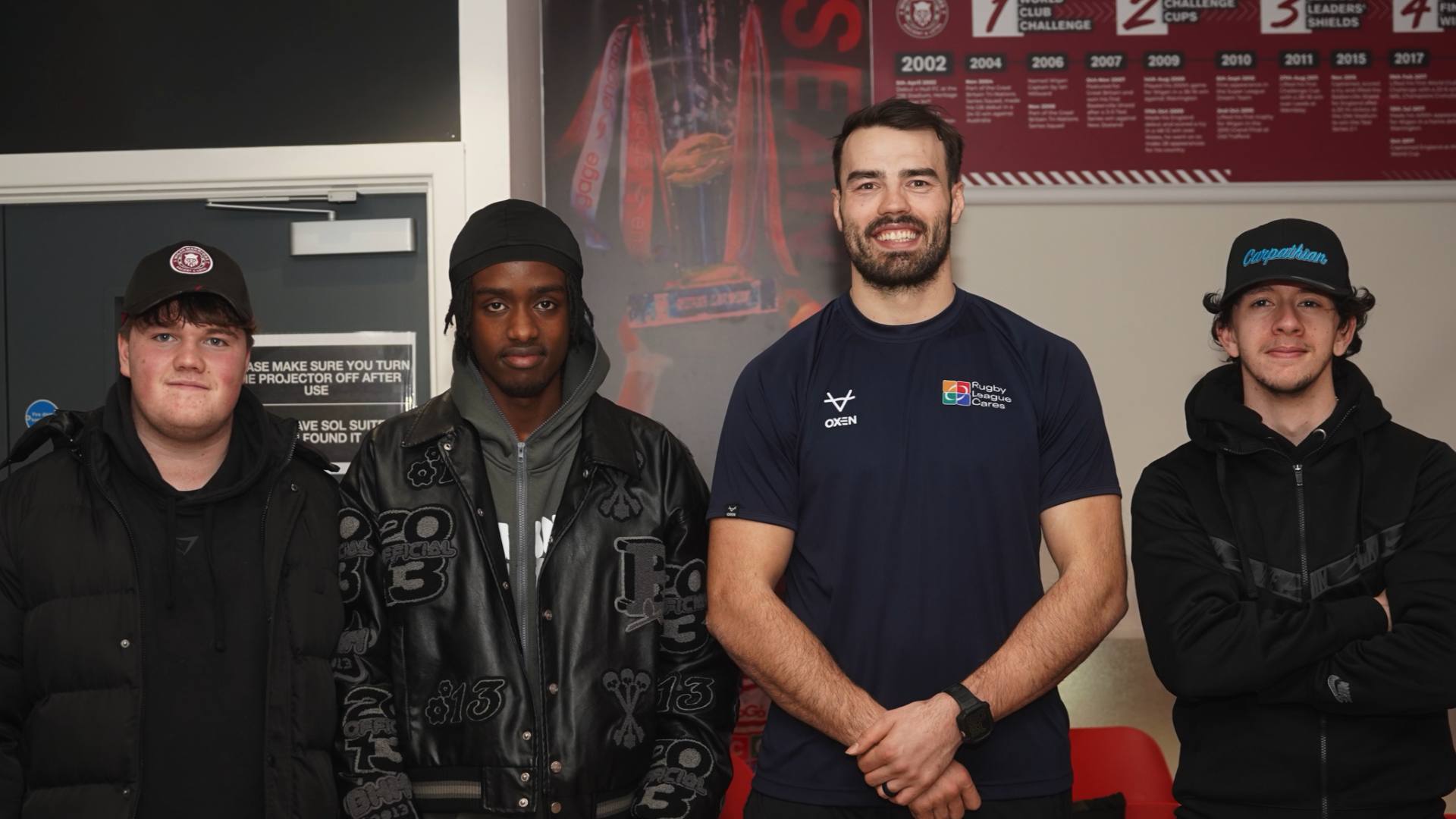
Commissioned by the UK Government’s Department for Digital, Culture, Media and Sport (DCMS) and delivered by Rugby League Cares, the pilot engaged over 1,000 participants. It used the power of rugby league to deliver adapted versions of Movember’s Ahead of the Game (MAOTG) and Offload programmes across Wigan and the Wakefield district between November 2025 and March 2026.
Researchers from the Faculty of Education and the Centre for Mental Health, Sport and Physical Activity at Edge Hill University worked alongside Rugby League Cares to evaluate the impact of the pilot.
The evaluation found that boys and young men who engaged in the pilot experienced improvements in social connections, wellbeing and aspirations among boys and young men who were experiencing, or at risk of experiencing, social isolation, loneliness, or being NEET (Not in Education, Employment, or Training). Read the report here.

Professor Andy Smith, Deputy Dean of the Faculty of Education and Director of the Centre for Mental Health, Sport and Physical Activity at Edge Hill, said:
“We’re immensely grateful to colleagues at the DCMS, Rugby League Cares, Movember and the foundations of the participating rugby league clubs for their support with this nationally important evaluation. Improving social connections, wellbeing and aspirations among boys and young men, especially among those who are NEET or at risk of becoming NEET, is an important national policy priority.
“It is pleasing to see such encouraging results from this pilot which provide further evidence of the important role that the foundations, or club community organisations, of professional sports teams can play in improving the lives of boys and young men.”
The evaluation explored whether the programmes could improve wellbeing for young men aged 16–24 (Offload) and boys aged 11–18 (MAOTG), while generating practical insights to support future national scale-up and adoption of the programme.
Emma Goldsmith, Director of Community for Rugby League Cares, said:
“We regard this as such a significant pilot to be involved with and we’re pleased that the initial evaluation is so positive.
“Since the development of our Offload programme almost a decade ago, we’ve seen the positive impact former and current athletes are able to make in northern communities – especially in the work we’ve done with Movember on their groundbreaking Ahead of the Game programme. This pilot programme has confirmed the power of positive sporting role models to break down barriers and underlined the potential of more work in this area.”
Rachel Wilcock, Research Assistant in the Faculty of Education and the Centre for Mental Health, Sport and Physical Activity, said:
“We were delighted to be asked by DCMS and RL Cares to be part of this important project, helping to deliver and study the Offload and Movember Ahead of the Game programmes adapted for boys and young men experiencing loneliness, social isolation and time NEET.
“The research addresses an important issue and has allowed us within the Faculty of Education to work closely with partners and participants to better understand how place-based community sport programmes can help improve the social connections, wellbeing and aspirations of boys and young men. This has been a rewarding project to be involved in, and we look forward to seeing how the findings can help shape future programmes.”
The true measure of the pilot’s success is best seen in the words of the participants themselves, who noted life-changing shifts in their confidence and coping strategies:
- “I feel positive about life. I’ve got new people I can talk to, if I see them around here…I can actually talk to people, so that’s positive for me. [I’m] more self confident.”
- “I think its good like people from different backgrounds and sport, or if they’re not sporty, coming together just to talk about their coping mechanisms and stuff. I feel like that’s been quite beneficial.”
- “I was encouraged to talk to people. We didn’t talk to each other that much…and we just learned more about each other.”
Vicky Foxcroft, Minister for Loneliness, said:
“Loneliness can affect anyone, at any age, but too often it’s boys and young men who suffer in silence rather than reaching out for support. That’s why this pilot is so encouraging: it shows the power of sport, and rugby league in particular, to break down barriers and build the connections and confidence that so many young people need.
“These results from Edge Hill’s evaluation are a testament to the dedication of Rugby League Cares and everyone involved in delivering these programmes in Wigan and Wakefield. Hearing directly from participants about the difference this has made to their lives is exactly why tackling loneliness remains a government priority, and why we’ll continue backing initiatives that help boys and young men build the social connections they need to move forwards with confidence.”
Find out more about how research at Edge Hill University is addressing some of society’s most pressing problems and providing expertise to develop solutions and enact change in our local communities and on a national and international level.
Find out more about the work of the Faculty of Education whose mission is Working Creatively with Others to Enhance Life Chances, and the Centre for Mental Health, Sport and Physical Activity Research.
September 22, 2026