What is the relationship between power, harm and social change? How does society work? Are you interested in challenging how ‘crime’ is understood in society? If you want to find the answers to those questions, then the criminology and sociology degree might be for you.
At Edge Hill, we offer more than just theory. You’ll examine real-world issues in rich cultural, political, and historical contexts, gaining insight into how social forces shape everything from the legal system to everyday life. Our programme uniquely combines cutting-edge criminological theory with deep sociological analysis, giving you the tools to critically engage with complex social issues like inequality, justice, and marginalisation.
You’ll investigate how societies define crime, produce social harms, and enforce laws that often reflect structural power rather than fairness. This means questioning the status quo and learning to think like a changemaker.
Experiential learning is at the heart of your journey. You’ll have the opportunity to enhance your studies through exploring historical perspectives through archival work, and engage directly with local communities through activism and outreach projects. These experiences will build your confidence, expand your worldview, and give you real-world insight into the systems you’re studying.
By the time you graduate, you’ll have more than just a degree. You’ll have dual disciplinary expertise, a strong portfolio of research and analytical skills, and a passion for social justice that’s backed by practical experience. Whether you’re aiming for a career in social research, criminal justice, policy, advocacy, or postgraduate study, this course opens the door to a wide range of impactful futures.
Course features
International students can apply
Sandwich year option available
Studying abroad option available
Work placement opportunity
The best thing about Edge Hill for me would be the amount of opportunities that are created for students.
In your first year, we’ll introduce you to the core themes across criminology and sociology. You’ll study the criminal justice process, criminological and sociological theory and political sociology and cultural studies. You’ll also gain real-world insights into how criminal justice agencies work together to prevent crime, assess risk and protect victims, including approaches such as MARACs, MAPPAs and Crime/Violence Reduction Units.
Criminology and the Modern World presents you with a number of case studies on substantive topics of current interest and importance. You will undertake a systematic examination of some of the major changes that are occurring and their implications for British society and other societies across the world. Phenomena such as the economic crisis, the environmental crisis, the increasing religiosity of politics and problems in the developing world will be considered in order to foster an understanding of contemporary society and some of the key issues it faces. Aspects of social and criminal justice, harms and rights, and the role that the media plays in shaping social perceptions will be subject to analysis.
Module code: CRI1005
Credits: 20
Assessment:
100% Coursework
Key Criminological Thinkers
Key Criminological Thinkers will introduce you to the theoretical perspectives that explain the causes of of crime, social harm, and deviance through the work of key criminological thinkers. These theoretical perspectives will be applied to contemporary issues in crime, social harm, and deviance in order to evaluate power and potential for harm reduction, in practice. In particular, the module will emphasise the political underpinnings of the critical criminological tradition and encourage you to recognise the impact of power relations in and on the control, reduction, and prevention of crime, social harm, and deviance.
Module code: CRI1142
Credits: 20
Assessment:
100% Exam
Multi-agency Work in Criminal Justice
Multi-agency Work in Criminal Justice is designed to enhance your learning about the core agencies of the criminal justice system, their role and function, and how they interact with each other to prevent and reduce crime, assess risk, and safeguard and protect (potential) victims of crime. The key bodies and their roles will be examined, and the processes by which they share information and work together to achieve goals will be explored. Multi-Agency Risk Assessment Conferences (MARACs), Multi-Agency Public Protection Assessments (MAPPAs), and Crime/Violence Reduction Units - will be evaluated and critiqued. The module will also provide a historical account of how multi-agency practice in criminal justice has evolved over time, and how these processes have been influenced by learning from key ‘turning point’ cases.
Module code: LAC1001
Credits: 20
Assessment:
50% Coursework
50% Practical
Power in Society
Power in Society immerses you in the study of power, the state, ideology, authority and domination. You will study the roles, functions and participation of institutions, organisations and groups in the political world, gaining a conceptual model of the way in which the political world operates and engages with powerful interests and demands for democratic participation. A series of lectures will provide a foundation of knowledge and you will then follow particular case studies to exercise that knowledge in depth. These case studies will be drawn from the research specialisms of staff and topical issues. Indicatively, case studies might be security and state surveillance of political participation in Britain, the political management of mass public protest, the political strategies of social movements, the relevance of political parties to contemporary politics, political marketing and media politics.
Module code: SPY1123
Credits: 20
Assessment:
60% Coursework
40% Practical
Critical Issues in Sociology
Critical Issues in Sociology introduces you to using the ‘sociological imagination’ to explore a range of sociological concepts and approaches. You will develop the ability to reason effectively about the relation of human agency and social structure, and reflect on the challenges, choices and constraints underlying the assumptions and tacit expectations that determine our view of the world. The module analyses how we create and sustain meaningful social relationships, organisations and systems, and how, in turn, those relations, organisations and systems impact on us.
Module code: SPY1124
Credits: 20
Assessment:
100% Coursework
Sociology of the Everyday
Sociology of the Everyday introduces you to sociological ways of understanding the everyday. From the mundane to the taken-for-granted topics or issues which constitute our ‘ordinary and ‘normal’ lives, you'll examine normative everyday issues and occurrences in a sociologically informed way. You will begin to see how small-scale interactions can impact upon broader social constructions and norms and vice versa. You'll explore areas such as the home, the street, love, sex and friendships. Other topics that may be studied range from shopping, hobbies and consumption to our understanding and use of time and silence.
Module code: SPY1125
Credits: 20
Assessment:
60% Coursework
40% Practical
In Year 2, you’ll continue to build on your theoretical knowledge. You’ll study critical criminological theory, and learn about armed conflict and political violence, racism, and the relationship between media and our understanding of ‘crime’. We’ll look at class, culture and conflict in British society. You’ll develop the skills that will set you up for a successful graduate career, including getting involved with community activism.
Becoming a Social Researcher provides you with an important grounding in social research methods. The module gives you an overview of the fundamental aspects of social research including philosophical approaches to knowledge production, literature searching, sampling and ethics. It addresses both quantitative and qualitative approaches. You will have the opportunity to choose a topic and design, conduct and report on a piece of your own research. This will involve the use of a range of different methods including interviews and questionnaires and you will be supported in this process through the module’s seminar programme.
Module code: SPY2150
Credits: 20
Assessment:
100% Coursework
States, Conflict and Political Violence
States, Conflict and Political Violence recognises that the sociological study of armed conflict and political violence is an important and growing field of inquiry. Wars and conflicts within and between states are key problems facing the contemporary global community, rooted in the complex character of modern societies. They have been a central concern for sociological theorists since the founding of the discipline. The study of armed conflict therefore does more than allow you to become familiar with the particular dynamics of specific wars. It also enables a series of key concepts, theories and issues in the social sciences (of power and authority, gender, ethnicity and class) to be investigated and applied to real world situations through the prism of organised violence by, between, against and beyond the state today.
Entrepreneurship and Innovation explores characteristics, behaviours, attributes, and skills of entrepreneurship as well as the whole process of innovation from idea to product development and the conditions that must be fulfilled for innovation to thrive. The module explores research from a number of areas to highlight the importance of factors such as social and economic capital, local and regional infrastructure and the role of government in enabling (or disabling) innovation. You'll develop your entrepreneurial skills, identifying opportunities and developing ventures. On top of this, you'll consider the risk environment including legal issues, funding issues, start-up and growth strategies. This module provides you with the ability to act entrepreneurially to generate, develop and communicate ideas, manage and exploit intellectual property, gain support, and deliver successful outcomes.
Module code: BUS2229
Credits: 20
Assessment:
50% Coursework
50% Practical
Crime, Media and Criminology
Crime, Media and Criminology investigates how the news media plays a primary role in the construction of social problems, crime, deviance and, to an extent, reality. The relationship between crime, media and criminology is long established, so this module critically explores the representation of ‘crime’ and criminal activity within various types of media forms incorporating traditional print, online news domains and social media forums. Developing a critical theoretical framework, the module will enable you to examine the criminological and wider societal significance of the production and reproduction of dominant images and discourses around ‘crime’, criminalisation and the construction of victims, perpetrators and events.
Module code: CRI2024
Credits: 20
Assessment:
100% Coursework
Generating Reputations
Generating Reputations highlights and explores the production of identities, reputations and stereotypes and the impact these have on particular social groups. A key focal point of the module will be the role of the media in shaping reputations and perceptions. You will consider ways in which determining contexts can influence societal perceptions of individuals and groups, as well as the impact of stereotypes, reputations and ‘common sense’ thinking on criminal justice policies and responses.
Module code: CRI2223
Credits: 20
Assessment:
100% Coursework
Violence and Society
Violence and Society explores the concept of violence and the various forms it can take, ranging from intrapersonal violence (for example, self-harm) to interpersonal violence, institutional and state violence, and violence on a global scale. You will be encouraged to look beyond established understandings of what constitutes a violent act to explore more abstract forms of violence such as harm, denial of rights, and poverty. Criminological theory will form the basis of considerations of aspects of violence. The structural relations of class (production), ‘family origins’ (neo-colonialism) and gender/sexuality (reproduction) will be highlighted as the determining contexts in which such violence occurs and is legitimated. Power, dominance, legitimacy and hegemony will be the key themes of the module.
Module code: CRI2224
Credits: 20
Assessment:
100% Exam
Gendered Violence, Crime and Justice
Gendered Violence, Crime and Justice is designed to provide you with knowledge and understanding of gendered violence and abuse in its various forms. Specifically, the module will focus on the relationships between gender, violence, crime and justice and the structural, ideological and institutional underpinnings of these. You will be encouraged to look beyond established understandings of what constitutes gendered violence and abuse to explore its different forms such as harm, denial of rights, justice, and poverty. Critical criminological and zemiological theories will be used to consider aspects of gendered violence and abuse, and the relationship of this with determining contexts such as age, disability, class, gender, sexuality and ‘race’ in which such violence and abuse occurs and is legitimated. Power, dominance, harm, justice, legitimacy, hegemony and ideology will be key themes of the module.
Module code: CRI2230
Credits: 20
Assessment:
100% Exam
Crime and Music
Crime and Music considers the connection between crime and music. Rather than just being a form of entertainment, music can reflect more important messages about problematic social arrangements and practices. The module will facilitate your evaluation of criminal justice agency practices and developments in terms of changing values and relationships between individuals, groups, and public and private agencies in different locations, using musicians, music genres, and the music industry. The continued social injustices that can occur through the use, abuse, and suppression of music have great importance to criminologists who are interested in how state and corporate power can be use against the most powerless in society. Discrimination of various types, whether that is racism or homophobia are frequently experienced by musicians and their fans, and this module will use relevant theoretical perspectives to analyse power differentials. It will also examine cultural meanings of crime, harm, deviance and stigmatised differences, including, but not restricted to, racism, sexism, and age.
Module code: CRI2231
Credits: 20
Assessment:
100% Coursework
Crime, Harms, Law and Justice
Crime, Harms, Law and Justice explores the application and effect of the criminal law upon individuals in society from criminological, zemiological and complementary critical legal perspectives. Through utilising both these perspectives, you will be encouraged to look beyond established traditional legal explanations for crime and legal responses to it, to explore the wider social, historical, political and theoretical context of the laws relating to crime. The module will enhance your understandings of how determining contexts impact upon how laws relating to crime are created, developed and enforced.
Module code: CRI2232
Credits: 20
Assessment:
100% Coursework
Victims, theories, debates and practices
Victims: Theories, Debates and Practices has been designed to develop a critical understanding of victimisation in a variety of contexts: from personal experiences of victimisation through crime, through to victimisation through corporate harm and/or state actions which may or may not be criminalised by law. The module aims to develop your appreciation of victimology as a distinctive academic discipline, and its contribution to national and international victim support initiatives. By focusing on relevant socio-economic and socio-political contexts, the modules aims to stimulate critical engagement with the concepts of victimhood and victimisation. It also encourages critical analysis of the victimisation experiences of individuals, groups and communities in a globalised world.
Module code: CRI2233
Credits: 20
Assessment:
100% Coursework
Community Punishment
Community Punishments is designed to equip you with knowledge and understanding of the role, function and historical development of community-based punishments within England and Wales. It will consider the main philosophical theories that have been used to justify and legitimise these modes of state punishment, notably through the concepts of ‘just desserts and ‘deterrence’. The module also examines how community punishments are experienced in relation to age, ‘race’, gender and class.
Work-based learning and Employability is designed to bridge the world of higher education with the world of work. You will develop a critical understanding of the changing context of work and of social, economic and political factors shaping the labour market and contemporary patterns of employment. There will be an opportunity to apply theory and disciplinary specialist knowledge to practical experience within a work-based setting with students undertaking a 60 hour placement. You will also enhance and develop a range of transferable skills to enhance your employability.
Module code: SPY2154
Credits: 20
Assessment:
100% Coursework
Self-Directed Study
Self-Directed Study enables you to focus on a particular agreed topic or focus and explore it, with tutorial support, to produce a project-based piece of work which relates to a particular career trajectory. The project will involve addressing a social issue or problem and/or one organisation’s response (voluntary, public or private sector) to a social issue or problem. It will involve not only desk research such as library searches but information retrieval from a range of primary sources. The self-directed learning focus allows for a sense of both leading on the learning taking place and reflecting on its progress, problems and problem-solving.
Module code: SPY2155
Credits: 20
Assessment:
100% Coursework
Youth Studies: Key Concepts and Issues
Youth Studies: Key Concepts and Issues provides you with an understanding of the key themes, concepts, issues and debates in the field of youth studies. Starting from an historical perspective, you will look at the broader social, economic and political factors which have shaped understandings about youth and the so-called ‘youth question’ from early to late modernity. The module will then turn to contemporary debates about youth, including themes such as transition, risk, culture and social policy.
Module code: SPY2156
Credits: 20
Assessment:
100% Coursework
Representations of Childhood and Popular Culture
Representations of Childhood and Popular Culture explores and analyses the ways in which childhood and youth are represented in popular culture in historical and contemporary genres. These representations will be examined in the context of popular culture about, and specifically for, children and young people. A critical approach will be adopted by drawing on theoretical perspectives including cultural theory and constructions of childhood and youth. In taking this approach, consideration will be given to representations of social divisions such as age, gender, sexuality, family origins and disability. Areas of study will include children as adventurers and heroes, children and young people in war and conflict, representations of children and young people’s experiences of education, and the globalisation of childhood.
Module code: SPY2157
Credits: 20
Assessment:
100% Coursework
Children’s Cultural Worlds
Children’s Cultural Worlds introduces you to some of the ways in which children experience and organise their social worlds. You will learn about a variety of children’s cultural practices from this perspective such as their play, friendships, family, sexuality, food, literature and language practices. In order to do this you will study a range of research which has taken a ‘naturalistic’ approach to children’s cultural practices. Naturalistic studies are those which seek to remain faithful to the nature of the phenomena which they investigate. In the study of human social life, this requires being faithful to how the people we study actually experience things. It involves refusing to impose our own views on other people but trying to gain an appreciation of how they look at things, how they understand things and how they organise their lives from their own points of view. This module will help you to develop this particular analytic sensibility.
Module code: SPY2158
Credits: 20
Assessment:
100% Coursework
Children, Food and Sustainability
Children, Food and Sustainability examines children’s food practices, environmental issues and the links between the two. The module introduces the analysis of children’s food practices and relations with animals and the environment under the rubric of understanding connections between children, childhood and nature. Themes to be studied include food practices in schools, food poverty, children and climate change and child-animal relations. These topics provide rich areas for investigating important developments in early childhood studies including children’s agency, voice and rights, in addition to children’s health, childhood consumption and children’s ethical engagement with the natural world. The module also illuminates debates on educational philosophy and explores childhood as a time and space for democratic and ecological renewal.
Module code: SPY2159
Credits: 20
Assessment:
100% Coursework
In the final year of your criminology and sociology degree, you’ll be able to bring specialism to your knowledge and skills by shaping the course to your own interests. Explore critical autism studies or issues around childhood and sexuality. Perhaps you’ll choose to focus on crimes of the powerful or the politics of policing and imprisonment.
Sociology of the Body and the Emotions introduces you to different ways of understanding ‘the body’ and its significance in past and contemporary societies. Relevant classical social theorists, such as Bourdieu, Elias, Le Breton, Foucault, Mauss and Goffman, will be covered, as will more contemporary sociologists such as Turner, Shilling, Fraser, Butler, Burkitt and Williams. The social production of bodies, how the body is deployed socially and culturally, the socially constructed dualism between body and mind, and the relationship between power and the body, are key issues for evaluation and analysis. They will be illustrated through a range of substantive topics such as gendered, classed and racialised bodies, the body, health and illness, body modification, biotechnology, and social and digital media and the body.
Module code: SPY3141
Credits: 20
Assessment:
100% Coursework
Global Capitalism and its Discontents
Global Capitalism and its Discontents explores a key aspect of contemporary life, the increasing impact globalisation has on our lives. From imperialism, colonialism and post-colonialism, to ideas of the clash of civilisations, multi-culturalism and living in diverse societies, this module provides a global awareness that is important to any graduate in the 21st Century. You'll also be provided with the analytical tools to deconstruct and sociologically evaluate how globalisation shapes, narrows or widens our life chances.
The Politics of Imprisonment provides you with a critical knowledge and understanding of the nature, functions and justifications for the use of punishment, specifically incarceration, in modern society. The module will consider the philosophical theories that are used to legitimise the state’s use of imprisonment and the sociological theories that explain historical developments in the purpose of state punishment. The various divisions and functions of the prison estate will be examined within their historical, structural, political, social and geographical contexts. Related methods of state punishment, such as the death penalty, will also be considered. You will adopt an international perspective and explore penal theory and practice in a range of countries. The relationships between power, legitimacy and justice will be central themes throughout the module.
Module code: CRI3110
Credits: 20
Assessment:
50% Coursework
50% Exam
Justice, Rights and the State
Justice, Rights and the State examines the development of the discourse about rights and justice. Taking a national and international approach, the module will consider the development of rights historically and the new discourses of rights. You will evaluate statutory policies and responses to the issue of rights and justice and consider how states respond to issues of justice and rights, including where states themselves uphold or violate citizen’s rights.
Module code: CRI3112
Credits: 20
Assessment:
100% Coursework
Expanding the Criminological Imagination
Expanding the Criminological Imagination critically reflects upon and analyses the discipline of criminology. You will examine criminology’s political, practical and theoretical strengths and limitations and explore the production and commodification of criminological knowledge. The module will consider whether criminology has become a ‘parasitic’ discipline with the criminalisation of social problems, and the ever increasing techniques of crime control, forming the justification for the discipline’s existence, rather than providing a platform for resistance. You will explore the concept of the ‘criminological imagination’ as an alternative way of envisaging the discipline and its utility. You will also examine the way in which criminology has to connect with other disciplines in order to expand the range of issues it deals with. This is a necessity in order to help criminologists make sense of issues where the ‘normal’ boundaries of criminology would stifle or limit an analysis.
Module code: CRI3113
Credits: 20
Assessment:
60% Practical
40% Coursework
State Crime
State Crime traces and explores serious harms and crimes perpetrated by states and associated professional and commercial interests from the eighteenth to the twenty-first century and provides detailed exploration of the origins, implementation, consequences of, and responses to the extreme state violences of the recent past. The module introduces you to a range of case studies and topics – both historical and contemporary – that are analysed through the framework of state crime. Beginning with a theoretical introduction to this framework, you will learn to integrate your understanding of state-perpetrated atrocity with a critical criminological analysis of the nature of state violence, the objectives and driving forces of state crime, the denial of state crime, and the potential avenues for accountability. It will examine not only state crime but examples of the state-corporation nexus and includes study of groups and individuals’ resistance to state crime.
Module code: CRI3120
Credits: 20
Assessment:
100% Coursework
Corporate Crime
Corporate Crime offers you the opportunity to critically examine extensive and intensive forms of social harm generated by companies and corporations. It encourages you to critically examine the construction of harms of the powerful as ‘regulatory’ rather than ‘real’ crimes, and examines the failure of current legal / judicial arrangements at national, international and global levels, to address the relative impunity of corporations. The module takes an expansive view of harm, drawing upon examples from within and without the criminal justice system, at local, national and international levels.
Module code: CRI3121
Credits: 20
Assessment:
100% Exam
Critical Autism Studies
Critical Autism Studies adopts a critical approach to understanding autism and seeks to challenge the dominant medical model of neurological deficit. Rather than viewing autism as a cognitive development disability, you will be encouraged to consider it as a naturally occurring form of cognitive diversity. The module will examine the argument that autism has been constructed as a neurobiological deficit in a context of neurotypicality or cognitive normality. Understanding autism as neurodiversity opens up spaces for more positive interpretations of autistic people’s experiences, skills and identities. The module is underpinned and, in part, informed by, research by members of the programme team which is focused on areas of sexuality and autism and, specifically, what professionals and care workers should do when providing support for people whose intellectual disability or mental condition makes their consent – being informed, competent and free from coercion – legally unreliable.
Module code: SPY3144
Credits: 20
Assessment:
100% Coursework
Childhood and Sexuality
Childhood and Sexuality juxtaposes how children and young people are constructed simultaneously as desexualised or pre-sexual beings and, therefore, in need of protection and, at the same time, young people, in particular, are portrayed as sexually ‘promiscuous’ or engaged in sexual ‘risk taking behaviour’. The module introduces you to the tensions between these contradictory constructions of youth sexuality and explores the ways in which young people understand their sexuality and develop their sexual identity.
Module code: SPY3145
Credits: 20
Assessment:
100% Coursework
Race, Crime and Criminology
Race, Crime and Criminology explores how ideas about 'race' help to shape and determine social, judicial, and political responses to perpetrators and victims of crime. It explores the role of race as a major source of social divisions and aims to show the significance of racism to the reproduction of structural inequalities. Throughout the module, you will develop knowledge about patterns of continuity and change in racism and an awareness of the relationship between ethnic and cultural diversity and social and criminal injustice.
Module code: CRI3123
Credits: 20
Assessment:
100% Coursework
How you'll study
The main forms of course delivery are lectures and workshop seminars, including videos, presentations and small group work. Students will typically be required to attend for three full days per week.
How you'll be assessed
Assessment methods on this degree include the use of portfolios, essays, information retrieval exercises, seminar presentations, case studies, article reviews and examinations. The range of assessments has been creatively designed to encourage the potential of all students.
Who will be teaching you
The teaching on our course is underpinned by the extensive research activity and field experience of our team.
Members of the criminology and sociology teams in our Department are at the forefront of teaching, research and publishing in a number of areas including states, violence and terrorism; cultural and social theories and perspectives; culture and arts in society; crimes of the powerful and the politics of policing and imprisonment; criminology, human rights and social justice; and the criminological imagination. Our strong levels of student support ensure your time with us is an enjoyable, rewarding experience, underpinned by the extensive research activity and field experience of our team.
Timetables for your first week are normally available at the end of August prior to enrolment in September. You can expect to receive your timetable for the rest of the academic year during your first week. Please note that while we make every effort to ensure that timetables are as student-friendly as possible, scheduled teaching can take place on any day of the week. Wednesday afternoons are normally reserved for sports and cultural activities.
Where your course includes optional modules, these are to provide an element of choice within the course curriculum. The availability of optional modules may vary from year to year and will be subject to minimum student numbers being achieved. This means that the availability of specific optional modules cannot be guaranteed. Optional module selection may also be affected by timetabling requirements. Some restrictions on optional module choice or combinations of optional modules may apply.
Entry criteria
Typical offer 112-120 UCAS Tariff points plus at least 3 GCSE’s at Grade C or above (or equivalent) including GCSE English.
Example offers
Qualification
Requirement
A Level
BBC-BBB.
UCAS Tariff points
112-120 points.
BTEC Extended Diploma (or combination of BTEC QCF qualifications)
Distinction, Merit, Merit (DMM).
T Level
Overall grade of Merit.
International Baccalaureate (IB)
We are happy to accept IB qualifications which achieve the required number of UCAS Tariff points.
Access to Higher Education Diploma
45 credits at Level 3, for example 15 credits at Distinction and 30 credits at Merit or 24 credits at Distinction and 21 credits at Merit. The required total can be attained from various credit combinations.
Please note, the above examples may differ from actual offers made. A combination of A Level and BTEC awards may also be accepted.
If you have a minimum of two A Levels (or equivalent), there is no maximum number of qualifications that we will accept UCAS points from. This includes additional qualifications such as Extended Project Qualification (EPQ), AS Levels that haven't been continued to A Level, and General Studies AS or A Level awards.
English language requirements
International students require IELTS 6.0, with a score no lower than 5.5 in each individual component, or an equivalent English language qualification.
Fair Entry Criteria
Our new Fair Entry Criteria is a Contextual Admissions Policy that takes an applicant’s personal and educational background into account. This policy will allow eligible applicants to receive up to a two-grade reduction in their entry requirements for this course. Find out more and see if you qualify.
Please see our international student pages for further information about how to apply as a prospective international student.
Should you accept an offer of a place to study with us and formally enrol as a student, you will be subject to the provisions of the regulations, rules, codes, conditions and policies which apply to our students. These are available at www.edgehill.ac.uk/studentterms.
The choice is clear
At Edge Hill, we believe Clearing is a new beginning - a chance to choose a university that believes in your ambition, invests in your future and supports you every step of the way. Our Clearing team is here to help you take the next step.
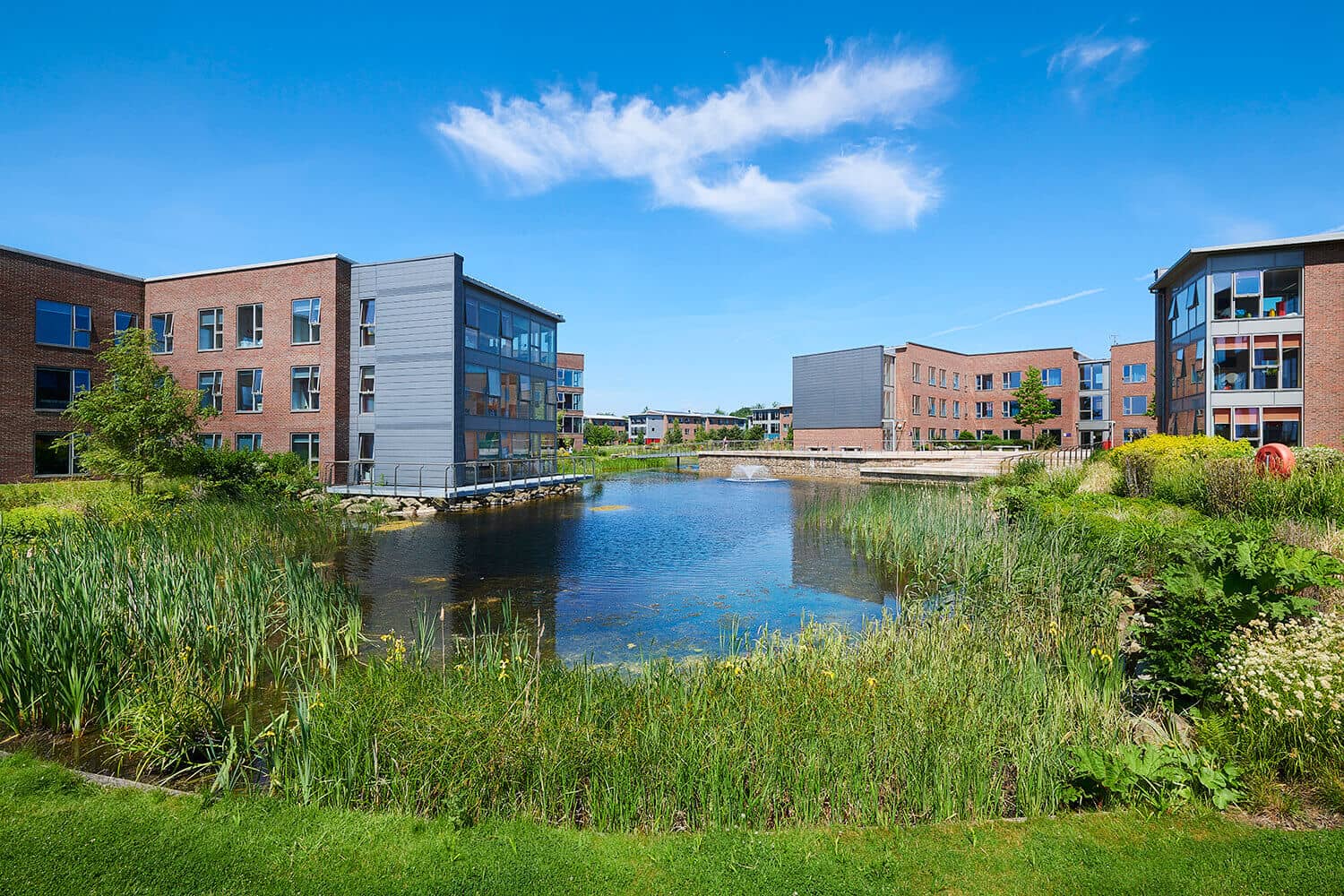
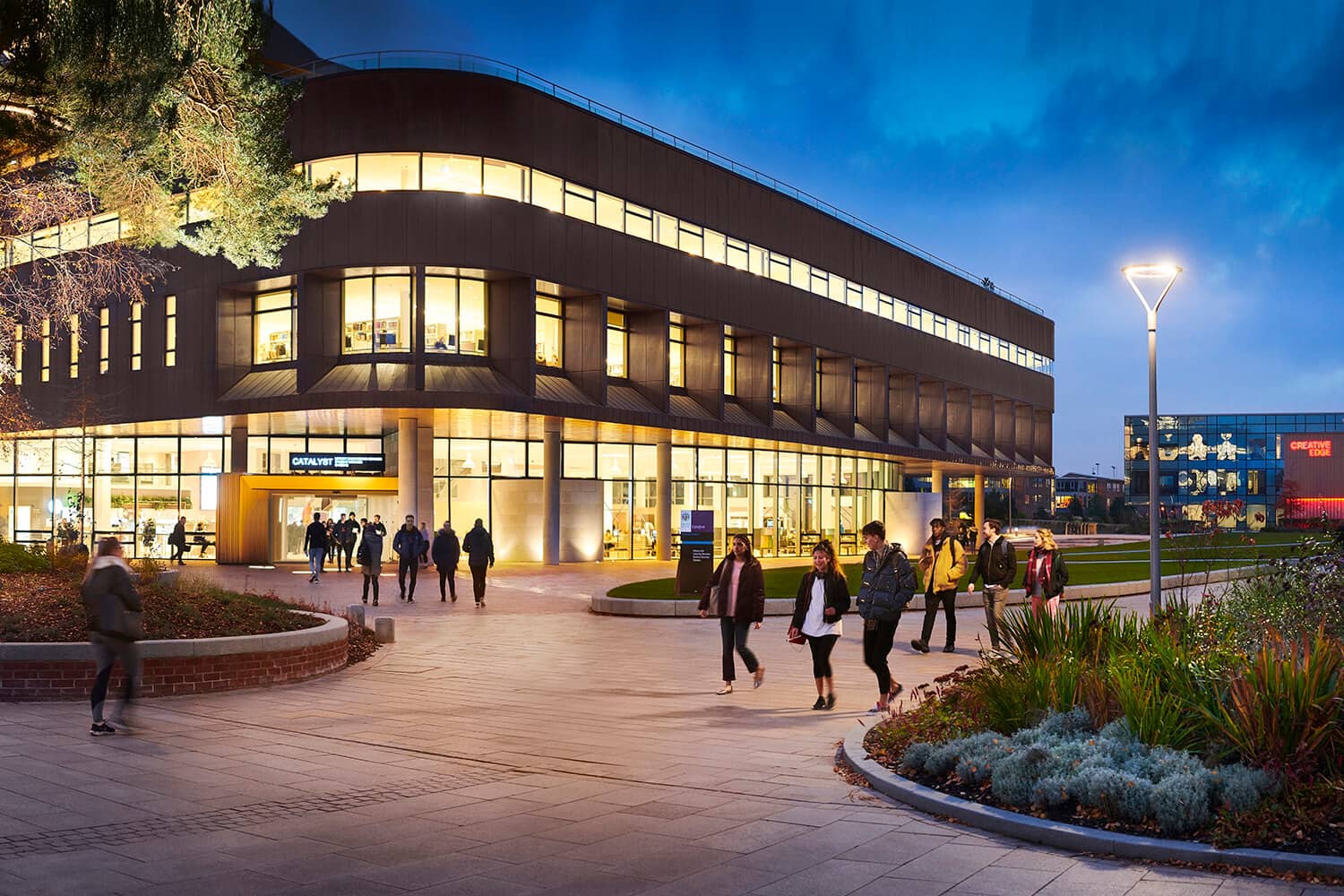
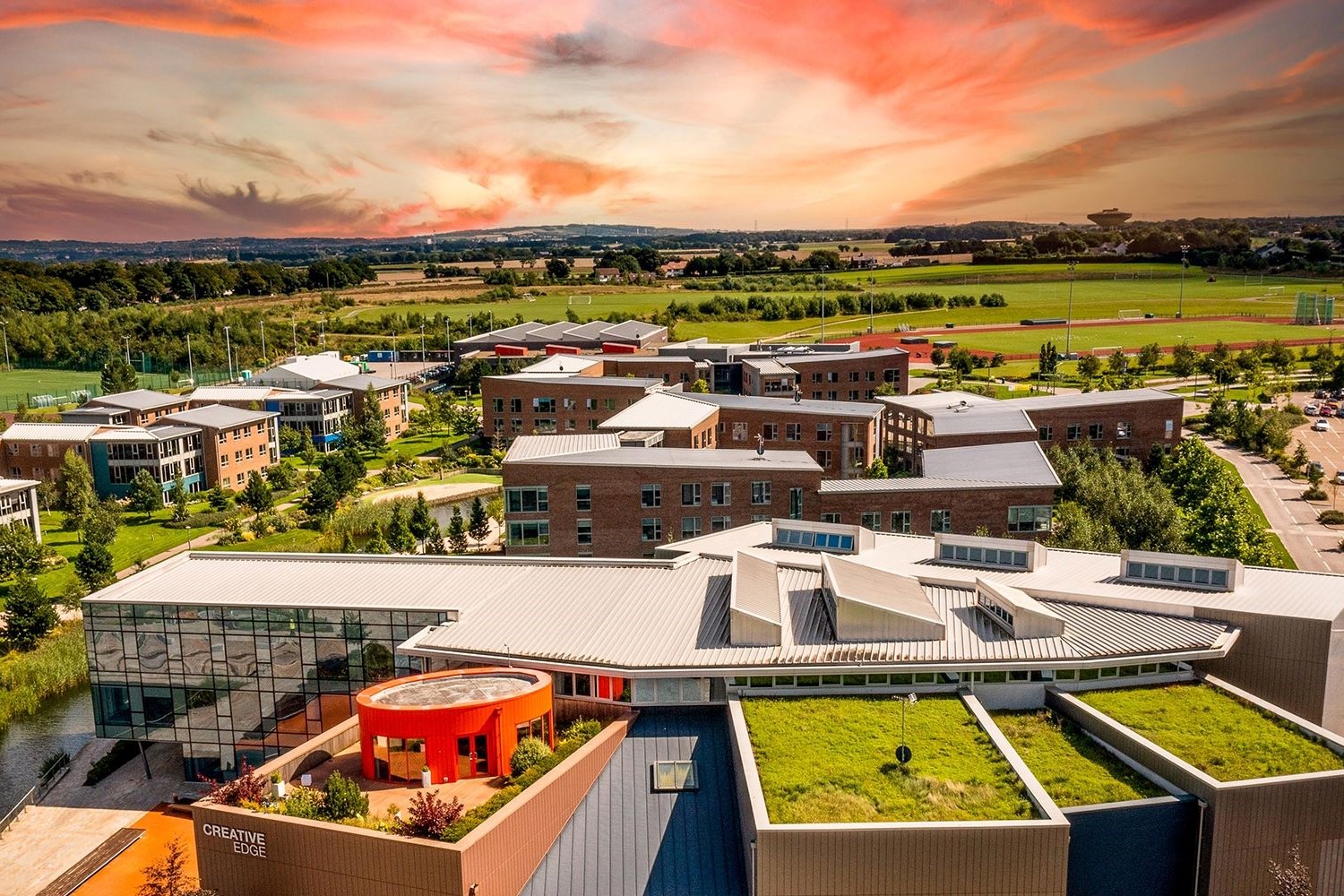
The Department of History, Geography and Social Sciences is based in the Geosciences building. The contemporary facilities combine with a friendly and supportive learning environment to ensure that your studies are a rich and rewarding experience.
The Geosciences building features a large lecture theatre, small group teaching rooms, IT facilities and smaller tutorial spaces. There is also a large social area which encourages a more informal and interactive style of learning.
For the academic year 2026/27 the UK Full-Time tuition fee is currently set to £9,790. Please note this is subject to Parliamentary approval and is likely to be increased in line with inflation (RPIX). There may be further inflationary increases in your subsequent years of study. Further details can be found at ehu.ac.uk/fees.
EU/EEA and Swiss students who have settled or pre-settled status under the EU Settlement Scheme, as well as Irish nationals, may be eligible for the UK tuition fee rate.
Financial support
Subject to eligibility, UK students joining this course can apply for a Tuition Fee Loan from the Government to cover the full cost of tuition fees. UK students enrolling on the course may also be eligible to apply for additional funding to help with living costs.
Scholarships
We offer a range of scholarships, which celebrate the determination, commitment and achievement of our students. Many of our scholarships are awarded automatically. There are some however, where you will need to be involved in an application or nomination process. To find out more about our scholarships and check your eligibility, please visit our dedicated scholarships pages.
Money Matters
Please view the relevant Money Matters guide for comprehensive information about the financial support available to eligible UK students.
EU/EEA and Swiss students who have settled or pre-settled status under the EU Settlement Scheme may be eligible to apply for financial support. Irish nationals can ordinarily apply to Student Universal Support Ireland (SUSI).
If you are an EU student who does not have settled or pre-settled status, or are an international student from a non-EU country, please see our international student finance pages.
Tuition fees
UK Full-Time
£10,050
a year
UK Part-Time
TBC
a year
International
TBC
a year
For the academic year 2027/28, the UK Full-Time tuition fee is currently set to £10,050. Please note this is subject to Parliamentary approval and is likely to be increased in line with inflation (RPIX). There may be further inflationary increases in your subsequent years of study. Further details can be found at ehu.ac.uk/fees.
EU/EEA and Swiss students who have settled or pre-settled status under the EU Settlement Scheme, as well as Irish nationals, may be eligible for the UK tuition fee rate.
Financial support
Subject to eligibility, UK students joining this course can apply for a Tuition Fee Loan from the Government to cover the full cost of tuition fees. UK students enrolling on the course may also be eligible to apply for additional funding to help with living costs.
Scholarships
We offer a range of scholarships, which celebrate the determination, commitment and achievement of our students. Many of our scholarships are awarded automatically. There are some however, where you will need to be involved in an application or nomination process. To find out more about our scholarships and check your eligibility, please visit our dedicated scholarships pages.
Money Matters
Please view the relevant Money Matters guide for comprehensive information about the financial support available to eligible UK students.
EU/EEA and Swiss students who have settled or pre-settled status under the EU Settlement Scheme may be eligible to apply for financial support. Irish nationals can ordinarily apply to Student Universal Support Ireland (SUSI).
If you are an EU student who does not have settled or pre-settled status, or are an international student from a non-EU country, please see our international student finance pages.
Your future career
By the time you achieve your criminology and sociology degree, you’ll have a wide range of transferable skills that will equip you for a graduate role or further study.
Our graduates go on to have exciting careers in the police, HM prison service and the Home Office, as well as in these areas:
criminal or youth justice agencies
youth and community work
law and research
offender management
outreach
Other students continue onto postgraduate study, or train to become teachers or social workers.
Course changes
Every effort has been made to ensure the accuracy of this information, however our courses are subject to ongoing review and development. Changing circumstances may necessitate alteration to, or the cancellation of, courses.
Changes may be necessary to comply with the requirements of professional bodies, revisions to subject benchmarks statements, to keep courses updated and contemporary, or as a result of student feedback. We reserve the right to make variations if we consider such action to be necessary or in the best interests of students.
Track changes to this course
Module changes - 1 September 2026
CRI1125 Introduction to the Criminal Justice Process removed.
LAC1001 Multi-Agency Work in Criminal Justice as a second semester compulsory module added.
Module changes - 8 July 2026
SPY2157 Representations of Childhood and Popular Culture updated from 60% coursework, 40% practical to 100% coursework.
Module changes - 12 May 2026
CRI3123 Race, Crime and Criminology added as an optional module.
Modules - 2 October 2025
Modules removed: Broken Britain and Critical Terrorism Studies removed.
Entry requirements - 29 July 2025
Entry requirements updated to ‘Typical offer 112-120 UCAS Tariff points plus at least 3 GCSE’s at Grade C or above (or equivalent) including GCSE English’, as part of revalidation.