
Edge Hill researcher wins international award for AI-driven breast cancer research
Edge Hill University’s Aasim Bin Saleem has won an international award for research that could improve breast cancer tissue analysis.
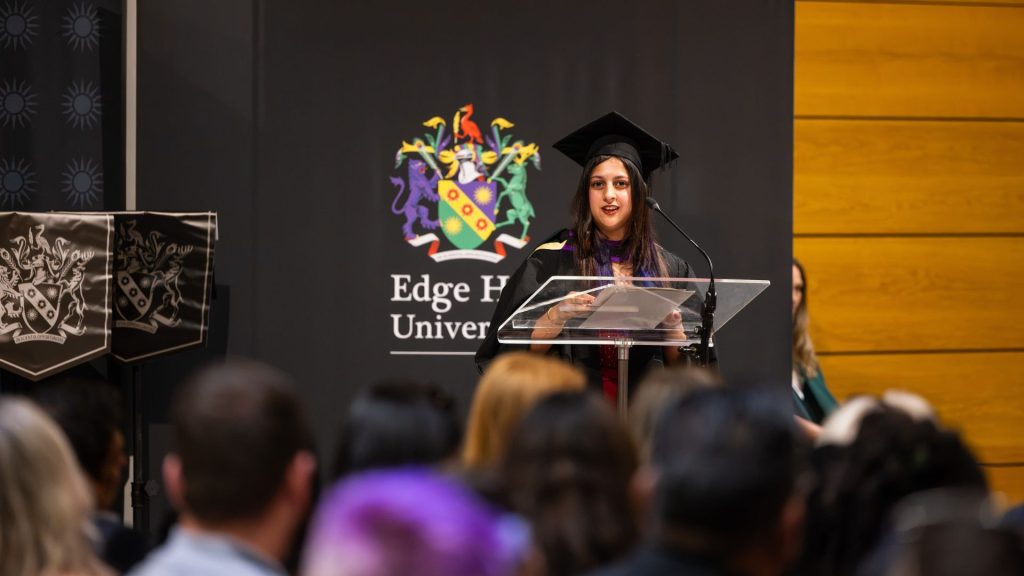
Aasim, a member of the Intelligent Visual Computing (IVC) Research Centre in the University’s Department of Computer Science, received a 2026 Best Industry Related Paper Award (BIRPA) at the 28th International Conference on Pattern Recognition (ICPR), held in Lyon, France.
The co-authored paper, ‘HistDiT: A Structure-Aware Latent Conditional Diffusion Model for High-Fidelity Virtual Staining in Histopathology’, was one of three papers recognised.
The award recognises the practical relevance of the research and highlights Edge Hill University’s work to explore applications of artificial intelligence in healthcare.
On winning the award, Aasim said: “I feel truly blessed and honoured to receive this recognition, especially as an early-career researcher. Having my very first paper accepted and spotlighted at an international conference has really boosted my confidence and this award is a career-defining highlight of my PhD journey.
“With a passion for Al, I always wanted to use my skills to serve society in a practical way. While generative Al often gets negative headlines, our work shows how it can be used for good.
“Our proposed algorithm, HistDiT, generates selective, high-contrast synthetic tissue stains to help clinicians with breast cancer prognosis and early personalised treatment. This approach overcomes the limitations of resource-intensive traditional laboratory staining protocols.
“I am truly thankful to Professor Amr and the Graduate School at Edge Hill University for giving me the opportunity to work on cutting-edge technologies.
“It is a privilege to bring this recognition to our university, and I look forward to continuing research that could bring real benefit to society.”
This study looked at how AI could create digital versions of specialist tests used in breast cancer diagnosis by analysing images from routine tissue samples.
These tests help doctors measure HER2, a protein linked to cell growth, and provide important information that helps guide treatment decisions.
The specialist immunohistochemistry (IHC) tests currently used to analyse tissue samples require additional processing in the laboratory, making them time-consuming and costly. Existing AI approaches have difficulty producing realistic staining while preserving fine cellular structures. This results in images appearing blurred or showing visual distortions, which could limit how effective they are for assessment.
The HistDiT model addresses this challenge by producing more realistic virtual stains while retaining vital structural detail. The paper reports improvements in image quality and supports further research into how the technology could be used in tissue analysis.
Read Aasim’s research paper.
Edge Hill researchers explore AI’s potential to improve skin cancer detection
Researchers from Edge Hill University’s Department of Computer Science are exploring how artificial intelligence (AI) could help clinicians identify skin cancer more accurately by combining medical images with additional patient information.
Across two recently published studies, the team investigated new AI approaches designed to improve the classification of skin lesions, including melanoma, the most serious form of skin cancer. The research examined whether AI systems could make more informed decisions by considering not only images of skin lesions, but also contextual information such as patient data and lesion characteristics.
In one study, researchers developed a context-aware AI model capable of analysing skin lesion images alongside patient information to improve classification accuracy. The approach mirrors the way clinicians use multiple sources of information when assessing whether a mole or lesion requires further investigation.
A second study explored how AI could assess patterns, colours and textures within skin lesions at a more detailed level. By analysing these subtle visual features alongside patient metadata, the model was better equipped to distinguish between benign lesions and those showing signs associated with skin cancer.
The research forms part of Edge Hill’s wider work in artificial intelligence and healthcare, investigating how AI technologies can support medical decision-making and improve patient outcomes. While further validation is needed before such systems could be used routinely in clinical practice, the findings highlight the potential of AI to assist clinicians in detecting disease more effectively.
Professor Ardhendu Behera, Professor of Computer Vision and AI, said:
“Diagnosing skin cancer often relies on recognising subtle patterns that can be difficult to identify from an image alone. Our research explores how AI can combine visual analysis with relevant clinical information to build a more complete picture, much like a clinician would during an assessment.
“The goal is not to replace healthcare professionals, but to develop tools that can support more accurate and informed decision-making. We hope this work will contribute to future technologies that help clinicians detect skin cancer earlier and improve outcomes for patients.”

MICCAI is a premier international conference in medical imaging and AI research, while ACM SAC is a prestigious, long-established conference in applied computing. Both are highly competitive, with 2026 paper acceptance rates of approximately 27% and 23%, respectively.
Read more about the ACM paper and MICCAI paper.
Edge Hill leads international AI project to advance personalised breast cancer treatment
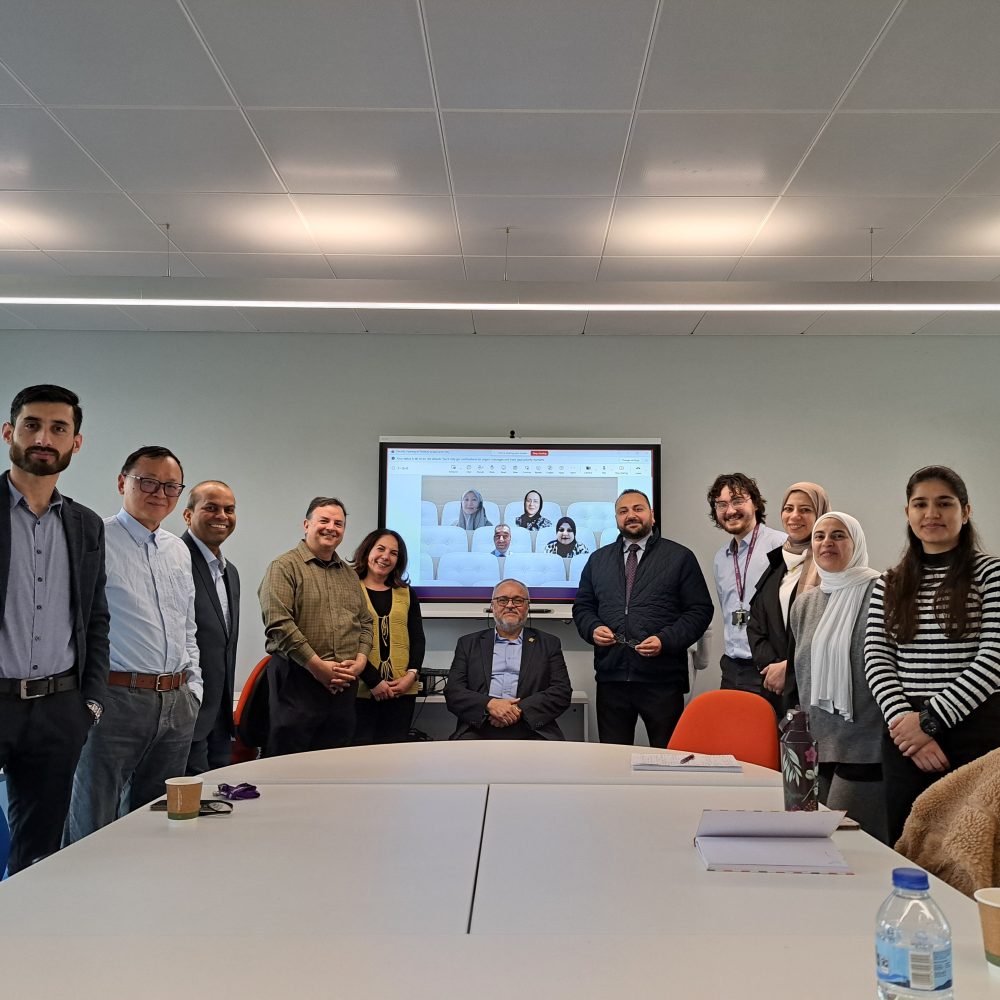
Academics from Edge Hill University have launched TRAPCAT (TRansformative Artificial Intelligence Research for Personalised Cancer Treatment), an international collaboration exploring how AI could help transform breast cancer care.
Led by Professor Amr Ahmed, the project brings together specialists from NHS University Hospitals of Liverpool Group, along with international partners in Egypt (including the National Cancer Institute at Cairo University, Baheya Foundation Hospitals, and AIC; Applied Innovation Centre) and collaborators from Malaysia (University of Nottingham Malaysia and Cancer Research Malaysia), to investigate new ways of supporting more personalised treatment decisions.
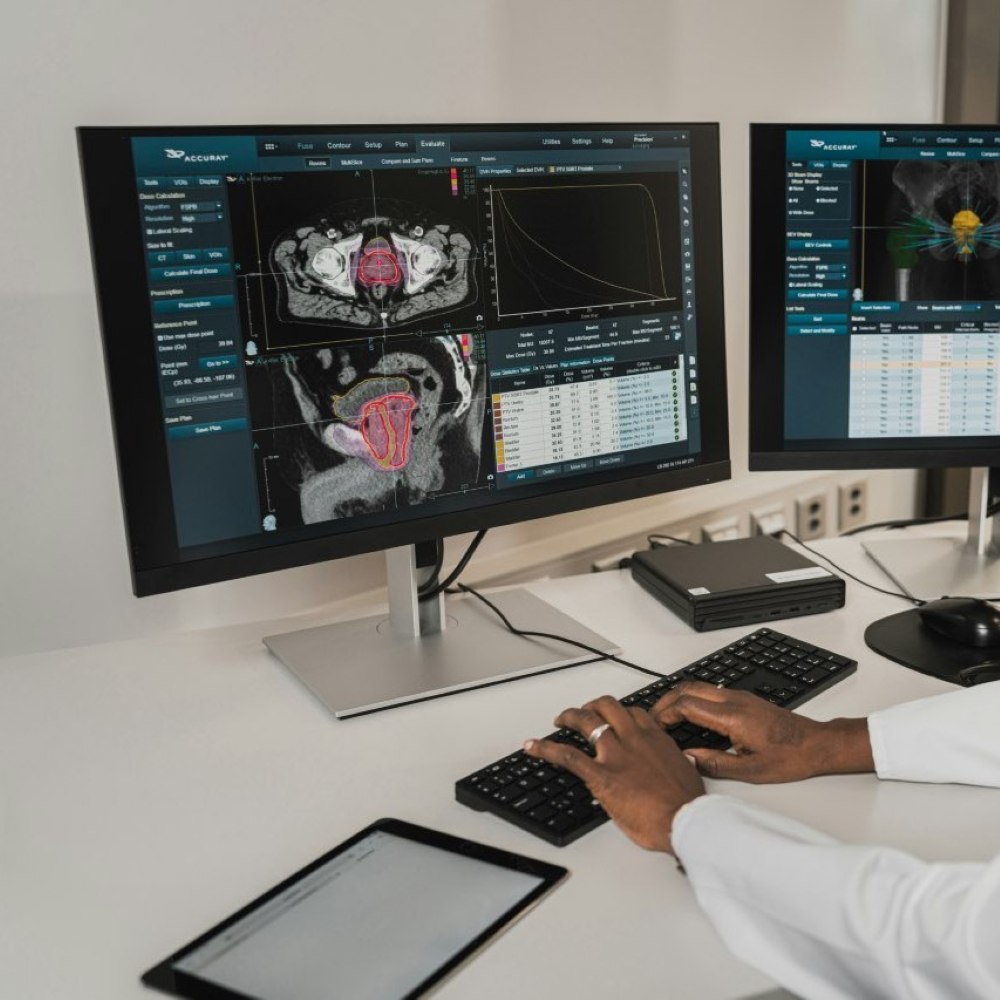
At the heart of the project is the development of AI models capable of generating “virtual staining” images from routine clinical data. These specialised images could provide information that would traditionally require additional tissue samples, laboratory processing, and significant time and cost.
By harnessing AI to generate these images, researchers aim to support more tailored treatment plans, reduce unnecessary interventions, and ultimately improve outcomes and quality of life for patients.
Funded by the British Council and the Science, Technology & Innovation Funding Authority, the 15-month project brings together expertise in pathology, computer science and artificial intelligence. The team is developing a comprehensive dataset of clinical and pathological information while establishing AI models to advance this emerging area of cancer research.
The work on Cancer is mainly part of the research within the Medical Image and Video Analysis [MIVA] research group (part of the “Intelliegent Visual Computing Centre”) to support clinicians, contributes to the patients benefits, and improves the quality-of-life.
The team is developing a comprehensive dataset of clinical and pathological information while establishing AI models to advance this emerging area of cancer research.
Professor Amr Ahmed, Head of Computer Science and Principal Investigator of TRAPCAT, said:
“Artificial intelligence has the potential to transform how clinicians diagnose and treat diseases such as breast cancer. Through TRAPCAT, we are exploring how AI can generate valuable insights from data already available through routine clinical practice, helping to reduce the need for additional testing while supporting more personalised treatment decisions.
“By bringing together experts from across healthcare, computer science and pathology, as well as international partners, we hope to accelerate innovation in this emerging field and contribute to research that could ultimately improve outcomes and quality of life for patients.”
Find out more about studying Computer Science at Edge Hill University
November 24, 2026