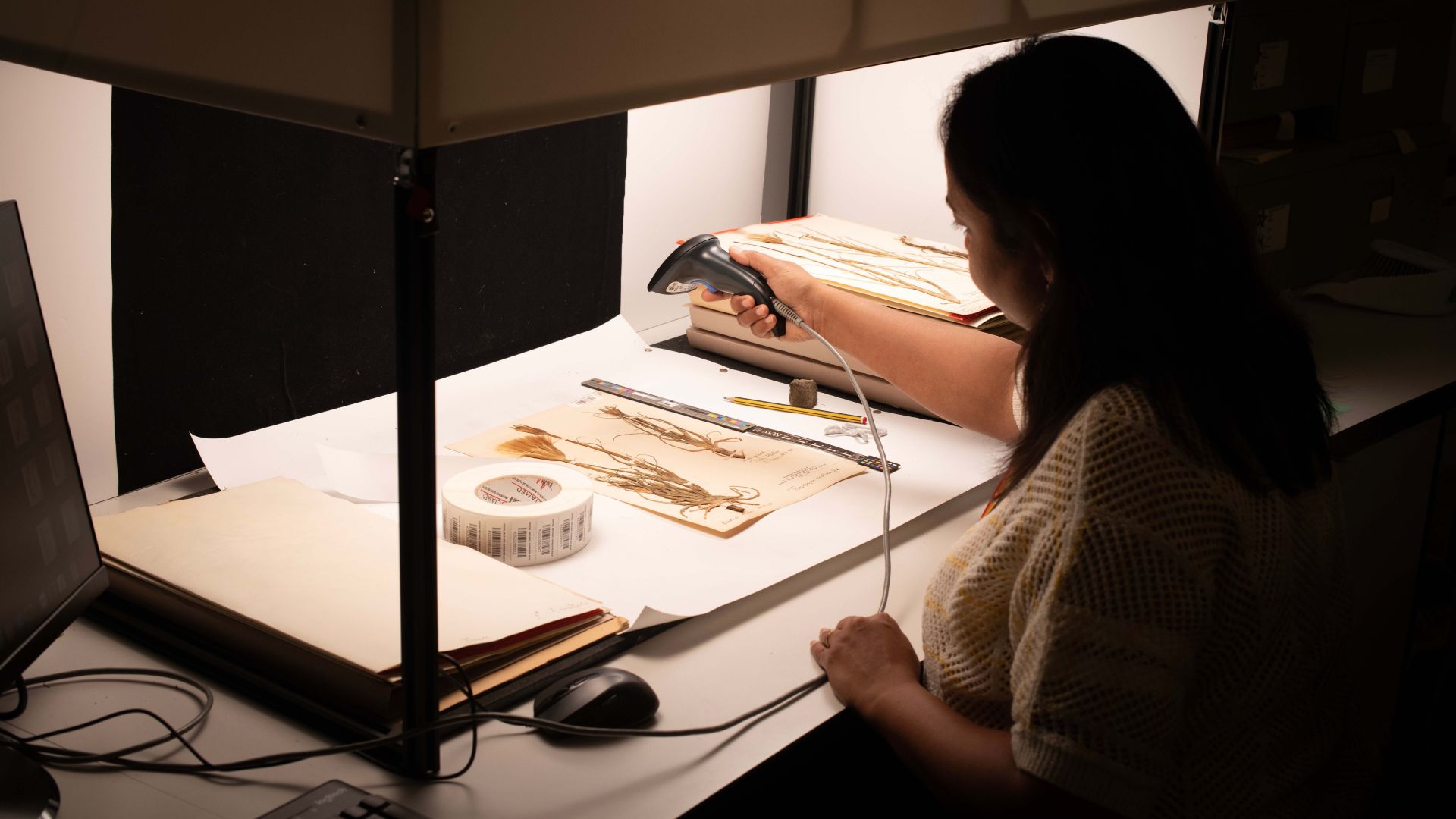
The report highlights how artificial intelligence and digitisation are transforming the fight against global extinction. While the true scale of the biodiversity crisis remains a significant challenge, the report offers hope, demonstrating how rapid advances in technology can act as a powerful ally to nature by identifying critical gaps in scientific knowledge and pinpointing where urgent action is needed.
The State of the World’s Plants and Fungi 2026 report marks a major milestone, bringing together expertise from over 400 scientists across 40 countries to explore how new tools are accelerating the race to save our planet’s flora and fungi.

Dr Sven Batke, Reader in Plant Science at Edge Hill University said: “Our team is delighted to see our research featured so prominently in this report. Its inclusion highlights the value of long-term, fundamental biodiversity research and demonstrates the importance of strong national and international collaborations in advancing conservation efforts.
“The Department of Biology at Edge Hill has a proud history of more than 25 years of research in plant taxonomy, biodiversity and conservation. Earlier this year, we had the privilege of meeting with His Excellency Iván Romero Martínez, Ambassador of Honduras, in London to discuss how this work can support future student exchanges, training opportunities and capacity building to strengthen Honduras’ national biodiversity research and conservation programmes.
“This represents an important milestone for Honduras, and we are proud to contribute to a collaborative effort that will help safeguard the country’s remarkable biological heritage for future generations.”
Dr. Batke co-authored the report alongside more than 400 experts from over 170 institutions with the report being translated into four languages so far. The team’s work in Honduras is featured in Chapter 8, titled ‘Safeguarding nature with accurate data.’ This research is the result of a long-standing collaboration between Edge Hill University, World Museum Liverpool, the National Museum Wales and the University of Zamorano.
Professor Alexandre Antonelli, Executive Director of Science at Royal Botanic Gardens, Kew said:
“This report provides an incredibly rich and exciting preview of the future of plants and fungi. Scientists, practitioners and anyone with a keen interest in biodiversity are now being equipped with unprecedented data and tools to learn and contribute in ways that are faster, better and more impactful than ever before.
“The digital revolution is breaking down the barriers of physical distance and access, catalysing more equitable collaboration at a truly global level. While documenting and protecting all life on Earth remain formidable challenges, digitisation and accompanying technologies make me increasingly hopeful that we’ll succeed.”
A key takeaway from this year’s report is that successfully tackling the biodiversity crisis requires a mix of innovation and cooperation. By combining historical collections with modern digital tools and new field discoveries, scientists are better equipped than ever to understand and protect the world’s natural heritage.
Find out more about studying Biology at Edge Hill University.
June 19, 2026