Ibukunoluwa Elizabeth Wahab
MSc Public Health Nutrition
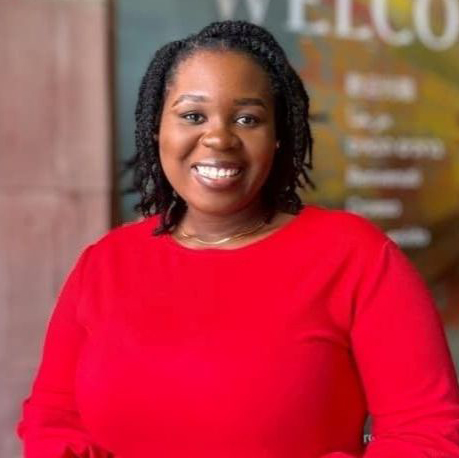
MSc Public Health Nutrition has changed the way I think about nutrition and public health, profoundly and irreversibly.
My passion for improving health outcomes through nutrition, particularly in underserved populations, inspired me to pursue a degree in Public Health Nutrition. When I was a little girl, I wanted to be an Obstetrician and Gynaecologist. That dream planted a seed that never stopped growing. The health of women and children was not just an academic interest; it felt personal, almost like a calling. That desire to protect and support women through some of the most significant moments of their lives never really left me; it just evolved as I did. When my academic path led me into Food Science and Technology at the undergraduate level, I began to see nutrition through a wider lens. It was not just about what was on the plate, but about the social structures, cultural norms, health policies, and systemic inequalities that shaped what ended up there. I became fascinated by the question of why certain communities, and particularly certain women, experience far worse nutritional outcomes than others. That fascination led me to public health nutrition, and once I found it, I knew it was where I was meant to be.
The MSc offered exactly what I was looking for: an academically rigorous environment that bridged nutrition science with public health policy, health behaviour, and systems thinking. It allowed me to move beyond individual-level dietary advice and develop the skills to think about nutrition at the population scale, where I have always believed the most meaningful and lasting change happens. For me, choosing this course was not just a career decision. It was the moment I found the grown-up version of that childhood dream. I care deeply about translating research into meaningful, people-centred public health action, particularly for communities that have historically been underserved. And with the recent acceptance of my MSc dissertation for publication in the African Journal of Midwifery and Women’s Health, I feel that the work I have always wanted to do in the world is truly beginning to take shape.
MSc Public Health Nutrition has changed the way I think about nutrition and public health, profoundly and irreversibly. Before the MSc, I thought about nutrition largely in scientific terms: nutrients, dietary patterns, and biological processes. The programme expanded that understanding in ways I did not fully anticipate. I now see nutrition as something shaped by power, by inequality, by culture, by history, and by the structures of the health systems that are supposed to serve people. When midwives and student midwives lack robust, up-to-date training in maternal nutrition, that is not just a gap in a curriculum; it is a systemic failure with real consequences for the women they care for. This course helped me see those connections clearly and understand how to research and address them. It has changed not just how I study nutrition, but how I see the world.
One moment stands out above the rest, and it is one I did not fully appreciate until a few days after it happened. During an interprofessional education day in the Faculty of Medicine, I had the opportunity to volunteer as a student public health nutritionist, sitting in a room alongside student nurses and doctors, working through a clinical scenario as a team. It was one of those experiences that felt significant even as it was happening. There I was, a public health nutrition master’s student, holding my own in a room full of future clinicians from different disciplines, each of us bringing our own lens to the same problem. Then, a few days later, an email arrived in my university email inbox. It was a commendation letter from the lecturer who had supervised my scenario team, written to recognise my contribution specifically. I read it twice, then a third time. It was one of those moments that stops you in your tracks, not because you were doing anything remarkable in that instant, but because someone took the time to tell you that you were seen and that what you brought to the room had mattered more than you realised. That letter reminded me that showing up fully, even when you feel uncertain, is never wasted. It is a lesson I have carried into every room I have walked into since.
The MSc Public Health Nutrition has opened doors across several areas of my life, both professionally and personally. Most visibly, it led to the publication of my dissertation research in the African Journal of Midwifery and Women’s Health. That is a milestone I am enormously proud of, and one that has given me a credible platform within the academic community. It has also expanded what I believe is possible for me. Completing a postgraduate degree at this level, and doing it well, has a quiet but powerful effect on your sense of your own capabilities. I know now that I can design and execute original research, withstand the scrutiny of peer review, and that I have something meaningful to say in my field. That kind of self-knowledge does not leave you.
But the course has done far more than position me for publication. It has sharpened the way I think, read evidence, and engage with complex public health problems. I approach professional conversations differently now, with more rigour, nuance, and more confidence in my ability to contribute something of value. Where I once might have deferred to others, I now bring my own informed perspective to the table. It has equipped me with a transferable set of skills, including critical appraisal, data analysis, research ethics, and public health communication, that I carry into every professional context. It has made me a more effective, more credible, and more purposeful public health professional in everything I do.
The top three skills I gained from my degree are Research and data analysis (using tools such as SPSS and NVivo), Critical thinking and evidence-based decision-making and Communication of complex health information to diverse audiences.
Choosing where to pursue my postgraduate studies was a decision I approached carefully. Edge Hill University stood out not just for the strength of the MSc Public Health Nutrition programme itself, but for the kind of institution it clearly was. The applied focus of the course, emphasis on real-world public health relevance, and commitment to developing students as independent thinkers all appealed to me greatly. What also drew me in was the culture, a genuine warmth and investment in students that felt different from other options I considered. I wanted to study somewhere that would challenge me and support me in equal measure. Looking back, I can say with confidence that Edge Hill delivered on both, and choosing this university was one of the best decisions I have made.
My favourite aspect of studying at Edge Hill was the strong emphasis on research and real-world application. The programme provided a supportive academic environment, and I particularly valued the opportunity to work closely with lecturers who were actively involved in research. This enriched my learning experience and helped me build confidence in applying theoretical knowledge to practical public health challenges.
The best thing about Edge Hill is its supportive and student-focused environment. The combination of high-quality teaching, accessible support services, and a welcoming campus community made my experience both enjoyable and rewarding. Achieving a distinction in my MSc was a major highlight for me.
Edge Hill provided a range of opportunities to enhance my employability, including access to career services, CV workshops, and one-to-one careers guidance. I also developed transferable skills through my coursework, presentations, and research projects. The university encouraged independent learning and professional development, which helped prepare me for both research and practice-based roles.
I participated in volunteering activities, including the interprofessional day at the Faculty of Medicine, Health and Social care, where I got a volunteering certificate and commendation letter. These experiences helped me develop teamwork, leadership, and communication skills. They also strengthened my confidence in engaging with diverse groups and applying public health knowledge in real-life settings.
I would advise new students on this course to trust yourself and trust the process, even when it feels uncomfortable. Invest in your dissertation fully. Do not treat it as just another assessment to complete and move on from; it is an opportunity to contribute something genuine to public health knowledge, and it may open doors you have not yet imagined. My own dissertation began as an academic project and is now published research. That happened because I took it seriously and gave it all I had. Build relationships with your lecturers and peers. Ask questions, engage with feedback, and be willing to have your thinking challenged. The academic community at Edge Hill is genuinely invested in your success; lean into that. And through every difficult moment, remember why you are there. Your reasons matter. Let them carry you through. I would also advise making the most of all available resources, including UniSkills and careers support.Engage actively with your lecturers, start your assignments early, and take every opportunity to build your research and practical experience. Also, seek out volunteering or internship opportunities to complement your academic learning.
I am currently working as a healthcare assistant and part-time Research assistant. A typical day involves supporting patients with their daily needs, monitoring vital signs, assisting with clinical tasks, and working closely with healthcare professionals to ensure high-quality patient care. The role requires strong communication, empathy, and attention to detail. My favourite part of the role is being able to make a positive impact on patients’ lives through compassionate care and support. It is rewarding to contribute to patient wellbeing and be part of a team that delivers essential healthcare services. I applied for the role just before completing my studies, leveraging both my academic background and previous healthcare-related experience. I also tailored my CV to highlight relevant skills such as communication, teamwork, and patient care, which helped me successfully secure the position.My degree provided a strong foundation in public health principles, research methods, and data analysis. Modules and my MSc dissertation enhanced my ability to critically evaluate evidence and apply it in real-world contexts. These skills are directly relevant to both clinical and research environments.
My long-term goal is to progress into a full time research-focused role within public health and nutrition. I am particularly interested in pursuing a PhD and contributing to research that informs policy and improves population health outcomes.
If I had to describe my time at Edge Hill University in one word, it would be: Becoming. Because that is what it felt like, not just learning, but becoming. Becoming a researcher. Becoming someone who believes in the value of her own work. Becoming the woman that little girl who wanted to be an OB-GYN would be proud of. Edge Hill gave me the environment, the challenge and the people to grow into a version of myself I had been working towards for a long time. I am deeply grateful for that.