
Understand human behaviour. Develop skills for life. Experience psychology in practice from your first year.
Most Psychology degrees teach you how to understand other people. But here at Edge Hill University, you’ll also learn skills that can help you better understand yourself.
From your first year, you’ll explore how psychological science can be applied to everyday challenges, from motivation and confidence, to habits, goal-setting and wellbeing. Through our dedicated Psychology of Wellbeing module and Coaching Psychology Clinic, you’ll have opportunities to experience psychology in practice.
What can psychology teach you about your own life?

Psychology is often associated with understanding other people’s thoughts, emotions and behaviours. But what happens when you turn those insights on yourself?
Through the Psychology of Wellbeing module, first-year students explore topics such as sleep hygiene, behaviour change and happiness, applying these ideas to their own experiences, practicing reflection and personal development planning. Students explore questions such as what influences motivation, why habits can be difficult to change, how people respond when things do not go to plan and what helps us make progress towards goals that matter.
Dr Lee Hulbert-Williams explains:
“In many teaching sessions, students have the option to pause and consider how an idea might apply to their own lives: perhaps to a habit they would like to develop, a goal they are working towards, the way they respond to setbacks, or a decision about what comes next. For some, that means seeing familiar experiences in a new light. For others, it is simply a chance to test-drive a psychological idea and ask whether it might be useful to them personally. Either way, it gives the subject an immediacy that students often find especially engaging. Rather than leaving Psychology in the lecture theatre, they begin to see how its ideas can help make sense of everyday life.”
Experience coaching psychology first-hand
Alongside the Wellbeing module, the Coaching Psychology Clinic will also be available to all Psychology students throughout their degree as a possible opportunity to experience coaching in practice. In one-to-one sessions with a member of the department’s Coaching Psychology Team, students can clarify a goal, explore what may be getting in the way and identify practical next steps that works for them.
Lorna Mills, one of the Coaching Psychologists explains why coaching can be so beneficial:
“Essentially, humans are neurologically and psychologically primed to be goal-seekers. Research in Goal-Setting Theory shows that having a specific target acts as a cognitive filter, helping us ignore distractions and channel our energy more effectively. Working toward a goal triggers the release of dopamine, which creates a sense of momentum and reward, while also providing us with a vital sense of agency and control over our lives.”
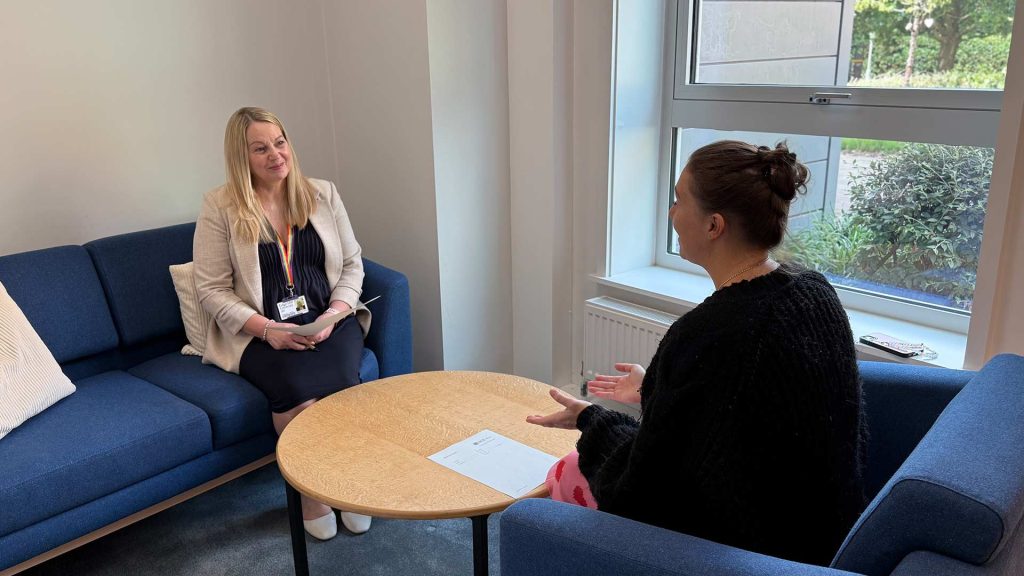
The aim is not to provide answers, but to help students develop the self-awareness and confidence to find solutions that work for them.
Opportunities like this are rare within undergraduate Psychology degrees, allowing students to gain first-hand experience of coaching psychology and develop skills that can support their academic and professional development.
One student described their Coaching Psychology Clinic experience:
“The sessions are clear, focused, and practical. I really appreciate having regular space to reflect with someone who is academically sound and attentive. Someone who also brings insight from working with leaders in an international organisational context.”
The impact can be transformative. Another student who accessed the Coaching Psychology Clinic said:

“One of the biggest takeaways for me has been recognizing how far I’ve already come and learning to celebrate my progress, and it was interesting to me to have someone external validate my successes, such as independent travelling and academic/professional achievement, because I usually don’t talk about these kinds of things with others. We used a variety of tools, from just talking to emotive cards, and I feel that the overall experience was something new for me that I would definitely recommend to anyone wanting to chat about elements of their life they don’t usually reflect upon, or anyone feeling a bit stuck in how to progress.”
Coaching is different from therapy, mentoring or academic tutoring. Rather than telling students what to do, coaches help students reflect on their experiences, identify barriers and develop practical strategies for moving forward.
Students seek coaching support for a wide range of challenges, including:
- Managing procrastination
- Building confidence
- Adapting to university life
- Balancing responsibilities
- Improving time management
- Exploring future career options
- Strengthening relationships
Where these skills can take you?
For students interested in careers within coaching psychology, counselling, clinical psychology or other helping professions, it can also provide valuable insight into how psychology is applied in practice.
Equally, the ability to reflect on experiences, communicate effectively, set meaningful goals and navigate challenges are skills that can benefit graduates in a wide range of careers from healthcare and education to human resources or leadership roles.
For those inspired to explore the field further, there is also the opportunity to continue developing their knowledge and skills through our recently launched MSc Coaching Psychology programme.

Lorna Mills adds:
“Beyond individual transformation, coaching psychologists are increasingly contributing to society’s biggest challenges, including environmental sustainability, social justice, and mental health. With opportunities in education, healthcare, business, and research, this is a career that not only helps others thrive but also allows you to grow, innovate, and be part of something bigger.”
What makes Psychology at Edge Hill different?
The combination of academic study, practical application and personalised support demonstrates the department’s commitment to helping students develop as individuals as well as learners.
By encouraging students to apply psychological concepts to their own lives from their first year, Psychology at Edge Hill offers an experience that is both academically rigorous and personally meaningful.
Whether you’re interested in becoming a psychologist, exploring a wide range of graduate careers or simply developing skills that will help you succeed at university and beyond, you’ll gain more than subject knowledge. You’ll develop practical skills, greater self-awareness and a deeper understanding of how psychology can make a difference in everyday life.
Discover Psychology at Edge Hill and explore a degree that goes beyond theory.
August 11, 2026