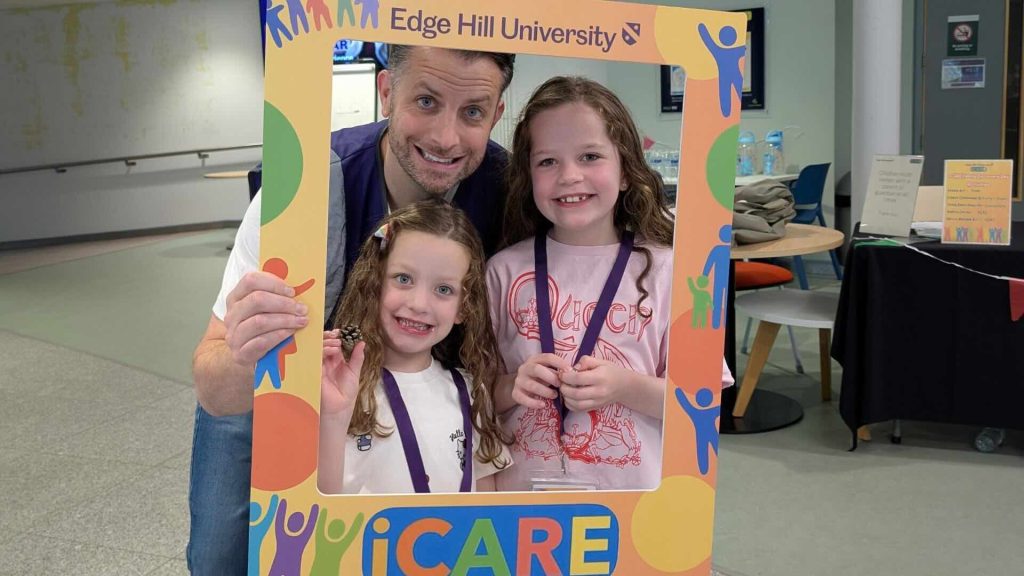
Over the past three years, researchers from Edge Hill University have conducted an in-depth evaluation into the impact of social prescribing through the Cumbria LINK service, following the journeys of children and young people from beginning to end, interviewing families and analysing the data of more than 1,000 children.
LINK, a joint initiative between Barnardo’s and several local Primary Care Networks in Cumbria, has supported more than 2,000 children and young people aged 5-19 since it began almost six years ago, providing non-medical treatment for issues including anxiety, low mood, loneliness or stress.

Dr Michelle Howarth, Professor in Health and social Care and Associate Director for Edge Hill’s Centre for Social Responsibility, said: “This project was a first opportunity to assess how social prescribing would impact on the mental health needs of children and young people in the UK.
“Our research enabled us to understand the LINK programme from the perspectives of children and young people and their families, as well as LINK workers, managers and commissioners.
“Findings demonstrate that LINK has successfully reached those with the greatest levels of need, supporting children, young people and families to build resilience, confidence and personal growth. The programme’s ability to work effectively across sectors has been central to its success, helping families navigate an often-complex system and ensuring timely, child‑centred support.
“We hope that our research contributes to the growing evidence base for children and young people’s social prescribing as a beneficial, impactful, and meaningful approach that supports children, young people and their families.”
The need for a local social prescribing service in Cumbria was identified by GPs and health professionals who worried they were only seeing children at crisis point and recognised the need for lower-level interventions to support wellbeing at a much earlier stage.
The study found social prescribing to have:
- improved mood, self-perception, and re-engagement in life and social activities;
- prevented difficulties from escalating into more severe mental health problems.
- reduced anxiety and panic-type responses, and improved emotional regulation
- calmer household environments, increased confidence, clearer communication within families about feelings and needs, improved school participation and young people looking to the future with hope.
Ellen Buckley, Senior Manager for Barnardo’s North Mental Health Services, said: “We’ve seen first-hand how powerful social prescribing can be for children experiencing anxiety and emerging mental health challenges.
“The extensive study with Edge Hill University has shown that when children are supported early and through trusted relationships with skilled workers, real and lasting change can happen. Crucially, the impact is felt across the whole family with parents having renewed hope and reduced worry as family relationships strengthen and they see their children connecting and thriving again.”
Dr Richard Massey, GP and Clinical Director of the Keswick and Solway Primary Care Network, added: “The future of healthcare and wellbeing should rightly be focused on moving from treatment to prevention and in general practice we value this service as a gold standard example of upstream support for children and young people.”
Read the full Young People’s Social Prescribing Service Evaluation Report and find out more about Edge Hill’s Centre for Social Responsibility.
May 19, 2026