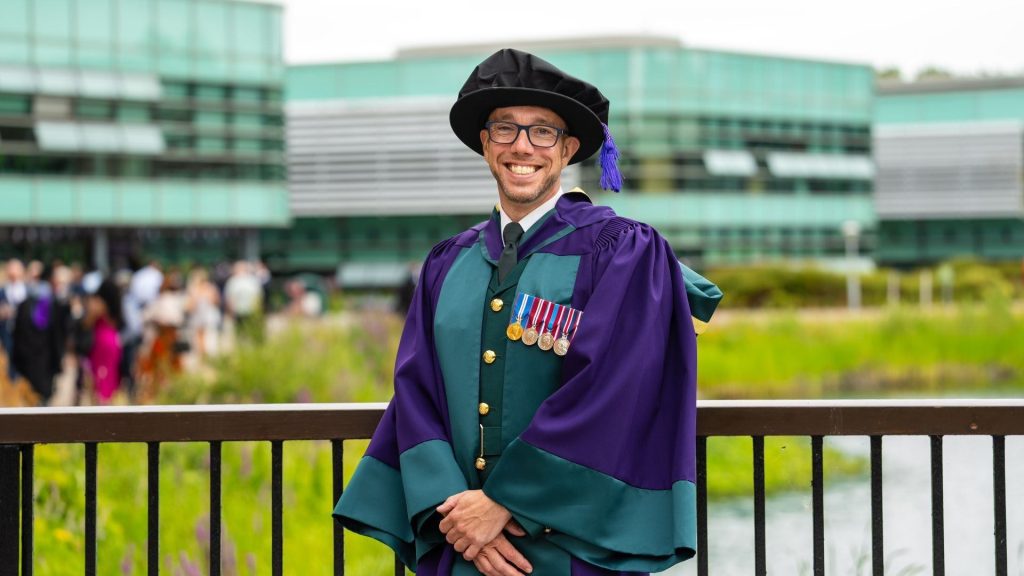
Edge Hill University welcomes international partners from Shandong Agricultural University

Edge Hill University recently welcomed a senior delegation from Shandong Agricultural University (SDAU), China, as part of an ongoing commitment to fostering international academic partnerships.
The visit, by SDAU Vice President Professor Lin Hai and three senior colleagues, provided a platform to build upon a recently signed collaboration agreement.
The delegates were hosted by Edge Hill’s newly appointed Deputy Vice-Chancellor (Business Development & External Engagement), Professor Kurt Allman, alongside Jay Cullen, Dean of the Faculty of Arts and Sciences, Dr Anne Oxbrough, Head of Biology and Kate Arnold, Head of International Administration.
Professor Kurt Allman, Deputy Vice-Chancellor, said: “It was a pleasure to welcome Professor Lin Hai and his colleagues to our Ormskirk campus. This visit marks an important step in our international strategy as we seek to build meaningful, long-term partnerships with prestigious institutions like Shandong Agricultural University.
“By aligning our expertise in areas such as Biosciences and research, we are creating new pathways for innovation and global engagement that will benefit both our students and the wider academic community.”
The visit included a formal exchange of gifts and a tour of the University’s state-of-the-art Biosciences laboratories, led by Dr Oxbrough. Discussions focused on a wide range of collaborative opportunities, including postgraduate progression routes, student and staff exchanges, joint research initiatives and potential Transnational Education (TNE) projects.
Kate Arnold, Head of International Operations, added: “Visits like these are vital for translating cooperation agreements into tangible opportunities. We are excited to explore how we can further integrate our academic offerings, from enhancing postgraduate progression to developing staff exchange programmes.
“Strengthening our ties with SDAU reflects Edge Hill’s growing reputation as a globally connected university dedicated to cross-cultural learning.”
The day concluded with a commitment from both institutions to continue exploring future collaborations that will enhance research and academic excellence on an international scale.
Find out more about international opportunities.
A flagship event for Educator Development: Medical School Spring Conference 2026
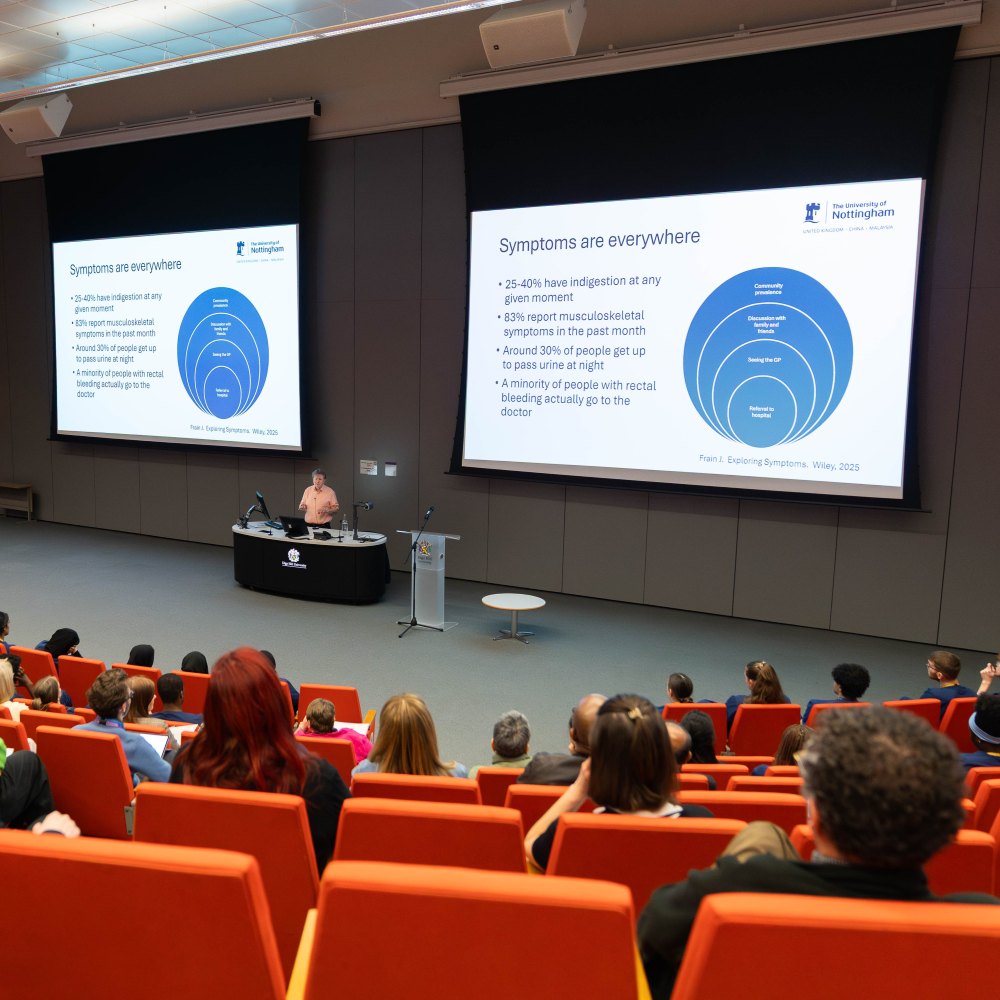
Edge Hill University’s Medical School welcomed over 120 delegates including students, placement educators and clinical teaching colleagues from across the region, to its annual Educator Development Spring Conference.
The conference was opened by Professor Mini Singh, Director of the Medical School, and attendees took part in a varied programme of interactive workshops, poster viewing and networking, creating space to share best practice, connect with colleagues and engage with current developments in medical education.
Poster prizes were presented by Dr Diane Hudman (Head of Undergraduate Medicine) celebrating innovation and excellence across Year 2 medicine community voluntary sector placements
Dr Alykhan Kassam, Academic Lead for Learning, Teaching Excellence and Educator Development at Edge Hill University Medical School, said: “The Spring Conference has become an integral component of our educator development offer within the Medical School. It brings our educator community together to celebrate excellence and share best practice and continues growing from strength to strength each year.”
The Medical school were able to offer attendees Continuing Professional Development (CPD) recognition for the conference, with approval from the Federation of the Royal Colleges of Physicians of the United Kingdom.
The annual conference is dedicated to fostering excellence in educator development by bringing together industry placement providers and academic staff, ensuring the University continues to deliver a gold-standard student experience.
Michael Lloyd, Head of Clinical Education at Mersey and West Lancashire Teaching Hospitals NHS Trust, said: “The Spring Conference was an excellent opportunity to network with colleagues and students and to support the professional development of delegates.
“The workshops were engaging and thought provoking, plenty of ideas to take forward to innovate our own medical education delivery. The student posters were inspiring and showcased not only their own learning, but their positive contributions to the local population.”
Major Edge Hill research study will help improve recruitment and retention in adult social care
A major national research study commissioned by Skills for Care and jointly delivered by Edge Hill University has been released.
The Skills for Care study aims to identify effective approaches to strengthening recruitment and retention across adult social care, highlighting the importance of adult social care in society and the economy.
A major national research study commissioned by Skills for Care and jointly delivered by Edge Hill University has been released.
The Skills for Care study aims to identify effective approaches to strengthening recruitment and retention across adult social care, highlighting the importance of adult social care in society and the economy.
Dr Julie Feather and Professor Axel Kaehne, from Edge Hill’s Evaluation and Policy Analysis (EPA) Unit with Dr Ciarán Murphy, Senior Lecturer in Social Work, led the project.
Dr Julie Feather, Senior Research Fellow at Edge Hill University, said: “This research highlights both the scale of the challenge facing adult social care and the opportunity to do things differently. What’s clear is that there is no single solution.
“Improving recruitment and retention requires coordinated action across providers and systems, alongside sustained investment and realistic expectations about what change takes.”
Currently, adult social care employs 1.6m people in England, providing local authorities and wider healthcare partners the support that they require to help people live independently.
The Skills for Care study combined a rapid evidence review of 45 studies (2015–2025), two national surveys for stakeholders and in-depth qualitative interviews across the country.
The findings were commissioned to identify the strongest and most consistent research moves beyond identifying opportunities to propose five pilot-ready delivery models that can be tested in 2026/27.

These include integrated pathways linking recruitment to long-term retention leadership development models to strengthen organisational culture and system-level approaches to improve recruitment efficiency and workforce stability evidence on what is considered best practice.
The study emphasised that change will be required moving forward over the course of the coming years, creating stronger collaborations between regional authorities.
Find out more about Skills for Care and Edge Hill’s Evaluation and Policy Analysis Unit.
May 15, 2026