Global Infectious Disease MSci (Hons)
UCAS code: B909
Prevent. Control. Cure. Arm yourself with specialist knowledge and skills and head to the forefront of the global fight against infectious diseases on the only MSci degree to be delivered in partnership with the Liverpool School of Tropical Medicine, a world-leader in infectious disease research.
Subject to validation.
Overview
| Course length: | 4 years full-time |
|---|---|
| Start dates: | September 2028 |
| Location: | Edge Hill University and Liverpool School of Tropical Medicine, Pembroke Place |
| Example offers: | 112-120 UCAS Tariff points, including A level Biology (Grade B or above). View full entry criteria |
| Subject(s): | Biology and Biosciences |
| Faculty: | Arts and Sciences |
| Department: | Biology |
Are you committed to creating a better future for communities across the globe? Do you want to develop knowledge and skills that could have a positive and lasting impact on human health and well-being? Our four year integrated Masters degree allows you to investigate some of the world’s greatest health challenges, alongside influential researchers in world-class laboratories.
Develop a critical understanding of infectious disease biology, whilst appreciating the associated inequalities that contribute to disease control efforts. Build practical knowledge and specialist skills in state-of-the-art facilities. Tailor your degree to your specific interests and career aspirations, by combining core learning with optional modules.
With more than a century at the forefront of global disease control efforts, the Liverpool School of Tropical Medicine partnership also allows you to make use of a global commercial and academic network. Join an international association of academic and industry partners, working in collaboration to solve infectious disease issues linked to diseases such as COVID-19, TB, malaria, dengue.
By the end of this degree, you will be well-equipped to apply your evolving expertise to a multitude of careers including drug and vaccine development, vector control and health programme management.
Course features
-
Sandwich year option available
-
Studying abroad option available
-
Fieldwork
What you'll study
Year 1 of MSci Global Infectious Disease is designed to introduce you to cell biology, genetics and the basic skills required of a biological scientist. You will also have the opportunity to select modules to suit your interests and career aspirations. From modules in biodiversity and ecology to those centred around human anatomy and chemistry, we will equip you with the foundations needed to prepare you for a range of careers including drug development, investigating the impact of disease on human body systems or working on natural reservoirs of disease.
In Year 2, you will learn how immune systems react and combat disease infections, before gaining more in-depth knowledge of the viruses, bacteria and parasites which cause them. You will continue your training in practical skills relevant to a future career in infectious disease biology and conduct a short research project at the laboratory facilities of Liverpool School of Tropical Medicine, supervised by LSTM researchers. Whether you’re are interested in working with animal-or insect-reservoirs of disease-causing organisms or pursuing a laboratory-based career in drug or vaccine development, optional modules will provide you with opportunities to pursue more advanced knowledge and skills in areas that meet their specific interests and aspirations.
In Year 3, you will propose, plan and execute an individual research project on the theme of infectious disease. The mini research project will be carried out at Liverpool School of Tropical Medicine laboratories and supervised by LSTM researchers. You will also study advanced topics including how to manage a public health issue related to infectious disease. Module options will provide further tuition on molecular, cellular and whole-organism biology to further deepen your knowledge and skills on advanced topics beyond infectious disease biology.
In Year 4, students will study full time at the Liverpool School of Tropical Medicine. Core modules will cover the biology of tropical pathogens and disease vectors, alongside training in research methods and professional skills. A major component of the programme is an extended individual research project, allowing students to design and conduct original research under academic supervision.
Optional modules enable students to tailor their studies to specific interests, with topics including epidemiology and control of tropical pathogens, molecular biology, immunology, microbiology, animal parasitology, vector population biology, and snakebite. Additional options provide applied training in bioinformatics, statistics for health research, pathogen and vector research skills, and the impacts of global climate change on health, ensuring graduates develop both advanced biological knowledge and practical research skills relevant to tropical medicine and global health.
Compulsory Modules
Biology of Tropical Pathogens and Disease Vectors
MSci Research and Professional Skills
MSci Research Project
Optional Modules
Epidemiology and Control of Tropical Pathogens
Applied Bioinformatics
Animal Parasitology
Microbiology and Health
Vector Population Biology and Control
Molecular Biology of Tropical Pathogens
Key Topics in Snakebite
Immunology of Tropical Diseases
Applied Skills in Pathogen and Vector Research
Applied Skills in Statistics for Health Research
Global Climate Change and Health
How you'll study
You will be taught via a combination of lectures, practical work and tutorials. For the first 3 years of study, you will be at the Edge Hill University main campus in Ormskirk and the Liverpool School of Tropical Medicine facilities in Liverpool. In the 4th year of study, you will be based at the Liverpool School of Tropical Medicine, but will have access to Edge Hill University facilities and resources.
A typical week of study during term time will involve 12 – 16 hours of face-to-face learning sessions. You will be expected to use the combined study facilities and resources of EHU and LSTM to further develop your skills and knowledge through independent study.
How you'll be assessed
You will be assessed using a combination of coursework and exams to ensure you develop a range of skills required by future employers. You will complete independent coursework tasks including practical write-ups, essays and research log books as well as addressing a real-world public heath issue, as part of a team.
Who will be teaching you
Edge Hill University and Liverpool School of Tropical Medicine have a long history in delivering excellent teaching in higher education. You will be taught by academic staff members affiliated to EHU and LSTM who are all experts in their respective fields of biology. In-depth topics in infectious disease biology, and the research elements of the programme, will be taught and supervised by researchers who are highly experienced in the field, using the state-of-the-art facilities at LSTM. Weekly research seminars by invited speakers will also be held during term to further expand your horizon in research and biology.
Where your course includes optional modules, these are to provide an element of choice within the course curriculum. The availability of optional modules may vary from year to year and will be subject to minimum student numbers being achieved. This means that the availability of specific optional modules cannot be guaranteed. Optional module selection may also be affected by timetabling requirements. Some restrictions on optional module choice or combinations of optional modules may apply.
Entry criteria
112-120 UCAS Tariff points, including A level Biology (Grade B or above) with GCSE Mathematics and English Language both at Grade C.
Equivalent qualifications and combinations will be considered, including Extended Project (EPQ) at grade C or above.
Other awards such as BTEC Extended Diploma, BTEC Nationals, International Baccalaureate and T Level, will require the equivalent point scores as the UCAS tariff.
Applications made by non-EEA students will be considered as part of the international admissions process in accordance with University procedure.
Example offers
| Qualification | Requirement |
|---|---|
| A Level | BBC-BBB. |
| UCAS Tariff points | 112-120 points. |
| BTEC Extended Diploma (or combination of BTEC QCF qualifications) | Distinction, Merit, Merit (DMM). |
| T Level | Overall grade of Merit. |
| International Baccalaureate (IB) | We are happy to accept IB qualifications which achieve the required number of UCAS Tariff points. |
| Access to Higher Education Diploma | 45 credits at Level 3, for example 15 credits at Distinction and 30 credits at Merit or 24 credits at Distinction and 21 credits at Merit. The required total can be attained from various credit combinations. |
English language requirements
International students require IELTS 6.0, with a score no lower than 5.5 in each individual component, or an equivalent English language qualification.
How to apply
Apply full-time
Read our guide to applying through UCAS to find out more about the application process.
International
Read our guide to applying through UCAS to find out more about the application process.
If you join a full time undergraduate degree at Edge Hill University, we will guarantee you the offer of a room in our halls of residence for the first year of your course.
Discover our accommodation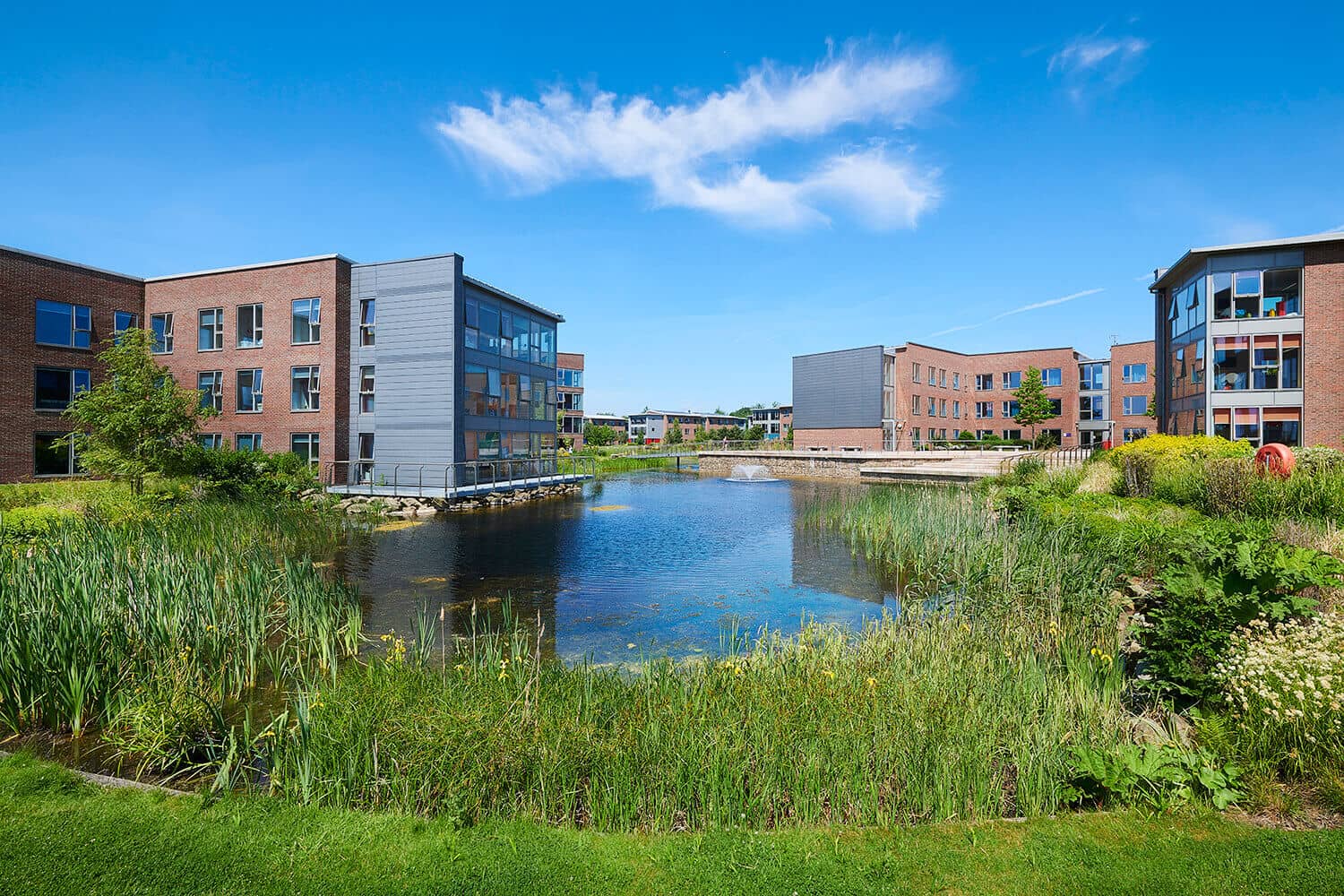
Facilities
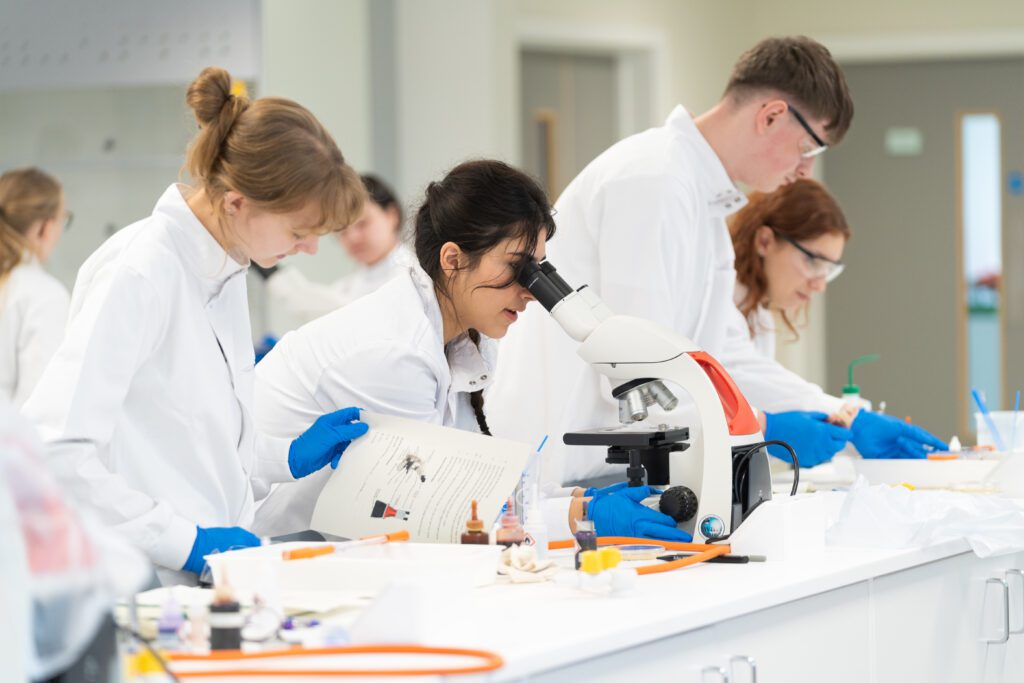
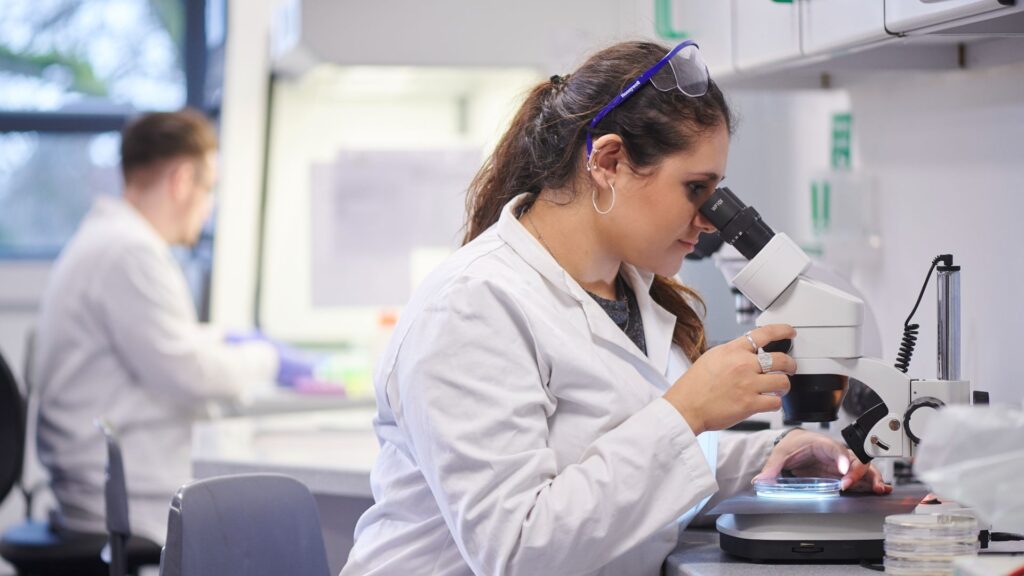
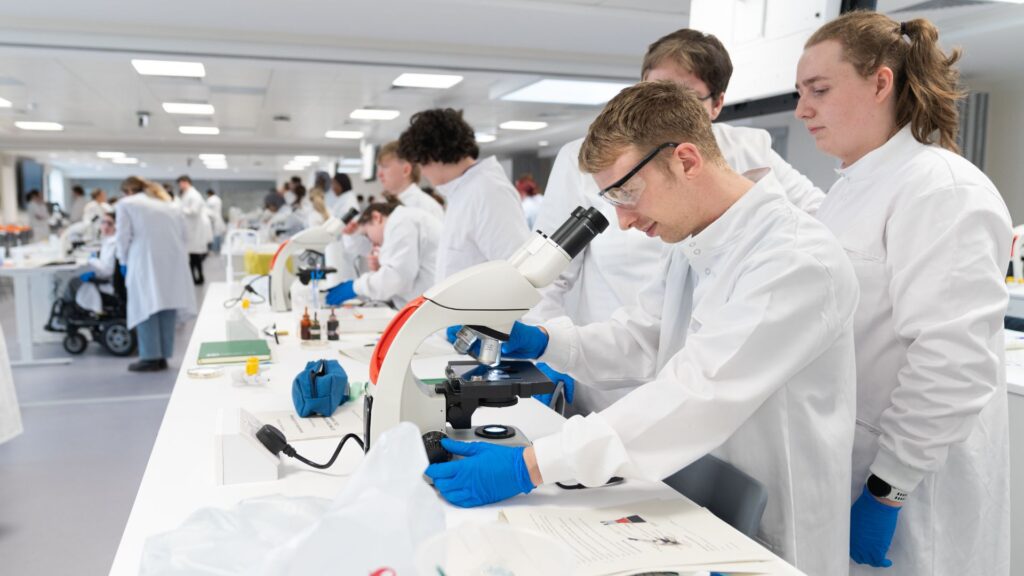
Our BioSciences building incorporates impressive, modern laboratories, offering exciting and highly relevant practical experience in some of the best equipped facilities in the country. Resources include fluorescence and scanning electron microscopes, DNA extraction and analysis equipment, and climate controlled insectaries.
You will benefit from our brand-new £17.4m Life Sciences building, featuring dedicated student research labs for learning advanced cell culture and histology techniques.
At Liverpool School of Tropical Medicine, you will have access to state-of-the-art laboratory facilities in an exciting research-active environment. Resources include a vast collection of ‘real-world’ diagnostic specimens as well as high-quality molecular, cell-culture and insectary facilities.
You will also benefit from LSTM’s specialist library as well as the immersive technology and connectivity at their flagship learning and training facility, Pembroke House. This has flexible working spaces with high-quality simulation and immersive reality suites and digital learning common rooms.
Where you'll study
Finance
Tuition fees
2028-2029 fees will be added when available.
Your future career
Our MSci (Hons) Global Infectious Disease degree will provide a wide range of career opportunities.
You may wish to pursue a career as a laboratory or data scientist involved in drug and vaccine development efforts, antimicrobial resistance monitoring, or responding to major incidents such as pandemics.
The transferable skills gained on this degree would also make our graduates ideal for careers in teaching or scientific communication.
Course changes
Every effort has been made to ensure the accuracy of this information, however our courses are subject to ongoing review and development. Changing circumstances may necessitate alteration to, or the cancellation of, courses.
Changes may be necessary to comply with the requirements of professional bodies, revisions to subject benchmarks statements, to keep courses updated and contemporary, or as a result of student feedback. We reserve the right to make variations if we consider such action to be necessary or in the best interests of students.