International Relations and Humanitarian Action MSci (Hons)
UCAS code: L249
Understand global crises. Respond with purpose. Build a career with impact.
Explore how power, conflict and inequality shape the world, while developing the skills to respond effectively to the world’s most urgent humanitarian emergencies on our unique, integrated MSci (Hons) International Relations and Humanitarian Action, delivered in partnership with Liverpool School of Tropical Medicine.
Are you curious about how global crises shape communities around the world? Do you want to develop the analytical, problem-solving, and negotiation skills needed to provide effective humanitarian responses to emergencies? The world needs professionals who can think critically, act ethically, and respond decisively in times of crisis. This integrated master’s degree equips you with the political insight and humanitarian expertise to do exactly that.
Our unique programme combines world-class teaching with real-world impact. For the first three years, you will study cutting-edge international relations and politics at our award-winning Ormskirk campus, building a strong academic foundation. In your fourth year, you will advance your learning at the internationally-recognised Liverpool School of Tropical Medicine (LSTM), where you will specialise in addressing humanitarian emergencies and contemporary global challenges. With LSTM’s unmatched expertise in real-world humanitarian response and strong connections to United Nations agencies, NGOs, and ministries of health, this course offers an unparalleled pathway to a global career making a meaningful difference.
Throughout the course, you will develop the skills needed to thrive in a competitive professional world, while gaining a deep understanding of international politics and the world’s most pressing humanitarian challenges.
You will also build a wide range of discipline-specific and transferable skills, including analysis, critical evaluation, research, ethical decision-making, and communication, through a combination of independent study and collaborative teamwork. The programme also allows you to tailor your degree to your own interests and career ambitions, combining core learning with optional modules that reflect your passions and goals.
By studying in multidisciplinary environments, you will gain the confidence to exchange ideas, collaborate across cultures, and build lasting professional networks.
By the time you graduate, you will be well prepared to pursue careers in humanitarian action, international organisations, policy, research, or further study, equipped with the knowledge, practical insight, and confidence to make a meaningful global impact.
Springpod Politics & International Relations Subject Spotlight
This teaser introduces a series led by Dr Steven Daniels, exploring how political systems, global events and international relationships shape the world we live in. To watch the full set of episodes, access the complete series on Springpod: ehu.ac.uk/politicsspringpod.
In Year 1, you will build a strong foundation in the principles and practice of international politics. Through carefully designed modules, you will explore the theory of international relations, develop practical skills in political analysis and speech-writing, and gain insight into how policies are shaped at both national and global levels. This year equips you with the analytical tools and communication skills essential for navigating the complex world of international affairs.
Introduction to Political Concepts and Theory explores the foundations of political analysis and the concepts, approaches and methods through which we understand the subject. You will critically examine the core ideas central to the study of politics. You will address the nature of the state and sovereignty, and will gain a deeper, critical understanding of power, systems of governance and political legitimacy.
Module code: POL1001
Credits: 20
Assessment:
100% Coursework
Introduction to International Relations
Introduction to International Relations recognises that it is difficult to understand politics today without having an understanding of how states relate to each other. The module explores inter-state relationships to each other and to international and supranational institutions. The global trends and pressures which impact on and influence politics and policy making will also be considered, as well as the role of non state actors, such as non-governmental organisations.
Module code: POL1003
Credits: 20
Assessment:
50% Coursework
50% Practical
UK Politics - Issues and Challenges Since 1979
UK Politics - Issues and Challenges Since 1979 will explore UK Politics, and the changes it has undergone, in the period from the 1979 election onwards. You will cover a range of issues such as the Brexit Referendum, the creation of the Social Democratic Party, the miners' strike and the 2010 Coalition. This module will provide you with a foundation for further study at a more advanced level and will complement other modules focusing on particular aspects of politics and the political profession.
Module code: POL1004
Credits: 20
Assessment:
60% Exam
40% Coursework
Analysing Policy and Policy-Making
Analysing Policy and Policy-Making looks at how policy is made, in government(s) and in political parties. You will learn a range of ways of analysing and evaluating the process and policy success. Many bodies in politics make policy. This can be in response to crises, in an attempt to introduce particular ideological approaches or to find ways of solving long and short term problems. This module will give you an understanding of policy making approaches and the policy-making "world" which is vital for understanding politics.
The Art of Political Rhetoric - from Pericles to Putin
The Art of Political Rhetoric - from Pericles to Putin explores a range of political speeches identifying rhetorical devices and context. You will also be introduced to the art of speech-writing. Understanding how politicians communicate is an important part of understanding politics. Speeches, whether in the legislature, at party conference, at the hustings or elsewhere, provide a rich source of material for that understanding. Learning the art of speech writing will help you understand speeches better and provide you with a chance to begin to develop skills useful in political employment.
Module code: POL1006
Credits: 20
Assessment:
50% Coursework
50% Practical
Parliaments and Devolution in the UK
Parliaments and Devolution in the UK will provide you with a focus on the development of devolved forms of government as well as Parliamentary procedures at UK and devolved Parliament areas. Since the new Labour Government in 1997 the UK has seen the setting up and empowering of devolved governments. There has also been the development and growth of the position of Elected Mayor. These developments are highly significant for the way politics is done in the UK. In this module you will focus on the UK Parliament but also on devolved Parliaments and elected mayors. The areas of focus will depend on current events.
Module code: POL1007
Credits: 20
Assessment:
50% Coursework
50% Exam
Language 1
Language 1 is ideal if you want to learn a new language, or further develop your current language skills, as an integrated part of this degree. The module will be taught in an interactive, communicative manner, using authentic materials in the target language. Emphasis will be placed on all four areas of reading, writing, speaking and listening. You will play an active role in the classes, engaging in role-plays, short conversations, videos, authentic texts and listening materials. You will also be encouraged to reflect on your own learning needs. The module accommodates varying language levels and you will be divided into groups accordingly. On enrolment to the module, you will complete a language induction form and be placed into a language level group appropriate for your prior knowledge of the language. Please note, while we will endeavour to accommodate varying language levels per module, this is not always possible. While you can join the module with some prior experience of your target language, you will not be able to study a language you are already fluent or proficient in.
Module code: TLC1010
Credits: 20
Assessment:
85% Coursework
15% Practical
In Year 2, you will deepen your understanding of global politics through focused study of European and US political systems. You will explore key political thinkers and ideas, and examine topics such as political ideologies, political economy, and psephology, the statistical analysis of elections and voting trends. This year combines theoretical insight with practical skills, helping you to analyse and interpret political developments in a comparative and informed way.
Political Ideologies explores the principle ideas, significance and impact of the major political ideologies in contemporary political life. The module first considers the nature of political ideology and then proceeds to examine and critique each system of ideas and consider the context that shaped their birth, development and evolution. You will also examine the ways in which political ideologies influence or determine political choices in contemporary societies.
Module code: POL2003
Credits: 20
Assessment:
80% Coursework
20% Practical
Contemporary US Politics
Contemporary US Politics looks at politics in the US today and in the recent past. It focuses on major trends and key developments while exploring in some detail the key institutions relevant to US politics. Focusing on the US politics from the Reagan presidency onwards, the aim is to equip you with an understanding of one of the major ‘theatres of politics’. You will explore key aspects of recent presidencies, the development of the role of Vice President, the US candidate selection system, the funding of political campaigns, the operation of Congress and State Houses, legislative processes, trends in party management and development, as well as any emerging news stories.
Module code: POL2005
Credits: 20
Assessment:
100% Coursework
Global and National Capital and Labour in the 20th Century
Global and National Capital and Labour in the 20th Century will explore the connection between capital and labour, both nationally and internationally, enabling you to understand the complex, ever-changing relationships. You'll gain a greater understanding of the complicated relationship between the two, and the various influences upon that relationship. You'll explore some of the historical and contemporary events that have shaped capital, labour, and the economy, from the French Revolution to the 2008 global financial crash, although mostly with a focus on the ‘long’ 20th Century. You'll study some of the theoretical and practical arguments underpinning this relationship, and conduct research on both national and international case studies.
Political Geography is one of the most important subdisciplines of human geography. The module provides a deeper understanding of various ways in which power produces, and is produced by, spaces and places in which they operate. You will discover the spatial nature of political power, thereby enabling deeper theoretical and practical insights into the relationship between space, place, territory and politics. With specific attention to how power is related to and distributed across space, the module interposes theories, concepts and activism to enable you to appreciate the contemporary moments of politics emerging at various scales. The post-colonial and post-structural theories introduced in the module are aimed at assisting students to develop their ideas on contemporary issues related to territory, sovereignty, border, conflicts, security, belongingness, race, settler colonialism, citizenship, mobility, and migration.
Module code: GEO2257
Credits: 20
Assessment:
100% Coursework
International Law
International Law is an important subject due to the globalisation of society. It is the law that governs relationships between states and the activities of international institutions, including the United Nations and European Union. During the module you will consider areas such as the settlement of disputes, title to territory, diplomatic relations, the law of the sea, human rights, and the law governing international trade agreements. You’ll also be encouraged to consider what international law is, who it applies to, who regulates the application of international law and why anyone should comply with it.
Module code: LAW2068
Credits: 20
Assessment:
100% Practical
Comparative European Politics
Comparative European Politics examines the government and politics of France, Germany, Italy, Greece and Poland on a comparative basis. The module will explore in a systematic manner through the application of a number of theoretical models the nature of the systems of government and politics in the three states.
Module code: POL2001
Credits: 20
Assessment:
100% Coursework
The Politics of Migration
The Politics of Migration acknowledges that migration is one of the key paradigms of the 21st century. To understand many of the trends and events in the world today, it is necessary to understand what migration is, how it is represented and ‘managed’, and how it is experienced, whether directly or indirectly. The module will introduce you to a range of theoretical traditions of migration, as well as a variety of case studies from both the UK and overseas, to enable you to understand and analyse a phenomenon that is highly relevant in contemporary politics.
Module code: POL2004
Credits: 20
Assessment:
70% Coursework
30% Practical
Elections and Voting Systems
Elections and Voting Systems looks at elections and voting systems across a range of countries. Anyone wanting to work in a political environment needs an understanding of how elections work and the significance of any changes. It was, for example, a system change in the Labour Party, as part of the Collins Review in 2014, that made it possible for Jeremy Corbyn to be elected. The module analyses the importance of each system and focuses on the many pressures for change in terms of who votes and when. The countries will be chosen in a way which provides a good range of systems and makes use of current events.
Module code: POL2006
Credits: 20
Assessment:
100% Coursework
Preparing for Work in Politics
Preparing for Work in Politics looks at the various activities which make up the world of work (both paid and unpaid) in politics. It will enable you to begin thinking about your potential place in this vast area. Focus will be placed on current examples of particular pieces of political work, for example party management, internal reform, selection campaigns, conference organisation, and motion and policy writing. You will also examine a variety of roles, from elected representatives to MPs’ assistants, think tank researchers, civil service staff, political bloggers, party activists and campaigners. The aim is to help you better understand a variety of areas of politics and identify those in which you have an interest and may wish to explore further.
Module code: POL2007
Credits: 20
Assessment:
50% Coursework
50% Practical
Party Politics at Home and Abroad
Party Politics at Home and Abroad looks at the reasons political parties exist, how and why they are born, how they develop, how and why they decline and die. You will study the relationships between parties and the challenges posed to mainstream parties by niche and challenger organisations. You will also focus on how we categorise and analyse parties. You will be using examples from the UK and from a range of other countries. These other countries may vary year on year to take account of current events or recent developments.
Module code: POL2008
Credits: 20
Assessment:
60% Coursework
40% Practical
Research Methods for Politics
Research Methods for Politics introduces research methodologies and issues such as ethics and project planning. It also explores the various debates around research approaches. Studying this module will prepare you for your dissertation project in year 3. This module will you give a complete focus on research, so you will be able to begin to think about the methods best suited to pursuing your areas of interest.
Module code: POL2010
Credits: 20
Assessment:
100% Coursework
Politics and International Relations Self Directed Study
Politics and International Relations Self Directed Study allows you to focus on a particular Politics and International Relations agreed topic or focus and explore it with tutorial support. You will produce a particular research project based piece of work that comprises the agreed focus of the assessment, and a learning diary that demonstrates a reflective approach to the study. Your study will involve not only desk research such as library searches but information retrieval from a range of primary sources (such as for example UN Security Council meeting notes or Hansard transcripts). You will develop your self-directed learning skills and build on the foundations of your academic studies in a focused, applied and reflective fashion.
Module code: POL2011
Credits: 20
Assessment:
80% Coursework
20% Practical
In Year 3, you have the flexibility to shape your learning through a wide range of optional modules. You will study statecraft and humanitarian responses, equipping you for your postgraduate year, while also having the opportunity to explore topics in depth, including the rise of China, global antisemitism and Islamophobia, strategic political communications, gender and power, and critical migration studies. Practical experience is a key focus this year: you can engage in hands-on projects, such as tackling a policy issue with a think tank or completing a work placement, building the skills and insights that will prepare you for a career in international relations and humanitarian action.
The Politics and Practice of Humanitarian Action explores the impact that geopolitical changes have had on the environments in which humanitarian action takes place. This modules introduces you to a broad range of research and evidence that informs our collective understanding of humanitarian action in complex emergencies, key ethical and policy debates, and the practice dilemmas that surround contemporary humanitarian action. It also challenges you to consider the principles, analytical perspectives, and actions required to protect the lives, livelihoods, and human dignity of crisis-affected people. You will also get the opportunity to interrogate the critiques levelled against the humanitarian system, such as whether humanitarian action can, under certain circumstances, do more harm than good, and explore some of the ways the humanitarian system has responded to these challenges.
Module code: POL3017
Credits: 20
Assessment:
70% Coursework
30% Practical
National and International Statecraft Challenges
National and International Statecraft Challenges explores how statecraft has evolved in response to growing global interdependence. You will examine the changing nature of power, diplomacy, and decision-making, considering the influence of actors such as multinational corporations, NGOs, and internal challengers to state authority. By focusing on real-world examples, the module asks a central question: who really makes the decisions in today’s complex global system?
Strategic Political Communications looks in depth at political communication and how it is used by various players in the political arena. It is impossible to understand modern day politics without understanding how politicians and campaign groups communicate. This module builds on your understanding of political systems and practices and analyses pieces of communication in a critical way.
Module code: POL3001
Credits: 20
Assessment:
100% Coursework
Politics Work Placement
Politics Work Placement gives you the opportunity to identify, apply for and take part in a work placement in a political or politically related field. The process is supported by politics tutors and a dedicated work placement team. You will also attend preparation and reflection sessions which will focus on themes such as job searches, time management and workplace disciplines, and the specific needs of particular employers.
Module code: POL3004
Credits: 20
Assessment:
70% Coursework
30% Practical
Advanced Parliamentary Studies
Advanced Parliamentary Studies equips you with a thorough and deep understanding of the workings of the UK Parliament and Parliamentary systems. The module explores the history, culture and potential future of Parliament, examines aspects of Parliamentary process in-depth, and considers related issues such as regulation and ethics. You will have the opportunity to interact with practitioners from the workforce in the Houses of Parliament.
Module code: POL3006
Credits: 20
Assessment:
60% Coursework
40% Practical
The Think Tank
The Think Tank looks at the role that think tanks play in politics and influencing policy-making and change. The tasks carried out by think tanks are relevant across a wide range of political, media and other practice. This module provides you with an in-depth understanding of the work of think tanks, as well as practical experience in carrying out that work and producing a product. You will take a policy area, research it in depth, produce policy ideas, identify outlets for pursing those ideas, and produce a product online.
Critical Migration Studies addresses a hot topic across the Global North and the South. Migration occurs across space influencing and shaping the spatial, demographic, economic, social and political environment of both the origin and destination locations. This module equips you with the factual knowledge and conceptual skills to understand migration processes, migration consequences and migration governance.
Module code: GEO3262
Credits: 20
Assessment:
100% Coursework
British Rule in Palestine
British Rule in Palestine explores the origins and development of British rule in Palestine, a seminal chapter in the history of the Arab-Israeli conflict, the Middle East and the British Empire. The module focuses on the political objectives and impact of British rule in Palestine, with particular reference to the evolution of the Zionist-Palestinian conflict.
Module code: HIS3025
Credits: 20
Assessment:
100% Coursework
Global Antisemitism and Islamophobia
Global Antisemitism and Islamophobia explores the nature and origins of antisemitism and Islamophobia as a global problem. It speaks to critical questions of race, colonialism, surveillance and terrorism that are central to our world. The module begins with the long history of these two fields of prejudice in Europe, including a particular focus on the relationship between them and their significance in the birth of modern politics. It then traces the contemporary history of our present moment, beginning with the end of the Cold War. Key issues include holocaust memorialisation and the West, Islamophobia and the War on Terror, and the international politics of antisemitism.
Module code: HIS3042
Credits: 20
Assessment:
100% Coursework
Gender and Power
Gender and Power explores the history of gender through the lens of ‘Gender and Power’ across a wide range of time periods and regions. The module focuses on a rich range of case studies to explore the intersections of gender, power, and privilege throughout history. It is important to note that this module is not a history of women: rather, it will explore constructions of gendered masculinity, femininity, and the spaces between and surrounding gendered identities throughout the ages. The goal of the module is to uncover the range of ways in which gender has been constructed in relation to power throughout the ages, as well as to study the range of scholarly approaches to gender and power from a modern perspective.
Module code: HIS3043
Credits: 20
Assessment:
100% Coursework
International Peace and Security
International Peace and Security examines the international legal aspects of the international community's efforts to maintain international peace and security. The module explores the 'law before war' known as jus ad bellum, including the prohibition of force, the principle of non-intervention, and the powers and role of the relevant United Nations organs in settling or responding to international disputes and situations. It will also give you an insight into rights of states in self-defence, and the international community's roles and responsibilities in responding to mass atrocity crimes under the 'Responsibility to Protect'.
Module code: LAW3221
Credits: 20
Assessment:
100% Coursework
Advanced International Relations - Focus on Asia
Advanced International Relations - Focus on Asia offers you an opportunity to study in depth the rise and impact in geopolitical terms of either China or India. You will examine relationships with and within relevant organisations (such as BRICS, the G20 and ASEAN). You will further examine the roles played within international organisations such as the United Nations (in the case of China its role within the Security Council). You will explore issues such as Tibet, Hong Kong and Kashmir and the relevance of domestic politics (in both India and China and in other key nations). The module will benefit you if you are looking to seek employment in political roles which involve researching or briefing about IR and Asia.
Module code: POL3011
Credits: 20
Assessment:
80% Coursework
20% Practical
Advanced Political and Ethical Theory
Advanced Political and Ethical Theory enables you to undertake focused work on particular thinkers or particular political and ethical traditions. This module is an excellent opportunity to develop your critical skills. You will explore key thinkers such as Rawls, Mill, Hobbes, Marx and Engels and study traditions and approaches such as Utilitarianism, Ethical Egoism, Social Contract Theory, Natural Rights.
Module code: POL3013
Credits: 20
Assessment:
80% Coursework
20% Practical
Britain and the European Union
Britain and the European Union critically evaluates the political and legal dynamics behind European integration whilst critically analysing Britain's attitude and relationship with its European neighbours. You will examine the EU's institutional configuration, its policymaking processes and its main policies whilst examining Britain's post-war relationship with the EU including its applications in the 1960's, its accession, its withdrawal and its post-Brexit relationship.
Module code: POL3014
Credits: 20
Assessment:
100% Coursework
Global and National Activist Movements
Global and National Activist Movements addresses new forms of grassroots protest movements, often linked to equality movements, and inspired with a collective scepticism for modern democracy and connected by the internet and new forms of online communication. You will examine the activist practices of modern political movements, identify the role of communication and technology and evaluate how successful they have been. You will explore whether the role of communication technologies has been overplayed in these debates and whether it is changes in the political structures of nations that are more important.
Module code: POL3015
Credits: 20
Assessment:
70% Coursework
30% Practical
Global Capitalism and its Discontents
Global Capitalism and its Discontents explores a key aspect of contemporary life, the increasing impact globalisation has on our lives. From imperialism, colonialism and post-colonialism, to ideas of the clash of civilisations, multi-culturalism and living in diverse societies, this module provides a global awareness that is important to any graduate in the 21st Century. You'll also be provided with the analytical tools to deconstruct and sociologically evaluate how globalisation shapes, narrows or widens our life chances.
Module code: SPY3142
Credits: 20
Assessment:
100% Coursework
In Year 4, your studies take place at the Liverpool School of Tropical Medicine, allowing you to benefit from their world-renowned expertise in health and humanitarian response, as well as their established links with UN agencies and international NGOs. This year provides a unique opportunity to combine academic rigor with practical, real-world experience in global humanitarian action. You will undertake an extended research project of your choice, working alongside leading researchers and humanitarian organisations. You will develop advanced research skills while studying complex humanitarian emergencies, relief operations, and the health and well-being of individuals and populations.
Subject to validation, the following modules will be delivered by Liverpool School of Tropical Medicine:
Compulsory
TROP704 Context and Developments in Humanitarianism
TROP702 Research Methods in Public Health
TROP712 Complex Humanitarian Emergencies
TROP732 Research Project
How you'll study
In the first three years, teaching takes place at Edge Hill University’s Ormskirk campus, with your final year based at the Liverpool School of Tropical Medicine. The course combines a variety of engaging learning experiences, from lectures, seminars, and workshops to debates, scenario-based exercises, guest speakers, case studies, and field trips. You will typically attend three half-days per week, leaving ample time for independent study, research, or hands-on opportunities such as volunteering with the Politics Lab. This approach ensures you gain both the knowledge and practical skills needed to thrive in international relations and humanitarian action.
How you'll be assessed
The course contains a wide range of assessments, from essays and reports to speech-writing, scenario responses and submissions to Parliamentary work groups. There are a limited number of examinations.
Who will be teaching you
Our tutors are experts in political communication, the impact of technology on the relationship between states and citizens, comparative international politics, democratisation, trade union politics, global activism, migration and diasporas, humanitarian practice in complex emergencies, global health and disaster management. We have built a wide network of speakers that include politicians, diplomats, NGO and think tank members, and representatives of international and humanitarian organisations.
Timetables for your first week are normally available at the end of August prior to enrolment in September. You can expect to receive your timetable for the rest of the academic year during your first week. Please note that while we make every effort to ensure that timetables are as student-friendly as possible, scheduled teaching can take place on any day of the week. Wednesday afternoons are normally reserved for sports and cultural activities.
Where your course includes optional modules, these are to provide an element of choice within the course curriculum. The availability of optional modules may vary from year to year and will be subject to minimum student numbers being achieved. This means that the availability of specific optional modules cannot be guaranteed. Optional module selection may also be affected by timetabling requirements. Some restrictions on optional module choice or combinations of optional modules may apply.
Entry criteria
112-120 UCAS Tariff Points. No particular subjects are required.
Example offers
Qualification
Requirement
A Level
BBC-BBB.
UCAS Tariff points
112-120 points.
BTEC Extended Diploma (or combination of BTEC QCF qualifications)
Distinction, Merit, Merit (DMM).
T Level
Overall grade of Merit.
International Baccalaureate (IB)
We are happy to accept IB qualifications which achieve the required number of UCAS Tariff points.
Access to Higher Education Diploma
45 credits at Level 3, for example 15 credits at Distinction and 30 credits at Merit or 24 credits at Distinction and 21 credits at Merit. The required total can be attained from various credit combinations.
English language requirements
International students require IELTS 6.0, with a score no lower than 5.5 in each individual component, or an equivalent English language qualification.
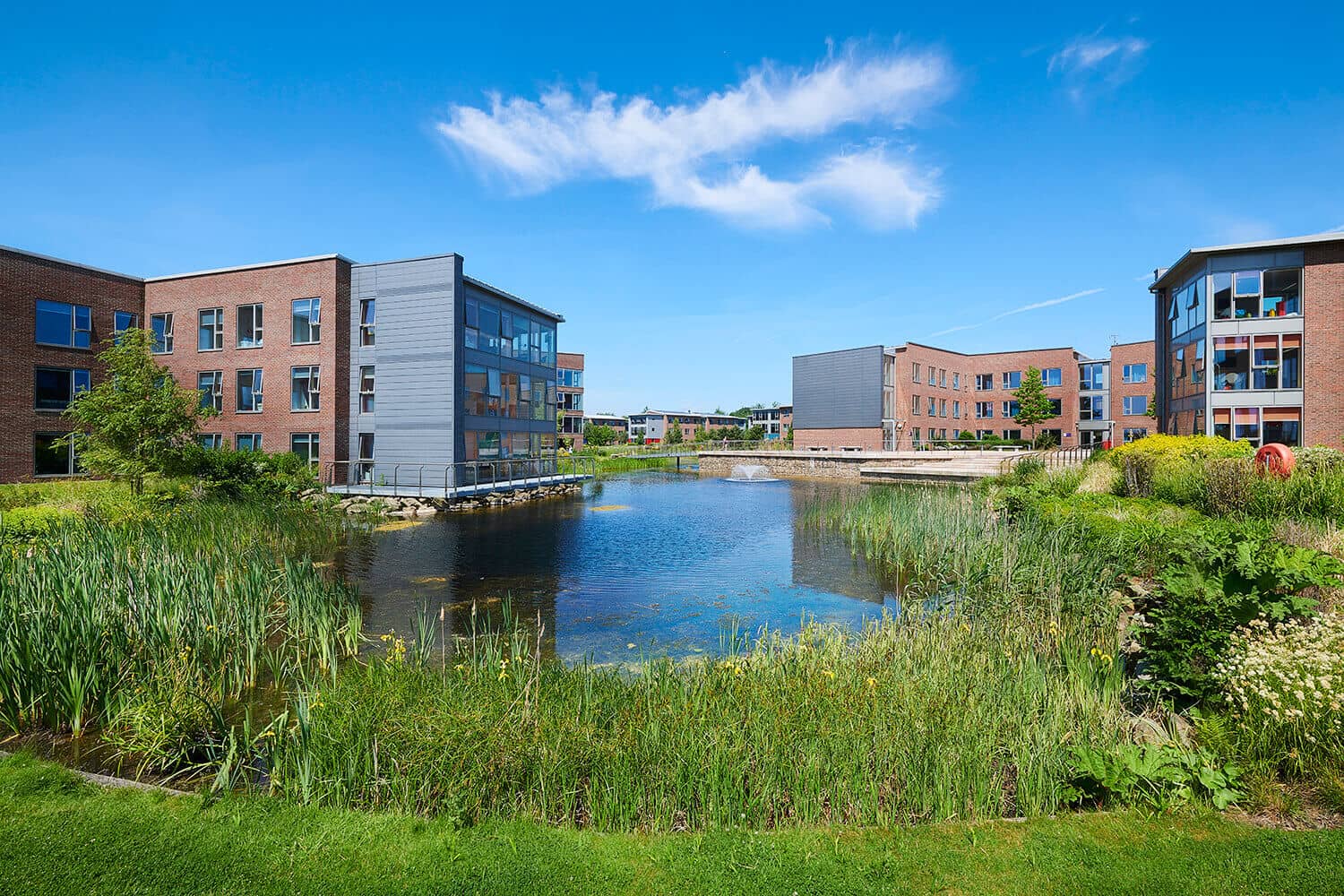
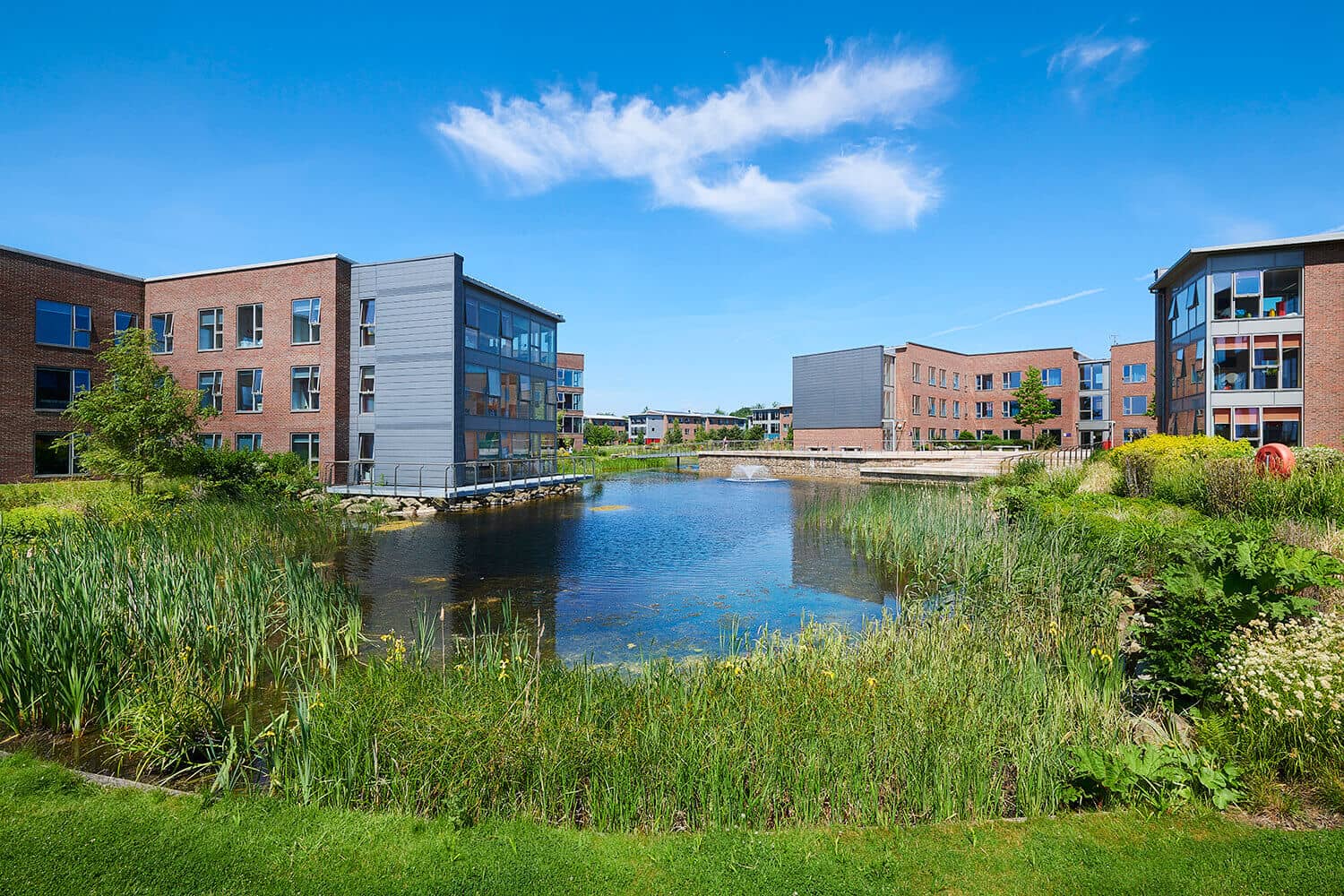
If you join a full time undergraduate degree at Edge Hill University, we will guarantee you the offer of a room in our halls of residence for the first year of your course.
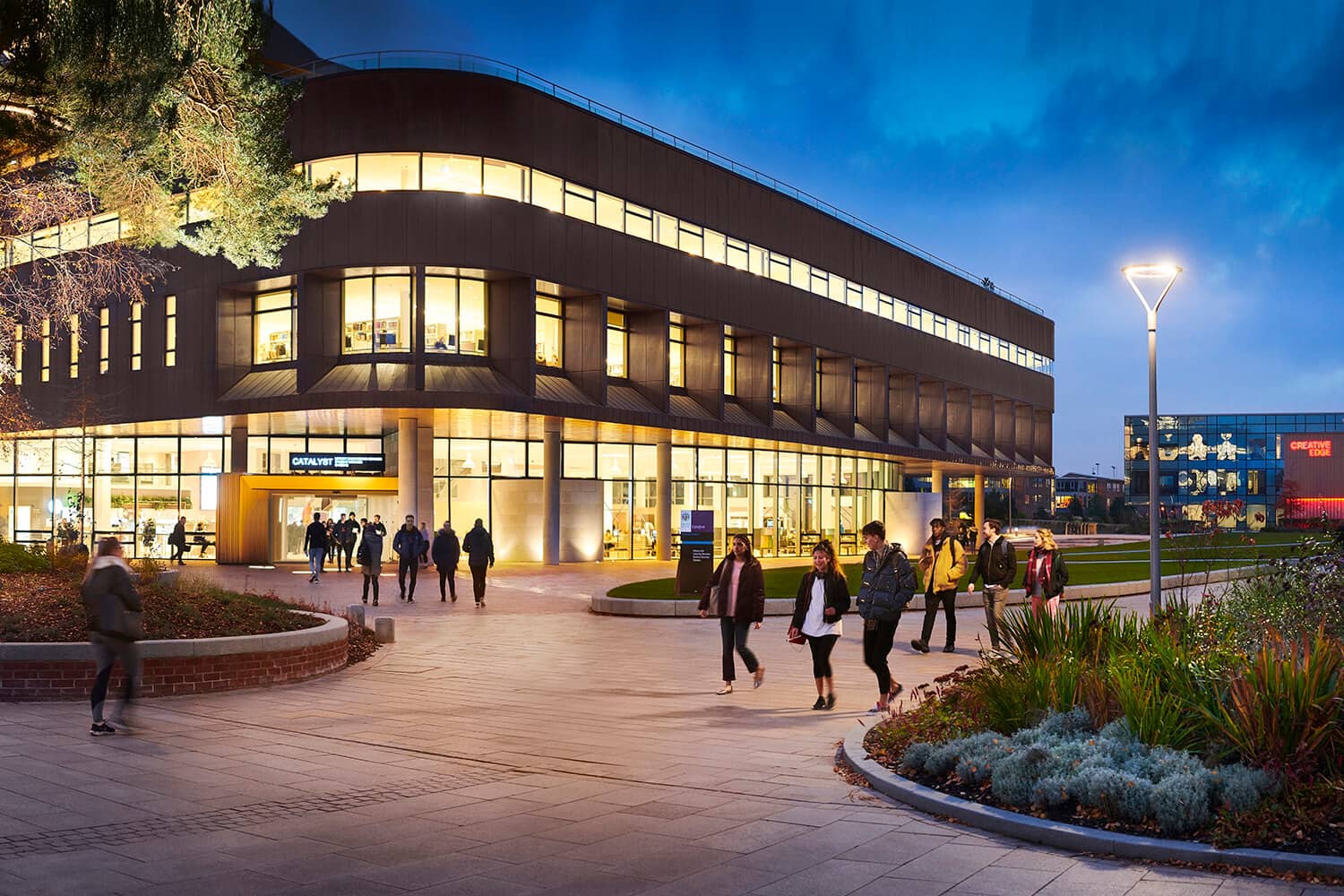
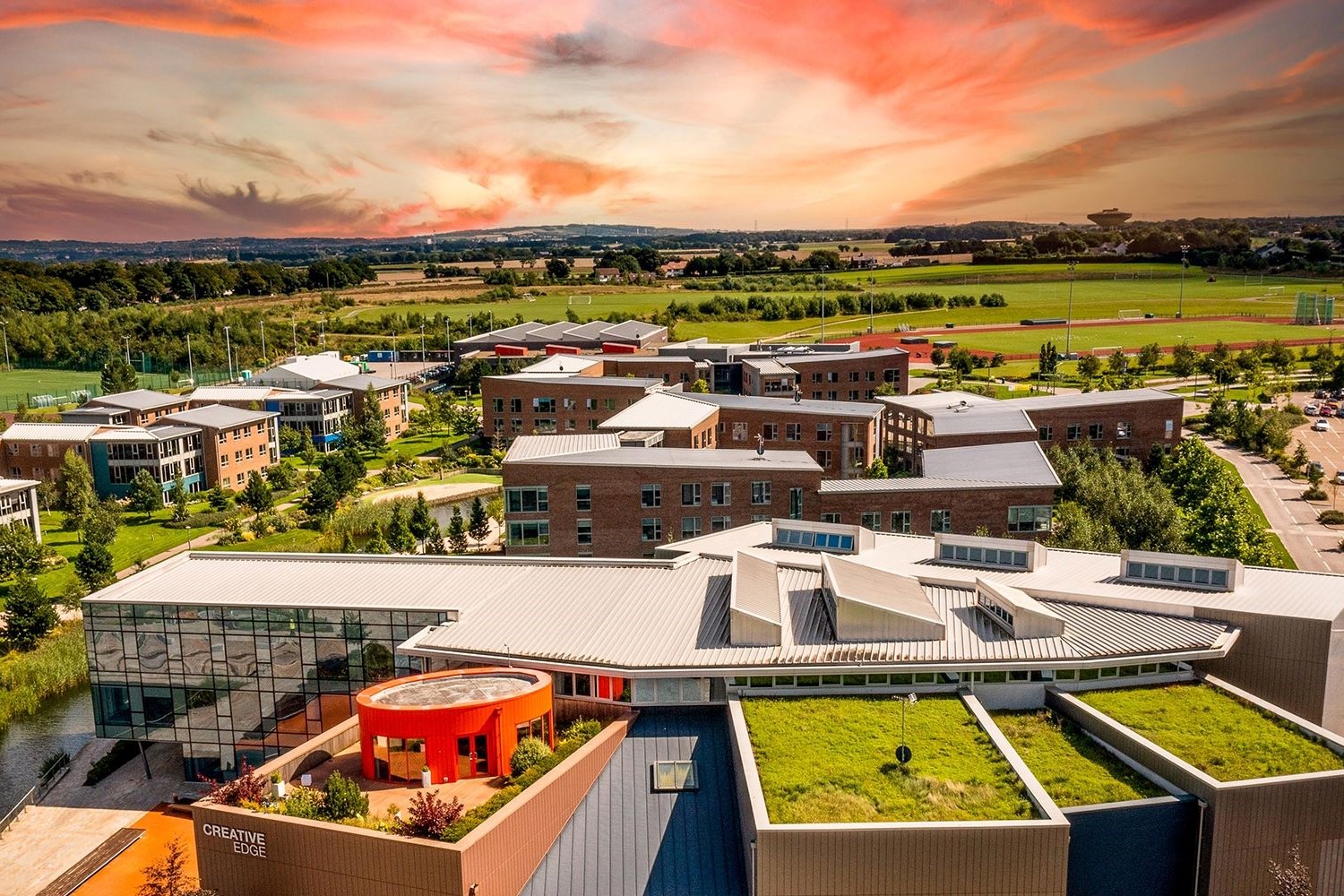
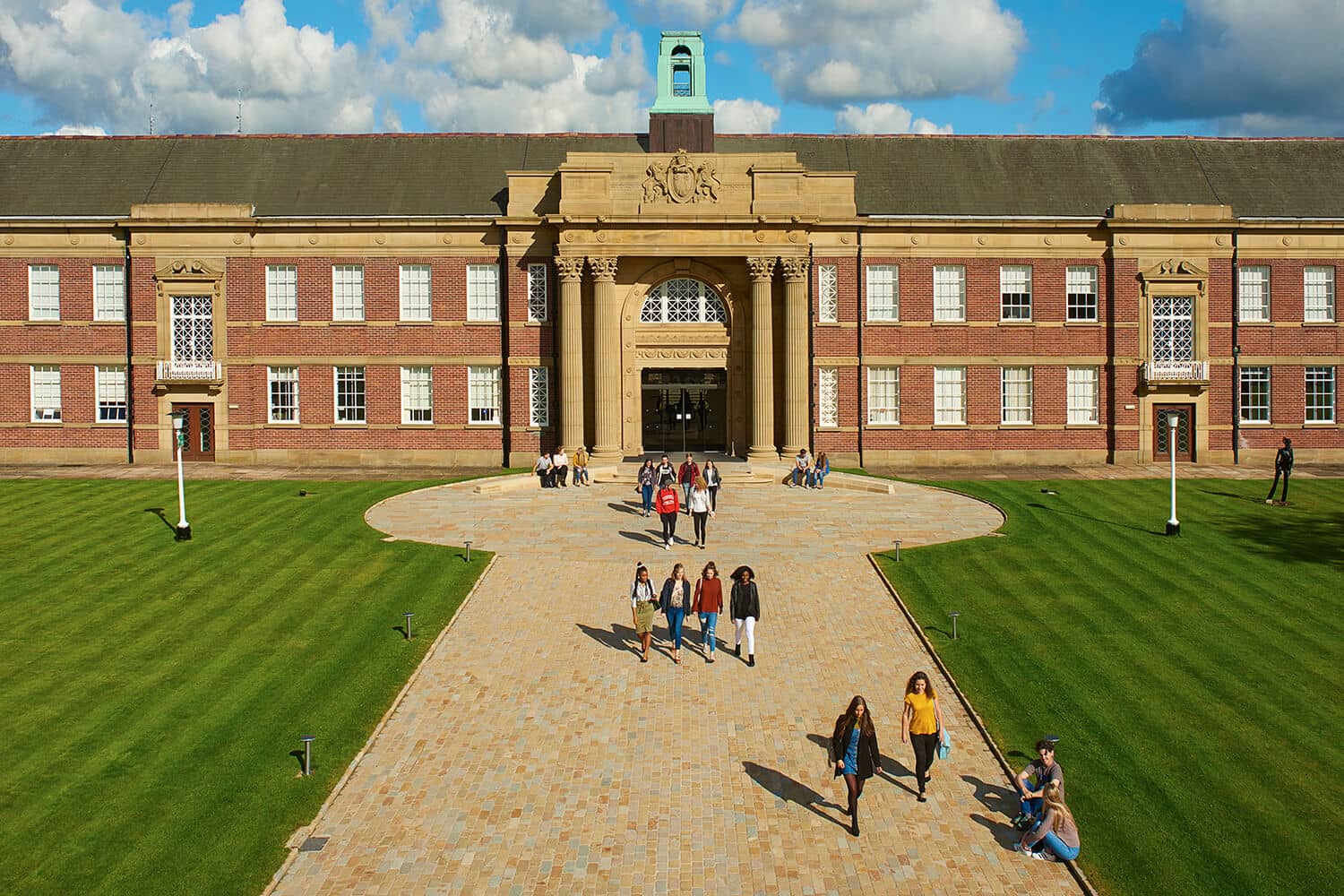
Our award-winning Ormskirk campus incorporates modern learning and recreational facilities. The impressive Catalyst building houses a comprehensive library, learning and training spaces, as well as student support services and a careers centre. A brand new Student Union building is the home of numerous student groups and societies, including the African-Caribbean, Arab, Middle Eastern and North African, Friends of Médecins Sans Frontières, and Student Radio Societies.
At Liverpool School of Tropical Medicine, you will have access to state-of-the-art facilities in an exciting research-active environment. You will also benefit from LSTM’s specialist library as well as the immersive technology and connectivity at their flagship learning and training facility, Pembroke House. This has flexible working spaces with high-quality simulation and immersive reality suites and digital learning common rooms.
For the academic year 2026/27 the UK Full-Time tuition fee is currently set to £9,790. Please note this is subject to Parliamentary approval and is likely to be increased in line with inflation (RPIX). There may be further inflationary increases in your subsequent years of study. Further details can be found at ehu.ac.uk/fees.
EU/EEA and Swiss students who have settled or pre-settled status under the EU Settlement Scheme, as well as Irish nationals, may be eligible for the UK tuition fee rate.
Financial support
Subject to eligibility, UK students joining this course can apply for a Tuition Fee Loan from the Government to cover the full cost of tuition fees. UK students enrolling on the course may also be eligible to apply for additional funding to help with living costs.
Scholarships
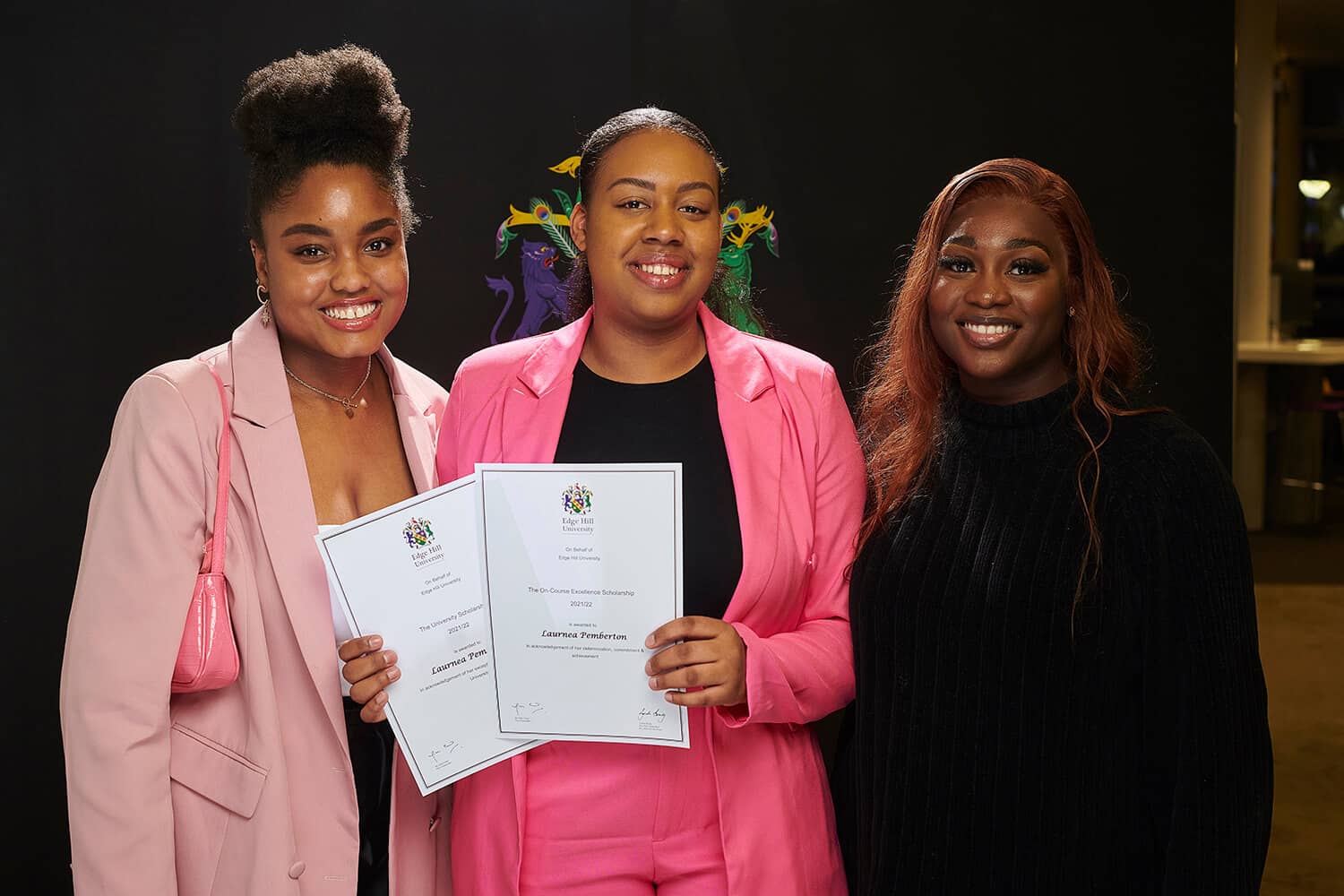
We offer a range of scholarships, which celebrate the determination, commitment and achievement of our students. Many of our scholarships are awarded automatically. There are some however, where you will need to be involved in an application or nomination process. To find out more about our scholarships and check your eligibility, please visit our dedicated scholarships pages.
Money Matters
Please view the relevant Money Matters guide for comprehensive information about the financial support available to eligible UK students.
EU/EEA and Swiss students who have settled or pre-settled status under the EU Settlement Scheme may be eligible to apply for financial support. Irish nationals can ordinarily apply to Student Universal Support Ireland (SUSI).
If you are an EU student who does not have settled or pre-settled status, or are an international student from a non-EU country, please see our international student finance pages.
Tuition fees
UK Full-Time
£10,050
a year
International
TBC
a year
For the academic year 2027/28, the UK Full-Time tuition fee is currently set to £10,050. Please note this is subject to Parliamentary approval and is likely to be increased in line with inflation (RPIX). There may be further inflationary increases in your subsequent years of study. Further details can be found at ehu.ac.uk/fees.
EU/EEA and Swiss students who have settled or pre-settled status under the EU Settlement Scheme, as well as Irish nationals, may be eligible for the UK tuition fee rate.
Financial support
Subject to eligibility, UK students joining this course can apply for a Tuition Fee Loan from the Government to cover the full cost of tuition fees. UK students enrolling on the course may also be eligible to apply for additional funding to help with living costs.
Scholarships
We offer a range of scholarships, which celebrate the determination, commitment and achievement of our students. Many of our scholarships are awarded automatically. There are some however, where you will need to be involved in an application or nomination process. To find out more about our scholarships and check your eligibility, please visit our dedicated scholarships pages.
Money Matters
Please view the relevant Money Matters guide for comprehensive information about the financial support available to eligible UK students.
EU/EEA and Swiss students who have settled or pre-settled status under the EU Settlement Scheme may be eligible to apply for financial support. Irish nationals can ordinarily apply to Student Universal Support Ireland (SUSI).
If you are an EU student who does not have settled or pre-settled status, or are an international student from a non-EU country, please see our international student finance pages.
Your future career
Graduates of this degree can pursue a wide range of careers across public, private, and third-sector routes. Career paths include:
Roles within international, political, and humanitarian organisations
Positions in NGOs, charities, and civic associations
Opportunities within the Civil Service
Work in policy research and think tanks
Roles in education and training
With further study, you could also qualify to teach or continue into research and academia, opening doors to specialist or leadership roles in your chosen field.