Skip to content Skip to section specific navigation Edge Hill University

BA (Hons) / BSc (Hons) Geography

Summary 2012/13

  • The Department was ranked 2nd in the UK for overall student satisfaction in the National Student Survey;
  • Travel to a variety of fieldwork destinations in the UK and abroad;
  • Develop a wide range of field and laboratory skills that will enhance your employability.

If you want to gain a deeper appreciation of the world around you and the part you play in it, and broaden your horizons through travel to our varied fieldwork destinations then you should consider this degree. You will develop an understanding of a range of environmental, political and socio-economic issues facing the contemporary world through a combination of theoretical and practical investigation.

You will gain knowledge and understanding of the patterns, processes, interactions and changes in the Earth’s physical environments and the social, economic, political and cultural processes actively impacting on the human world. You will also develop expertise in Geographical Information Systems and remote sensing using the latest industry standard technology.

Campus: Ormskirk Campus, Edge Hill University
UCAS: L701/F801
Course Type: Undergraduate Degree
Attendance & Study Mode:
3 years: Full Time
Start Date: September 2012

2012 Entry Requirements

240 UCAS tariff points, normally to include Geography, Geology or Environmental Science, or a related subject, plus GCSE Mathematics at grade C or equivalent.

Summary 2013/14

  • The Department was ranked 2nd in the UK for overall student satisfaction in the National Student Survey;
  • Travel to a variety of fieldwork destinations in the UK and abroad;
  • Develop a wide range of field and laboratory skills that will enhance your employability.

If you want to gain a deeper appreciation of the world around you and the part you play in it, and broaden your horizons through travel to our varied fieldwork destinations then you should consider this degree. You will develop an understanding of a range of environmental, political and socio-economic issues facing the contemporary world through a combination of theoretical and practical investigation.

You will gain knowledge and understanding of the patterns, processes, interactions and changes in the Earth’s physical environments and the social, economic, political and cultural processes actively impacting on the human world. You will also develop expertise in Geographical Information Systems and remote sensing using the latest industry standard technology.

Campus: Ormskirk Campus, Edge Hill University
UCAS: L701/F801
Course Type: Undergraduate Degree
Attendance & Study Mode:
3 years: Full Time
Start Date: September 2013

2013 Entry Requirements

280 UCAS tariff points, normally to include Geography, Geology or Environmental Science, or a related subject, plus GCSE Mathematics at grade C or equivalent.

Details

What will I study?

Year 1 provides a foundation in physical and human geography, as well as developing a range of subject-specific skills, fieldwork and key skills. You will be introduced to various practical techniques and research skills.

In Years 2 and 3 you have the option of continuing on a non-specialist route in Geography or specialising in either Physical Geography or Human Geography.

In Year 3 you complete an independent research project (dissertation) and study a number of option modules in either physical or human geography. The Geo-careers module will give you an opportunity to develop your career planning and management skills. This will give you an when you start to apply for jobs.

How will I study?

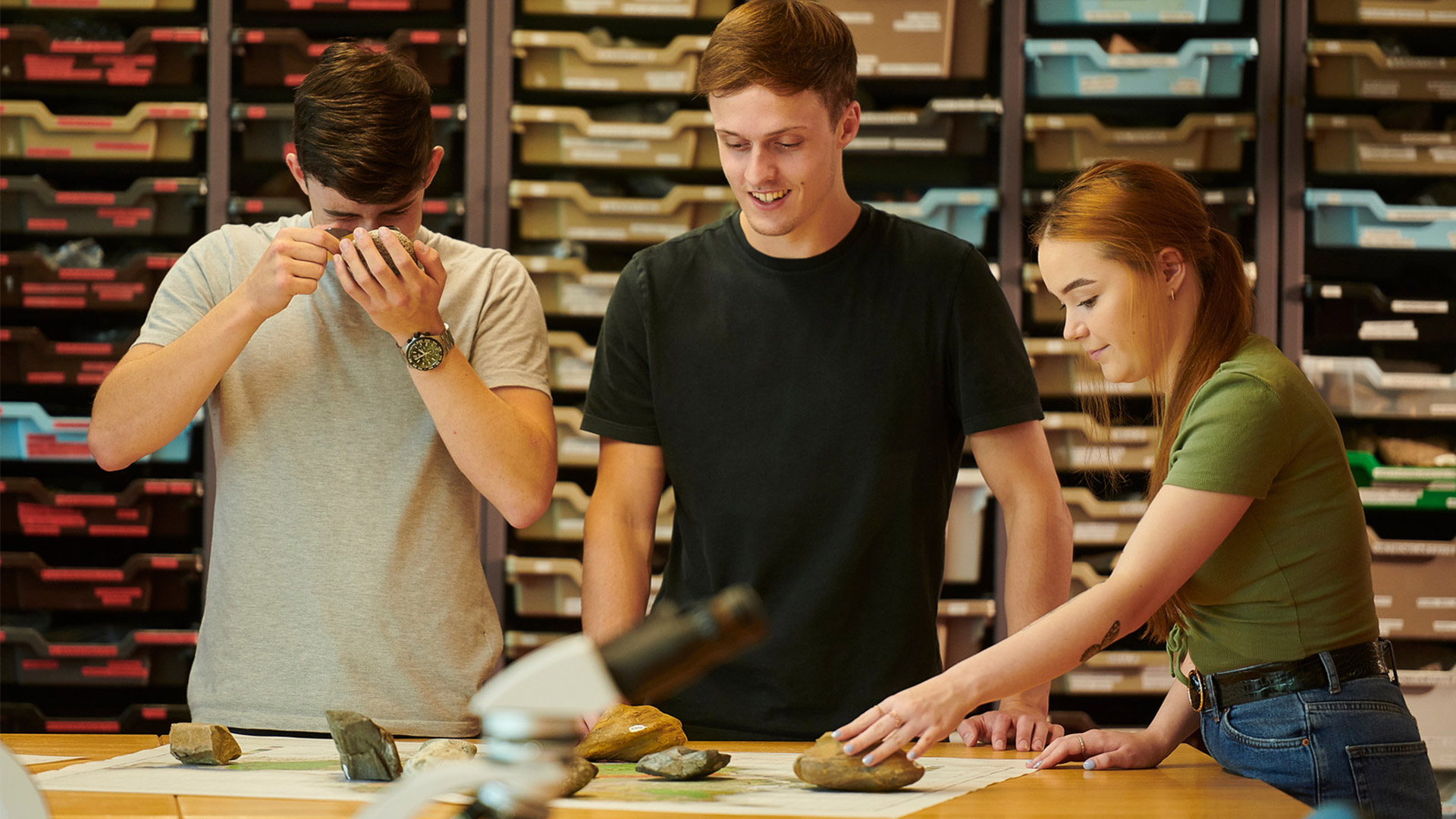
Teaching is through laboratory and workshop practical activities, lectures and seminars, directed independent study, dissertation supervision, tutorials and fieldwork. We place an emphasis on building your employment potential through the acquisition of subject-specific, key and career management skills, as well as the development of knowledge and understanding.

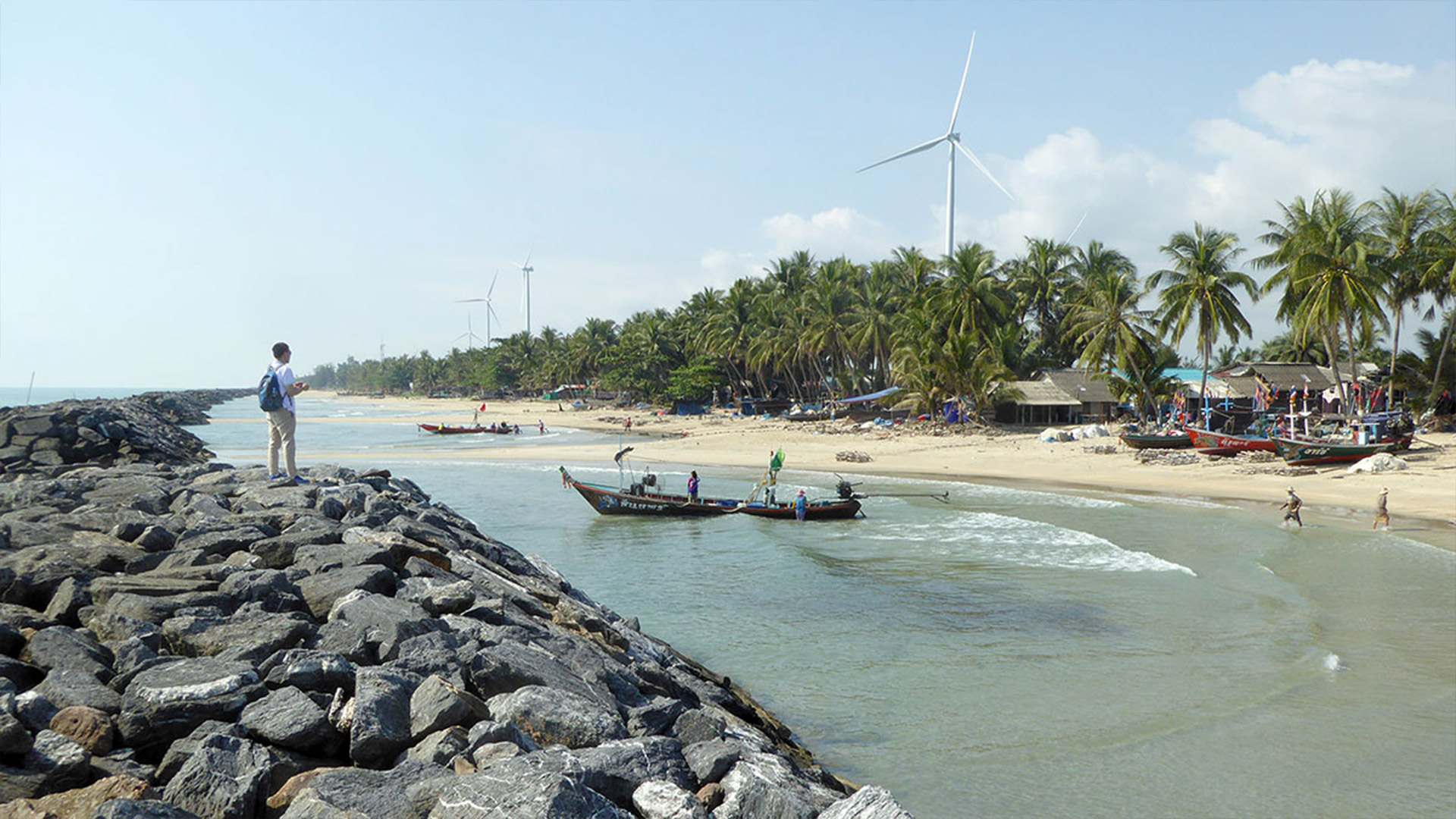
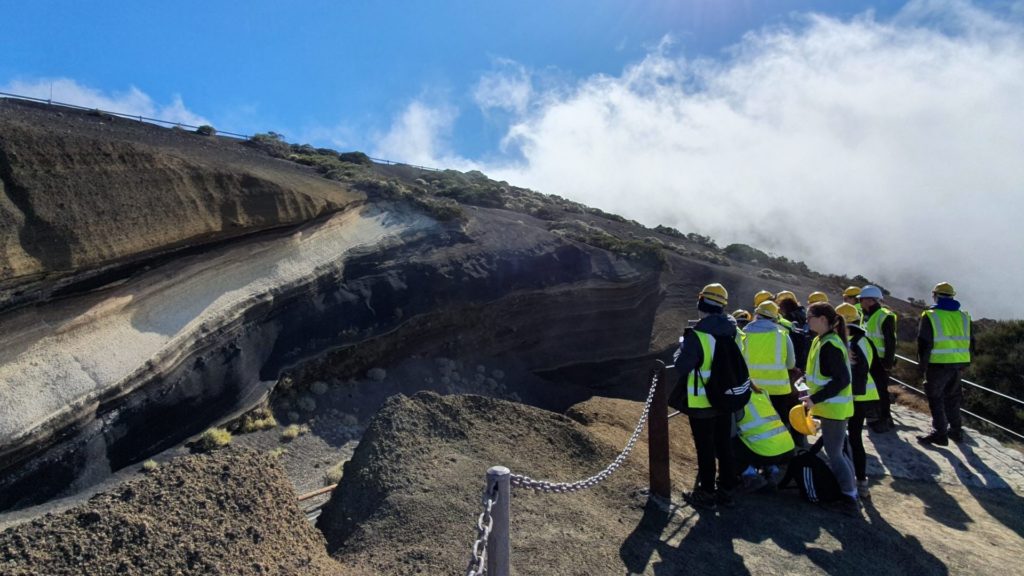
Fieldwork is one of the most beneficial and enjoyable aspects of our programme. Current fieldwork locations include Cumbria, the Netherlands and Mallorca as well as local sites. You may also have the opportunity to participate in additional, optional fieldwork visits to locations overseas.

Placement

Our optional Year 2 work-based learning module provides you with an opportunity to apply and simultaneously extend and refine the knowledge and skills acquired during your degree in a professional setting. It could play a key role in enhancing your career prospects.

Who will be teaching me?

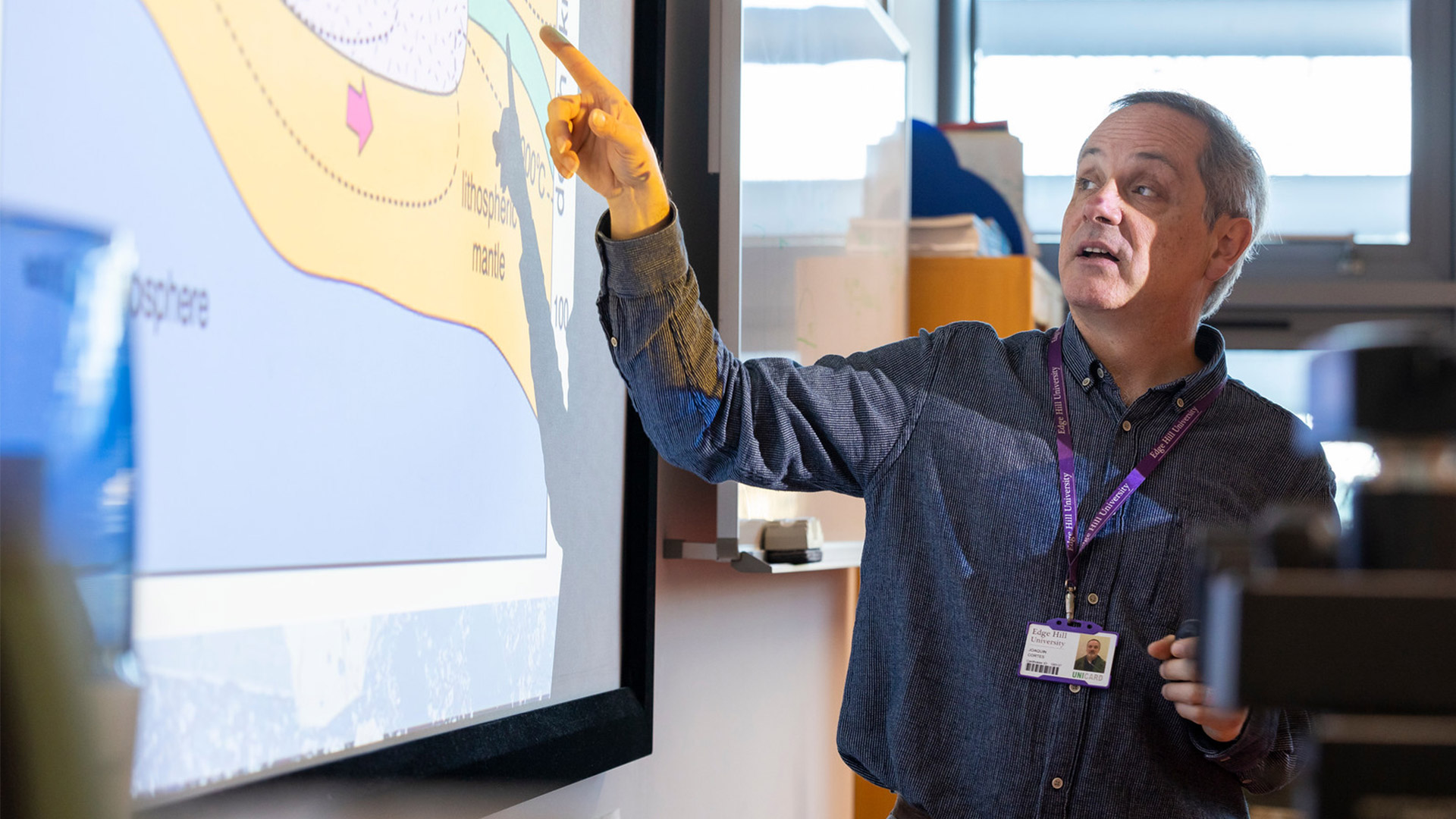
We have experienced and knowledgeable staff who take pride in the quality of their teaching. All staff are research active, which means that they keep up-to-date with current developments in their areas of interest and pass this knowledge on. We are a friendly and approachable department where you won't get lost in the crowd and we will respond to your needs.

How will I be assessed?

Assessments give you the opportunity to display your knowledge and understanding and to develop and demonstrate your competence in subject-specific and key skills. Modules are assessed by either coursework only or a mixture of coursework and examination. Exams never count for more than 40% of the total mark for those modules that include an examination. Coursework includes practical portfolios, essays, project reports, field notebooks, individual and group oral presentations and poster presentations.

What are my career prospects?

A geography degree is recognised by employers for the extensive range of transferable skills that graduates have including IT and communication skills, project management, report writing, statistical analysis, group work and oral presentation skills. These skills are of great value to them and to you in your career. You will be qualified for a career in industry, administration, finance, marketing, local government, environmental management, planning, remote sensing, environmental monitoring and consultancy, and environmental education, postgraduate study, teaching (further training required) and research.

A Great Study Environment

The Department of Natural, Geographical and Applied Sciences at Edge Hill University provides a wide range of learning opportunities in a positive, friendly and supportive environment. Teaching facilities include lecture rooms and laboratories for physical and human geography, information technology, remote sensing and geographical information systems, all of which have an extensive range of equipment and technical support.

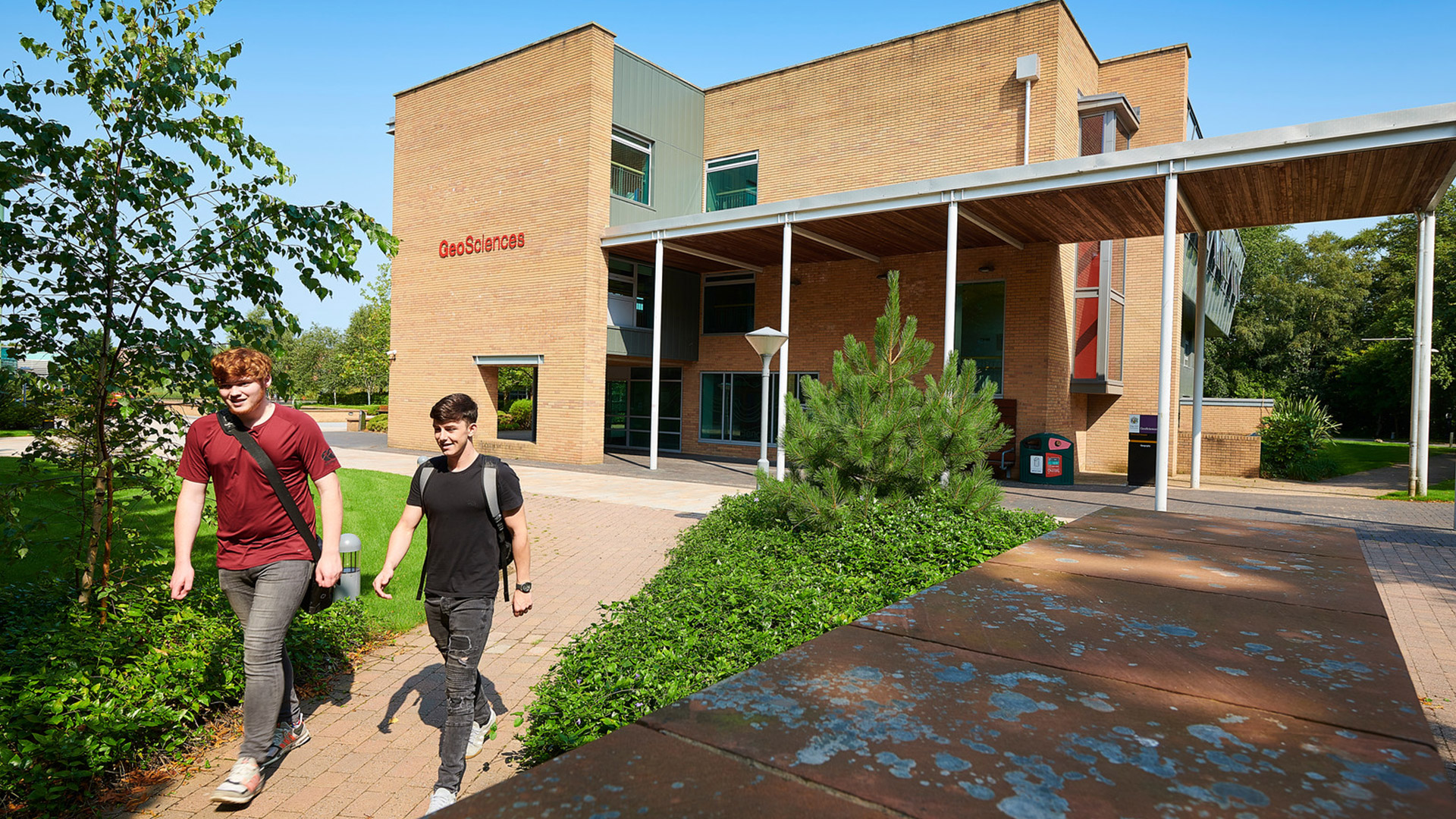
Based in 160 acres of beautifully landscaped grounds, the Ormskirk Campus is a unique and inspirational place to study. Industry standard resources and cutting edge technology combine to make an interactive and highly advanced teaching and learning environment. Everything you could want is on one site with 25 acres of sport and leisure facilities, more than 1,400 rooms in halls of residence and fantastic modern spaces in which you can study and socialise.

The University library gives you access to thousands of books, journals, online resources and extensive PC and media provision. You'll get all the support you need to succeed, reflected in Edge Hill University being ranked in the top two in England for students' personal development, and the top three in the country for assessment and feedback, in the 2011 National Student Survey. The University is also featured in the top four in England for graduate employment.

How do I apply?

Apply online through UCAS at www.ucas.ac.uk.

Visit www.edgehill.ac.uk/apply for more information on the application process and our Admissions criteria.

Fees and Finance

For academic year 2012/13, Edge Hill University will charge £9,000 for full-time BA, BSc and LLB degrees. Eligible students will not have to pay upfront for their tuition. The cost of tuition will be paid by a loan which you will only start to repay once you have finished the course and are earning over £21,000.

Eligible full-time students can also apply for a maintenance grant, subject to household income, and a non-means-tested loan to help with living costs.

Edge Hill University offers a range of scholarships for prospective full-time students. These include £2,000 Entrance Scholarships rewarding determination, commitment and achievement in creative arts, performing arts, sport and volunteering. Eligible entrants with outstanding grades are recognised through the £1,000 High Achievers Scholarship.

The University will also be offering awards, worth £3,000 in cash benefits and fee/accommodation waivers for academic year 2012/13, to eligible prospective full-time students through the National Scholarship Programme.

For more information on scholarships, including eligibility criteria for each award, visit www.edgehill.ac.uk/scholarships.

To find out more about fees, grants and loans for academic year 2012/13, visit www.edgehill.ac.uk/undergradfees2012.

Please note, the above information is for UK and eligible EU students only. International students should check the fees and finance information at www.edgehill.ac.uk/internationalfees2012.

Not got the entry requirements?

Students returning to education may present their previous experience in work (paid or unpaid) to support their application.

Students with relevant study through either a professional body or appropriate academic course can apply to join the programme at an advanced stage.

If you do not have a Mathematics GCSE, or lack the required grade, you can sit an Edge Hill equivalency test to gain the equivalent qualification.

For personalised advice based on your circumstances, please contact us or come to an event.

Where can I find out more?

If you would like to receive a copy of our prospectus or be kept updated about forthcoming events, contact the Course Information, Advice and Guidance Team by emailing study@edgehill.ac.uk or calling 01695 657000.

If you want to attend one of our open events held throughout the year, visit www.edgehill.ac.uk/opendays to book your place.

You will also find Edge Hill University staff at many national careers fairs and UCAS events.

Still want more?

If you have any questions you would like to ask the programme leader about this course, please contact:

  • Dr Nigel Richardson, Department of Natural, Geographical and Applied Sciences, Faculty of Arts and Sciences, Edge Hill University, St Helens Road, Ormskirk, Lancashire, L39 4QP
  • Tel. 01695 584421
  • Email: richardn@edgehill.ac.uk

Overseas students should visit www.edgehill.ac.uk/international or email international@edgehill.ac.uk for further information.

Modules

Year 1

Introducing Human Geographies provides a broad introduction to the scope of human geography, including different approaches and contemporary developments in the subject.

Introducing Physical Geographies provides an introduction to approaches, concepts, knowledge and skills in physical geography at a level appropriate to an introductory module in higher education.

Practising Human Geographies focuses on the broad theme of 'human geography in action'. You will be introduced to the research process in human geography and the idea of ‘practising’ human geography.

Practising Physical Geographies investigates a range of field and laboratory methods and equipment for the recording of physical geographical phenomena.

Geographical Skills develops a number of geographical skills including map skills, aerial photography, satellite image interpretation, research skills, statistical analysis, and fieldwork skills. The module involves a residential field course.

Geo.com focuses on the handling, analysis and communication of spatial and graphical data and geo-information by providing an introduction to the principles, uses and practical skills of Geographical Information Systems (GIS), digital cartography and graphical software packages.

Year 2

Research Methods in Geography. Using investigative research processes, this module will enhance and develop essential geographical research methods. The module will provide a broad base for future choices in terms of physical, human or environmental study.

Fieldwork in Geography. Within a foreign field setting, this module further enhances the field and research skills developed in years 1 and 2.

Digital Geographies is a fusion of Remote Sensing - the analysis and interpretation of aerial and satellite imagery, and Geographical Information Systems – the management, processing, analysis and presentation of spatial and non-spatial data from different sources. An understanding of these systems will help your career prospects and support your geographical learning.

Retail and Consumption examines the workings of the retail industry, exploring how this industry impacts on people, places and environments. The module considers the ways in which the retail sector has changed over time, in particular in terms of space, technology and behaviour.

Urban and Rural Geographies investigates key themes, concepts and issues in urban and rural geography. Attention focuses on exploring similarities and differences encountered by people in living and working in urban and rural environments via an examination of the economic, social and political processes which have shaped such lived experiences and relationships.

Sustainability and the Global Built Environment explores the human-built environment relations and sustainable development through a number of key themes, concepts and theories of architecture, urban planning and design. Particular emphasis will be on the evolution of the city culture and the transformation of the global built environment.

Geomorphology provides you with an introduction to the processes which are responsible for the existence and continual modification of the landforms and materials which constitute the Earth’s surface.

Biogeography examines the spatial and temporal patterns of distribution of living organisms over the Earth’s surface, highlighting fundamental processes and causal factors which determine these patterns, and examining the varying contributions to them made by human and physical phenomena.

Weather, Climate and Soils aims to provide you with a detailed understanding of the climate system and the soil system. It covers a range of atmospheric processes through to the development of weather systems, with a specific focus on mid-latitude weather. The varying nature and properties of soils, and the soil processes which give rise to soil formation and development are then considered.

Work-based Learning provides a professional setting in which you can apply and simultaneously extend and refine the knowledge and skills acquired during your degree. It may play a key role in enhancing your career prospects.

Year 3

Dissertation. Through the dissertation experience you develop and apply a range of research and transferable skills in the planning, execution, and reporting of an individual research project.

Approaches and Concepts in Geography considers the history of geography, and the major geographical concepts, approaches and developments that have taken place in the discipline.

Geo-careers assists you in making the necessary transition from academia to the world of employment or postgraduate study. The module provides opportunities to develop career planning and management skills and, therefore, should enhance your employability and career prospects.

Heritage Tourism explores the presence of the past in contemporary society, focusing on the role of heritage and culture in the tourism industry.

Postmodern Geographies challenges traditional conceptions of human geography and explores alternative geographies of contemporary experience of the articulation of space, culture and technology.

Historical Geographies provides an outline of the main features of contemporary historical geography, providing you with detailed knowledge of substantive issues and theoretical approaches. In addition, the module provides a contextual understanding of the historical geography of northwest England.

Sport Geographies. Modern sport is used to explore geographical concepts of space, place and identity. The module examines the economic, social, political, health, environmental and cultural impacts of sport. Attention focuses on the economic, political and social processes operating at various spatial scales to produce a range of sporting opportunities, experiences and modes of engagement.

Population and Medical Geographies aims to explore the links between population and medical geographies through a number of number of key themes, concepts and theories of demography, epidemiology and accessibility to health care provision.

Popular Culture of South Asia provides a broad understanding of the rich but diverse culture of the South Asian subcontinent. South Asian history, religion, art and architecture, literature and cinema are all considered in the module.

Climatic Change considers the nature and causes of climate variability, and the methods used to reconstruct the record of past climates. It includes a detailed consideration of the evidence for a human-induced impact on climate at the present day, and for the prediction of climate into the future and its potential impacts.

Coastal Zone Environments and Management examines recent and current changes affecting coastlines. Coastal zone environments are approached as repositories of recent environmental change and as dynamic systems responding to human activities.

Snow and Ice Environments considers both modern glacial environments, their processes, materials, landforms and fluctuations, and past glacial environments and the sedimentological and morphological evidence upon which they are based.

Postglacial Environments aims to develop an understanding of the nature of environmental change in terms of causes, and spatial and temporal responses. It considers the techniques and methodologies used in the reconstruction of environmental change and examines the focus of palaeo-environmental research in terms of significant findings and futures goals.

Recent Environmental Change. The application of techniques to sediments or peat allows the detailed reconstruction of a sequence of changes in the recent past. These techniques can be used in the direct interpretation and evaluation of contemporary environmental problems where the present is seen as an expression of processes and trends which can be dated, interpreted and often quantified from the historical evidence contained in the various deposits.

Geohazards focuses on the relationships between the physical causes of selected geohazards such as volcanic eruptions, earthquakes, landslides and flooding, the potential hazards produced and the responses to these risks.

Advanced Digital Geographies is a blend of GIS and remote sensing and is the systematic study and theory of digital representations of the Earth, and the processes that can be applied.

Contact

Edge Hill University
St Helens Road
Ormskirk
Lancashire
L39 4QP
United Kingdom
GEO: 53.559704; -2.87388
+44(0)1695 575171
+44(0)1695 579997

Location