Melissa Yalcin
MbChB Medicine - research internship student
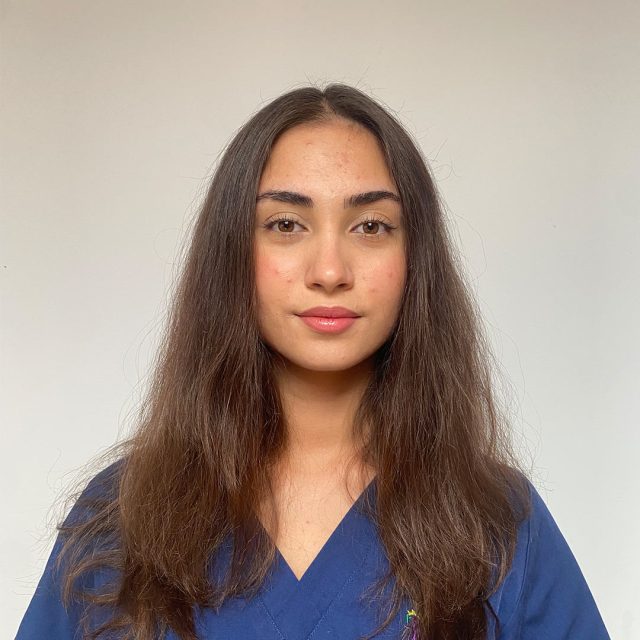
Completing this internship has been one of the highlights of my medical school journey so far, and I would definitely recommend it to any student who wants to understand how research is conducted behind the scenes. My supervisor, Professor Linda Kaye, was a pleasure to work with and provided invaluable support and guidance throughout.”
I wanted to join the Summer Internship Programme to understand how research projects are conducted in practice. While lectures provide the theoretical foundation, they offer limited opportunity to develop the practical skills needed to plan and carry out a project from start to finish. As a medical student, I am keen to build these skills early, as research is central to evidence-based practice. My main aims were to become confident using key research software, gain hands-on experience of conducting a scoping review, and learn from the mentorship of experienced researchers.
The main focus of my internship was to plan and complete a scoping review exploring the psychological factors that influence clinicians’ acceptance and implementation of technology in practice. This involved developing the inclusion criteria, screening studies at title/abstract and full-text stages and extracting and analysing relevant data. I then mapped the findings onto widely used technology adoption frameworks to identify themes these models missed. Through this, I became confident using Covidence and learnt how to navigate research papers efficiently to identify key information. Appraising studies also strengthened my ability to judge the validity and significance of results, which was something I previously found challenging and time-consuming. These skills will help me to critically evaluate evidence to inform patient care throughout my medical career.
I really enjoyed the data analysis stage, where I organised the data I had gathered and drew my own conclusions. It was fascinating to see how much our findings revealed, and rewarding to know they could inform future research in the field. My supervisor, Professor Linda Kaye, was a pleasure to work with and provided invaluable support and guidance throughout.
The most challenging stage of my project was quality appraisal, where I assessed studies for bias, rigour, validity and a priori hypotheses. This was particularly difficult with quantitative studies, as I was unfamiliar with many of the statistical tests used. To overcome this, I researched the different tests independently, then discussed any areas of confusion with my supervisor. Learning how to judge the quality and significance of research data became one of the most valuable skills I gained from this internship.
Completing this internship has been one of the highlights of my medical school journey so far, and I would definitely recommend it to any student who wants to understand how research is conducted behind the scenes. Hands-on research experience develops skills that are difficult to gain in the classroom, and being mentored by an experienced researcher has greatly improved my knowledge, competence and confidence as a student.