Joseph Chappell
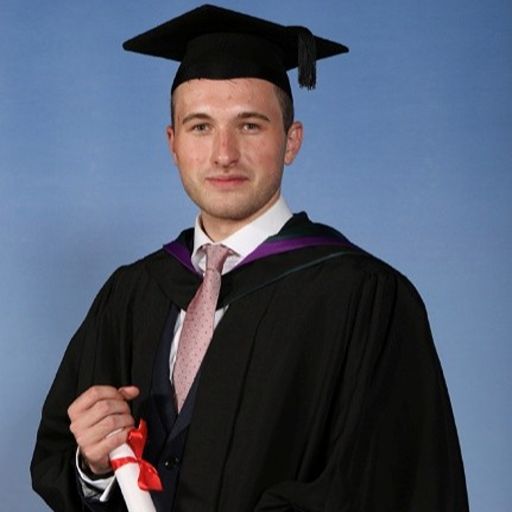
I always said that I would go to as many open days as possible, and the right choice would be the one that stood out from the rest - Edge Hill was that university!
I always said that I would go to as many open days as possible, and the right choice would be the one that stood out from the rest – Edge Hill was that university! The academic team were all friendly and approachable, of course, but it was their pride in showcasing Edge Hill’s impressive facilities that convinced me I was making the right decision. Edge Hill also offers a significant amount of placement time, including in clinical areas outside the ambulance service, and I cannot overstate how valuable this was. There really is no substitute for experience when it comes to developing into a well-rounded paramedic.
I really enjoyed the breadth of the course. It taught me far more than simply recognising a problem and knowing the appropriate algorithm to follow; it taught me how to think clinically, piece together information, and adapt the medicine to the patient in front of me, especially when things aren’t always straightforward. The practical teaching, simulation, and placements then allowed me to apply that knowledge to real patients. Once I started seeing patients for real, I quickly learned that they rarely read the textbook, and there is no helpful diagnosis written at the top of their scenario page! Learning to adapt my knowledge and recognise patterns in individual patients was challenging but remains invaluable. Ultimately, I think the course taught me not just what to do, but how to work out what I needed to do – something I’ll carry with me throughout my career.
Learning to manage the competing demands of academic work and full-time placement was every bit as valuable as anything I learned about the job. I learned quite quickly that even being passionate about the subject doesn’t mean you can rely on motivation alone. I had to learn to organise and plan my time realistically, make the most of quieter periods, and accept that sometimes the best thing I could do was take a step away and come back to my work with a fresh perspective.
The thought of becoming the sort of paramedic I wanted to be kept me motivated during some of the more challenging parts of the course. I liked the idea of a career where I have to think, adapt, and make decisions with only the information I can gather for myself. I became passionate about teaching and education and discovered areas of paramedicine that interested me more than others.
Taking part in extra-curricular activities helped to develop my knowledge and practical skills. In my third and final year I was part of the team that set up the Edge Hill Students’ Union (EHSU) ParaSoc. I organised talks from external guest speakers and internal professional development events, which was a great opportunity to create some of the opportunities I’d wanted to see myself.
I couldn’t recommend getting involved beyond the core curriculum enough. In my second and third years, I competed at the Paramedic Games, a simulation competition. This competition was probably one of the most valuable things I’ve done in my career to date – two days of intense, high-fidelity simulation with a team of students you’ve never met before! Nerve-wracking, but definitely worth it. It was probably one of the most rewarding parts of the degree for me. It gave me the chance to explore the areas I was interested in and train alongside people with impressive knowledge, skill and experience, for which I am endlessly grateful.
My advice to current and future Paramedic Practice students would be:
-
- Stay humble. Being book-smart doesn’t automatically make you a better paramedic. Patients will catch you out, and you’ll quickly be reminded of just how much you don’t know. I continue to healthily question my decisions, which helps me practise safely. Being willing to say “I’m not sure” is more valuable than pretending you are.
- Qualifying is the start of a lifelong learning journey. Don’t expect to be the finished product by the end of three years. You will have developed a strong foundation, but you should also have realised how much there is still to learn.
- Stay curious and get involved. It’s very cliché, but what you put into the degree is largely what you get out of it. If there’s a space on a course, take it. If there’s an extra teaching session, go along. If there’s an opportunity to lead, get stuck in. If you’re not sure about something, be proactive and ask your mentor or lecturer. If you see something on placement that interests you, take some time to research it. It’s very easy to lose your drive and inquisitiveness when you’re tired or burnt out, but curiosity is how we learn.
- Look after yourself. Try your hardest to find the balance; you’ll be a better student and a better paramedic for it.
- Join the Paramedic Society!