Darol O’Kane
Senior Executive Designer - Liverpool Football Club
MA Marketing, Communications & Branding
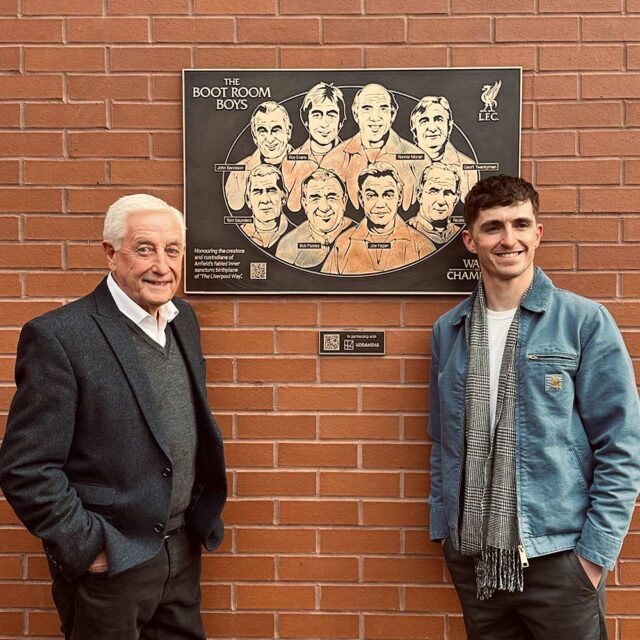
I loved the campus at Edge Hill, all of the facilities are brilliant. But what I loved the most about my experience was the lecturers. They were all very helpful and you could tell they really cared about how everybody in the class did, no matter how big the class was.
I had been working at LFC for about 5 years and found myself at a bit of a junction, where I wasn’t sure what the next step was. There wasn’t much room for progression, so I just looked around the team thinking where can I step up around here? And I spotted that gap where I was working in a design team. Our Head of Design comes from an advertising background, and apart from him there was no one with any marketing or brand experience. So I then floated the idea of studying a masters degree to my managers, and they agreed with it.
I loved the campus at Edge Hill, all of the facilities are brilliant. But what I loved the most about my experience was the lecturers. They were all very helpful and you could tell they really cared about how everybody in the class did, no matter how big the class was. I think they really took an interest in everyone in the class and wanted to see them succeed.
I didn’t write much as a designer, but getting a 70 on my first essay gave me more confidence. My writing style was encouraged and nurtured by my lecturer, so that skill has really improved and sharpened. I felt a bit of imposter syndrome when I first started, but my confidence in myself and my skills grew and I could see what I was capable of.
I’ve always been quite open minded with my career and gone along with it, but I think there’s been a bit more drive in me since taking on this course. I’m a designer at the club that I’ve always loved so I’m happy in my career, but there’s probably more driving me now where I want to start climbing the ladder. I’d like to try and go down the route of focusing on becoming a Creative Director where I can use the knowledge I’ve gained from my degree. For example, I can now use the strategic side of marketing too, and combine that with my creative side.
I would say to anyone coming on a course like this, have a clear direction of what you want at the end and make sure all the work you do is driving towards that. I knew at the start of this that my dissertation at the end was going to be about football in some sense and the delicate nature of brand and marketing within football. So I geared all my modules building up to that to that final piece, meaning that anything that I was reading over the course of the two years would have some sort of benefit at the end that came to the dissertation.
I work from home and go into the office about 1-2 times a week. A typical day would start off with a lot of meetings at the start where and a brief nailed down how we’re going to design something and what the message is going to be. In terms of the work that we do, although we’re a small team it really does just jump all over the place depending on what’s currently going on or what season we are in. A lot of the time we must react to what’s happening on the pitch. For example the big project from the start of this year to the summer was our what we call in house a plan to win project. This is when it’s looking likely that you will win a competition. So that’s like a six-month cross-channel project involving a lot of stakeholders.
The rebrand I was a part of at Liverpool was a three-year project, where an agency does an audit on our brand. This looks at what people say and what our stakeholders say. There was some commonality, but there were also mixed messages about the brand. For example, the colours that people associate with Liverpool Football Club. I then worked on developing Liverpool’s visual identity. The agency presented some potential creative solutions, and we would steer them in a direction that we thought was the best.