Batsa Bright Tetteh
Secondary Science (Physics) with QTS (11-16)
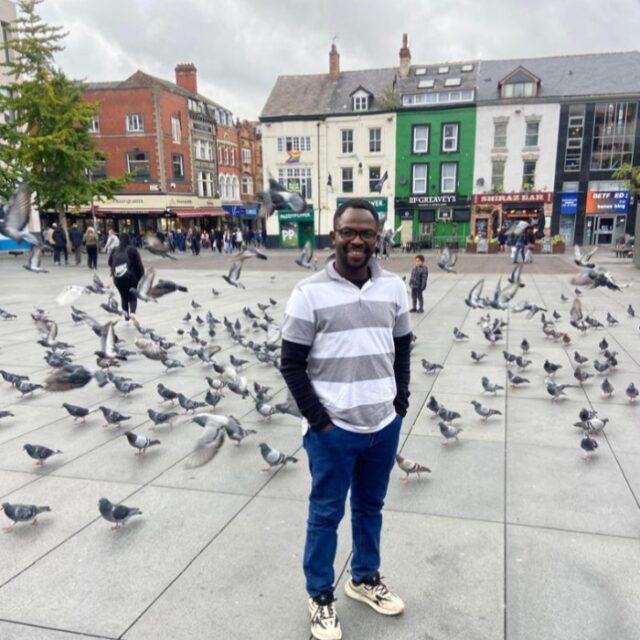
Edge Hill doesn't just train you for a job; it invests in your entire professional future. I've gained a real competitive edge through their incredible seminars and workshops on vital topics like safeguarding, behaviour management, and mental health.
Can you tell us about your background (education and or career to date?) and what inspired you to pursue a PGCE, what was it about Edge Hill University that attracted you?
My name is Batsa Bright Tetteh, and I come from Odumase Krobo in the Eastern Region of Ghana, West Africa. I was born in Ashaiman, a suburb of Greater Accra, and I am the youngest of three siblings. I began my education at Assurance International School, continued to Ashaiman Senior High School where I completed my WASSCE, and later pursued a BSc in Physics Education at the University of Education.
My passion for education and the joy I feel when I help pupils succeed in their academic journey motivated me to pursue the PGCE Science (Physics) with QTS program. Teaching has always felt like a calling, a way to inspire others and contribute to their success.
I chose Edge Hill University because it is one of the leading institutions for teacher education in the UK, with a Gold rating in the Teaching Excellence Framework (TEF) and classified as outstanding by Ofsted. The university combines academic study with practical experience, allowing us to practice in real classrooms while still training. The learner-centred approach, excellent pastoral support, and highly experienced staff create the perfect environment for professional growth. The serene Ormskirk community, with its historic market and welcoming atmosphere, also makes it an ideal place for learning. Additionally, the cost of living in this part of England was very low, and the university also offers automatic scholarships to students regardless of the programme they are studying.
Are you the first in your family to go university? If so, how has that shaped your experience?
I am proud to be the first in my family to pursue university education in England. Studying here has exposed me to new cultures, traditions, and perspectives, as well as different teaching styles, technologies, and problem-solving methods. I have gained not only knowledge but also friendships and global connections that have enriched my personal and professional life.
How did you hear about us?
How I heard about Edge Hill was quite surprising, because I was searching the internet for universities in communities here in England, with a lower cost of living and good scholarship opportunities, and Edge Hill came up at the top of the list.
What’s your favourite thing about your degree?
What I value most about my degree is the balance between theory and practice. Placements have given me hands-on classroom experience, building my confidence and preparing me for the realities of teaching.
What additional workshops or activities have you found particularly helpful in developing your teaching skills, knowledge and behaviours (e.g., behaviour management, voice projection)?
Edge Hill doesn’t just train you for a job; it invests in your entire professional future. I’ve gained a real competitive edge through their incredible seminars and workshops on vital topics like safeguarding, behaviour management, and mental health. This isn’t just theory, it’s the practical toolkit you need to thrive in a real classroom from day one.
And when it’s time to release stress, the on-campus world-class gym is a game changer. Staying fit and healthy is effortless with its state-of-the-art facilities, all available at a discounted student subscription rate. It’s the perfect balance for a teacher in training, building a resilient mind in a healthy body.
How have your lecturers helped you during your degree?
Our well experienced and resourceful lecturers are our bedrock and go to great lengths to ensure we succeed as trainees. They even sacrifice their spare time to help us. Their guidance during assignments and projects has helped me develop critical thinking and problem-solving skills. Additionally, their encouragement and constructive feedback have boosted my confidence and motivated me to strive for excellence. Through their mentorship and tutelage, I have also learned important professional and academic skills that will benefit me in my future career.
How has your subject knowledge improved to date?
My subject knowledge has evolved from a theoretical grasp of Physics to a dynamic, practical expertise, deeply enriched by advanced pedagogical training. I have moved beyond simply understanding concepts to mastering a diverse toolkit of teaching strategies. This allows me to deconstruct complex topics like electromagnetism into accessible steps, using models and analogies that cater for various learning styles and make the subject engaging for all students. Additionally, my theoretical learning has been solidified through direct application in the classroom. The structure of the PGCE programme, with its integrated school placements, has been crucial. I have immediately tested and refined my explanations with real students, which has honed my ability to anticipate common misconceptions and adjust my teaching on the spot. This cycle of practice and reflection has transformed my knowledge into a flexible and effective teaching skill.
How will you implement your learning within your professional practice whilst on placement?
I am going to apply the knowledge and skills I have gained during my studies directly in the classroom. This includes planning and delivering lessons effectively, using appropriate teaching methods, and adapting to the needs of different learners, with safeguarding underpinning all activities. I will also use strategies learned from my lecturers to manage the classroom, encourage student engagement, and assess learning outcomes. Reflecting on my practice and seeking feedback from mentors will help me continuously improve and ensure my teaching is both effective and professional.
What opportunities do you think this degree give you? What career do you intend to pursue?
This programme is a launchpad for a global career and lifelong learning. My primary goal is to become a Science Teacher with Qualified Teacher Status (QTS), a credential recognised worldwide that opens doors internationally. Furthermore, the PGCE is not a terminus but a starting point; its links to master’s-level modules mean I can seamlessly progress to an MA in Education or specialise in science education research, shaping the future of the subject itself.
How will your degree enhance your employability?
Edge Hill’s outstanding graduate outcomes speak for themselves. The latest data (2025) shows that 98.1% of PGCE graduates are in work or further study within 15 month.s of completion. This exceptional employability rate gives me immense confidence as I transition into my teaching career.
What’s the best thing about Edge Hill University to you?
Edge Hill University has fundamentally shaped my aspirations as an educator. It’s more than a university; it’s an ecosystem that nurtures the whole student. From the learner-centered teaching and first-class mental health support to the outstanding facilities and direct career guidance, every element is designed to build your confidence and ensure your success. The unparalleled hands-on experience, complemented by dedicated CV and employment support, makes me feel not just trained, but truly career ready. Edge Hill is the best choice for anyone who wants to train to teach because you will not be left out but will be included in the process of becoming the teacher you want to be. Edge Hill makes you feel at home away from home, which is the best thing that can happen to you.
What do you hope to do when you graduate?
Upon graduation, my plan is to immediately step into the classroom as a qualified Science Teacher with Qualified Teacher Status (QTS). My primary goal is to inspire a new generation of students in the field of Science (physics), making complex concepts accessible and engaging through the learner-centred and practical pedagogical approaches I have mastered at Edge Hill University.
In the longer term, I am committed to continuous professional development. I plan to leverage the strong master’s-level foundations of the PGCE to eventually pursue an MA in Education, specialising in science education. This will allow me to not only excel in the classroom but also contribute to the field through research, perhaps one day moving into a role mentoring future trainee teachers myself.
What advice would you give to someone considering studying this degree at Edge Hill?
My advice would be to come to Edge Hill ready to be transformed, not just educated. This is not just a programme where you passively receive information; it’s an experience where you are actively built into the teacher you aspire to be.
In what ways has Edge Hill supported you during your degree (e.g., academic support, wellbeing services, careers guidance)?
Firstly, Edge Hill has provided exceptional academic support, forming the foundation of my success. My lecturers have been dedicated mentors, offering detailed feedback that honoured my critical thinking and providing one on one guidance that often extended beyond their scheduled hours. This was complemented by essential professional workshops on topics like safeguarding and behaviour management, which directly prepared me for the realities of the classroom.
Secondly, the university’s commitment to my personal wellbeing has been equally vital. A robust pastoral care system and easily accessible mental health services provided a crucial safety net, allowing me to navigate the demands of the course with resilience. This holistic support ensured I could maintain my focus and well-being, which was fundamental to performing at my best.
Finally, the practical career guidance has been instrumental in securing my future. From direct help with CV preparation to highlighting employment opportunities, the university has actively worked to make me career ready. This targeted support, backed by the programme’s outstanding 98.1% employability rate, gives me complete confidence as I transition from a supported trainee to a qualified professional.
How have you adapted to studying and teaching in a new cultural context?
My integration into the British cultural and educational landscape has been a purposeful journey marked by observation, critical reflection, and adaptive practice. I proactively engaged with the nuances of UK classroom expectations, communication protocols, and social conventions. Through open minded inquiry and ongoing evaluation of my pedagogical approach, I refined key aspects of my teaching from instructional delivery to behaviour management to foster stronger connections with students and enhance their learning experience within this new context.
Edge Hill University played a pivotal role in facilitating this transition. The expert guidance of my lecturers, the collegiality among peers, and the institution’s emphasis on pastoral support created an inclusive and nurturing environment. This robust foundation empowered me to navigate cultural differences with confidence, deepening my adaptability and empathy as an educator operating within a global framework.
Have you felt a sense of community at Edge Hill? What helped you feel included?
Absolutely yes, I have felt a strong sense of community at Edge Hill, shaped by both institutional support and personal connections. The inclusive atmosphere was evident from the start, with lecturers fostering open dialogue and encouraging collaboration. Their approachability and genuine interest in student wellbeing made it easy to ask for help and share ideas. Peer relationships also played a key role. Group tasks, seminars, and informal discussions created opportunities to bond with fellow students, many of whom were navigating similar transitions. These shared experiences helped build trust and mutual respect. What truly made me feel included was the university’s emphasis on pastoral care and its celebration of diversity. Whether through tailored academic support or cultural events, Edge Hill consistently demonstrated that every student belongs. This environment not only welcomed me but empowered me to contribute meaningfully to the community.
Were there other colleagues in your industry that were interested in teaching? (if they are a career changer)
Yes there were other colleagues who were interested in education and would like to grab the opportunity to train to teach. They also want to have a legacy to live with by inspiring to succeed.