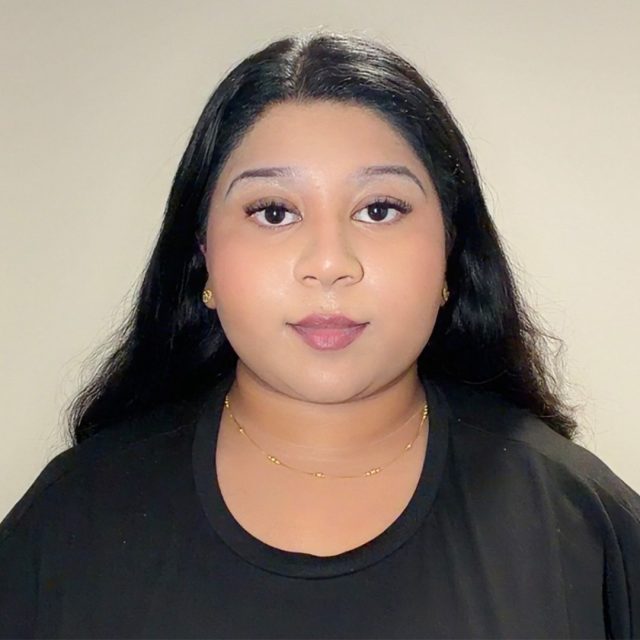
Lomikga Balachandran
MbChB Medicine - research internship student
Rather than simply learning about research, you are able to become involved in the process yourself, work with real data, analyse your findings and see how your work develops into a final outcome.
I wanted to join the Summer Internship Programme because I have always felt that research is an important part of medicine, particularly when it comes to evidence-based practice. Although we learn about research as part of the medical curriculum, I wanted the opportunity to experience the research process first-hand and understand what goes on behind the evidence that ultimately informs clinical practice.
I was particularly interested in having the opportunity to identify and analyse research independently, work with data, and see how this could eventually be developed into something such as a research poster. I wanted to understand the whole process rather than only learning about individual aspects of research in theory.
My internship focused on analysing Prevention of Future Deaths (PFD) reports relating to NHS Trusts where Edge Hill medical students undertake their clinical placements. I carried out a thematic analysis of these reports, extracting relevant information into a spreadsheet and analysing the data across areas such as the circumstances of death, the concerns raised by coroners and the NHS Trusts involved.
A particularly important part of the project was looking beyond individual cases to identify recurring themes and consider what could be learned from them to help prevent similar deaths in the future. This felt especially relevant given the increasing emphasis within healthcare on moving from treating illness towards prevention.
Throughout the internship, I developed skills in data extraction, data organisation, thematic analysis and interpreting research findings. I also learned how to take a research project through several different stages, from working with the original data to analysing the findings and presenting the results in a research poster. This gave me a much better understanding of the practical research process and the work that sits behind the evidence we encounter in medicine.
One of the biggest highlights of my internship was the opportunity to learn from my supervisor, Dr June Jones. She was incredibly supportive throughout the internship and took the time to explain different aspects of the research process to me and guide me through areas that were new to me. Having that support while also being encouraged to work independently made the experience particularly valuable and helped build my confidence in research.
I also really valued knowing that the work we completed could have an impact beyond the internship itself. The findings from the project have contributed towards developing learning resources for medical students, which could help future Edge Hill medical students and, ultimately, future doctors. That made the work feel particularly meaningful.
One of the biggest challenges was managing and extracting a large amount of data. Initially, the amount of information could feel challenging, but I learned to manage this by being organised and breaking the project down into smaller, achievable tasks. The weekly meetings with my supervisor were also really helpful, as they gave me an opportunity to discuss my progress, clarify any uncertainties and plan the next stages of the project.
My career goal is to become an ophthalmologist while continuing to be actively involved in research throughout my career. I hope to be a clinician who not only uses evidence to guide my practice, but also contributes to that evidence by being involved in research and publishing papers.
I would definitely recommend the internship to other students. It gives you the opportunity to experience research in a much more practical and hands-on way than you might normally experience within the medical curriculum. Rather than simply learning about research, you are able to become involved in the process yourself, work with real data, analyse your findings and see how your work develops into a final outcome.
Even if a student is unsure whether research will form a major part of their future career, I would still recommend the experience. Understanding how evidence is produced and being able to critically engage with research are important skills for any future doctor.