Nursing (Adult) BSc (Hons)
UCAS code: B740
Learn how to care compassionately for adult patients on our specialised adult nursing degree. Gain eligibility to register as a qualified adult nurse with the Nursing and Midwifery Council.
UK students on this course are eligible to apply for a £5,000 training grant via the NHS Learning Support Fund, with additional support available for those meeting certain criteria.
Overview
| Course length: | 3 years full-time |
|---|---|
| Start dates: | September 2026 January 2027 September 2027 |
| Location: | Edge Hill University |
| Example offers: | BCC-BBC (A Level) or DMM (BTEC)104-112 UCAS Tariff points View full entry criteria |
| Subject(s): | Nursing |
| Faculty: | Health, Social Care and Medicine |
| Department: | Nursing and Midwifery |
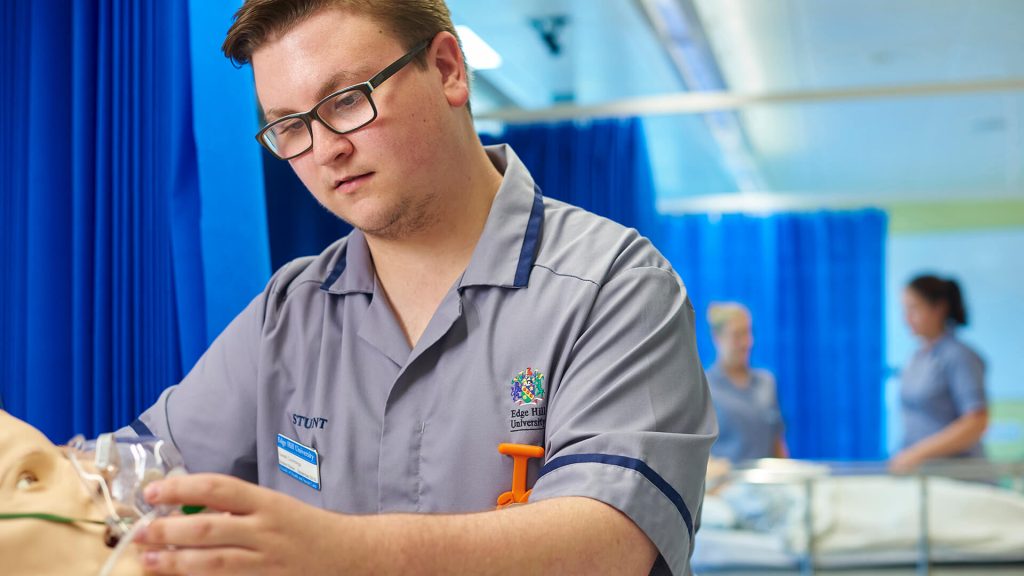

Do you have the passion and empathy to care for adults in a variety of settings? Nursing is a challenging, incredibly rewarding career. Joining us, you’ll learn to care for people with a diverse range of health conditions.
You’ll develop the organisational skills needed to lead, coordinate and deliver care to people and their families at home, in the community or in hospital. Explore theories and concepts to boost your understanding of the needs of adults, then apply these to practice.
Understand the key health priorities for adults. Consider how as an adult nurse you can enable people to live healthily, manage acute illness and adapt to living with long-term conditions. You’ll also be kept up-to-date with the leading improvements in health and social care to prepare you for professional practice.
Practice experience or placements will prepare you for registration as a qualified adult nurse with the Nursing and Midwifery Council (NMC). Hone your knowledge, skills and attitude to lead, coordinate and deliver care in a safe, compassionate and effective way. Start to build the communication skills, personal resilience and emotional intelligence required for a career in professional nursing.
We’re proud to have been awarded Community Student Placement of the Year in the 2026 Student Nursing Times Awards, alongside 8 other award nominations.
An NMC approved degree
On successfully graduating from this course at Edge Hill, you’ll be eligible to register as a qualified adult nurse with the Nursing and Midwifery Council. All registered nurses in the UK must engage in continuous professional development to maintain their registration and keep their skills and knowledge up-to-date, ensuring safe and effective practice.
If you accept an offer from Edge Hill you will need to satisfy the requirements of the Nursing & Midwifery Council in respect of physical and mental fitness and will be required to apply for a Disclosure and Barring Service (DBS) Enhanced Disclosure indicating that you meet the mandatory criteria of ‘Clearance to Work with Children and/or Vulnerable Adults’. Further information will be sent to you after you have firmly accepted an offer.
You may be interested in FdSc Nursing Associate, if you do not meet the entry requirements for this programme.
 Nursing & Midwifery Council
Course features
-
Professional accreditation
-
Professional practice placements
-
International students can apply


What you'll study
This course adheres closely to the six core values of the NHS. These values, enshrined within the NHS Constitution, have been developed by patients, the public and staff to inspire passion in the NHS, guide it in the 21st century, and provide common ground for cooperation in achieving shared aspirations.
Themes
Adopting a non-modular approach, the curriculum is aligned around three core progressive strands, each of which covers a distinctive year of study.
Year 1: The Foundations of Nursing Practice (120 credits) will empower you with the knowledge, skills and competencies required to deliver safe and effective care. You’ll benefit from a wide range of practical experiences, as well as integrated care delivery, as you discover the theory and application of biological, psychosocial and pharmacological factors. Professional and personal concepts will be studied, as you learn the foundations for the delivery of contemporary nursing practice across the lifespan and through a variety of healthcare settings.
Assessment: Written (33%), Verbal (34%), Written (33%) and Practice Assessment Document.
Year 2: Developing Proficiencies for Nursing (120 credits) prepares you to assess a variety of healthcare needs for people of all ages and across a variety of settings. You’ll learn to safely assess, plan, lead and evaluate patient care, as well as undertake an assessment of physical, psychological, social and emotional needs. This includes safe discharge, transition and end of life care. With a focus on working in partnership, we’ll prepare you for your career in an ever-changing health and social care environment. Explore the proactive role of the professional nurse in the provision of health promotion and prevention strategies, whilst gaining the skills and experience to plan and deliver health and wellbeing interventions.
Assessment: Written (33%), Verbal (33%), Simulated Practice (34%) and Practice Assessment Document
Year 3: Preparing for the Role of the Registered Nurse (120 credits) provides you with the opportunities to develop a critical appreciation of the role of the registered nurse. This will be achieved through a combination of independent and guided learning in which you will develop confidence in assessment, clinical decision making, and the application of a range of related theories to support care delivery. Successful completion of this year of study will enable you to have the confidence and ability to think critically and apply knowledge and skills in the provision of expert evidence-based direct nursing care.
Assessment: Written (33%), Verbal (33%), Simulated Practice (34%) and Practice Assessment Document
How you'll study
Seminars, lectures, work-based learning, tutorials and technology enhanced learning will be used to deliver this programme. While the majority of classes will take place at Edge Hill University, some modules may involve studying at sites other than Ormskirk in which case you will be responsible for travel and parking costs.
You will spend 50% of your time in practice which will be undertaken in hospitals and community settings within the NHS, local authority, independent and voluntary organisations. These practice learning environments range throughout the North West and neighbouring geographical areas. This is an extensive area which we would encourage you to become familiar with, as your practice experiences may be allocated from across the whole geographical area, but predominantly within the Cheshire and Merseyside region. You’ll be supported by a practice placement assessor and supervisor.
Placements include weekend, early morning, evening and night work to ensure access to a full range of practice experiences across 24-hour care. You will be responsible for travel and parking costs while on placement.
How you'll be assessed
In each year, you will be assessed by written coursework, an verbal task and practice assessment. You will also be assessed by a simulated practice assessment in Year 2 and 3.
While on practice placement, you will be supported in the development of the application of knowledge and skills, leading to the assessment of related proficiencies.
Who will be teaching you
All lectures are delivered by professionals within the field of nursing as well as specialists in other areas.
The programme team represent a range of qualified, research-active professionals with extensive experience of working within the health and/or social care sector.
Most importantly, service users, carers and their families will be involved in facilitating your learning so that you gain an understanding of the impact care has on individual groups.
Entry criteria
Typical offer 104-112 UCAS Tariff points, for which no specific subjects are required, plus GCSE English Language and GCSE Mathematics at Grade C or Grade 4 or above (or equivalent).
An interview forms part of the selection process.
If you accept an offer from Edge Hill you will need to satisfy the requirements of the Nursing & Midwifery Council in respect of physical and mental fitness and will be required to apply for a Disclosure and Barring Service (DBS) Enhanced Disclosure indicating that you meet the mandatory criteria of ‘Clearance to Work with Children and/or Vulnerable Adults’. Further information will be sent to you after you have firmly accepted an offer.
You may be interested in FdSc Nursing Associate, if you do not meet the entry requirements for this programme.
Example offers
| Qualification | Requirement |
|---|---|
| A Level | BCC-BBC. |
| UCAS Tariff points | 104-112 points. |
| BTEC Extended Diploma (or combination of BTEC QCF qualifications) | Distinction, Merit, Merit (DMM). |
| T Level | Overall grade of Merit. |
| International Baccalaureate (IB) | We are happy to accept IB qualifications which achieve the required number of UCAS Tariff points. |
| Access to Higher Education Diploma | 45 credits at Level 3, for example 9 credits at Distinction and 36 credits at Merit or 15 credits at Distinction and 30 credits at Merit. The required total can be attained from various credit combinations. |
Please note, the above examples may differ from actual offers made. A combination of A Level and BTEC awards may also be accepted.
If you have a minimum of two A Levels (or equivalent), there is no maximum number of qualifications that we will accept UCAS points from. This includes additional qualifications such as Extended Project Qualification (EPQ), AS Levels that haven't been continued to A Level, and General Studies AS or A Level awards.
Our new Fair Entry Criteria is a Contextual Admissions Policy that takes an applicant’s personal and educational background into account. This policy will allow eligible applicants to receive up to a two-grade reduction in their entry requirements for this course. Find out more and see if you qualify.
English language requirements
International students require IELTS 6.0, with a score no lower than 5.5 in each individual component, or an equivalent English language qualification.
How to apply
Apply full-time
Read our guide to applying through UCAS to find out more about the application process.
International
Please see our international student pages for further information about how to apply as a prospective international student.
Should you accept an offer of a place to study with us and formally enrol as a student, you will be subject to the provisions of the regulations, rules, codes, conditions and policies which apply to our students. These are available at www.edgehill.ac.uk/studentterms.
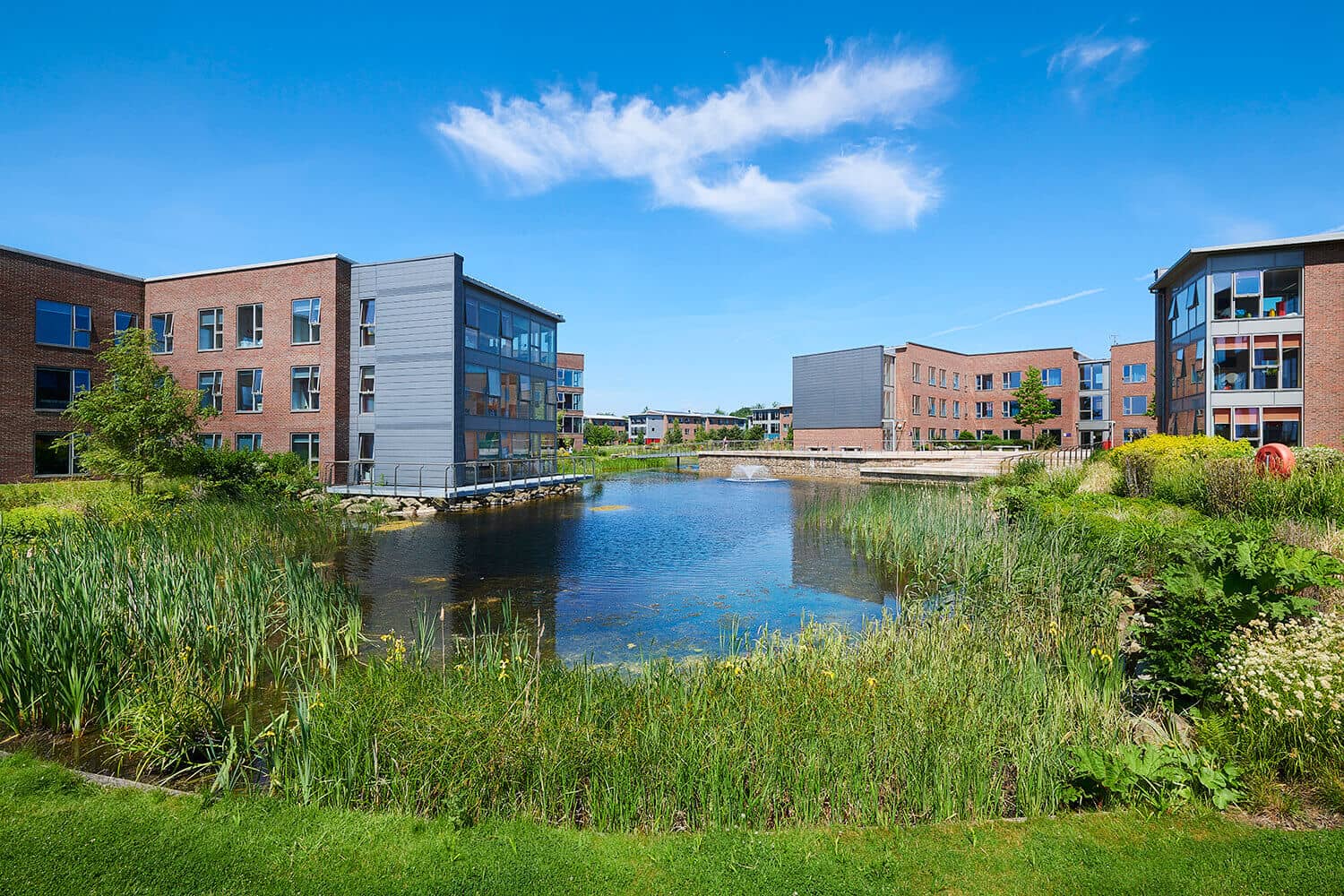
If you join a full time undergraduate degree at Edge Hill University, we will guarantee you the offer of a room in our halls of residence for the first year of your course.
Discover our accommodation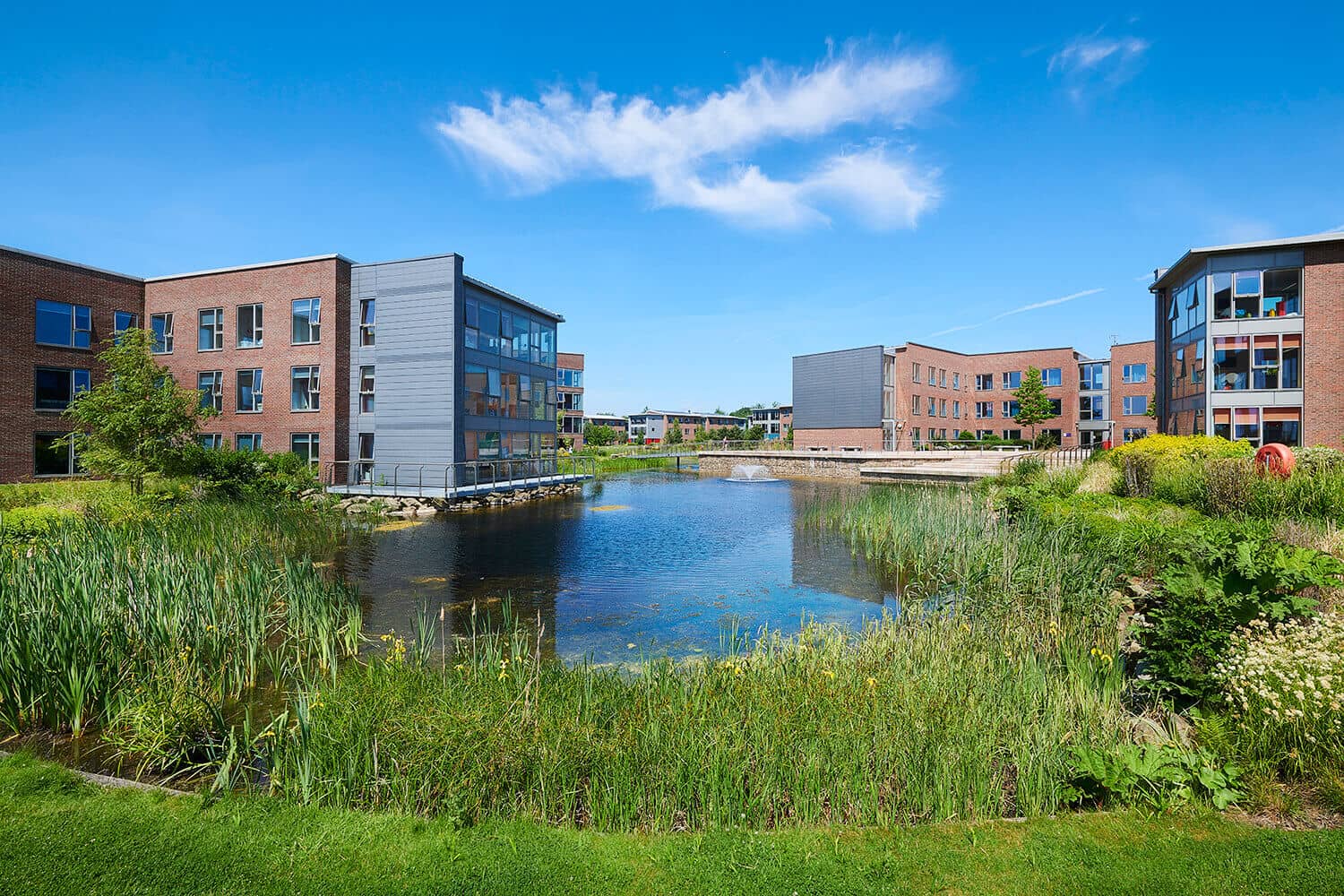
Facilities

The Faculty of Health, Social Care and Medicine offers outstanding facilities for the education and training of health and social care professionals.
The contemporary teaching and learning resources include leading edge clinical skills facilities, an 860-seat lecture theatre, and a variety of teaching rooms and social learning spaces.
Where you'll study
Learning resources
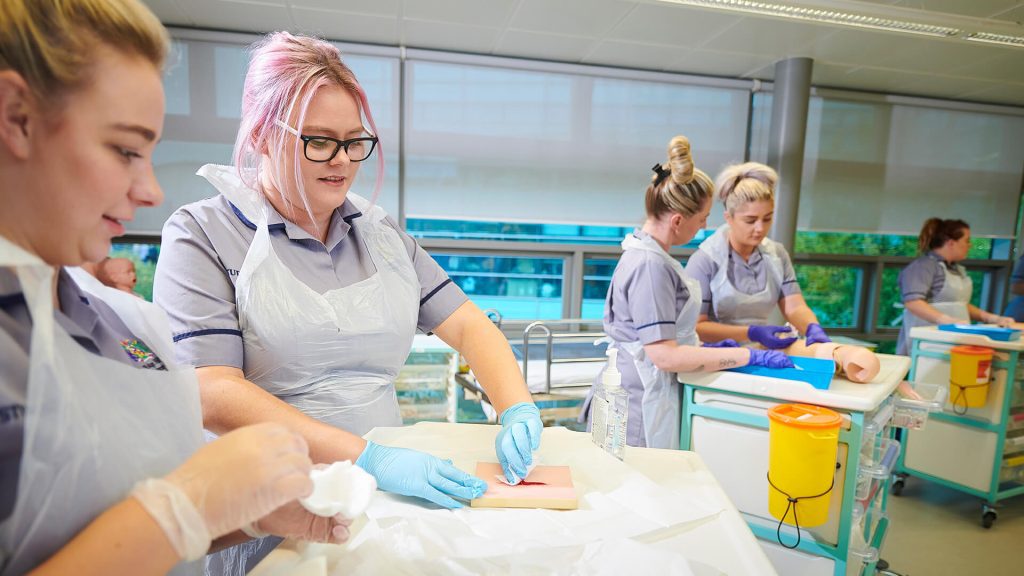
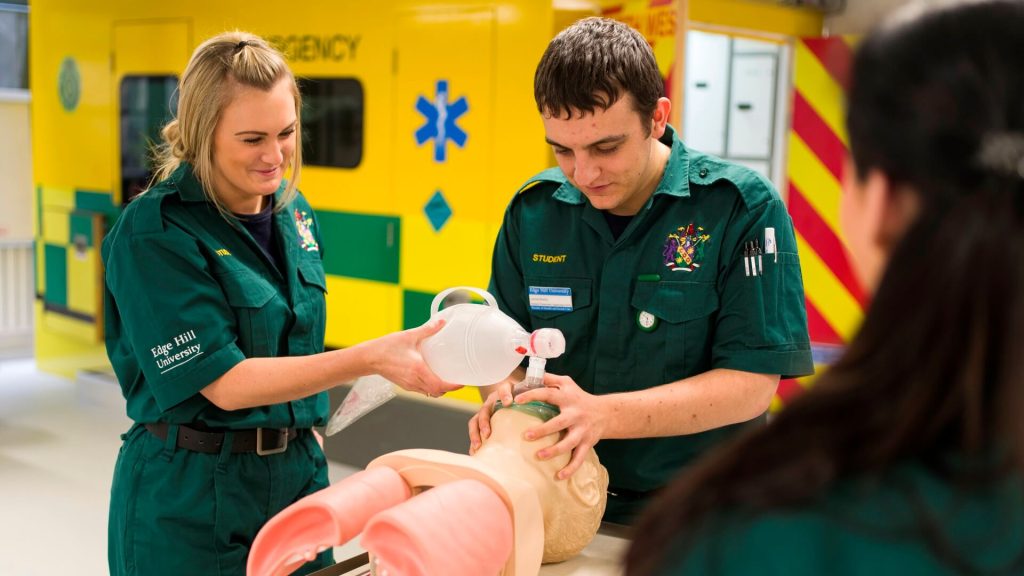
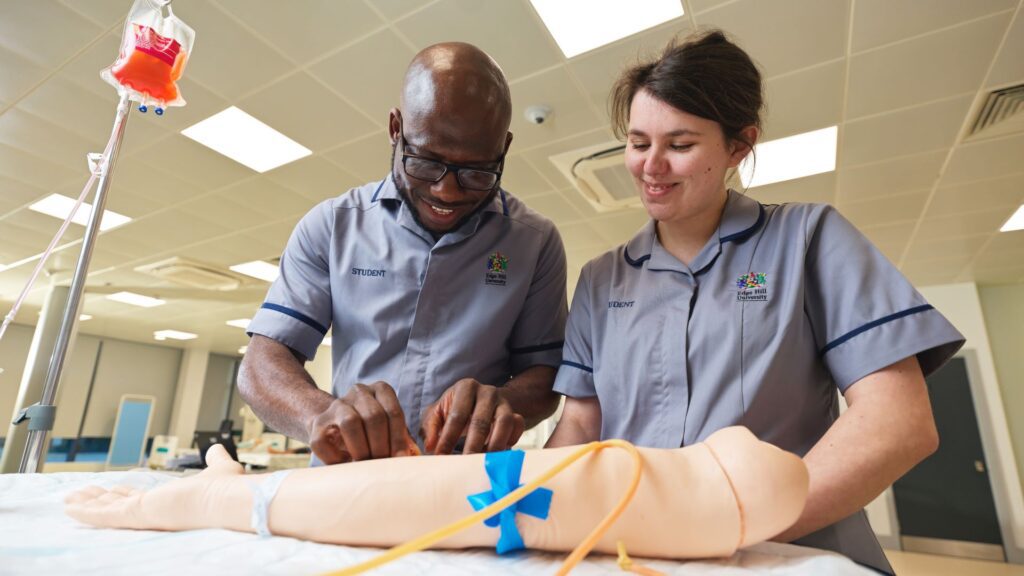
The Clinical Skills and Simulation Centre offers a variety of simulated environments from home, through primary and emergency care, to secondary care and beyond. The flexible and adaptable facilities include a ward environment, operating theatre, an anatomy and ultrasound resource centre, a ‘Better at Home’ suite, clinical skills area and consultation rooms.
You will benefit from access to a wide variety of healthcare equipment, as well as a range of full-body patient simulators that can breathe, talk, have pulses and can simulate a wide range of symptoms and clinical conditions. This will enable you to undertake practical scenarios in realistic settings, providing ideal preparation for professional practice placements and future employment.
Finance
Tuition fees
UK Full-Time
£9,790
a year
International
£14,500
a year
EU/EEA and Swiss students who have settled or pre-settled status under the EU Settlement Scheme, as well as Irish nationals, may be eligible for the UK tuition fee rate.
Financial support
Subject to eligibility, UK students joining this course can apply for a Tuition Fee Loan from the Government to cover the full cost of tuition fees. UK students enrolling on the course may also be eligible to apply for additional funding to help with living costs.
Scholarships
We offer a range of scholarships, which celebrate the determination, commitment and achievement of our students. Many of our scholarships are awarded automatically. There are some however, where you will need to be involved in an application or nomination process. To find out more about our scholarships and check your eligibility, please visit our dedicated scholarships pages.
Money Matters
Please view the relevant Money Matters guide for comprehensive information about the financial support available to eligible UK students.
UK students on this course are eligible to apply for a £5,000 training grant via the NHS Learning Support Fund, with additional support available for those meeting certain criteria.
EU/EEA and Swiss students who have settled or pre-settled status under the EU Settlement Scheme may be eligible to apply for financial support. Irish nationals can ordinarily apply to Student Universal Support Ireland (SUSI). If you are an EU student who does not have settled or pre-settled status, or are an international student from a non-EU country, please see our international student finance pages.
Your future career
With graduation from our adult nursing degree, you will be eligible to register as a qualified adult nurse with the Nursing and Midwifery Council.
The field of adult nursing is very diverse so there’s a range of career paths. Adult nurses play a vital role in providing, leading and coordinating care for a variety of patients in different healthcare settings.
In the health and social care industry, you could apply for roles in settings such as:
- acute NHS trusts
- community trusts
- primary care
- the voluntary and independent sector
- private hospitals
- charitable organisations
Within these organisations, the skills and knowledge you’ve acquired mean you’re well-placed to apply for rewarding roles in:
- research
- education
- leadership/management
- community nursing
- specialist practice
All registered nurses in the UK must engage in continuous professional development to maintain their registration and keep their skills and knowledge up-to-date, ensuring safe and effective practice.
Course changes
Every effort has been made to ensure the accuracy of this information, however our courses are subject to ongoing review and development. Changing circumstances may necessitate alteration to, or the cancellation of, courses.
Changes may be necessary to comply with the requirements of professional bodies, revisions to subject benchmarks statements, to keep courses updated and contemporary, or as a result of student feedback. We reserve the right to make variations if we consider such action to be necessary or in the best interests of students.