Surgery MCh
Develop an evidence-based approach and advance your clinical practice in your specialist area of surgical expertise on a programme for experienced, qualified doctors who are registered with the General Medical Council.
Overview
| Course length: | 2-3 years part-time |
|---|---|
| Start dates: | September 2026 September 2027 |
| Location: | Edge Hill University and Wrightington Hospital Edge Hill University or Wrightington Hospital |
| Example offers: | In addition to having a medical degree, you will also need to be registered with the General Medical Council to work in the UK View full entry criteria |
| Subject(s): | Medicine |
| Faculty: | Health, Social Care and Medicine |
| Department: | Medical School |
The MCh enables experienced, qualified doctors to develop an evidence- based approach to healthcare practice and to obtain a postgraduate qualification whilst enhancing their surgical clinical expertise within the NHS. Edge Hill University is an accredited Surgical Training Centre with the Royal College of Surgeons (England).
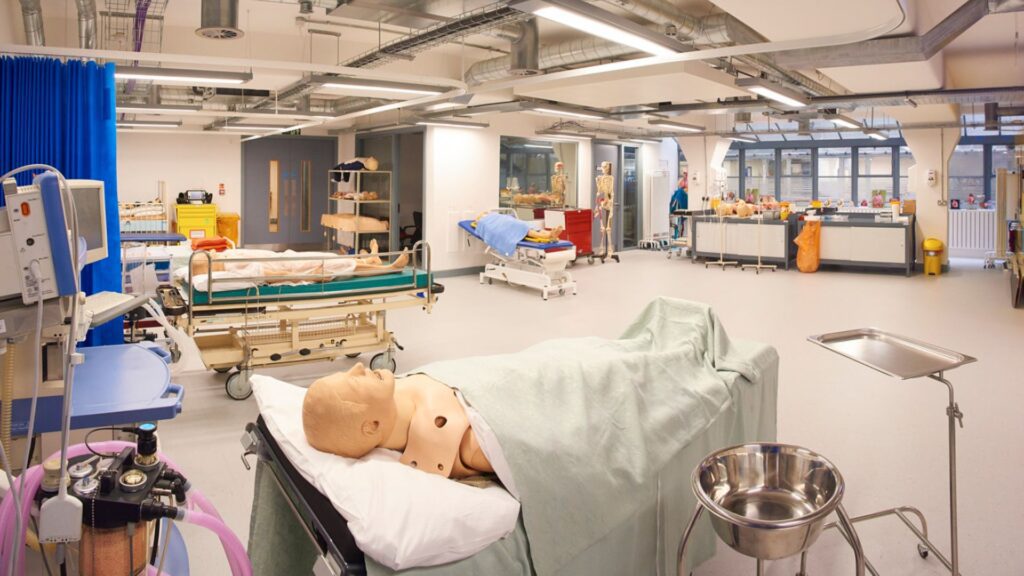
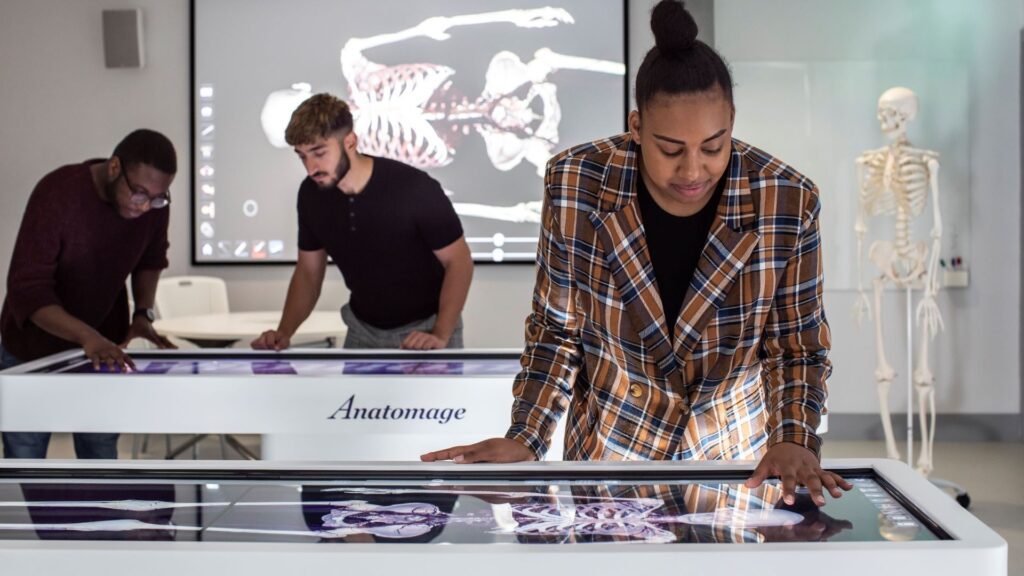
The programme has been designed in collaboration with senior surgeons and academics and is at the cutting edge of contemporary surgical evidence-based practices. It will allow you to extend your knowledge and skills to advanced levels within your specialist area of work. The clinical modules focus on practical skills in operative surgery with the use of interactive teaching aids and practical workshops.
You can choose from a range of specialist pathways or opt for a general surgery route.
- MCh Cardiothoracic Surgery*
- MCh Colorectal Surgery*
- MCh Emergency and Trauma*
- MCh General Surgery*
- MCh Gynaecology
- MCh Gynaecology Oncology
- MCh Limb Reconstruction*
- MCh Minimal Access Cardiothoracic Surgery*
- MCh Minimal Access Surgery*
- MCh Neurosurgery*
- MCh Obstetrics
- MCh Obstetrics and Gynaecology
- MCh Oculoplastic Surgery
- MCh Oncoplastic and Reconstructive Breast Surgery*
- MCh Ophthalmology
- MCh Ophthalmology Paediatrics
- MCh Ophthalmology (Cataract and Glaucoma)
- MCh Ophthalmology (Cataract and Refractive Surgery)
- MCh Ophthalmology (Medical Retina)
- MCh Orthopaedics (Foot and Ankle)*
- MCh Orthopaedics (Hand and Wrist Surgery)*
- MCh Orthopaedics (Hip and Knee)*
- MCh Orthopaedics (Spine)*
- MCh Orthopaedics (Upper Limb Surgery)*
- MCh Otorhinolaryngology*
- MCh Paediatric Orthopaedics*
- MCh Plastic Surgery*
- MMed Renal & Pancreatic Transplant Surgery*
- MCh Reproductive Medicine
- MCh Rhinology*
- MCh Rhinology & Facial Plastic Surgery*
- MCh Surgical Gastroenterology*
- MCh Surgical Oncology*
- MCh Trauma & Orthopaedics*
- MCh Urogynaecology*
- MCh Urology*
*Pathways currently accredited by the Royal College of Surgeons (England).
Whichever pathway you choose, the programme will be delivered in partnership with Wrightington, Wigan and Leigh NHS Foundation Trust. Wrightington Hospital is recognised as a Centre of Excellence (Orthopaedic Surgery) and has clinical facilities / laboratories that will provide you with excellent learning opportunities.
 The Royal College of Surgeons of England, registered charity number 212808
Course features
-
Professional accreditation
What you'll study
This course consists of two clinical research modules, a work-based learning module and a dissertation. Topics covered will include:
- Specialist aspects of evidence based practice in surgery – the application of advanced knowledge of physiology, pathology, microbiology and imaging. The aim is to enable you to acquire an advanced understanding of the process of service innovation in the relevant subject area.
- Qualitative and quantitative research methods.
- Critiquing research findings.
- Writing a research proposal.
- Analysis of quantitative data.
- Systematic reviews.
- Research governance and ethics.
- Focus on a significant piece of investigative enquiry from conceptualisation through to completion.
For more information about each module, including the dates and times of module sessions, please see our Continuing Professional Development Modules for Health and Social Care Practitioners pages.
How you'll study
The programme is delivered over two to three years, commencing in September each year. The academic year runs from September through to July, though the dissertation submission will be in September of the second year, with the option to defer the dissertation to the third year. You will experience a variety of teaching and learning strategies including lectures, seminars, individual and group tutorials and independent guided study.
An online Virtual Learning Environment (VLE) is used for some components of the programme. The surgical modules have elements of practice-based learning and involve the completion of a log of practical experience which complements the course material. The dissertation allows you to focus on a significant piece of investigative enquiry from conceptualisation through to completion.
How you'll be assessed
Assessment methods include a research proposal, written assignments, completion of online activities and discussions, Objective Structured Clinical Examinations (OSCEs), clinical log books, poster presentations, clinical audit, seminar presentations and a dissertation.
Who will be teaching you
The programme team consists of experienced academic staff from across Edge Hill University and expert clinicians from Wrightington Hospital and other specialist hospital trusts. This collaborative approach provides a team of high calibre individuals to support your learning. Additionally, leading surgeons from related specialities are invited as guest speakers on the surgical modules. Edge Hill University enjoys an excellent reputation for the teaching quality of its programmes. All staff involved in the delivery of modules and pathways within this programme are currently involved in scholarly and research related activities which are congruent with their teaching responsibilities.
Entry criteria
In addition to having a medical degree, you will also need to be registered with the General Medical Council to work in the UK or alternatively have successfully applied for an International Training Fellowship. You must have demonstrable clinical expertise and some experience in surgery.
For further information regarding eligibility for International Training Fellowships, please email [email protected].
How to apply
If you wish to apply for this course, please email your CV to [email protected] in the first instance.
Should you accept an offer of a place to study with us and formally enrol as a student, you will be subject to the provisions of the regulations, rules, codes, conditions and policies which apply to our students. These are available at www.edgehill.ac.uk/studentterms.
There’s plenty of opportunities to come take a look around campus. Attend one of our Open Days to see what life at Edge Hill University is all about.
Book an Open Day
Finance
Tuition fees
2026/2027 fees will be added when available.
Tuition fees
If you are joining the MCh in academic year 2025/26, are already registered with the General Medical Council, and have been working in the NHS for a minimum of two years at the point you enrol on the programme, you can expect the tuition fee to be £16,000 for the entire course, subject to completing the programme within three years.
Alternatively, if you are joining the MCh in academic year 2025/26 and are appointed as an International Training Fellow, you can expect the tuition fee to be £35,000 for the entire course, subject to completing the programme within three years.
The University may administer a small inflationary rise in tuition fees, in line with Government policy, in subsequent academic years as you progress through the course.
Financial support
Please view the relevant Money Matters guide for comprehensive information about the financial support available to eligible UK students joining postgraduate courses at Edge Hill University.
Your future career
Medical professionals need to continually seek ways to improve their career prospects in an increasingly competitive job market where a postgraduate qualification is often now deemed essential.
The MCh provides a highly relevant qualification for doctors working in a specialist area of surgical practice which will add to your portfolio of qualifications and provide you with opportunities for professional development supported by expert clinicians and academics.
Course changes
Every effort has been made to ensure the accuracy of this information, however our courses are subject to ongoing review and development. Changing circumstances may necessitate alteration to, or the cancellation of, courses.
Changes may be necessary to comply with the requirements of professional bodies, revisions to subject benchmarks statements, to keep courses updated and contemporary, or as a result of student feedback. We reserve the right to make variations if we consider such action to be necessary or in the best interests of students.