Creative Writing MA
Hone your writing technique. Find your unique literary voice. Joining us, you’ll learn to read as a writer and develop your craft as you produce a manuscript for possible publication.
Overview
| Course length: | 1 year full-time 2 years part-time |
|---|---|
| Start dates: | September 2024 September 2025 |
| Location: | Edge Hill University |
| Subject(s): | Creative Writing |
| Faculty: | Arts and Sciences |
| Department: | English and Creative Arts |

What does it take to be a professional writer in the twenty-first century? As a writer with some experience, you’ll work with our team of professional writers and other creative professionals to refine your skills.
We’ll help you develop your own philosophy of writing as you improve your craft. You’ll study contemporary forms. You’ll learn to read as a working writer. You’ll try new techniques and explore the relationship between writing and society.
Your main focus will be working towards a final manuscript. You’ll develop a deep understanding of your creativity and your craft as you reflect on your progress.
Uncover the hidden workings of the literary industry. Discover how to submit a piece to publication and prepare for a writer’s life on our MA Creative Writing.
Course features
-
International students can apply
What you'll study
Explore how successful writers work and examine their philosophies and practices. Learn about the publishing industry and research an area of the industry that will help your career development. Experiment with different writing genres, as you work towards specialisation in the form of your choice: poetry, the short story, scriptwriting, novel writing, non-fiction. Develop your final manuscript. Full-time students will complete The Manuscript module within one year while part-time students focus on their manuscript in Year 2.
How you'll study
The writing workshops are always taught in small groups, but the discussion groups involve seminars with a lecture component.
During the manuscript module (a dissertation) you will work one-to-one with your manuscript supervisor, bringing your months of study to a final creative fruition. All the modules you will take have been designed specifically for writers.
This is not the kind of ‘Creative Writing’ course that requires you to pick from already existing English Literature modules. The modules have been custom-designed for you.
How you'll be assessed
Most assessment is through a portfolio of creative writing together with a piece of reflective writing. There will also be some essays and a presentation based on individual research projects. You’ll also be required to keep a professional development log. All this work will help you develop towards the final piece of work, The Manuscript.
Who will be teaching you
Our teaching team has extensive experience in poetry, fiction, non-fiction, short stories and scriptwriting.
As a Creative Writing student at Edge Hill University, you’ll have the opportunity to attend workshops and readings with a variety of guest writers at the Arts Centre. Close links have also been established with Liverpool’s Everyman Theatre as well as other poetry venues across Merseyside.
Entry criteria
Entry requirements
You should have a degree equivalent to UK first-class or second-class honours (2:2 or above).
As part of the application process, you will also be required to submit a portfolio of your creative work alongside your application form. This should be in the form of either a 2,000 word sample of prose fiction or creative non-fiction; 5 poems, or a ten page script.
You may also be required to attend an interview as part of the selection process.
English language requirements
International students require IELTS 6.5, with a score no lower than 6.0 in each individual component, or an equivalent English language qualification.
If your current level of English is half a band, one band, or one-and-a-half bands lower, either overall or in one or two elements, you may want to consider our Pre-Sessional English course.
How to apply
There is an online application process for this course.
Please choose the application form for your preferred intake date and mode of study.
Please see our international student pages for further information about how to apply as a prospective international student.
Should you accept an offer of a place to study with us and formally enrol as a student, you will be subject to the provisions of the regulations, rules, codes, conditions and policies which apply to our students. These are available at www.edgehill.ac.uk/studentterms.
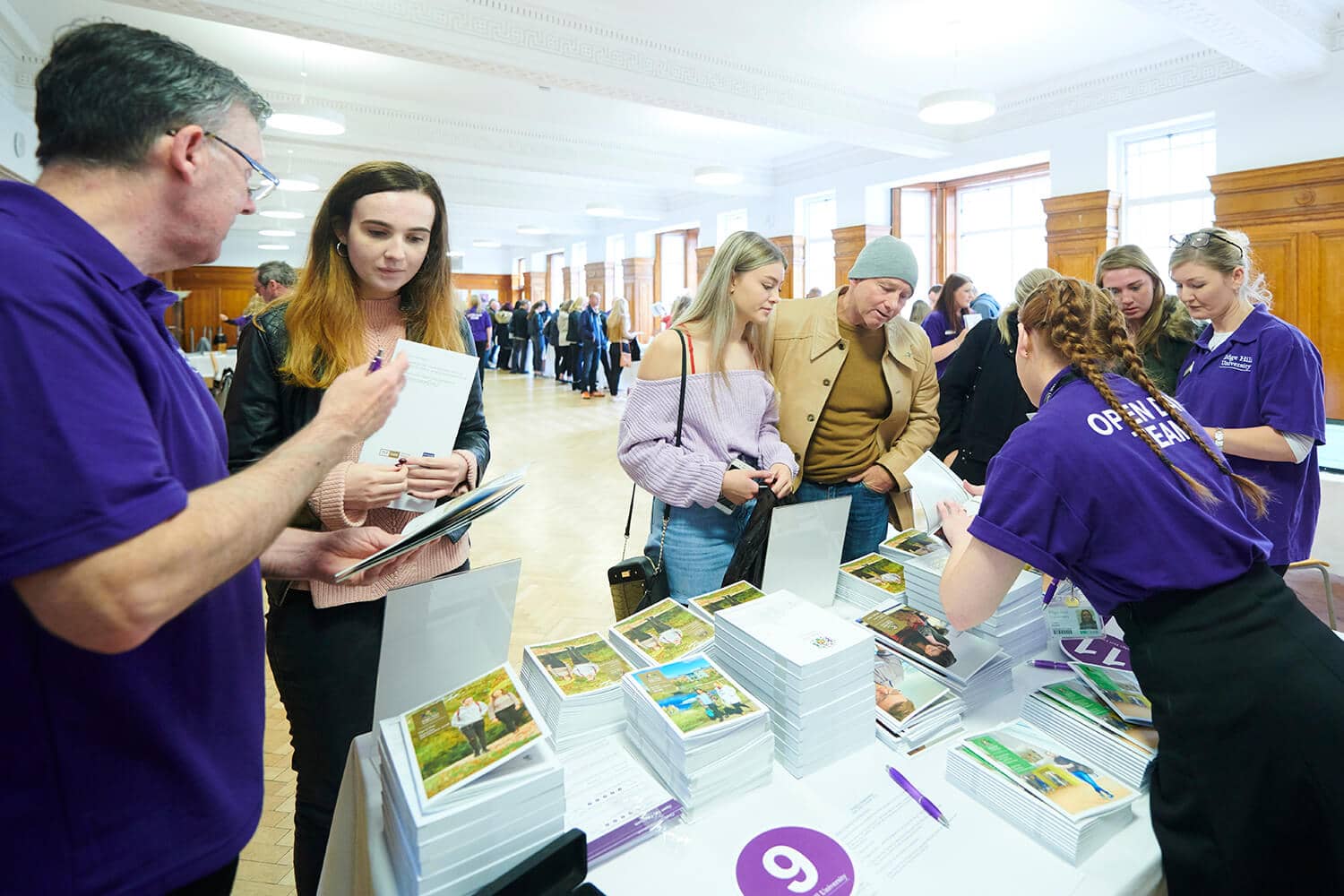
There’s plenty of opportunities to come take a look around campus. Attend one of our open days to see what life at Edge Hill University is all about.
Book an open day
Facilities
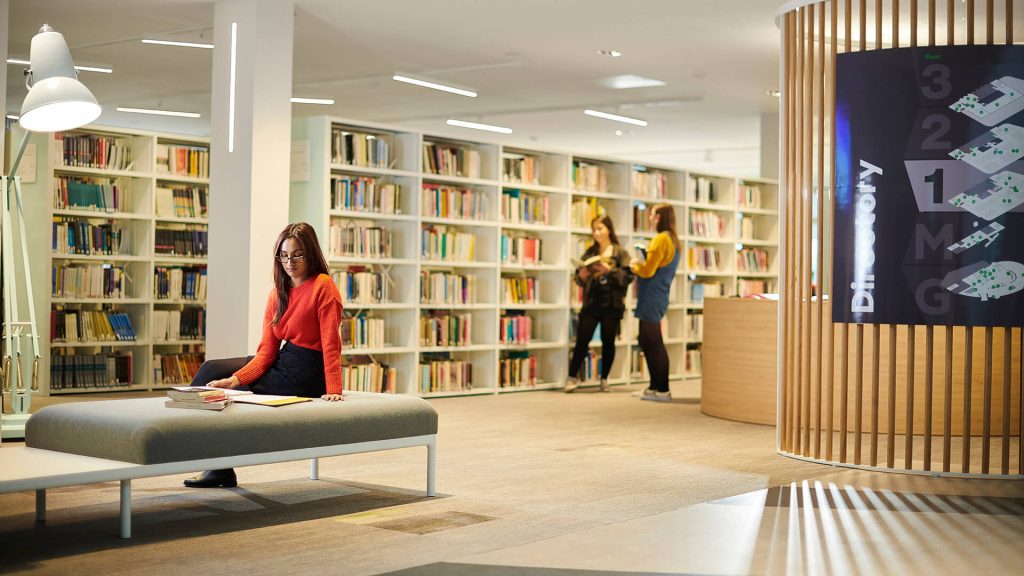
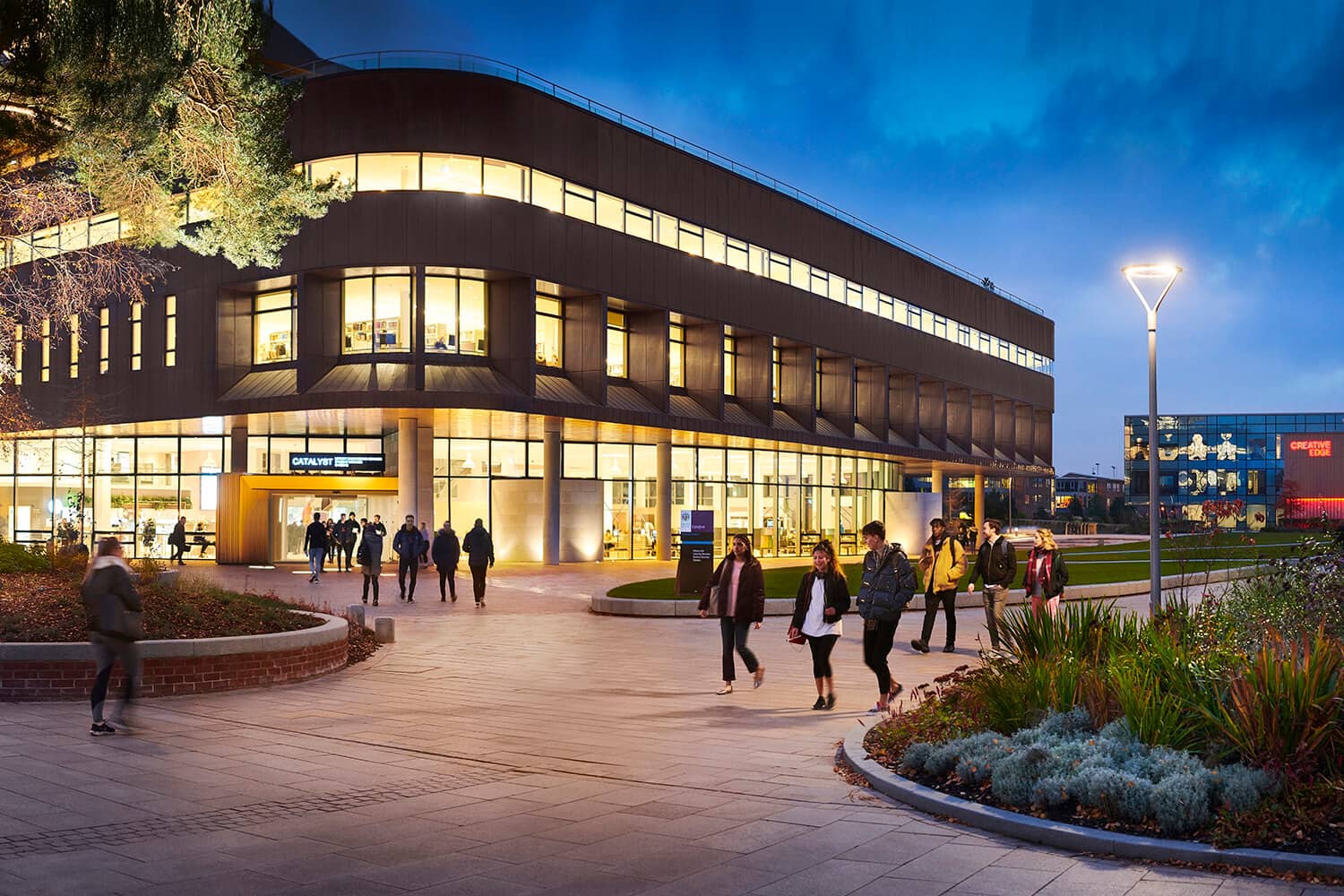
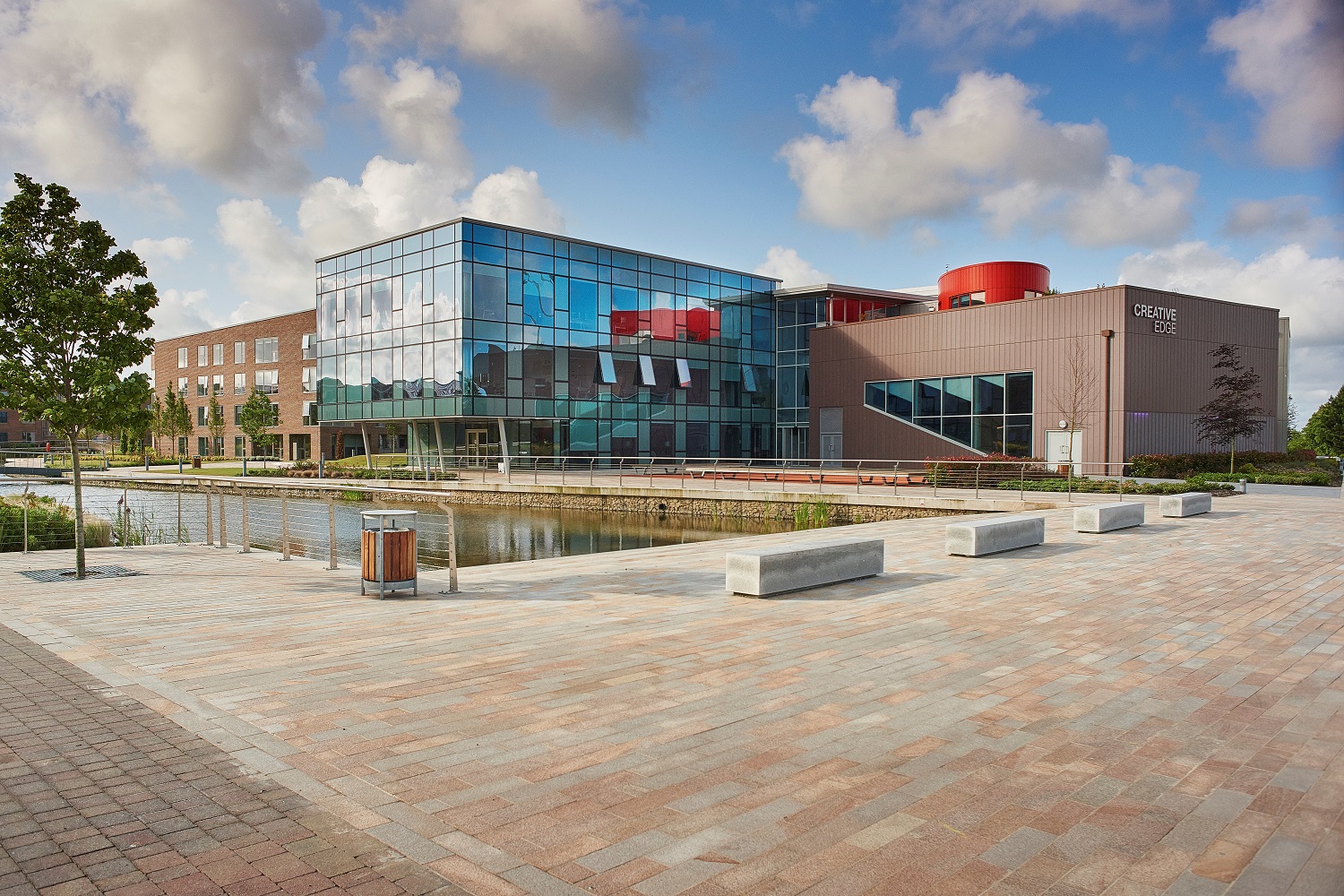 The Department of English and Creative Arts is based in Creative Edge, a state-of-the-art £17million building offering highly contemporary facilities.
The £17 million Creative Edge building features a lecture theatre, seminar rooms, IT facilities and smaller tutorial spaces. It has everything you need to become a capable, versatile, creative writer and thinker. Creative Edge’s social learning spaces are ideal for passionate discussion with like-minded creatives.
You’ll develop the practical skills, analytical tools and confidence for wherever your creative flair and insight takes you.
Where you'll study
Creative Edge
Finance
Tuition fees
UK Full-Time
£9,000
for the course
UK Part-Time
£50 per credit
for the course
International
£16,500
for the course
EU/EEA and Swiss students who have settled or pre-settled status under the EU Settlement Scheme, as well as Irish nationals, may be eligible for the UK tuition fee rate.
Financial support
Please view the relevant Money Matters guide for comprehensive information about the financial support available to eligible UK students joining postgraduate courses at Edge Hill University.
EU/EEA and Swiss students who have settled or pre-settled status under the EU Settlement Scheme may be eligible to apply for financial support. Irish nationals can ordinarily apply to Student Universal Support Ireland (SUSI). If you are an EU student who does not have settled or pre-settled status, or are an international student from a non-EU country, please see our international student finance pages.
Your future career
What can you do with a Masters degree in creative writing? Some of our graduates have gone straight into successful freelance writing careers. Others have found rewarding roles in publishing, content creation, and teaching. Positions they hold include:
- editorial and publication manager
- creative writing tutor
- senior editor
- content creator
Our students have gone on to work for high-profile publishers. We have alumni at Oxford University Press, Heroic Publishers, DC Thomson Media, and Comma Press.
You’ll also find our alumni working at local colleges and schools, the NHS Leadership Academy and in content roles in the digital industries. While pursuing these careers, they continue to develop their portfolios.
Your future and employability matter to us. You’ll have opportunities to enter the Dame Janet Suzman Playwrighting Award and the PG Short Story Award, part of the prestigious Edge Hill Prize. These competitions are open exclusively to Edge Hill students and can help launch careers: Hywel Wilkie, alumni and winner of the Dame Janet Suzman Playwrighting award 2018, gained a seed commission as one of Liverpool Everyman’s Young Writers.
Course changes
Every effort has been made to ensure the accuracy of this information, however our courses are subject to ongoing review and development. Changing circumstances may necessitate alteration to, or the cancellation of, courses.
Changes may be necessary to comply with the requirements of professional bodies, revisions to subject benchmarks statements, to keep courses updated and contemporary, or as a result of student feedback. We reserve the right to make variations if we consider such action to be necessary or in the best interests of students.