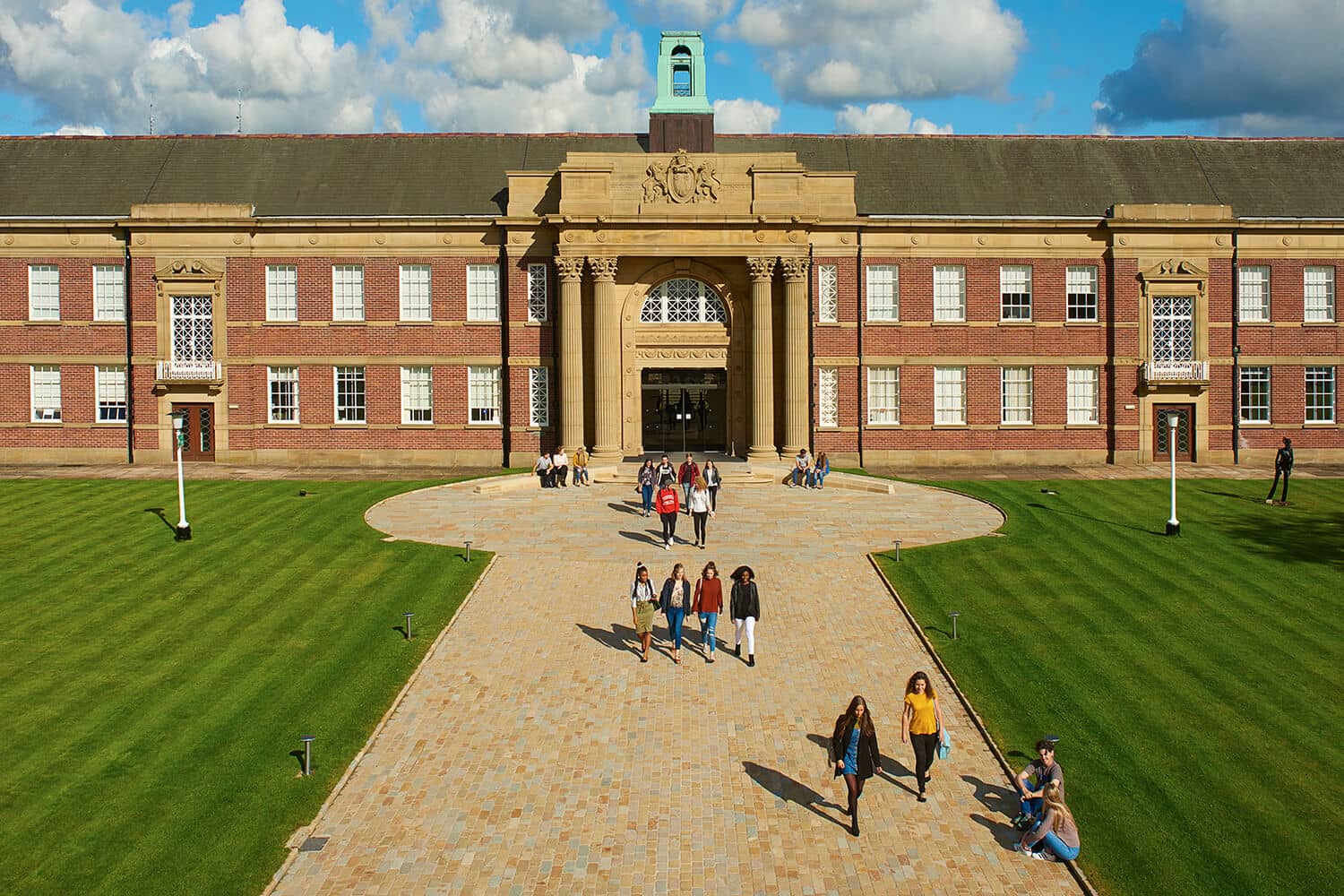
Act. Create. Produce. Find your voice as a student of drama as part of our creative community. Probe the social and political impact of theatre and performance in the 21st century. We’ll develop your performance skills and help you discover the many opportunities presented by a life in the creative industries.
What is drama? Why do we need it? You’ll challenge the meaning of popular entertainment and engage in artistic debate on our drama degree.
Live performance is central to our ethos. On this drama course, we’ll encourage you to develop your artistic skills and vision in the theatres and studios of our Arts Centre. Join workshops with professional directors and companies. Try new techniques for acting, improvisation, rehearsal and performance as you collaborate on stage and in the studio. Explore the process of making socially-engaged theatre and performance both with and for specific audiences and communities.
Interrogate plays across time and culture to answer questions on the origins, development and value of drama. You’ll examine the work of key ensembles in traditional and contemporary theatre, before creating dynamic group productions. And you’ll also have opportunities to push yourself further with our staff- and student-led drama groups.
We want you to feel supported during your drama degree. Our team of experienced actors, playwrights, directors and theatre technicians will work with you as you grow. Together, we’ll connect theory to practice so you graduate as a practitioner with a deep understanding of your profession and real experience of live performance.
In Year 1 of your BA (Hons) Drama degree, you’ll look at acting, how theatre gets made and how textual interpretation impacts dramatic messaging. See contemporary and historical productions from around the world through a critical lens. Explore innovative approaches to creating performance in a laboratory environment. Our acting and acting techniques workshops will give you a reflective space to put ideas into practice and find your voice.
Acting Fundamentals is an introductory practical exploration of the fundamental skills required by the theatre actor. The module will cover a range of historical and cultural contexts, ranging from ancient times to the dawn of the modern age of drama. The module provides a creative environment in which your own performance and awareness of the art of acting can be developed in the context of the socio-cultural role of actors in history. You will discover the range of skills and techniques used by actors, with these personal encounters contributing to a deeper recognition and appreciation of the complexity and longevity of the theatre actors' art. This will provide an insight into the historical development of acting, as well as the historical role the actor has played in the cultural creation and communication of meaning. While the module focuses broadly upon the development of Western performance traditions, making clear links between historical methodologies and the contemporary theatre industry, it also draws on examples and perspectives from around the world.
Module code: DRA1301
Credits: 20
Acting Techniques
Acting Techniques develops and hones your theatre making skills. The module will identify and explore the dynamics between the key elements of live performance practice and immerse you in the vocal, physical and creative processes required by a contemporary performer. Workshop practice will equip you with the essential practical skills and techniques of the professional actor. You will also develop the movement and physical expressiveness of an actor, translate the functional elements of a play-text into theatrical action, and engage in storytelling and improvisation. Tutor-led sessions will be complemented by workshops that you can lead. The module will combine practice and theory, with practical exercises being informed by discussion, debate and research around performance practice.
Module code: DRA1300
Credits: 20
Destabilising the Canon
Destabilising the Canon explores the nature and history of drama. It will ask what is drama? How did it originate and develop? How does it work? What is it for? Why do we need it? The module will confront the Euro-American focus of the conventional theatrical canon and interrogate the intersecting global histories of theatrical practice. You’ll be encouraged to question what is considered ‘canonical’, representing the best of theatre and that which has most impact and generates more commentary, and why this is the case. The module will broaden the range of texts, practices and histories you are able to draw upon in your studies and future career. You will identify relevant patterns and themes across global theatrical histories and consider creative methods for revising, expanding and making the theatrical canon more inclusive.
Module code: DRA1302
Credits: 20
Devising and Dramaturgy
Devising and Dramaturgy explores the practice and examines the creation of performance work. The module focuses on developing the performance, devising and dramaturgical skills needed to work within a successful ensemble. Workshop practice will hone your physical, vocal and technical skills and develop your ability to work creatively in collaborative situations. You will gain a creative understanding of the physical and conceptual processes involved in the construction of contemporary performance. Drawing upon the creative methodologies employed by devising theatre companies in the twentieth and twenty-first centuries, as well as contemporary approaches to dramaturgy, you will engage with a range of creative strategies. Particular attention will be paid to the importance of the body in space, the manipulation and shaping of material, the application of rhythm and dynamics, the role of improvisation techniques, and intention and motivation in collaborative processes. By developing an embodied understanding of contemporary devising and dramaturgy, the module will help you find your own critical and creative voice and discover the links between creation, performance and reception.
Module code: DRA1303
Credits: 20
Performance Contexts
Performance Contexts surveys the key elements of dance, drama and musical theatre contexts and histories. While not intended to offer an exhaustive account of all performance histories, the module will highlight shared terminologies and practices, while also offering an introduction to appropriate modes of study, including research, performance and workshop skills. Key themes will include the nature of performance and how it is perceived, ‘traditional’ and ‘non-traditional’ crafting traditions, training processes, and the continuous expansion and development of definitions of performance itself. You will gain an enhanced understanding of the close relationship between dance, drama and musical theatre, as well as the associated relationship between actors, performers, choreographers, directors, writers and audiences.
Applied, Community and Outreach Practice 1 is a project-based module where you will be guided through the creation of a performative outreach project focusing on a range of community settings. This will involve the study of performance interventions, their histories and practices, and consequences and meanings. After studying a range of performance intervention projects in diverse cultural, social and political contexts, you will identify and devise an appropriate project for a chosen setting. Although you will not implement the project in the community, you will develop a project portfolio and subsequently present your plans and deliver a workshop to your peers. This will include key illustrations of your creative artistic practice. You can work individually, by agreement with tutors, but emphasis is placed upon the skills of team working, including how to embrace divergent thinking, maintaining positive interpersonal communication, problem solving and collective decision-making.
Module code: PAR1301
Credits: 20
Introduction to Scriptwriting
Introduction to Scriptwriting covers some of the essential elements of dramatic scriptwriting. These include characterisation, writing dialogue, scenes and beats, monologues, conflict and structure. The module will explore the concept of story in different mediums (theatre/film/television/radio) but will focus in particular on radio drama. You will gain an understanding of the specific demands of learning how to write effectively for radio.
Module code: WRI1020
Credits: 20
New Venture Creation
New Venture Creation introduces you to business planning and the development stages in business start-up. You will organise and evaluate theoretical perspectives in a practical setting, informing your future learning processes and outcomes. A key element of the module is a review of entrepreneurial skills and small business development through theoretical concepts of enterprise, self-employment and small business management. This module creates an awareness of emergent business types and their markets, the factors behind small business start-ups, entry routes, funding, and barriers. A practical element includes foundational steps towards a business start-up project which will require you to demonstrate key skill areas such as the development stages of business planning, communication, negotiation, self-management, and problem solving. The combination of these aspects will enable you to critically engage in academic thinking and writing about enterprise, evaluate business ideas, choose one main idea, strategically conceptualise that idea, and prepare a business plan and pitch for how the idea could be brought successfully to market.
Module code: BUS1054
Credits: 20
Language 1
Language 1 is ideal if you want to learn a new language, or further develop your current language skills, as an integrated part of this degree. You can study French, German, Arabic, Italian, Mandarin, Japanese or Spanish (subject to minimum numbers for your preferred language). Delivered at the Edge Hill Language Centre, the module will be taught in an interactive, communicative manner, using authentic materials in the target language. Emphasis will be placed on all four areas of reading, writing, speaking and listening. You will play an active role in the weekly two-hour classes, engaging in role-plays, short conversations, videos, authentic texts and listening materials. You will also be encouraged to reflect on your own learning needs. On enrolment to the module, you will complete a language induction form and be placed into a language level group appropriate for your prior knowledge of your chosen language. Please note, while we will endeavour to accommodate varying language levels per module, this is not always possible. While you can join the module with some prior experience of your target language, you will not be able to study a language you are already fluent or proficient in.
Module code: TLC1010
Credits: 20
Learn how different actors approach creating performances and what drove key historical theatre-makers. Explore how culture influences performance, and study a range of alternatives to the traditional Euro-American perspectives on making performance. Devise, rehearse and present work as an ensemble. Choose to focus on writing scripts, creating projects for schools and communities, or explore the use of voice in digital performance.
Acting: Genres and Styles investigates the cultural significance of acting across a range of theatrical genres and styles which rose to prominence in the modern era of theatre and continue to exert significant cultural influence on live performance. The module enables you to deepen your focus on the art and role of the actor in the theatre - what actors do and how they do it. You will experiment with diverse processes of acting strategy and analyse, rehearse and perform text-based dramatic work. Theory and practice will combine to inform the creation of theatrical performance and interrogate the strategies and techniques of key modern acting practitioners in how they create and communicate meaning on stage. You will also discover how to manipulate the functional elements of a modern play-text, from character, dialogue and plot to stage directions, to create significant and meaningful stage action.
Module code: DRA2300
Credits: 20
Devising and Dramaturgy: Site
Devising and Dramaturgy: Site builds the performance, devising and dramaturgical skills necessary to work in a successful ensemble context. The module provides a performance laboratory environment in which you can experience the creation of small-scale and site-specific devised projects. The practical work will be informed by research into the range of strategies and methods employed by practitioners for creating original work from a variety of sources. This theory will be framed through approaches to site-responsive performance, referring to performances that arise from and respond to their immediate environment and surroundings outside of the traditional theatre space. Various forms and categories of site-responsive performances will be considered. The module culminates in the creation of practical devised site-responsive work, enabling you to experience first-hand the dynamics of performance devised in (and in response to) a non-traditional environment or public space.
Module code: DRA2301
Credits: 20
Staging the Play
Staging the Play investigates the processes underpinning theatre making and interrogates the strategies for transforming text into dramatic action. Using a series of case studies, you will critique the rehearsal and staging process, working with a director to bring a production from rehearsal text to performance, developing and refining your knowledge and understanding of the creative process of staging a play. You will gain first-hand insight into the rehearsal process and dramatic production strategies, including the creative working relationships that underpin them. You will enhance your knowledge of the nature and role of the dramatic text in theatre productions. This will lead to the interrogation of a range of play-texts in the rehearsal room and culminate in transferring a production from the rehearsal room to present it to an audience.
Module code: DRA2302
Credits: 20
Performance Contexts 2
Performance Contexts 2 explores dance, drama and musical theatre as a cultural product of its own specific cultural setting. By considering examples of performances drawn from each genre, across a wide range of different cultures, the module will explore how performance traditions can communicate and appropriate cultures and ideologies. The module will help you to understand the complex relationship between performance, culture, politics and ideology. It will also encourage you to recognise and value cultural diversity in performance practice and develop the skills, understanding and sensitivities to reflect these complexities in your own practical explorations of performance.
Applied, Community and Outreach Practice 2 enables you to create a performance and/or facilitate artistic educational workshops in response to the needs of a specific community, educational setting or selected client group. The module provides the opportunity to devise, plan, implement and evaluate a ‘real world’ project. Focusing on applied practice that takes place in a range of settings, including with community groups and in formal education, the module provides a platform for you to experience and interrogate creative artistic practice in diverse cultural, social and political contexts. It also introduces you to the work of current and historical key practitioners in this field. Prior to commencing the project, you will submit a proposal that considers ethical concerns and other safety risks. Projects can draw on teaching practices, or applied creative and artistic enquiry, or a combination of the two. You can work individually, by agreement with tutors, but emphasis is placed upon the skills of team working. This includes how to embrace divergent thinking, maintain positive interpersonal communication, and demonstrate problem solving and collective decision-making.
Module code: PAR2301
Credits: 20
Entrepreneurship and Innovation
Entrepreneurship and Innovation explores characteristics, behaviours, attributes, and skills of entrepreneurship as well as the whole process of innovation from idea to product development and the conditions that must be fulfilled for innovation to thrive. The module explores research from a number of areas to highlight the importance of factors such as social and economic capital, local and regional infrastructure and the role of government in enabling (or disabling) innovation. You'll develop your entrepreneurial skills, identifying opportunities and developing ventures. On top of this, you'll consider the risk environment including legal issues, funding issues, start-up and growth strategies. This module provides you with the ability to act entrepreneurially to generate, develop and communicate ideas, manage and exploit intellectual property, gain support, and deliver successful outcomes.
Module code: BUS2229
Credits: 20
Digital Performance: Voice
Digital Performance: Voice introduces you to the skills and technologies of digital performance, focussing on vocal technique and audio tools. The module enables you to extend your skills as a reflective practitioner in a performance laboratory setting that recognises the expansion of modern performance practice to include digital theatre, multimedia creation, and voice work. You will enhance your skills in vocal performance technique and gain a greater insight into the importance of voice work in theatrical training. You will also explore available technologies for digital and voice work, both in the recording studio and independently. Identifying transferable skills between digital and in-person performance, you will engage with a range of digital, online and media-based performance platforms and produce a digital performance as part of a small group.
Module code: DRA2303
Credits: 20
The Art of Scriptwriting
The Art of Scriptwriting explores various strategies towards scriptwriting with a particular emphasis on writing for the stage. You will gain an understanding of the central role of the playwright in the theatre making process, be involved in a dramaturgical analysis of a range of scripts, and gain an understanding of how plays are constructed. The module enables you to develop your own personal practice and playwright’s aesthetic. Additionally, you will prepare, pitch, develop and write to format your own original one act play.
Module code: WRI2025
Credits: 20
Language 2
Language 2 is ideal if you want to learn a new language, or further develop your current language skills, as an integrated part of this degree. You can study French, German, Arabic, Italian, Mandarin, Japanese or Spanish (subject to minimum numbers for your preferred language). Delivered at the Edge Hill Language Centre, the module will be taught in an interactive, communicative manner, using authentic materials in the target language. Emphasis will be placed on all four areas of reading, writing, speaking and listening. You will play an active role in the weekly two-hour classes, engaging in role-plays, short conversations, videos, authentic texts and listening materials. You will also be encouraged to reflect on your own learning needs. On enrolment to the module, you will complete a language induction form and be placed into a language level group appropriate for your prior knowledge of your chosen language. Please note, while we will endeavour to accommodate varying language levels per module, this is not always possible. While you can join the module with some prior experience of your target language, you will not be able to study a language you are already fluent or proficient in.
Module code: TLC2000
Credits: 20
Work as an independent artist within a collective and explore what it means to create work for a professional tour. Learn how to develop your research into your own performance project as you develop into a critically-engaged emerging artist. Then refine your path with additional optional modules. Dig into acting or delve into screenwriting. Experiment with digital performance, interventionist theatre or question political ideas on stage. In Year 3 of your BA (Hons) Drama, you’ll build the skills and confidence you need to launch your artistic career.
Creative Entrepreneurship: Production and Touring nurtures your development as an independent artist, providing authentic experience of working as part of a collective to devise a professionally orientated performance project. You will utilise and demonstrate the skills of an independent practitioner, such as enterprise, project management and evaluation, in the creation of a collective performance piece and its distribution/touring activity. The project will encourage you to consider key questions in creating performance. What is being made? How is it being made? Who is the target audience? Working collaboratively with a choreographer, dramaturg and director, you will create a full-length performance and organise performance dates for a small-scale tour. You will be encouraged to adapt the work according to your audience or performance setting. There is also the opportunity to consider and engage in behind-the-scenes processes that underpin the making and performance of dance, drama or musical theatre, such as costume and lighting, as well as tour development and management. This combination of exciting real-world experiences will provide you with the expertise to develop collective performance work within the financial constraints of an emerging artist.
Module code: PAR3303
Credits: 20
Research Project
Research Project engages and expands your interests in performance while cultivating your professional expertise and critical perspectives. You will plan and conduct a research enquiry relevant to the application, practice and study of dance, drama, musical theatre, live art or cross-form practices. A series of lectures, workshops and tutorial support will develop your skills in collecting, analysing, documenting and organising materials to present and evidence your research process and findings. You will then apply these research skills to the creation of a dissertation or artefact which may take the form of a performance, creative, applied or written project. This will allow you to demonstrate creative independence and position you as an engaged, emerging artist.
Acting Reconsidered re-evaluates contemporary conceptions of the art and cultural significance of the actor in live performance. The module equips you with advanced knowledge of what actors do and how they do it. Theories and practical strategies in the art, craft and role of the theatre actor in contemporary cultures will be introduced. You will investigate these respective identities and interrogate the diverse contributions of live theatre to the role of the actor. Exploring the creative strategies of a range of key contemporary theatre-makers will help you to identify and embody a personal aesthetic of theatrical performance in the creation and presentation of contemporary works of theatre. The module provides the opportunity to take artistic risks in the pursuit of your independent and individual acting aesthetic, while encouraging you to reflect on being an emerging theatre-maker.
Module code: DRA3300
Credits: 20
Devising and Dramaturgy: Artivism
Devising and Dramaturgy: Artivism will enhance the performance, devising and dramaturgical skills you will need to work as part of a successful ensemble. This module investigates how performers can offer a resistance to established norms and hierarchies through their performance. Taking consideration of how the performing body can be read, the module will support you to explore what performance makers can do to account for, and intervene into, these readings. You will examine how performance practices carry ideological connotations and ascriptions, paying special attention to the problems, debates and discourses surrounding representation, with specific focus on under-represented voices. You will engage in these debates through the development of your own practice, including the creation of a group devised performance and individual manifesto.
Module code: DRA3301
Credits: 20
Digital Performance: Physicality
Digital Performance: Physicality recognises that the use of digital technologies is becoming more and more prevalent in contemporary performance, as evidenced in the rise of virtual performance, zoom performance, or app-based performance during the pandemic. This complements the increased use of digital scenography and blending of live and virtual performance which had already become more prevalent even prior to the online revolution of the pandemic. The module will immerse you in the use of digital technologies in performance, extending your skills in physical performance technique and exploring a range of digital, online and media-based performance platforms. Examining the practical applications and critical concepts of digital and intermedial performance, you will give particular focus to the themes of presence and absence, live-ness and mediated performance, and the relationship between human and technology. Motion sensors, motion capture and green screen technology will also be introduced.
Module code: DRA3302
Credits: 20
Performance, Gender and Sexual Politics
Performance, Gender and Sexual Politics explores a range of different types of dramatic text and theatrical experience linked to the fundamental themes of gender and sexual politics. The module interrogates themes of gender and sexual politics, examining ways in which playwrights and practitioners have sought to use theatre as a forum to challenge gender roles and sexual ideology. Other means by which the themes of gender and sexuality have been explored through performance will also be explored. You will consider how theatre has functioned as a setting for challenging gender roles, with specific reference to a range of contrasting dramatic texts that deal explicitly with gender identity and sexual politics. Bringing a specialised focus to the study of the relationship between the theatre and our quest to understand who we are, the module will reveal theatre’s dual function as a site for debating gender identity and sexuality. This will provide a springboard for creating a theatrical event, as part of a small group, embracing these themes of gender identity and sexual politics.
Module code: DRA3303
Credits: 20
Live Art
Live Art explores and interrogates live art practices, from avant-garde histories and performance art to installation art and experiential, participatory, socially-engaged practices. The module focuses on the political implications and aesthetic sensibilities of live art study and practice and spans a wide range of disciplines and artforms. Challenging conventional definitions and boundaries of what constitutes theatre and contemporary performance, the module develops advanced knowledge and offers a critical perspective on live art and provides you with the opportunity to create live art work. You will discover a creative genre where defined performance roles break down and are replaced with the concept of the performance artist or live artist. Live art encourages experimentation, process and participatory practice and is deeply invested in the experience of creative and aesthetic possibilities. Immersing you in this challenging art form will enable you to create your own piece of live art and in so doing help to forge your own creative relationship between 'body', ecologies, visual imagery, political intent and live performance.
Module code: PAR3301
Credits: 20
The Art of Screenwriting
The Art of Screenwriting focuses on the development of screenplays for television and film. The module will give you an understanding of character, plot, dialogue, montage and the structure of screenwriting. The module will explore the particular skills required for writing visually for the screen and the television medium. You will also learn to analyse films and consider a sequence analysis of scripts from the writer’s perspective. The module will culminate in the preparing of outlines, the pitching of film ideas, treatments and writing to format your own industry standard film/television script (between 30-45 minutes long with appropriate additional documentation such as scene-by-scene and episode breakdowns).
Module code: WRI3023
Credits: 20
Language 3
Language 3 enables you to build on and develop your previous language knowledge in French, German, Arabic, Italian, Mandarin or Spanish. You must have either studied the prior language module in the previous year or be able to demonstrate equivalent knowledge of your target language (though you will not be able to study a language you are already fluent or proficient in). The language levels available will be determined by the continuation of corresponding groups from the previous language module. You will gain the language skills necessary to become a more proficient user of the language. Classes will be taught in an interactive and communicative manner using authentic materials to promote meaningful communication. They will be conducted in the target language as much as possible. Emphasis will be on speaking and listening, with appropriate attention also being paid to other communication skills. Other work will include a variety of tasks which may be completed in the Language Centre.
Module code: TLC3000
Credits: 20
Where your course includes optional modules, these are to provide an element of choice within the course curriculum. The availability of optional modules may vary from year to year and will be subject to minimum student numbers being achieved. This means that the availability of specific optional modules cannot be guaranteed. Optional module selection may also be affected by timetabling requirements. Some restrictions on optional module choice or combinations of optional modules may apply.
How you'll study
Through formal lectures and seminars, practical workshop classes, production projects, independent ensemble work and personal research, you will acquire critical and creative skills which will be of use in your future career. Alongside your study programme, you will develop the graduate skills you need for employment.
Our lectures include workshops, tutorials and seminars which provide an opportunity to study a wide range of plays and to interrogate ideas in the history, theory and practice of drama and theatre. Some modules include placements alongside taught sessions.
Through our broad range of modules focusing on acting, live and digital performance you’ll have the opportunity to develop your practical skills in a variety of performance contexts, including in our fully-equipped professional theatre spaces.
Timetables for your first week are normally available at the end of August prior to enrolment in September. You can expect to receive your timetable for the rest of the academic year during your first week. Please note that while we make every effort to ensure that timetables are as student-friendly as possible, scheduled teaching can take place on any day of the week. Wednesday afternoons are normally reserved for sports and cultural activities.
How you'll be assessed
Assessment is through a balanced mixture of practical and written work including essays, reflective journals, workshop performances, full productions and oral presentations. Practical work and research go hand-in-hand and all good practice is informed by sound theoretical investigation. In assessment, you can expect to be tested on your practical and theoretical knowledge and understanding. You will be encouraged to reflect critically on your learning and use a range of tools, including journals, to reflect on your personal development.
There are no formal written examinations as part of the current assessment methods on this drama degree.
Who will be teaching you
You will be taught by a dedicated team of academic specialists and professionally-experienced practitioners and benefit from a wide range of learning experiences.
Learning is driven by the principle of research-informed teaching and supported by a team of technicians.
Entry criteria
Entry requirements
Typical offer 112-120 UCAS Tariff points. No specific subjects are required.
Relevant experience will be taken into account and all offers are made on the basis of an audition.
Example offers
Qualification
Requirement
A Level
BBC-BBB.
BTEC Extended Diploma (or combination of BTEC QCF qualifications)
Distinction, Merit, Merit (DMM).
T Level
Overall grade of Merit.
International Baccalaureate (IB)
We are happy to accept IB qualifications which achieve the required number of UCAS Tariff points. Subject-specific requirements at Higher Level (HL) Grade 5 may apply.
Access to Higher Education Diploma
45 credits at Level 3, for example 15 credits at Distinction and 30 credits at Merit or 24 credits at Distinction and 21 credits at Merit. The required total can be attained from various credit combinations.
Please note, the above examples may differ from actual offers made. A combination of A Level and BTEC awards may also be accepted.
If you have a minimum of two A Levels (or equivalent), there is no maximum number of qualifications that we will accept UCAS points from. This includes additional qualifications such as Extended Project Qualification (EPQ), AS Levels that haven't been continued to A Level, and General Studies AS or A Level awards.
English language requirements
International students require IELTS 6.0, with a score no lower than 5.5 in each individual component, or an equivalent English language qualification.
If your current level of English is half a band, one band, or one-and-a-half bands lower, either overall or in one or two elements, you may want to consider our Pre-Sessional English course.
Should you accept an offer of a place to study with us and formally enrol as a student, you will be subject to the provisions of the regulations, rules, codes, conditions and policies which apply to our students. These are available at www.edgehill.ac.uk/studentterms.
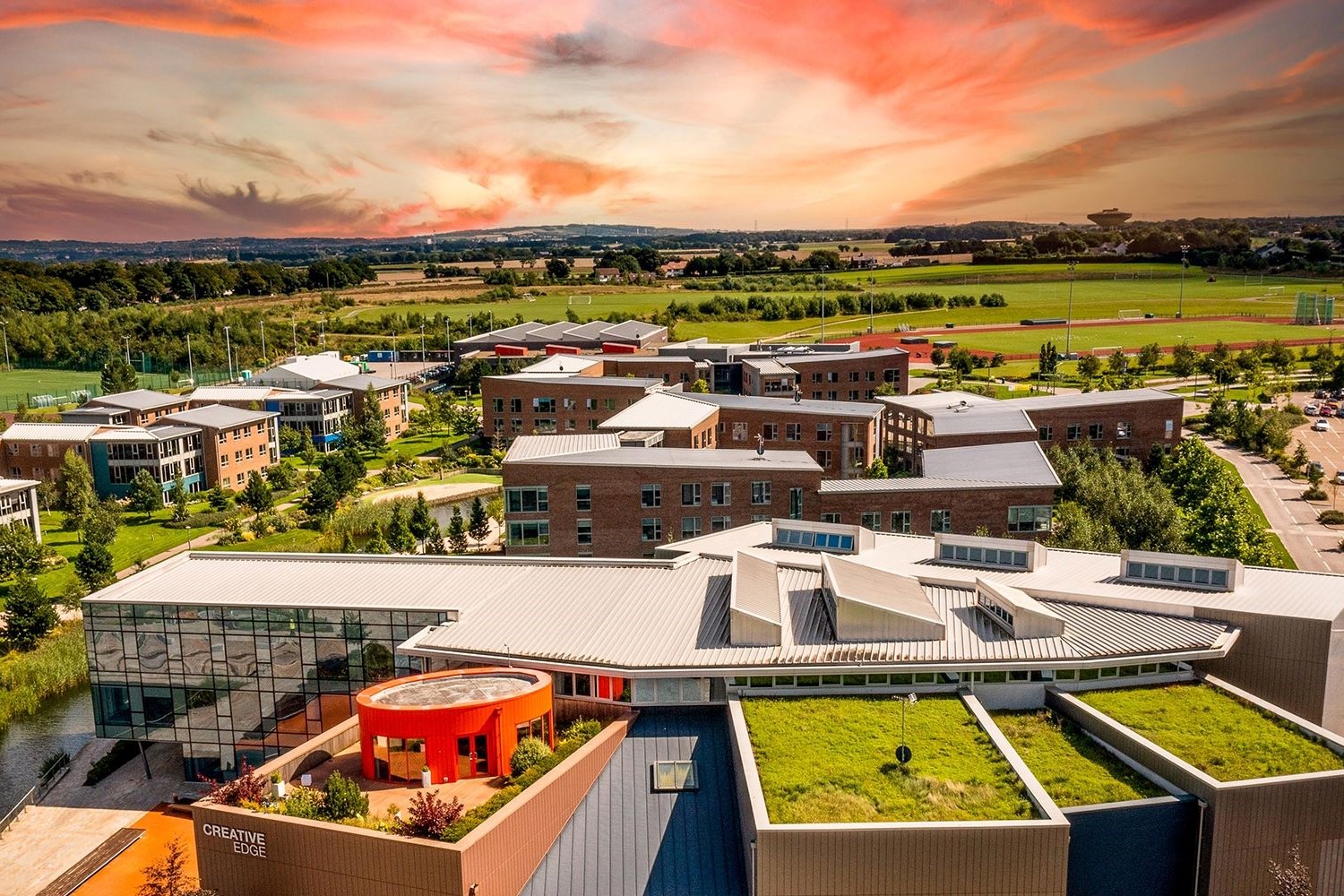
Dance, Drama and Musical Theatre students at Edge Hill University enjoy industry-standard teaching and learning facilities in the £7million Arts Centre which is also home to the Rose and Studio Theatres.
The Department of English and Creative Arts’ outstanding resources ensure you gain practical experience to a professional standard. Contemporary performance environments include dance studios, black box drama studios, rehearsal rooms, a theatre construction workshop, costume construction workshop, scene dock, theatre design studios, digital sound studio, digital design suite, music technology room, music practice studios, a recital room and an outdoor amphitheatre. The Studio Theatre also functions as a fully equipped aerial performance space.
The Arts Centre hosts a diverse range of high-quality productions and performers, including comedy, dance, drama and music, designed to supplement English and Creative Arts programmes and entertain both students and the local community.
The University may administer a small inflationary rise in tuition fees, in line with Government policy, in subsequent academic years as you progress through the course.
EU/EEA and Swiss students who have settled or pre-settled status under the EU Settlement Scheme, as well as Irish nationals, may be eligible for the UK tuition fee rate.
Financial support
Subject to eligibility, UK students joining this course can apply for a Tuition Fee Loan from the Government to cover the full cost of tuition fees. UK students enrolling on the course may also be eligible to apply for additional funding to help with living costs.
Scholarships
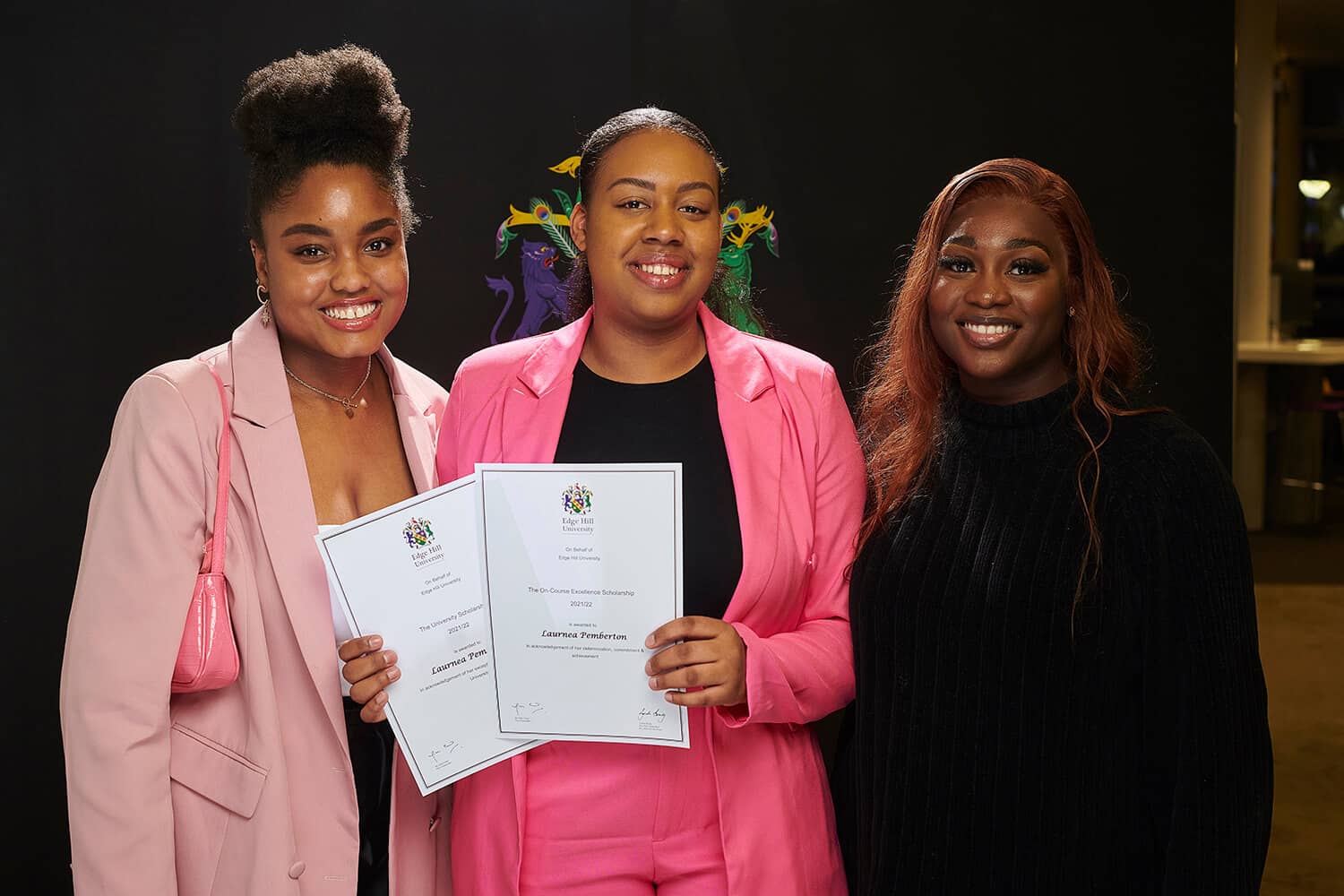
We offer a range of scholarships, which celebrate the determination, commitment and achievement of our students. Many of our scholarships are awarded automatically. There are some however, where you will need to be involved in an application or nomination process. To find out more about our scholarships and check your eligibility, please visit our dedicated scholarships pages.
Money Matters
Please view the relevant Money Matters guide for comprehensive information about the financial support available to eligible UK students.
EU/EEA and Swiss students who have settled or pre-settled status under the EU Settlement Scheme may be eligible to apply for financial support. Irish nationals can ordinarily apply to Student Universal Support Ireland (SUSI).
If you are an EU student who does not have settled or pre-settled status, or are an international student from a non-EU country, please see our international student finance pages.
Your future career
A drama degree develops specialist and transferable skills, so you’ll have lots of exciting career options when you graduate. Our EHU-Arts HUB offers professional opportunities to ensure you are industry-ready. If you decide to kickstart your career straight away, you could go for rewarding roles in:
theatre production
television production
acting
drama therapy
teaching
arts administration
community outreach
Many of our students choose to pursue their passion with freelance careers as actors, directors, writers or producers, or by starting their own performance company. Others find alternative paths in the creative industries. We’re proud to have alumni working in casting and theatrical agencies, theatres, media production companies and at arts venues across the UK, including with the BBC and Shakespeare North.
Edge Hill drama graduates sometimes decide to continue studying or go into teacher training. One of our alumni is now thriving as head of performing arts in a secondary school. Other students have explored a wide variety of roles: leading visitor experience teams and managing a busy box office in a nationally renowned theatre, a career in social work, and working as drama therapists.
A drama degree is a great way to explore acting, so if performance is your passion, this is the course for you.
Course changes
Every effort has been made to ensure the accuracy of this information, however our courses are subject to ongoing review and development. Changing circumstances may necessitate alteration to, or the cancellation of, courses.
Changes may be necessary to comply with the requirements of professional bodies, revisions to subject benchmarks statements, to keep courses updated and contemporary, or as a result of student feedback. We reserve the right to make variations if we consider such action to be necessary or in the best interests of students.
Track changes to this course
Module changes - 31 May 2024
BUS1054 New Venture Creation, a new 20-credit optional module added to Year 1
BUS2229 Entrepreneurship and Innovation, a new 20-credit optional module added to Year 2
Course features - 12 January 2024
International students can apply added as a course feature.
Change to Entry Requirements - 21 November 2022
Entry requirements updated to remove preferred subjects.
Change of Modules - 6 October 2022
DRA1300 Acting Techniques (20 credits), DRA1301 Acting Fundamentals (20 credits), DRA1302 Destabilising the Canon (20 credits), DRA1303 Devising and Dramaturgy (20 credits) and PAR1300 Performance Contexts replace DRA1101 Drama, Theatre and the Idea of the Play: Concepts, Cultures, Contexts (20 credits), DRA1102 The History of the Actor: Traditions and Styles (20 credits), DRA1103 Introducing the Art of the Actor: Text, Voice, Chorus (20 credits), DRA1104 Staging the Play: Text into Action (20 credits) and DRA1105 Analysing Theatre Productions: Interrogating the Performance Text (20 credits) as compulsory modules in Year 1. PAR1301 Applied Community and Outreach Practice 1 (20 credits) and WRI1020 Introduction to Scriptwriting (20 credits) replace DRA1106 Drama Technique Workshops 1: Basic Practical Skills Development (20 credits) as optional modules in Year 1.
DRA2300 Acting, Genres and Styles (20 credits), DRA2301 Devising and Dramaturgy: Site (20 credits), DRA2302 Staging the Play (20 credits) and PAR2300 replace DRA2101 The Modern Age of Drama: Forms, Movements, Modernity (20 credits), DRA2102 Modern Theatre Practitioners: Principles, Practices, Purposes (20 credits), DRA2103 Modern Rehearsal Strategies: Process Research (20 credits) and DRA2104 The Making of Modern Theatre: Staging Classic Modern Plays (20 credits) as compulsory modules in Year 2. DRA2303 Digital Performance: Voice (20 credits), PAR2301 Applied, Community and Outreach Practice 2 (20 credits) and WRI2025 The Art of Scriptwriting (20 credits) replace DRA2105 Imagining Better Worlds: Theatre, Learning and Development (20 credits), DRA2106 Drama Technique Workshops 2: Advanced Practical Skills Development (20 credits) and DRA2108 The Art of the Actor and Rise of the Director (20 credits) as optional modules in Year 2.
PAR3302 Research Project (40 credits) and PAR3303 Creative Entrepreneurship: Production and Touring (20 credits) replace DRA3102 The Contemporary Ensemble: Theatre Manifestos (20 credits), PAR3101 Researching Performance (20 credits), PAR3103 Ensemble Production Project (20 credits) and PAR3104 Dissertation (20 credits) as compulsory modules in Year 3. DRA3300 Acting Reconsidered (20 credits), DRA3301 Devising and Dramaturgy: Artivism (20 credits), DRA3302 Digital Performance: Physicality (20 credits), DRA3303 Performance, Gender and Sexual Politics (20 credits), PAR3301 Live Art (20 credits) and WRI3012 The Art of Screenwriting (20 credits) replace DRA3103 Acting and Directing Reconsidered (20 credits), DRA3104 Theatre, Gender and Sexual Politics (20 credits), DRA3107 On the Road: Enabling Better Worlds (20 credits) and PFA3107 Contemporary Popular Performance (20 credits) as optional modules in Year 3.
The above changes take effect for September 2023 entry.
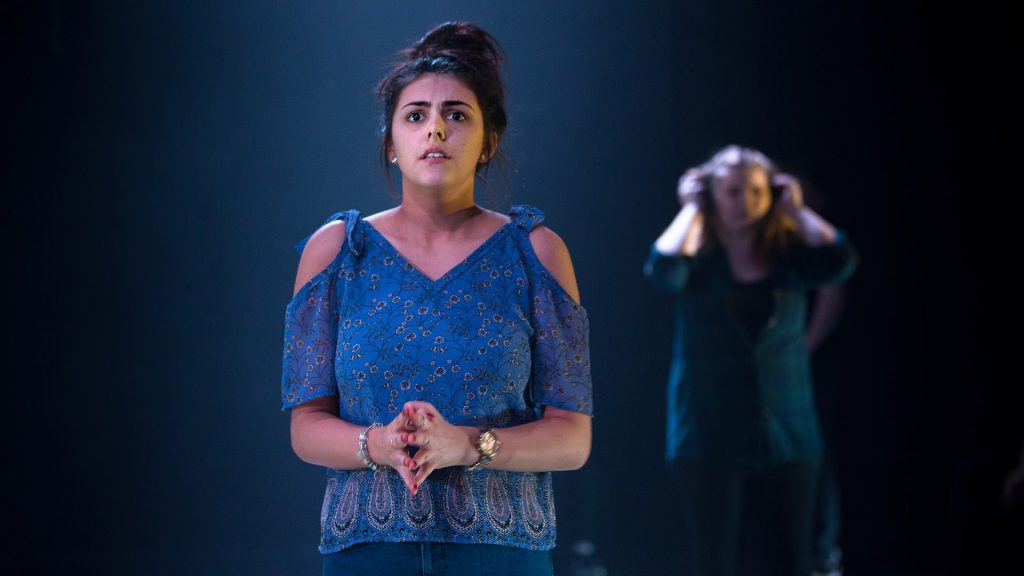

 Dance, Drama and Musical Theatre students at Edge Hill University enjoy industry-standard teaching and learning facilities in the £7million Arts Centre which is also home to the Rose and Studio Theatres.