Skip to content Skip to section specific navigation Edge Hill University

BA (Hons) Creative Writing

Summary 2012/13

  • Join a Creative Writing degree ranked third in England for overall student satisfaction (National Student Survey, 2011);
  • Live the writing life and learn to read as a writer whilst developing your own creative writing skills and philosophy of composition;
  • Cultivate your imagination and gain inspiration by expressing yourself through poetry, stories and scripts;
  • Gain insights into publishing, broadcasting and professional production.

If you love to read and write and want to explore the boundaries of your own creativity, this Creative Writing degree will encourage you as an aspiring author and bring a new appreciation of all literature. Edge Hill University has pioneered the use of reflective work to enhance the development of student writers and is widely recognised as a centre of excellence in this regard.

Campus: Ormskirk Campus, Edge Hill University
UCAS: W800
Course Type: Undergraduate Degree
Attendance & Study Mode:
3 years: Full Time
Start Date: September 2012

2012 Entry Requirements

280 UCAS tariff points overall.

BA (Hons) Creative Writing and Drama: Performing Arts or a related subject at grade C at A level or equivalent is preferred. The selection process normally includes an audition.

BA (Hons) Creative Writing and English / English Language / English Literature: Preferably to include A level English.

Details

Who is this course for?

This course will appeal to those with a love of the written word and an enthusiasm for its power and influence, whether you see writing as a lifelong vocation or would simply like to try your hand at something different. If you’re looking for a challenging programme to stretch your ability and encourage independent thought, a degree in Creative Writing could be for you.

What will I gain from this programme?

Covering three genre strands, Fiction, Poetry and Scriptwriting, you will learn to read as a writer, to study the craft of published writers and, alongside these disciplines, develop through the reflective writing of your own creative writing skills and the personal philosophy of your composition. You will also gain insights into the processes of publishing, broadcasting and performing.

What will I study?

Year 1 introduces you to the art of writing fiction and poetry, giving you the skills you need to start composing short observational poems and a short story. You will also experiment with a range of creative non-fiction, including memoirs, travel-writing and biographical sketches and learn the basics of writing for stage, screen and radio. Practical workshop activities are backed up by an introduction to the art of reading as a writer, such as the close reading of published and broadcast material.

In Year 2 you are introduced to a range of poetry and, by following carefully designed exercises, you will start to write groups of poems and further your understanding of the art of reading as a poet. You will also focus on writing for the stage and radio, explore techniques of short fiction, and be introduced to the publishing industry with a small research project.

Year 3 presents the opportunity to experiment in a range of poetic styles and concentrate on a longer work of your own. You’ll continue your study of prose through working on more complex stories or chapters of a novel whilst the scriptwriting element of year 3 allows you to focus on writing scripts for television and film. You will also undertake an extended project by completing a 9,000 word dissertation in a genre of your choice. This work receives intensive feedback during workshop sessions and is accompanied by independent research and reading.

In all three years of the degree you will be able to select optional English Literature, Film Studies and History modules that suit your particular interests.

How will I study?

Teaching and learning is centered on the writer's workshop where there is a strong emphasis on participation. You will learn the habits of a professional writer, including keeping a writer's journal, research and observation, re-drafting and editing and presenting work to a high standard.

Self and peer appraisal are important, as are paired and small group work. All our modules are underpinned by a sense of audience - ranging from a student’s seminar group through electronic and paper publication to performance.

Who will be teaching me?

You will be taught by an enthusiastic team of writers whose work has been widely published, broadcast and staged. They are led by four internationally known writers: distinguished poet and critic Professor Robert Sheppard, award-winning poet and literary translator Daniele Pantano, award-winning short story writer Ailsa Cox and award-winning playwright Kim Wiltshire. You also get the opportunity to attend workshops and readings with guest writers who in past have included Lee Harwood, Maggie Gee, Iain Sinclair, Robert Shearman, Jerome Rothenberg, Carol Ann Duffy and Billy Collins.

The programme team publish and/or edit a variety of academic and literary journals, including the Journal of British and Irish Innovative Poetry, Short Fiction in Theory and Practice and 21: Journal of Contemporary and Innovative Fiction.

How will I be assessed?

All modules are assessed by coursework, which includes creative practice, reading as a writer and reflection on the whole process.

What are my career prospects?

As a graduate in Creative Writing, you will be well placed to pursue a career in areas such as media, education, advertising, business, information technology, publishing industry, radio and television, and theatre.

Further study at Edge Hill University

Edge Hill University offers one of the UK's longest established MA Creative Writing programmes and a growing number of students are also registered with us for PhD fiction, poetry and script research projects.

A Great Study Environment

Based in 160 acres of beautifully landscaped grounds, the Ormskirk Campus is a unique and inspirational place to study. Industry standard resources and cutting edge technology combine to make an interactive and highly advanced teaching and learning environment. Everything you could want is on one site with 25 acres of sport and leisure facilities, more than 1,000 rooms in halls of residence and fantastic modern spaces in which you can study and socialise.

The University library gives you access to thousands of books, journals, online resources and extensive PC and media provision. You'll get all the support you need to succeed, reflected in Edge Hill University being ranked in the top two in England for students' personal development, and the top three in the country for assessment and feedback, in the 2011 National Student Survey. The University is also featured in the top four in England for graduate employment.

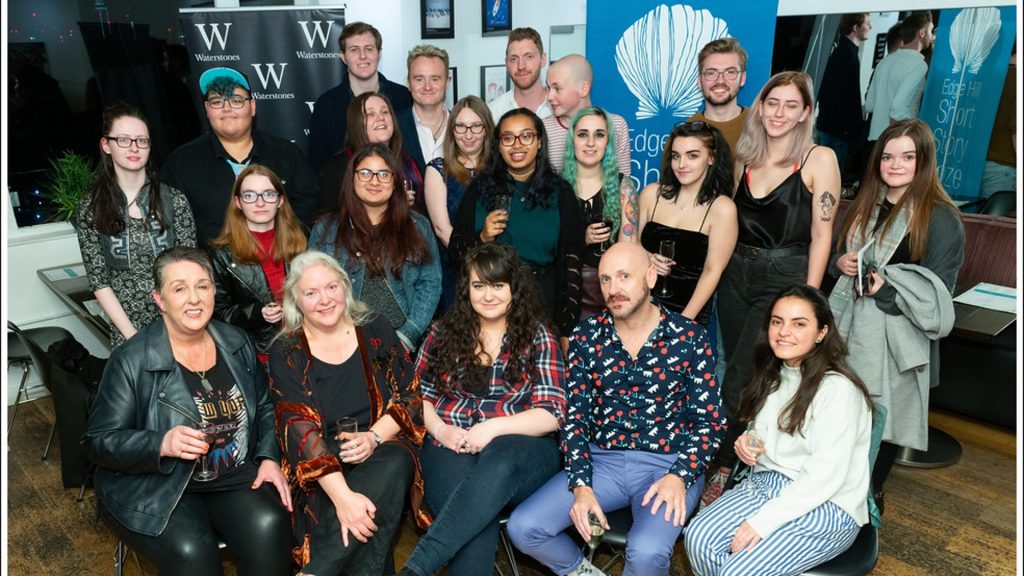
There are regular readings at the University’s own Rose Theatre and off-campus we have close links with Liverpool's Everyman Theatre as well as other poetry venues across the city. We have hosted several conferences on the short story and run the prestigious Edge Hill Prize for a Short Story collection, whose winners have included Colm Toibin, Claire Keegan, Chris Beckett and Jeremy Dyson. We also run two research groups - 'Poetry and Poetics' and the 'Narrative Research Group'. We also publish The Black Market Review, an international literary journal edited by our creative writing students.

How do I apply?

Apply online through UCAS at www.ucas.ac.uk.

See our How to Apply pages for more information on the application process and our Admissions criteria.

Fees and Finance

For academic year 2012/13, Edge Hill University will charge £9,000 for full-time BA, BSc and LLB degrees. Eligible students will not have to pay upfront for their tuition. The cost of tuition will be paid by a loan which you will only start to repay once you have finished the course and are earning over £21,000.

Eligible full-time students can also apply for a maintenance grant, subject to household income, and a non-means-tested loan to help with living costs.

Edge Hill University offers a range of scholarships for prospective full-time students. These include £2,000 Entrance Scholarships rewarding determination, commitment and achievement in creative arts, performing arts, sport and volunteering. Eligible entrants with outstanding grades are recognised through the £1,000 High Achievers Scholarship.

The University will also be offering awards, worth £3,000 in cash benefits and fee/accommodation waivers for academic year 2012/13, to eligible prospective full-time students through the National Scholarship Programme.

For more information on scholarships, including eligibility criteria for each award, visit www.edgehill.ac.uk/scholarships.

To find out more about fees, grants and loans for academic year 2012/13, visit www.edgehill.ac.uk/undergradfees2012.

Please note, the above information is for UK and eligible EU students only. International students should check the fees and finance information at www.edgehill.ac.uk/internationalfees2012.

Not got the entry requirements?

Students returning to education may present their previous experience in work (paid or unpaid) to support their application. Students with relevant study through either a professional body or appropriate academic course can apply to join the programme at an advanced stage.

For personalised advice based on your circumstances, please contact us or come to an event.

Where can I find out more?

If you would like to receive a copy of our prospectus or be kept updated about forthcoming events, contact the Course Information, Advice and Guidance Team by emailing study@edgehill.ac.uk or calling 01695 657000.

If you want to attend one of our open events held throughout the year, visit www.edgehill.ac.uk/opendays to book your place.

You will also find Edge Hill University staff at many national careers fairs and UCAS events.

Still want more?

If you have any questions you would like to ask the programme leader about this course, please contact:

  • Daniele Pantano, Department of English and History, Faculty of Arts and Sciences, Edge Hill University, St Helens Road, Ormskirk, Lancashire, L39 4QP
  • Tel: 01695 650947
  • Email: pantanod@edgehill.ac.uk

Overseas students should visit www.edgehill.ac.uk/international or email international@edgehill.ac.uk for further information.

Combinations

Combined

  • BA (Hons) Creative Writing and Drama (WW94)
  • BA (Hons) Creative Writing and English (WQ93)
  • BA (Hons) Creative Writing and English Language (WQ83)
  • BA (Hons) Creative Writing and English Literature (QW38)
  • BA (Hons) Creative Writing and Film Studies (WW69)
  • BA (Hons) Creative Writing and History (WV91)
  • BA (Hons) Creative Writing and Media (PW38)

Modules

Year 1

Introduction to Poetry introduces you to the art of writing short observational poems and examines the ways in which writers of poetry reflect on their practice and improve.

Introduction to Fiction considers the art of writing short stories, memoirs and biographical sketches.

Introduction to Scriptwriting will introduce you to the art of writing scripts for the stage, radio, television and film.

Reading the World & The Business of Writing covers the art of reading as a writer and examines the ways in which this process helps writers reflect on their practice and improve. This module will also offer practical advice on how to submit creative work to magazines, publishers, agents, etc.

Year 2

The Art of Poetry introduces you to a wide range of poetry. By following carefully designed exercises, you will experience writing groups of poems.

Writing Short Stories explores the techniques of short fiction, including characterisation, narrative structure and the epiphany. With the help of published examples, you will produce complete short stories and reflect upon the nature of the genre.

The Art of Scriptwriting focuses on writing for the stage and radio. Practical workshop activities will be backed up by the close-reading of published plays and a theatre visit.

Cultural Economies & The Writer’s Life involves studying the publishing industry and undertaking a project component that allows you to find out about some aspect of the writer's life or research a possible career in writing. Completing this module allows you to match the transferable skills of creative writing (literacy, creativity, flexibility and reflectiveness) to the world of work.

Year 3

Poetry & Innovative Form builds on earlier exercises to allow you to experiment both in a range of poetic styles, but also to concentrate upon a longer work of your own. You will also be guided in writing a reflection on what kind of poet you have become.

Advanced Fiction Writing requires you to work on longer, more complex stories or chapters of a novel. With examples drawn from published material, you will engage with multiple narratives, shifting viewpoints and generic experimentation.

The Art of Screenwriting concentrates on writing for film and television, and complete storylines, treatments and short scripts. It will develop your awareness of the specific demands of writing for the screen, enhancing your understanding of plot, characterisation and audience response developed in earlier scriptwriting modules.

Dissertation involves undertaking an extended project in a genre of your own choosing. This normally consists of 6,000 words of prose (or the equivalent in poetry or scriptwriting) and a 3000-word reflection. Your work will receive intensive feedback during workshop sessions and will be accompanied by independent research and reading.

Contact

Edge Hill University
St Helens Road
Ormskirk
Lancashire
L39 4QP
United Kingdom
GEO: 53.559704; -2.87388
+44(0)1695 575171
+44(0)1695 579997

Location