Animation BA (Hons)
UCAS code: W615
Create worlds where anything is possible. Our animation degree, recognised by ScreenSkills, immerses you in the visual arts industry, teaching you how to delight audiences and viewers. Encourage your imagination to run wild and see your ideas flourish on screen.
Overview
| Course length: | 3 years full-time 6 years part-time |
|---|---|
| Start dates: | September 2027 |
| Location: | Edge Hill University |
| Example offers: | BBC-BBB (A Level) or DMM (BTEC)112-120 UCAS Tariff points View full entry criteria |
| Subject(s): | Animation and Graphic Design |
| Faculty: | Arts and Sciences |
| Department: | English and Creative Arts |
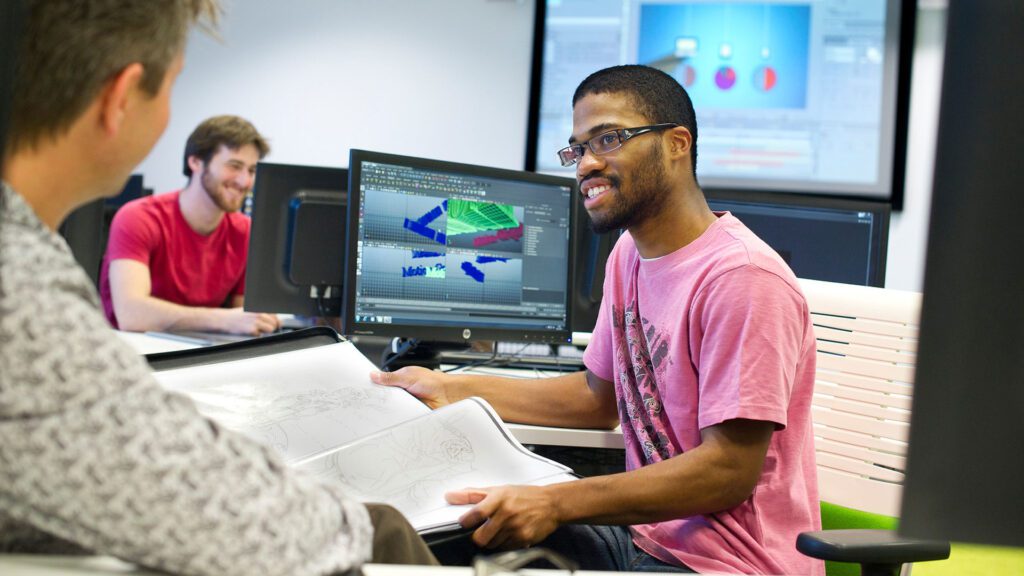
Fancy following in the footsteps of those working in pioneering studios like Disney, Pixar and Aardman? From film to television, virtual reality to web animation and video games, our BA (Hons) Animation degree teaches you how to bring visual art forms to life. You’ll learn how to tell stories and engage audiences by creating the illusion of movement.
Animate your learning
The course is based around practical learning. Up for the challenge of working on live animation briefs from industry experts? Want to test your creative limits and see your ideas on screens big or small? The practical teaching on the animation course reveals how to make your animation ambitions a reality.
Over the three years you’ll experience the whole animation process – from idea generation and character creation to pitching, animated performance and post-production. We’ll also bring you face-to-face with artists from leading animation houses to give you networking opportunities that could propel your career.
Industry-recognised course
We are a member of UK Screen Alliance/Animation UK, an organisation that provides a voice for TV, film and animation studios across the UK. Membership massively expands our – and your – access to professional animators, filmmakers and tv producers.
It will help you achieve your aspirations, from careers in film through to web animation and video games.

Course features
-
International students can apply
-
Sandwich year option available
-
Studying abroad option available

What you'll study
You’ll build the foundations of your creative and practical animation skills during the first year of your animation course. We’ll cover commercial and experimental animation techniques as well as learning about character and performance. Dramatic creation and film structure are also on the agenda. You’ll find out how to take ideas from conception to final piece by working on briefs.
In the second year of your animation course, you’ll take a closer look at rigging, animation, sound, lighting, cinematography and post-production to develop your practical experience in Year 2. Working on the theory behind this visual art form you’ll get to understand commercial and avant-garde animation in context. We’ll also give you opportunities to enhance your communication skills through presenting your ideas on a variety of animation projects.
In your final year of this animation degree, you’ll become familiar with the real-life aspects of running and working within a professional animation studio. Hear from industry guest speakers and work out your future career path.
Finally, you’ll get to show your creative abilities and technical skills on a comprehensive animation project, and complete a dissertation in an area of animation that interests you most.
How you'll study
Teaching and learning for the animation course takes place through workshops, lectures, seminars and screenings. Your learning will be supported by a Personal Tutor, individual or group tutorials and an experienced team of specialist technicians.
To give you a flavour of the work you might produce on our Animation degree, you can view some of the films made by past and present Animation students at https://vimeo.com/edgehill. A selection of student showreels are available at https://vimeo.com/edgehill/videos/sort:date.
How you'll be assessed
Assessment will be via written and practical assignments, research projects and individual and group presentations.
Who will be teaching you
The animation course is taught by an enthusiastic, experienced team with a wide range of interests and practical animation industry experience. Lecturers are research-active in animation and the media and have experience in using the variety of resources available to you.
Guest speakers will also contribute to programme delivery and develop your industry contacts. Recent guest speakers to the University include BBC (CBeebies/CBBC), Mackinnon and Saunders (Corpse Bride, Frankenweenie),Jon Doyle Studios, Lime Pictures and Kilogramme Animation Studio, as well as speakers from Cosgrove Hall Fitzpatrick (Pip) and Factory TransMedia (Strange Hill High and Clangers).
Where your course includes optional modules, these are to provide an element of choice within the course curriculum. The availability of optional modules may vary from year to year and will be subject to minimum student numbers being achieved. This means that the availability of specific optional modules cannot be guaranteed. Optional module selection may also be affected by timetabling requirements. Some restrictions on optional module choice or combinations of optional modules may apply.
Entry criteria
Typical offer 112-120 UCAS Tariff points. The study or experience of creative arts subjects, for example art, graphics or media, is preferred.
In most cases we will invite you to provide a digital portfolio of work to support your application. An interview may form part of the selection process.
Example offers
| Qualification | Requirement |
|---|---|
| A Level | BBC-BBB. |
| UCAS Tariff points | 112-120 points. |
| BTEC Extended Diploma (or combination of BTEC QCF qualifications) | Distinction, Merit, Merit (DMM). |
| T Level | Overall grade of Merit. |
| International Baccalaureate (IB) | We are happy to accept IB qualifications which achieve the required number of UCAS Tariff points. Subject-specific requirements at Higher Level (HL) Grade 5 may apply. |
| Access to Higher Education Diploma | 45 credits at Level 3, for example 15 credits at Distinction and 30 credits at Merit or 24 credits at Distinction and 21 credits at Merit. The required total can be attained from various credit combinations. |
Please note, the above examples may differ from actual offers made. A combination of A Level and BTEC awards may also be accepted.
If you have a minimum of two A Levels (or equivalent), there is no maximum number of qualifications that we will accept UCAS points from. This includes additional qualifications such as Extended Project Qualification (EPQ), AS Levels that haven't been continued to A Level, and General Studies AS or A Level awards.
English language requirements
International students require IELTS 6.0, with a score no lower than 5.5 in each individual component, or an equivalent English language qualification.
Fair Entry Criteria
Our new Fair Entry Criteria is a Contextual Admissions Policy that takes an applicant’s personal and educational background into account. This policy will allow eligible applicants to receive up to a two-grade reduction in their entry requirements for this course. Find out more and see if you qualify.
How to apply
Apply full-time
Read our guide to applying through UCAS to find out more about the application process.
International
This course is now closed to international applicants for September 2026 entry.
2027 part-time application links will be added when available.
Should you accept an offer of a place to study with us and formally enrol as a student, you will be subject to the provisions of the regulations, rules, codes, conditions and policies which apply to our students. These are available at www.edgehill.ac.uk/studentterms.
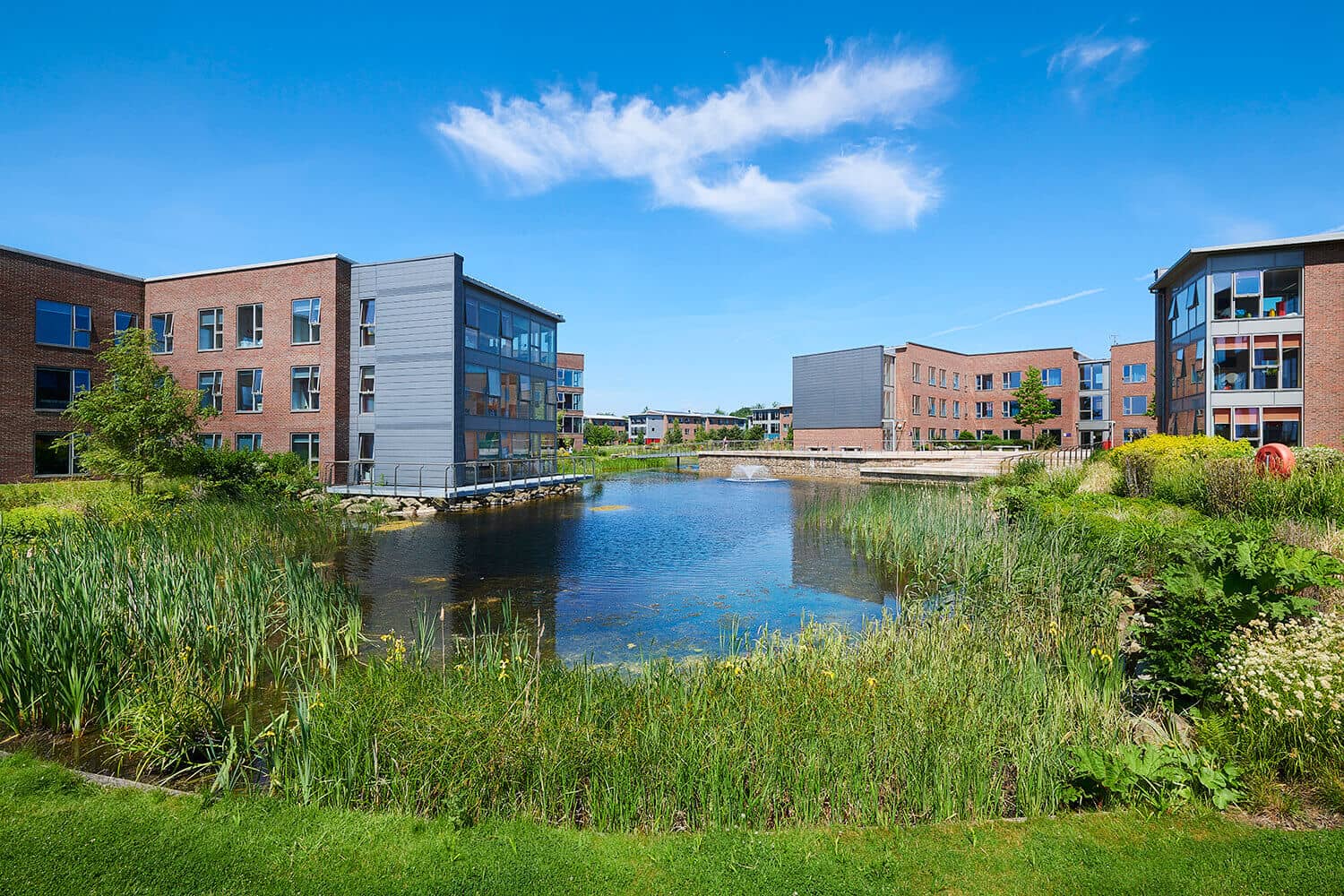
If you join a full time undergraduate degree at Edge Hill University, we will guarantee you the offer of a room in our halls of residence for the first year of your course.
Discover our accommodation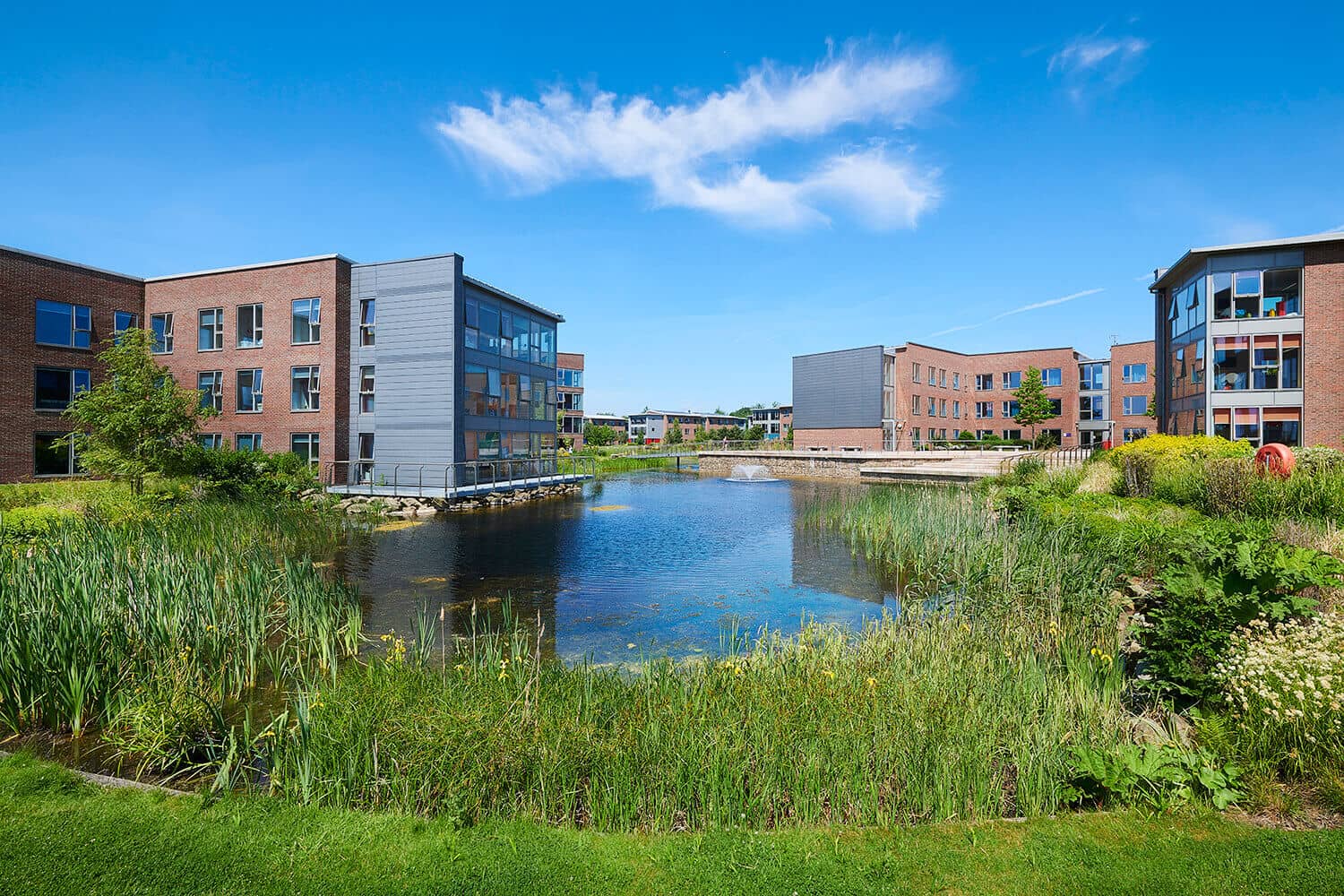
Facilities
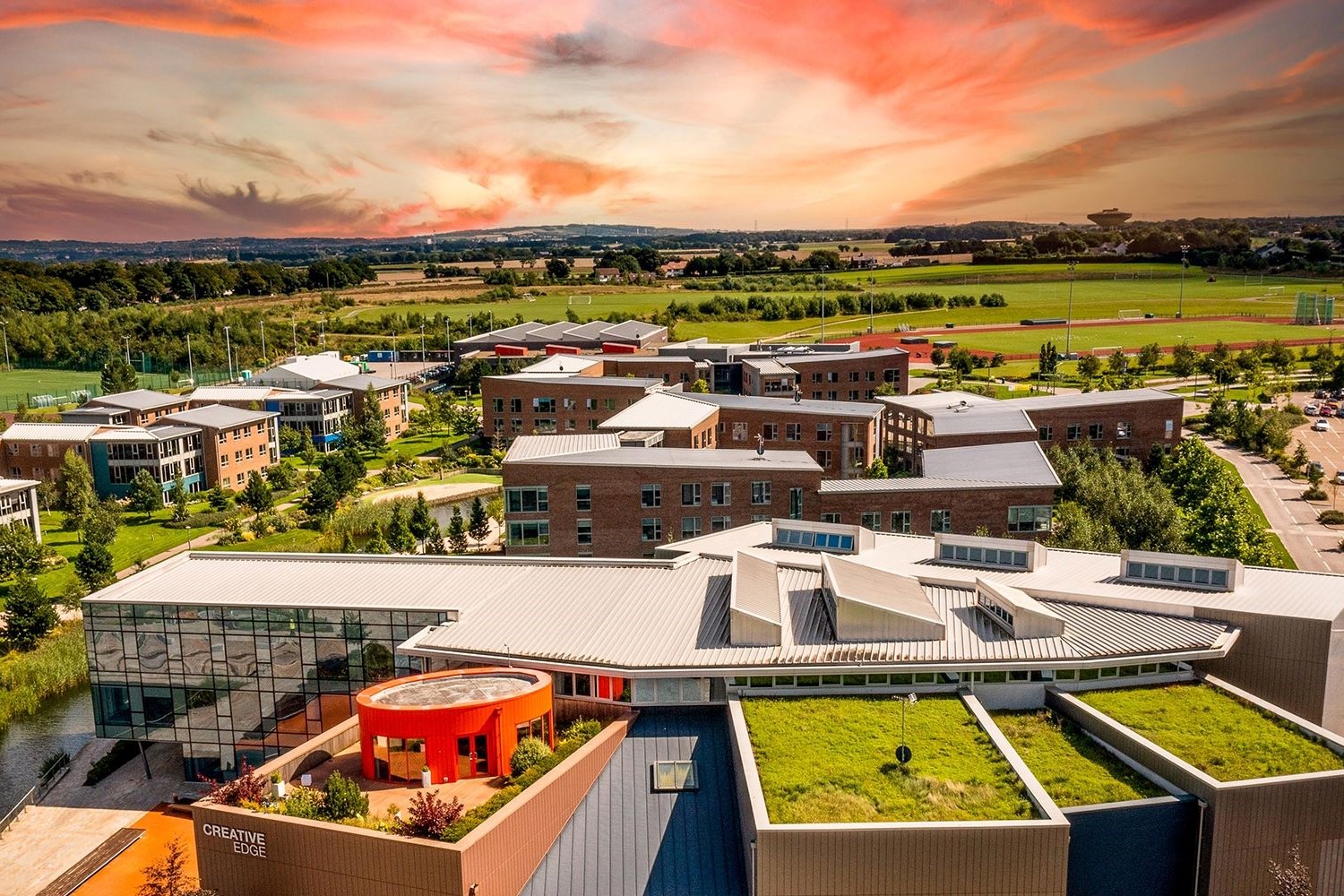
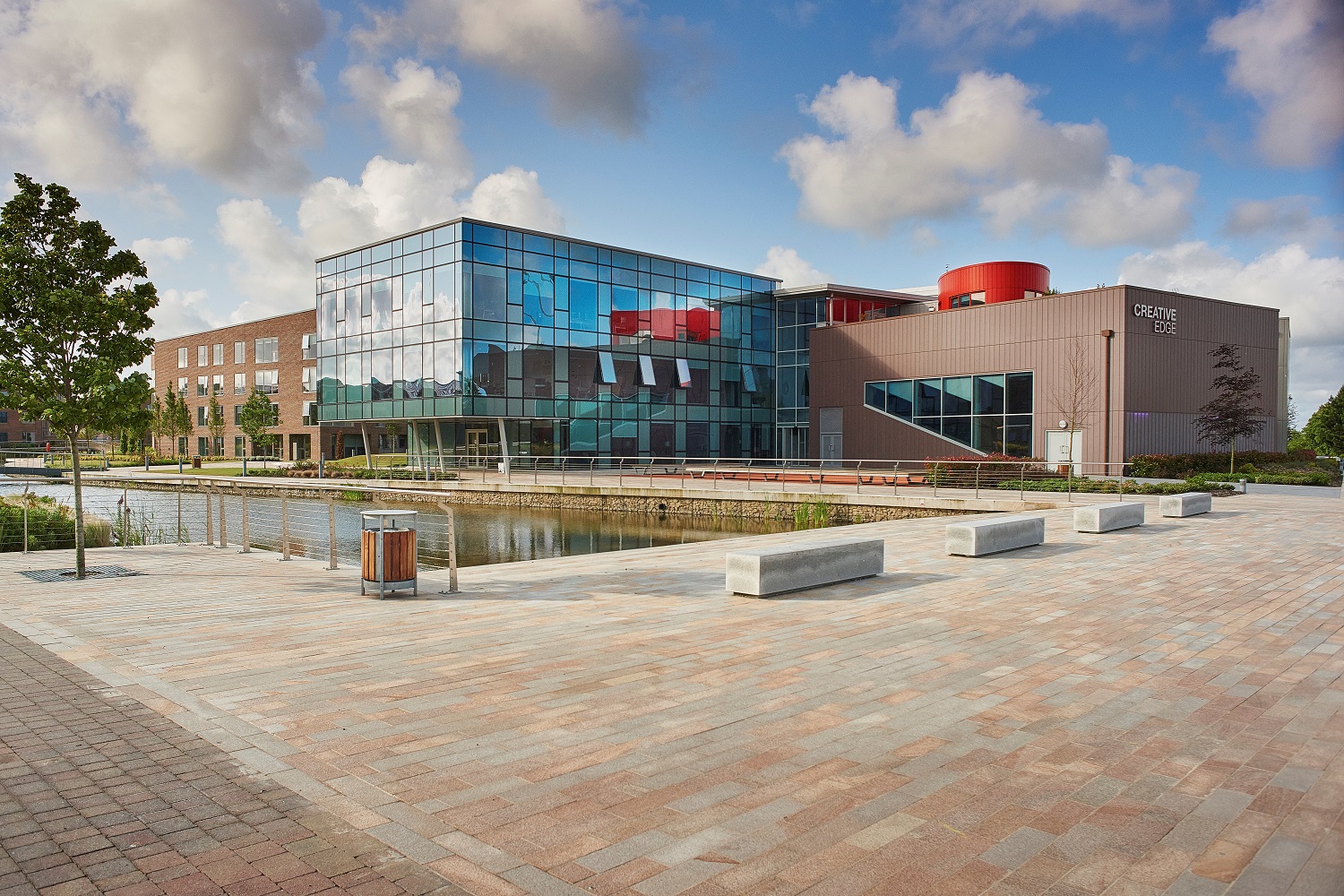 Animation students are based in Creative Edge, an industry-standard £17million building offering highly contemporary suites of outstanding facilities for the Department of English and Creative Arts.
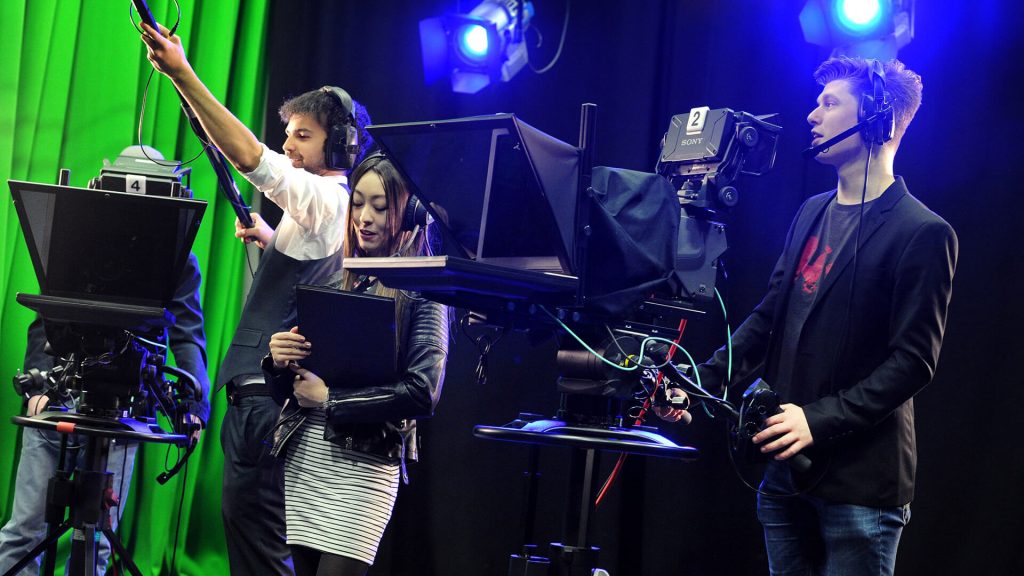
Key features include TV studios with broadcast capacity and full production capabilities, recording studios, sound-editing suites, animation studios, a photographic studio, radio studio and multimedia laboratory. Our innovative resources are designed to ensure you gain practical experience to a professional standard. Dedicated support in the use of all creative media facilities is available through our Media Development Team.
Where you'll study
Learning resources
Practical animation work is supported by four dedicated animation studios equipped with 24″ HD Cintiq Wacom Touch monitors, Rostrum camera stations, Rotational light-boxes, 3D Printer and industry standard software: Adobe Creative Suite (including Photoshop, After Effects, Illustrator, Flash), Toon Boom Storyboard Pro, Harmony Premium, Autodesk Maya, Cinema 4D, ZBrush and VRay. Mac studio facilities provide access to the latest editing and audio software (AVID ProTools 11, Apple Logic X, Propellerhead Reason 7, Adobe SoundBooth CE, Native Instruments Komplete Ultimate, and Sibelius).
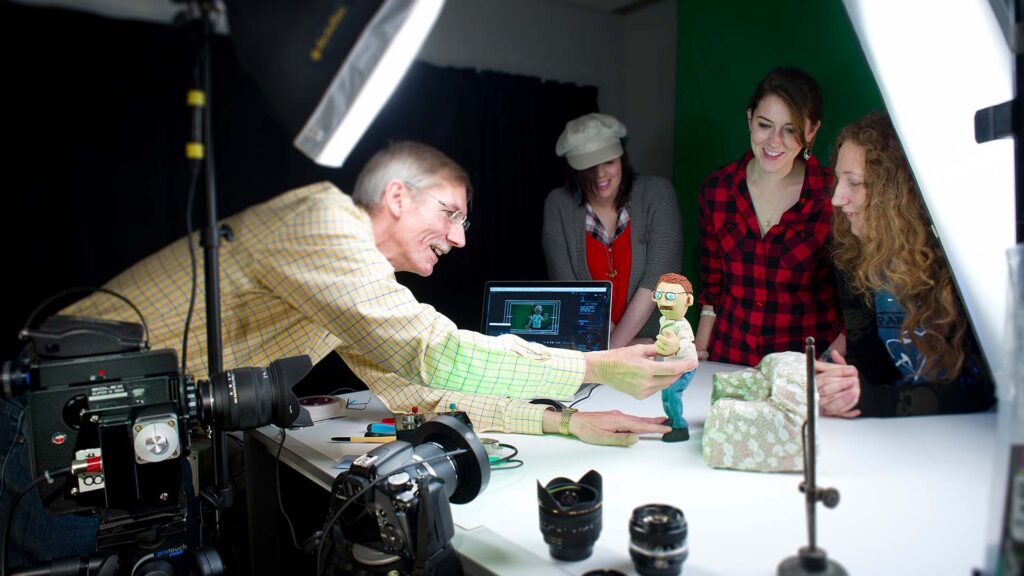
The stop-motion studio is designed to professional standards, utilising Canon EOS 700D/850D with 18-135mm IS Lens, Dragon Frame, Dedo lighting and motion control camera movement technologies. For Foley-FX work and voiceover production, you will utilise our audio post-production studios which come equipped with AVID ProTools HDX digital recording systems with C|24 control surfaces, as well as Waves and IK Multimedia, and a range of microphones. There are also several dedicated rehearsal rooms which provide electronic keyboards and a range of acoustic and electric guitars, effects modules and practice amps.
Finance
Tuition fees
UK Full-Time
£9,790
a year
UK Part-Time
£81.50 per credit
for 360 credits
International
£14,500
a year
EU/EEA and Swiss students who have settled or pre-settled status under the EU Settlement Scheme, as well as Irish nationals, may be eligible for the UK tuition fee rate.
Financial support
Subject to eligibility, UK students joining this course can apply for a Tuition Fee Loan from the Government to cover the full cost of tuition fees. UK students enrolling on the course may also be eligible to apply for additional funding to help with living costs.
Scholarships
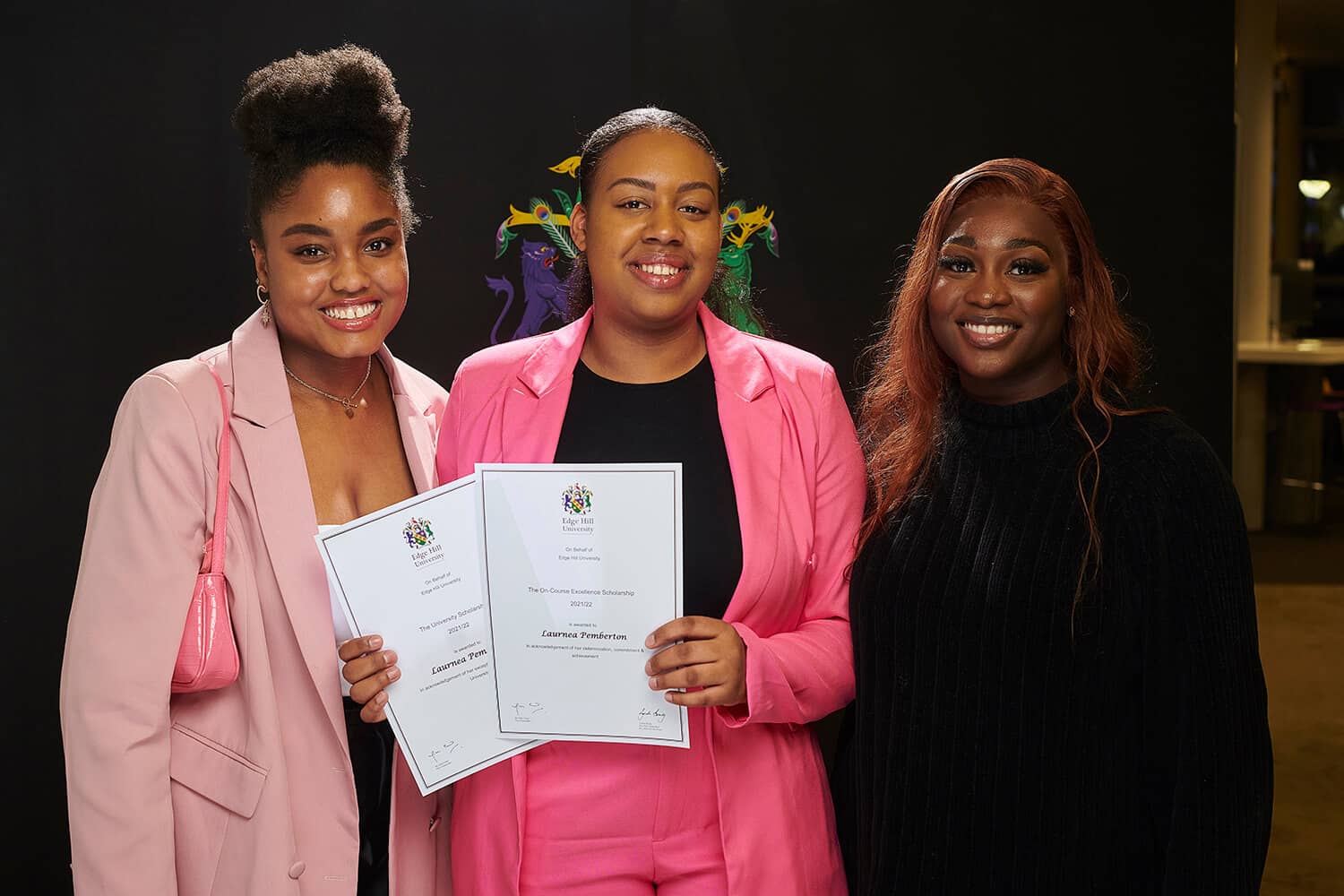
We offer a range of scholarships, which celebrate the determination, commitment and achievement of our students. Many of our scholarships are awarded automatically. There are some however, where you will need to be involved in an application or nomination process. To find out more about our scholarships and check your eligibility, please visit our dedicated scholarships pages.
Money Matters
Please view the relevant Money Matters guide for comprehensive information about the financial support available to eligible UK students.
EU/EEA and Swiss students who have settled or pre-settled status under the EU Settlement Scheme may be eligible to apply for financial support. Irish nationals can ordinarily apply to Student Universal Support Ireland (SUSI). If you are an EU student who does not have settled or pre-settled status, or are an international student from a non-EU country, please see our international student finance pages.
Tuition fees
UK Full-Time
£10,050
a year
UK Part-Time
TBC
for 360 credits
International
£15,000
a year
EU/EEA and Swiss students who have settled or pre-settled status under the EU Settlement Scheme, as well as Irish nationals, may be eligible for the UK tuition fee rate.
Financial support
Subject to eligibility, UK students joining this course can apply for a Tuition Fee Loan from the Government to cover the full cost of tuition fees. UK students enrolling on the course may also be eligible to apply for additional funding to help with living costs.
Scholarships
We offer a range of scholarships, which celebrate the determination, commitment and achievement of our students. Many of our scholarships are awarded automatically. There are some however, where you will need to be involved in an application or nomination process. To find out more about our scholarships and check your eligibility, please visit our dedicated scholarships pages.
Money Matters
Please view the relevant Money Matters guide for comprehensive information about the financial support available to eligible UK students.
EU/EEA and Swiss students who have settled or pre-settled status under the EU Settlement Scheme may be eligible to apply for financial support. Irish nationals can ordinarily apply to Student Universal Support Ireland (SUSI). If you are an EU student who does not have settled or pre-settled status, or are an international student from a non-EU country, please see our international student finance pages.
Your future career
You’ll graduate with a degree endorsed by ScreenSkills and be ready to dive into this vibrant and creative industry. A broad range of career paths could await you. Our graduates have secured rewarding roles such as:
- animator at nDreams
- senior motion designer at Crucial-FX
- 3D animator at Creative Soup
- animator at Framestore
- graphic designer at New Balance
Through this animation degree you’ll also have invaluable opportunities to network with members of the creative community that give a flavour of what the industry is really like.
Building a strong network within this burgeoning industry could set you up to find the animation career path best suited to your skills and interests.
Course changes
Every effort has been made to ensure the accuracy of this information, however our courses are subject to ongoing review and development. Changing circumstances may necessitate alteration to, or the cancellation of, courses.
Changes may be necessary to comply with the requirements of professional bodies, revisions to subject benchmarks statements, to keep courses updated and contemporary, or as a result of student feedback. We reserve the right to make variations if we consider such action to be necessary or in the best interests of students.