Information Technology Management for Business BSc (Hons)
UCAS code: GN52
Boost business with your problem-solving abilities. As you study innovative technologies and people management skills, you’ll unlock a career in computing on an IT management degree awarded initial accreditation by BCS, The Chartered Institute for IT (subject to re-approval).
Overview
| Course length: | 3 years full-time Typically 4.5 years part-time |
|---|---|
| Start dates: | September 2024 September 2025 |
| Location: | Edge Hill University |
| Example offers: | BCC-BBC (A Level) or DMM (BTEC) View full entry criteria |
| Subject(s): | Computing, IT and Mathematics |
| Faculty: | Arts and Sciences |
| Department: | Computer Science |

Unlock the potential of the workplaces of the future. During this degree you’ll broaden your knowledge of business, technology, interpersonal and project management skills to give you a well-rounded understanding of computing and the people that work in tech.
This course combines theory and practical exercises to hone your leadership abilities and bring out the best in yourself and your colleagues and peers. We’ll also provide the technical know-how for a future in critical thinking where you’ll examine issues and create imaginative solutions for business challenges.
You’ll also get a flavour for accounting and statistics, e-commerce for business and data. Take your place in the digital world and upgrade your understanding of IT management with an optional third year placement. This practical experience and technical expertise mean you’ll be highly-valued by future employers upon graduation and beyond.
 Subject to re-approval.
Course features
-
International students can apply
-
Learn a language option available
-
Professional accreditation
-
Sandwich year option available
-
Studying abroad option available
-
Work placement opportunity
What you'll study
We’ve worked with employers to find out what essentials they look for in graduates – and created our modules with this in mind. You’ll cover the foundations of business and IT including accountancy, networking, programming and web design. We’ll also start to think about your time after graduation and give you an idea of career options and industries you could go into.
In Year 2, improve your skills in business and IT from the first year. Find out about the real-world uses of computer networks, databases, leadership and e-commerce and how this could change in the future. If you want even more opportunity to put your skills into practice, you can also take a 12-month or shorter placement.
In the final year, you’ll work independently and create your own piece of software or hardware that solves a business challenge. Undertaking the research and creation of this project will be a big part of the final year, but you’ll also gain an in-depth understanding of IT management within organisations and information security.
How you'll study
Many classes will be based in computer workshops and will focus on student activity as a means of learning. We introduce theoretical concepts by building on practical activity. As well as preparing for and attending lectures, seminars, tutorials and workshops, you will spend time reading and completing coursework, including written assignments, portfolios, presentations and poster production.
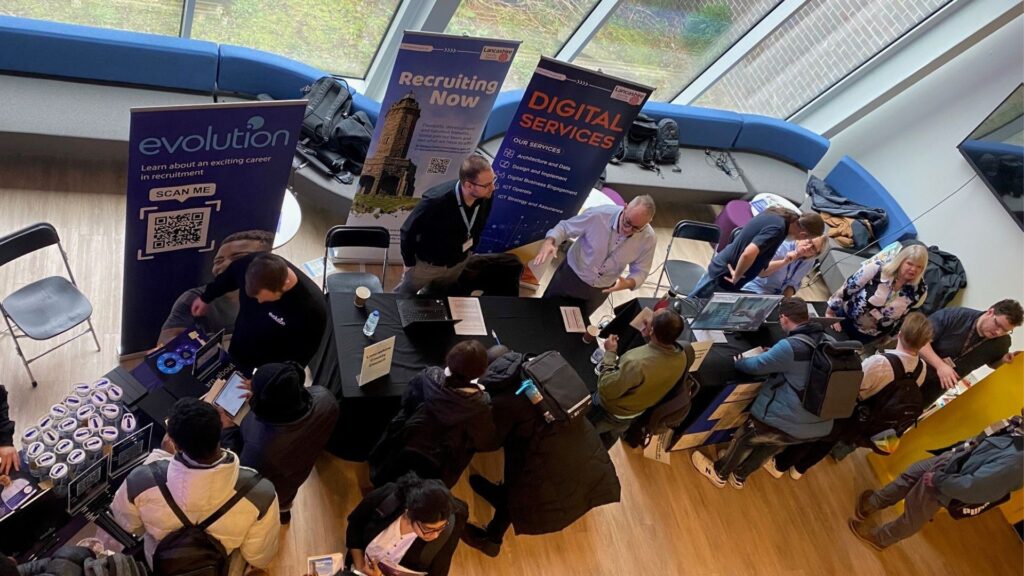
Working with business is a strong theme of the degree and you will have the opportunity to develop your employability profile through a work placement. This will enable you to develop essential people skills to complement your technical knowledge.
How you'll be assessed
Assessments are varied and designed to ensure you acquire a range of skills, particularly those required by future employers. You will design and write programs, write reports and essays, critically analyse documents, deliver oral presentations and undertake examinations. We want you to develop an ability to work independently and as part of a team.
Who will be teaching you
You will be taught by staff who are passionate about student learning and development. The programme team are specialists in computing, information systems, accountancy, human resource management, e-commerce and small and medium sized enterprises, among others. The team includes active researchers who publish in academic journals.
Entry criteria
Entry requirements
Typical offer 104-112 UCAS Tariff points, for which no specific subjects are required, plus GCSE Mathematics at Grade C or Grade 4 or above (or equivalent).
Please note, for all programmes in the Department of Computer Science, a level 2 numeracy qualification is not considered as equivalent to GCSE Grade C or Grade 4 in Mathematics.
Example offers
| Qualification | Requirement |
|---|---|
| A Level | BCC-BBC. |
| BTEC Extended Diploma (or combination of BTEC QCF qualifications) | Distinction, Merit, Merit (DMM). |
| T Level | Overall grade of Merit. |
| International Baccalaureate (IB) | We are happy to accept IB qualifications which achieve the required number of UCAS Tariff points. |
| Access to Higher Education Diploma | 45 credits at Level 3, for example 9 credits at Distinction and 36 credits at Merit or 15 credits at Distinction and 30 credits at Merit. The required total can be attained from various credit combinations. |
Please note, the above examples may differ from actual offers made. A combination of A Level and BTEC awards may also be accepted.
If you have a minimum of two A Levels (or equivalent), there is no maximum number of qualifications that we will accept UCAS points from. This includes additional qualifications such as Extended Project Qualification (EPQ), AS Levels that haven't been continued to A Level, and General Studies AS or A Level awards.
English language requirements
International students require IELTS 6.0, with a score no lower than 5.5 in each individual component, or an equivalent English language qualification.
If your current level of English is half a band, one band, or one-and-a-half bands lower, either overall or in one or two elements, you may want to consider our Pre-Sessional English course.
How to apply
Apply full-time
Read our guide to applying through UCAS to find out more about the application process.
International
Please see our international student pages for further information about how to apply as a prospective international student.
Part-time applications require a direct application to Edge Hill. Please select the year of entry that you wish to apply for.
Should you accept an offer of a place to study with us and formally enrol as a student, you will be subject to the provisions of the regulations, rules, codes, conditions and policies which apply to our students. These are available at www.edgehill.ac.uk/studentterms.
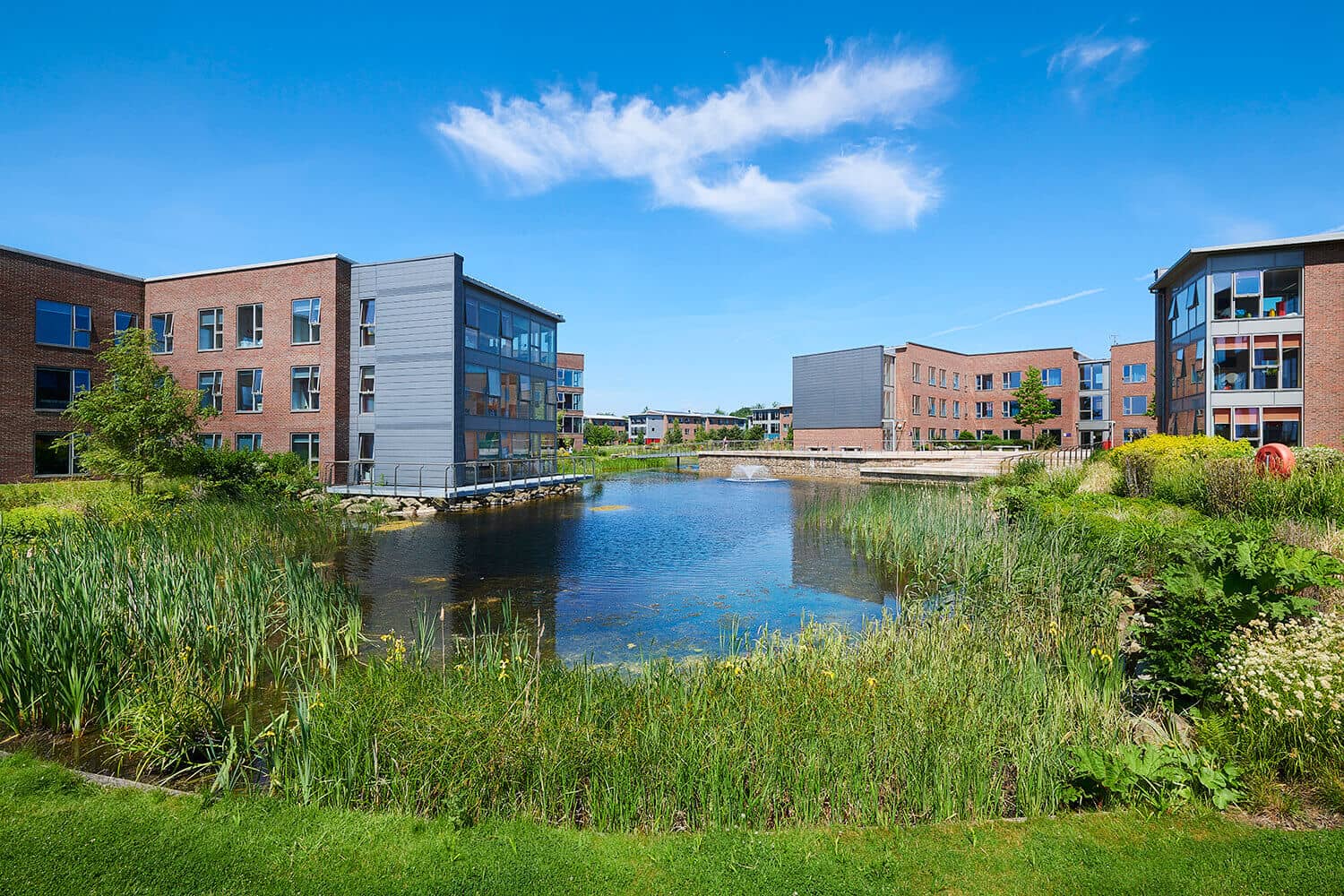
If you join a full time undergraduate degree at Edge Hill University, we will guarantee you the offer of a room in our halls of residence for the first year of your course.
Discover our accommodation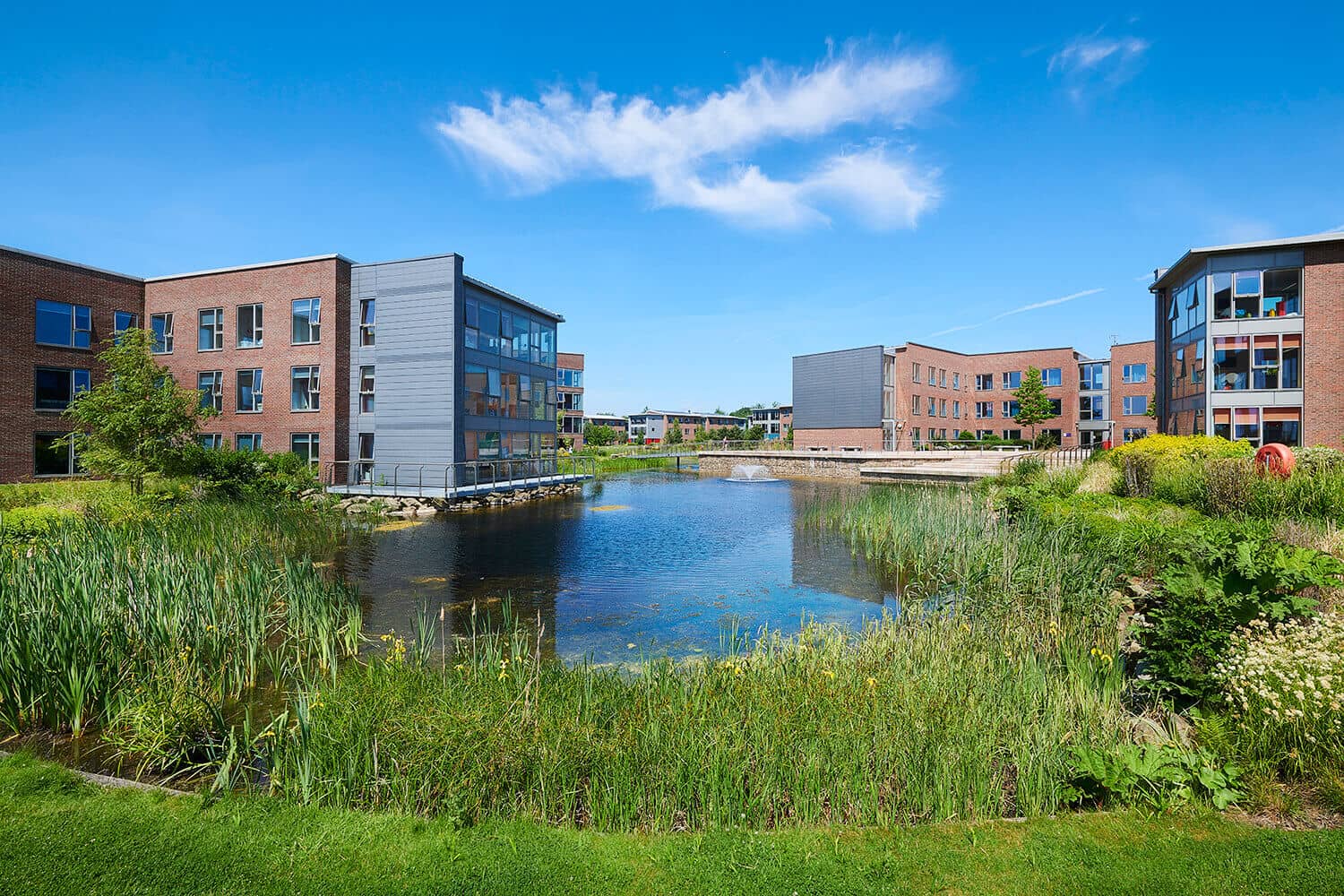
Facilities
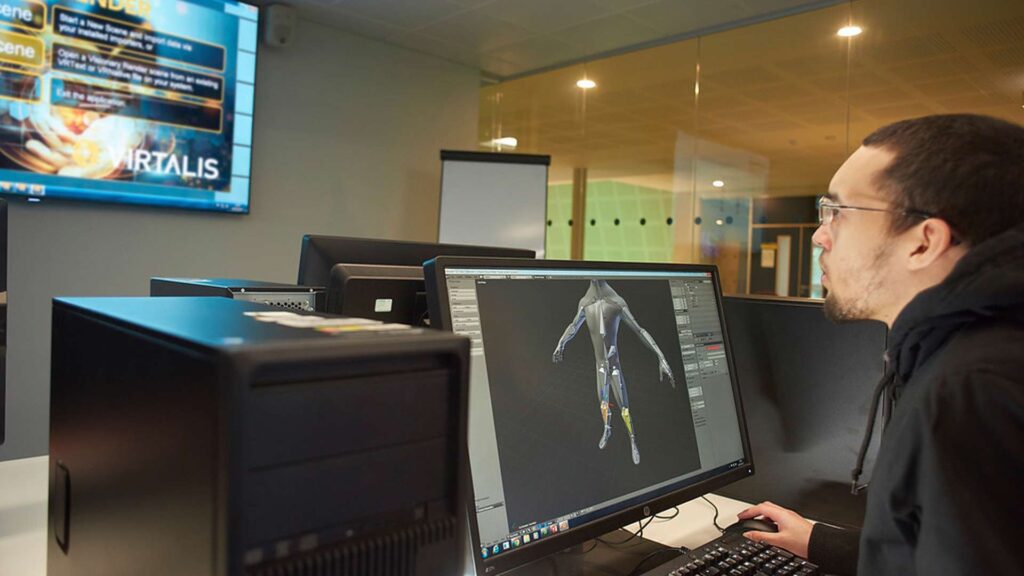
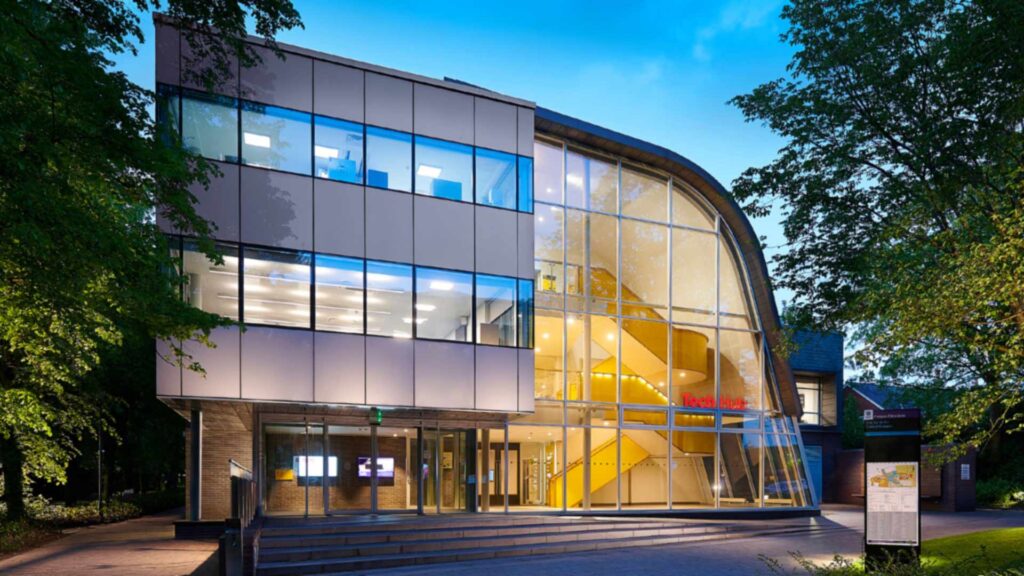
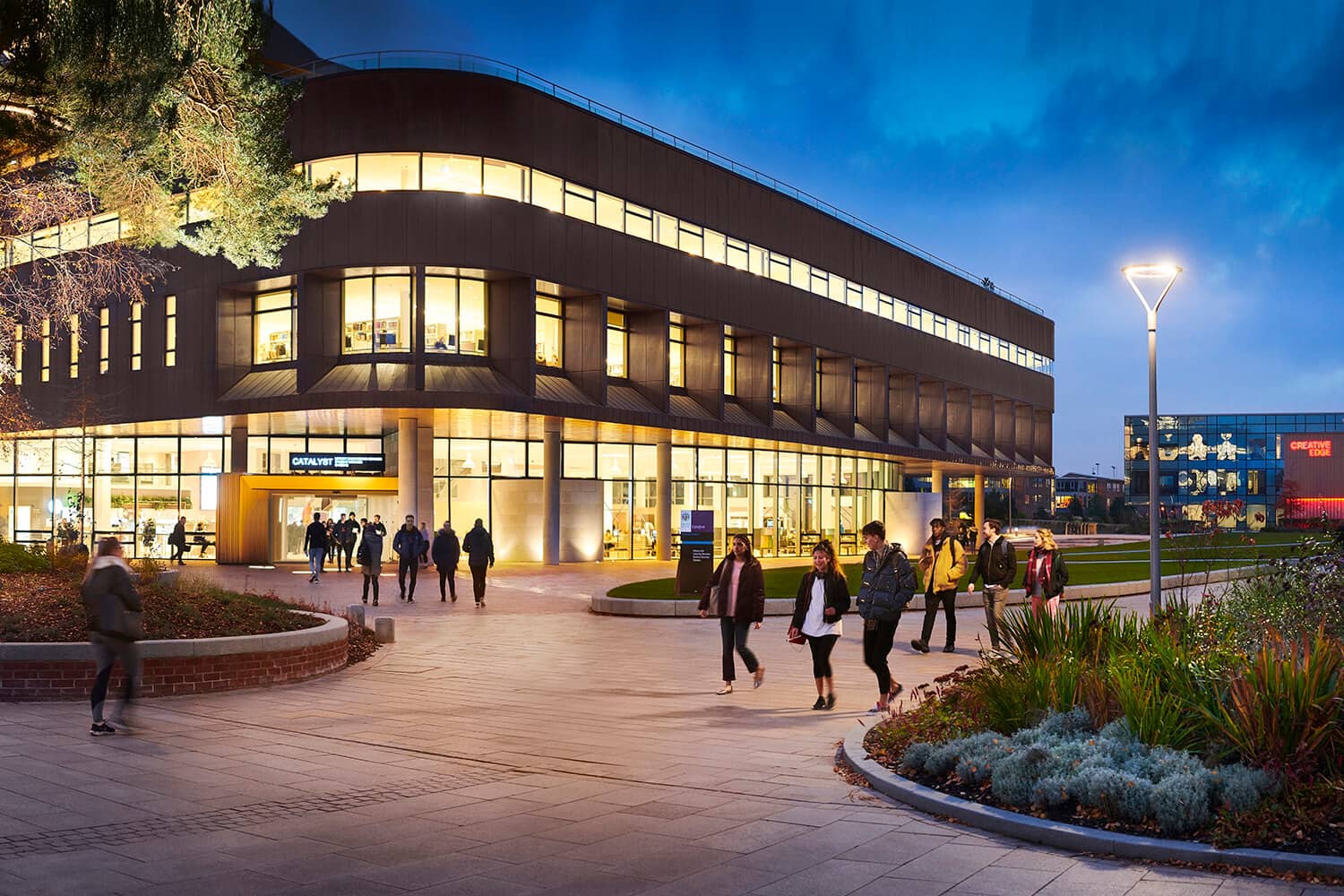
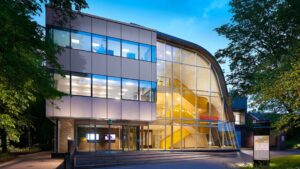 The Department of Computer Science is based in the state-of-the-art £13million Tech Hub. This purpose-built development offers highly contemporary suites of outstanding facilities for Computer Science and Engineering students. Our modern computing and engineering laboratories are equipped with comprehensive test and measurement equipment, high-specification computers, high-resolution screens and the latest hardware and software.
A four-screen CAVE (Computer Augmented Virtual Environment) provides a super immersive 3D virtual environment, enabling users to immerse themselves in a virtual room and experience real life scenarios in 4K resolution. There are also specialist laboratories for networking and games programming, in addition to a specialist research laboratory, open access laboratory and a Harvard style lecture theatre.
Where you'll study
Tech Hub
Learning resources
Learning resources include robots and a robotics simulator, wired and wireless networking hardware, graphics software, web development tools, software development environments, big data servers, eye trackers, giant 3D interactive teaching screens, and other specialist software required for studying forensics and internet security techniques.
Finance
Tuition fees
UK Full-Time
£9,250
a year
UK Part-Time
£77 per credit
for 360 credits
International
£16,500
a year
EU/EEA and Swiss students who have settled or pre-settled status under the EU Settlement Scheme, as well as Irish nationals, may be eligible for the UK tuition fee rate.
Financial support
Subject to eligibility, UK students joining this course can apply for a Tuition Fee Loan from the Government to cover the full cost of tuition fees. UK students enrolling on the course may also be eligible to apply for additional funding to help with living costs.
Please view the relevant Money Matters guide for comprehensive information about the financial support available to eligible UK students.
EU/EEA and Swiss students who have settled or pre-settled status under the EU Settlement Scheme may be eligible to apply for financial support. Irish nationals can ordinarily apply to Student Universal Support Ireland (SUSI). If you are an EU student who does not have settled or pre-settled status, or are an international student from a non-EU country, please see our international student finance pages.
Your future career
Graduating with comprehensive skillsets in technology, management and business, you’re well-placed to enter many different industries. Edge Hill graduates typically take roles in IT departments including database administrators, tech support and project management.
Typical graduate roles you might want to pursue are:
- Graduate Digital Technologists
- Graduate Operations Analyst
- Business Development Assistant
- Security Compliance Analyst
Our graduates could find themselves working at organisations like AO, Barclays, Buro Happold, ESG and Pentagull Ltd. If you take the placement year, use this as a networking opportunity and set the wheels in motion for the future.
BCS accredited
Subject to re-approval, the programme has received initial accreditation from BCS, The Chartered Institute for IT, for the purposes of fully meeting the academic requirement for registration as a Chartered IT Professional. Initial accreditation is granted to new programmes which are yet to have a graduating cohort. Successfully completing an accredited honours degree is the first step to full BCS membership and to being awarded chartered status.
Course changes
Every effort has been made to ensure the accuracy of this information, however our courses are subject to ongoing review and development. Changing circumstances may necessitate alteration to, or the cancellation of, courses.
Changes may be necessary to comply with the requirements of professional bodies, revisions to subject benchmarks statements, to keep courses updated and contemporary, or as a result of student feedback. We reserve the right to make variations if we consider such action to be necessary or in the best interests of students.