BA (Hons) English Literature
Summary 2012/13
- Join one of the UK's most respected departments which prides itself on its dynamic and modern programme, awarded a 90% overall satisfaction rating in the 2010 National Student Survey - placing us within the top third of English courses nationally;
- Be inspired by literature, from classic to contemporary;
- Develop independent critical thinking and judgement.
In English Literature, we study books, we don't just read them. We will introduce you to recent theoretical and critical approaches, as well as offering a range of modules that include different periods, genres and topics. You will have the opportunity to study both 'classic' texts and popular writing.
| Campus: |
Ormskirk Campus, Edge Hill University |
||
| UCAS: | Q200 | ||
| Course Type: | Undergraduate Degree | ||
| Attendance & Study Mode: |
|
||
| Start Date: | September 2012 |
2012 Entry Requirements
280 UCAS tariff points overall. A level English preferred.
BA (Hons) Drama and English Literature: Performing Arts or a related subject at grade C at A level or equivalent preferred. The selection process normally includes an audition workshop.
English Literature and History: Preferably to include A level History.
Details
Who is this course for?
Anyone with a passion for reading and a love of language, an enthusiasm for the ideas that lie behind published literature in all its forms, and a desire to know more about motivations and the impact of literature on societies.
What will I gain from this programme?
You will have a very wide choice of optional modules. You will focus on texts from the Renaissance to the 21st Century, building your appreciation of literature and understanding of its context. English Literature is good preparation for a whole host of careers or further study.
What will I study?
In Year 1, you will study modules covering a range of methodological and recent critical and theoretical approaches to reading literature, and on historical and generic approaches. You will also be introduced to stories, myths and narratives as they exist both in literature and in other kinds of texts such as films, games and comic books. Literature modules focus on texts from the past 500 years and allow students to study both 'classic' texts and popular writing. We also concentrate on training you in the research skills and scholarly practices that will need to succeed at degree level.
In Years 2 and 3 your course will range between study of period surveys introducing you to core texts and approaches - covering the Renaissance, the 'long' eighteenth century, Victorian literature, and the literature of the Modernist period - and option modules reflecting particular staff interests and research specialisms. Your choice of the latter will include modules focusing on feminism and women's writing, Gothic literature, science fiction and the fantastic, masculinities, postcolonial literature, satire, crime fiction, vampire fictions, interrelationships between literate and other kinds of texts, special authors such as Byron and Shakespeare, 'minor' or non-canonical writers and works, contemporary linguistically innovative poetry, the short story and American literature. A creative writing option is also available.
How will I study?
Teaching and learning is by a variety of methods including lectures and seminars, workshops, group activities and independent research. In addition, you will make use of our online, virtual learning environment. As well as module and seminar tutors, we offer both personal tutors and year tutors, who are on hand to provide support when it is required.
Who will be teaching me?
We have a large and enthusiastic team of English Literature tutors who also contribute to Masters programmes and the supervision of research students. Our staff are active in research in all taught subject areas, publishing books and articles on a regular basis. Several have been successful in winning national research awards from bodies such as The British Academy, The Arts and Humanities Research Council and The Leverhulme Trust. The work undertaken on research projects underpins teaching throughout the department and ensures you are at the cutting edge of developments in your subject.
How will I be assessed?
Assessment across the programme involves a mixture of coursework and formal tests or examinations. Most emphasis is placed on work produced in your own time or formally presented in class. Typically, you can expect to be assessed on essays, short analyses, reports and close readings, oral presentations and group work. In your final year Single or Major Honours students may choose to write a dissertation on a literature topic of particular personal interest.
What are my career prospects?
You will graduate well placed for a career in areas such as teaching (further training required), speech therapy, library work, media, journalism, arts administration, publishing, public and voluntary sectors, and managerial work. The degree also provides an excellent foundation for further academic study.
A Great Study Environment
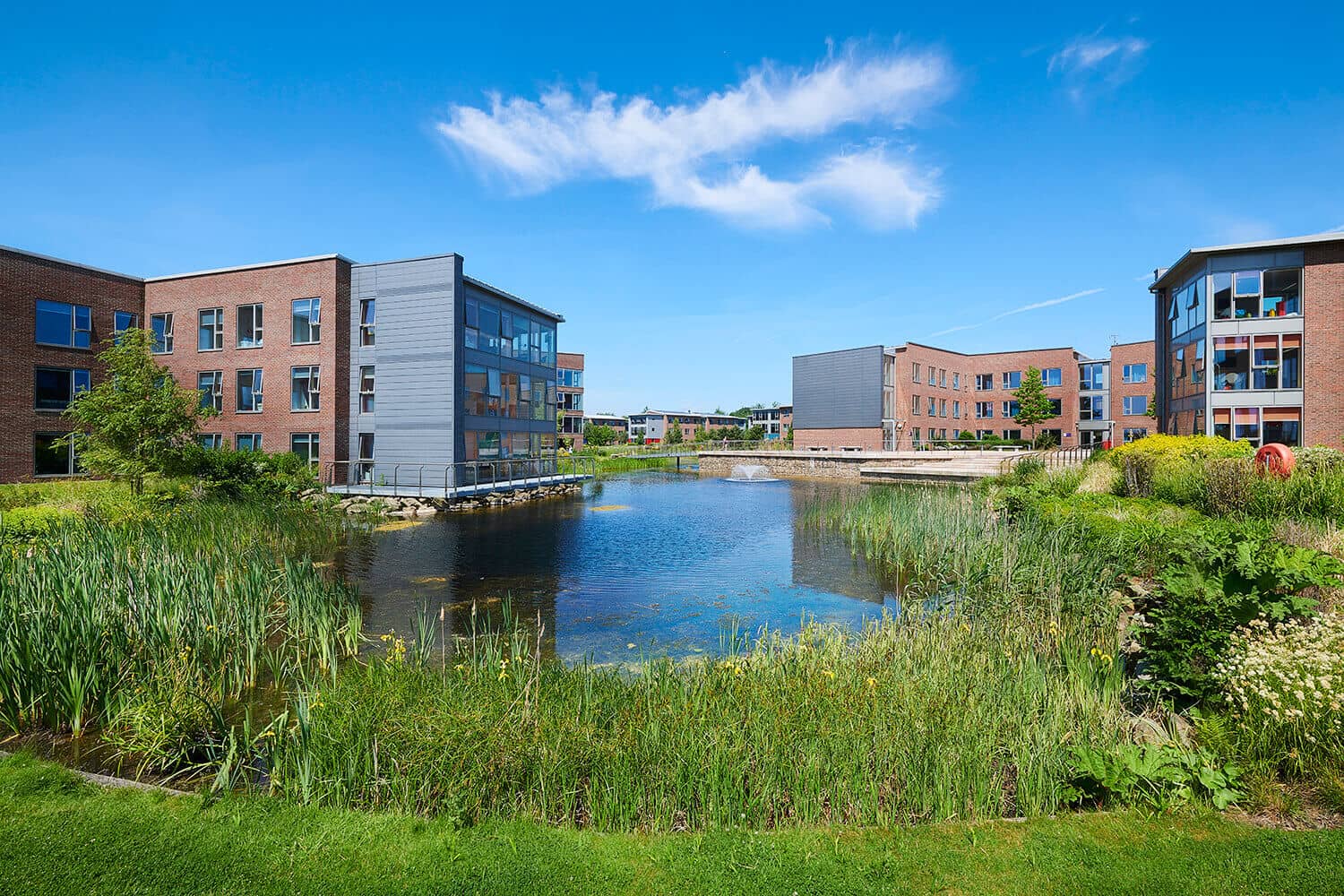
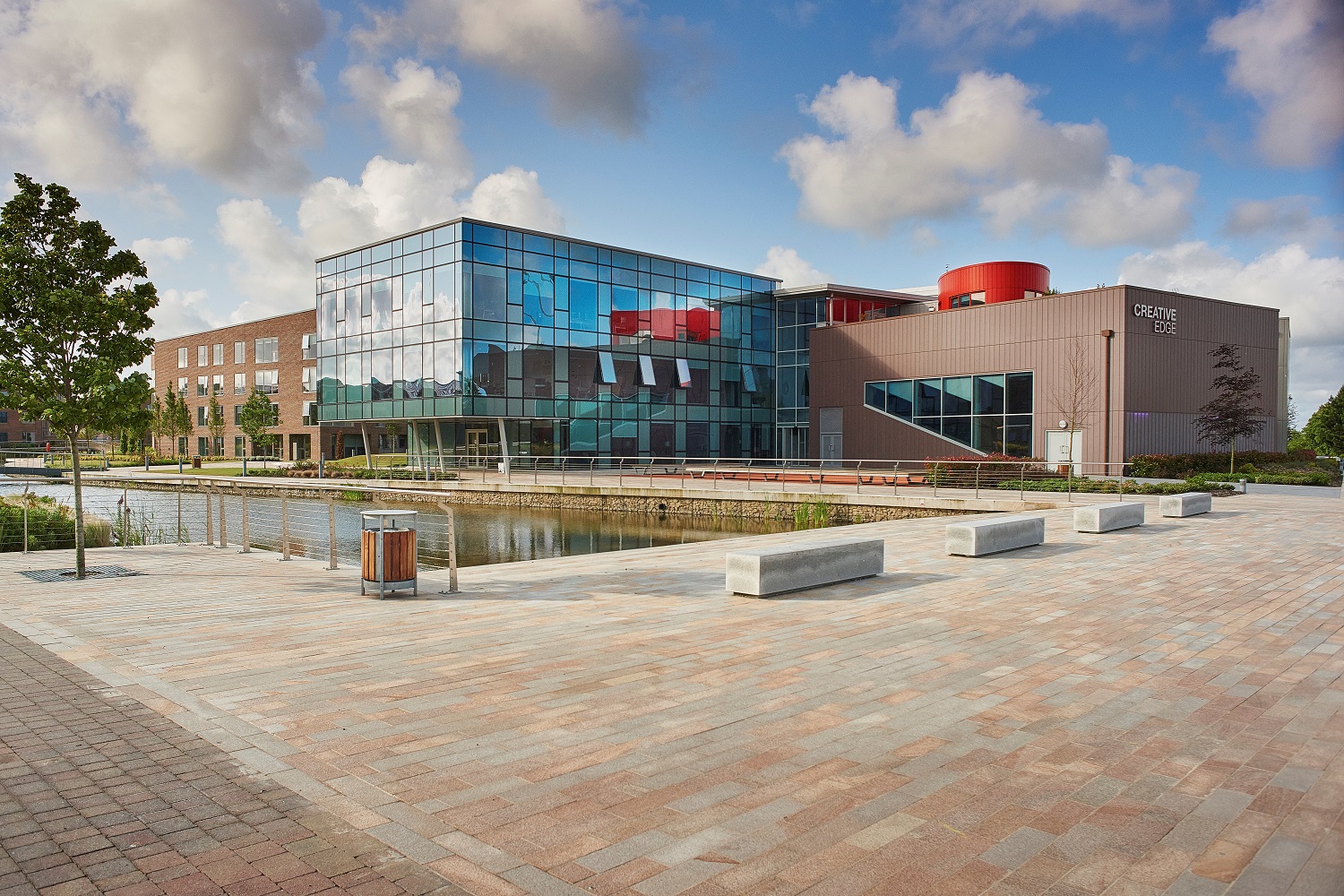
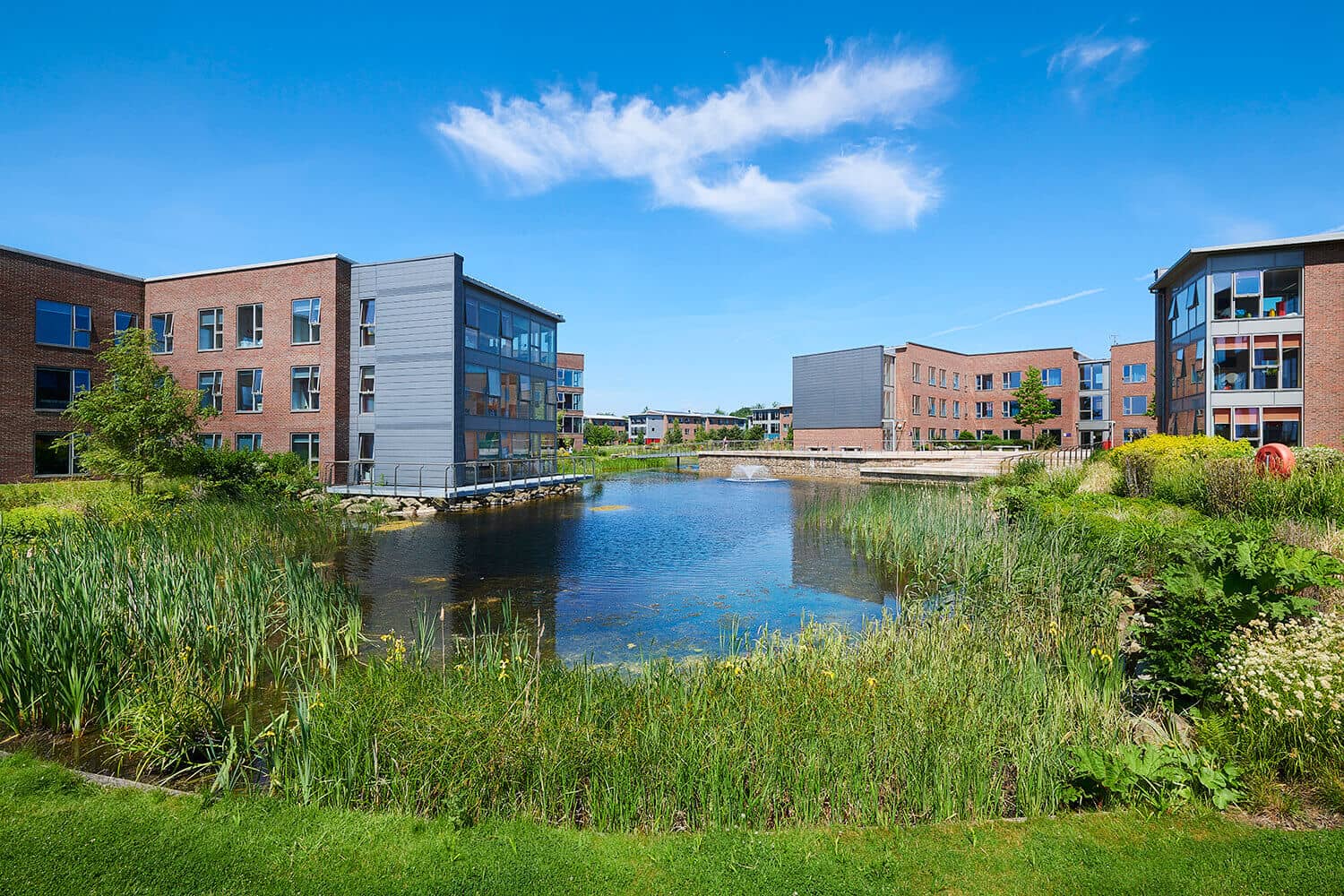
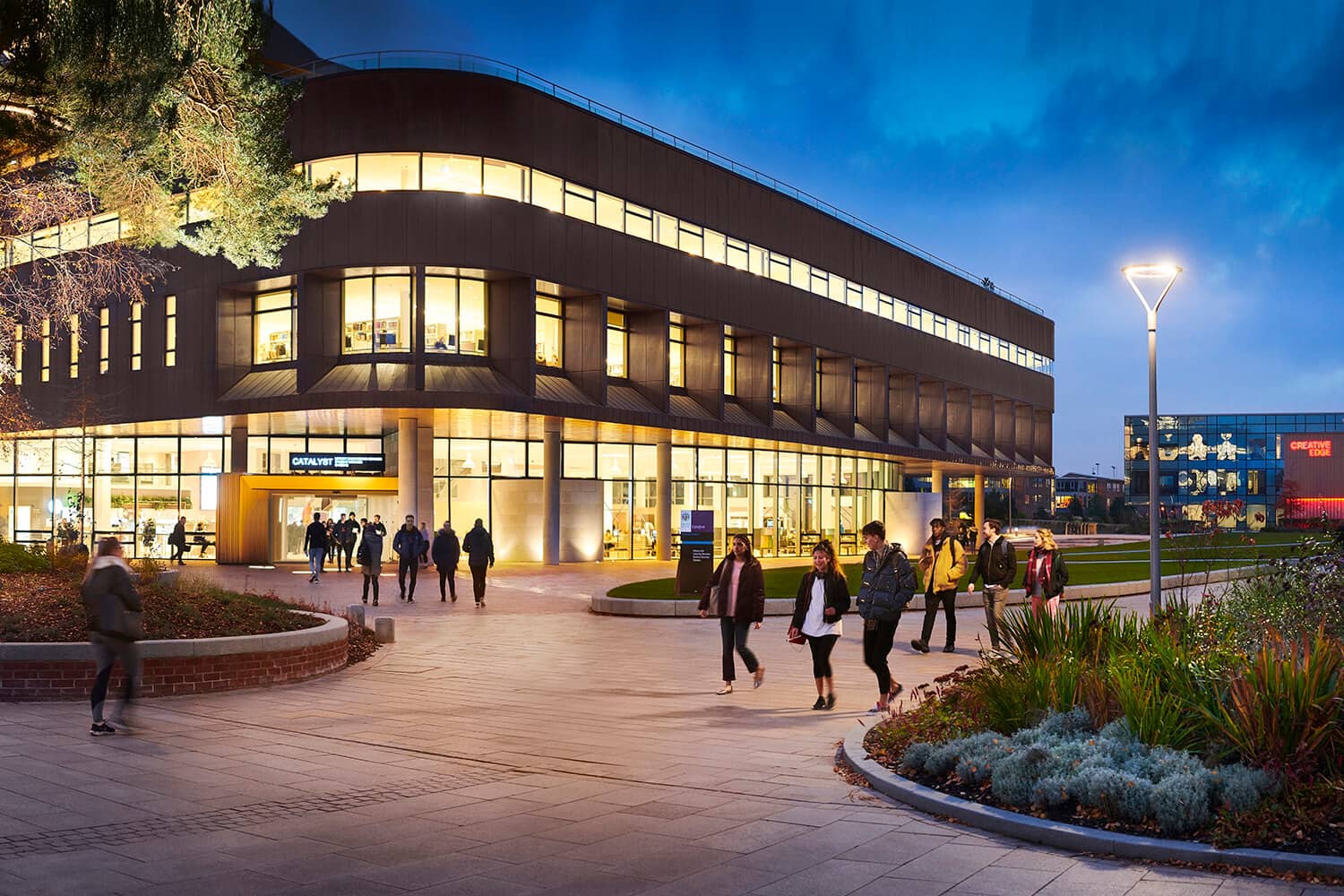
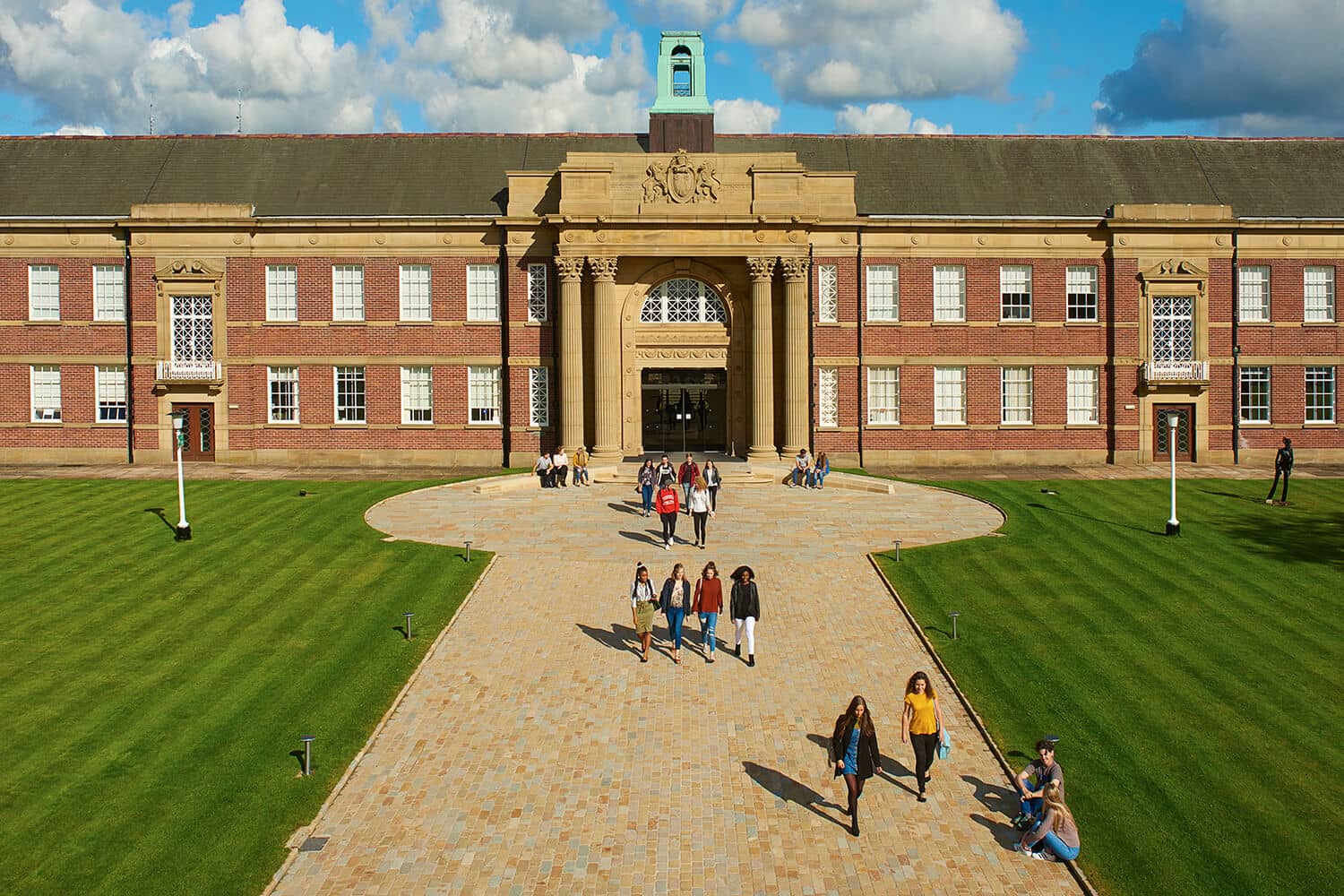
Based in 160 acres of beautifully landscaped grounds, the Ormskirk Campus is a unique and inspirational place to study. Industry standard resources and cutting edge technology combine to make an interactive and highly advanced teaching and learning environment. Everything you could want is on one site with 25 acres of sport and leisure facilities, more than 1,000 rooms in halls of residence and fantastic modern spaces in which you can study and socialise.
The University library gives you access to thousands of books, journals, online resources and extensive PC and media provision. You'll get all the support you need to succeed, reflected in Edge Hill University being ranked in the top two in England for students' personal development, and the top three in the country for assessment and feedback, in the 2011 National Student Survey. The University is also featured in the top four in England for graduate employment.
How do I apply?
Apply online through UCAS at www.ucas.ac.uk.
See our How to Apply pages for more information on the application process and our Admissions criteria.
Fees and Finance
For academic year 2012/13, Edge Hill University will charge £9,000 for full-time BA, BSc and LLB degrees. Eligible students will not have to pay upfront for their tuition. The cost of tuition will be paid by a loan which you will only start to repay once you have finished the course and are earning over £21,000.
Eligible full-time students can also apply for a maintenance grant, subject to household income, and a non-means-tested loan to help with living costs.
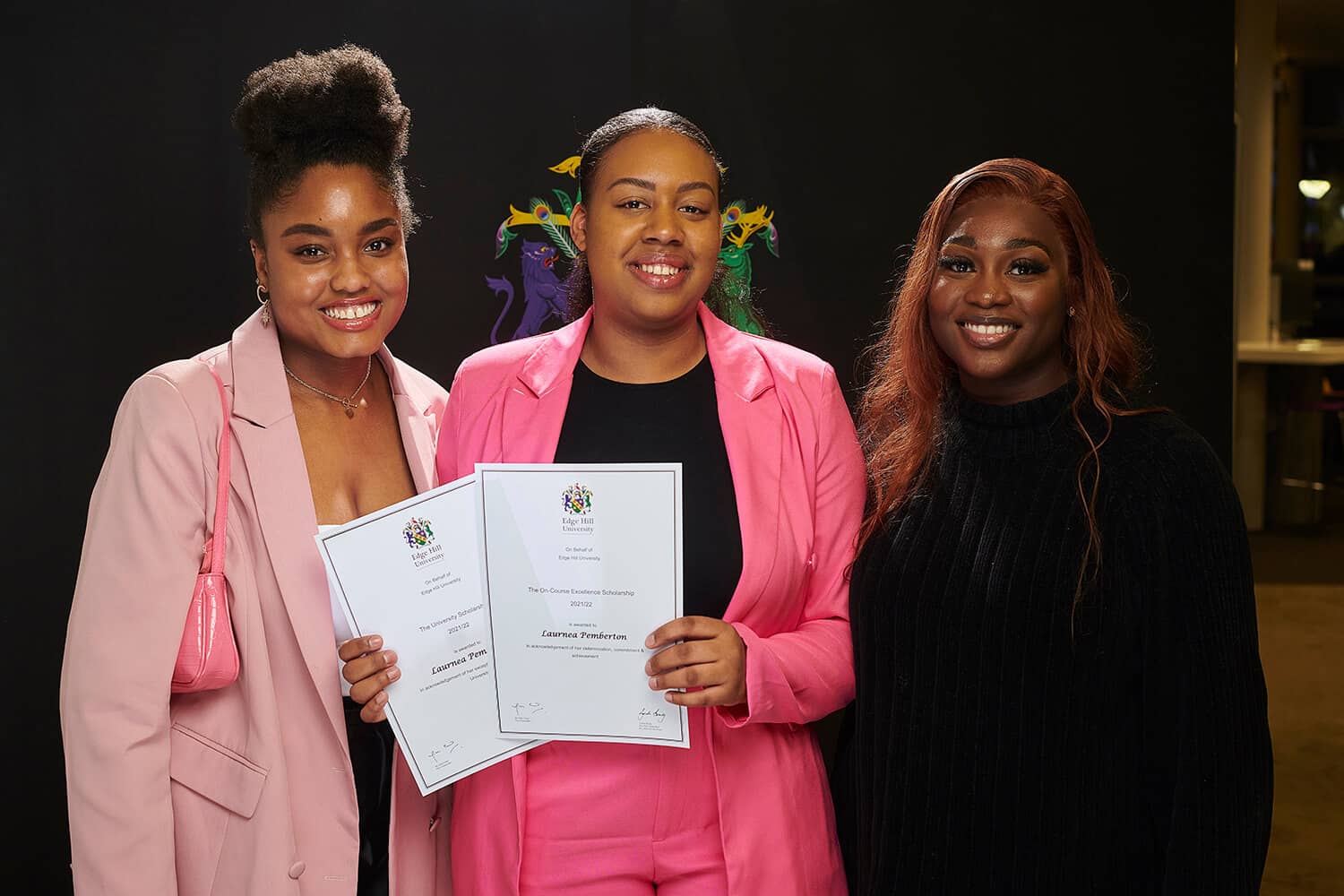
Edge Hill University offers a range of scholarships for prospective full-time students. These include £2,000 Entrance Scholarships rewarding determination, commitment and achievement in creative arts, performing arts, sport and volunteering. Eligible entrants with outstanding grades are recognised through the £1,000 High Achievers Scholarship.
The University will also be offering awards, worth £3,000 in cash benefits and fee/accommodation waivers for academic year 2012/13, to eligible prospective full-time students through the National Scholarship Programme.
For more information on scholarships, including eligibility criteria for each award, visit www.edgehill.ac.uk/scholarships.
To find out more about fees, grants and loans for academic year 2012/13, visit www.edgehill.ac.uk/undergradfees2012.
Please note, the above information is for UK and eligible EU students only. International students should check the fees and finance information at www.edgehill.ac.uk/internationalfees2012.
Not got the entry requirements?
Students returning to education may present their previous experience in work (paid or unpaid) to support their application.
Students with relevant study through either a professional body or appropriate academic course can apply to join the programme at an advanced stage.
For personalised advice based on your circumstances, please contact us or come to an event.
Where can I find out more?
If you would like to receive a copy of our prospectus or be kept updated about forthcoming events, contact the Course Information, Advice and Guidance Team by emailing study@edgehill.ac.uk or calling 01695 657000.
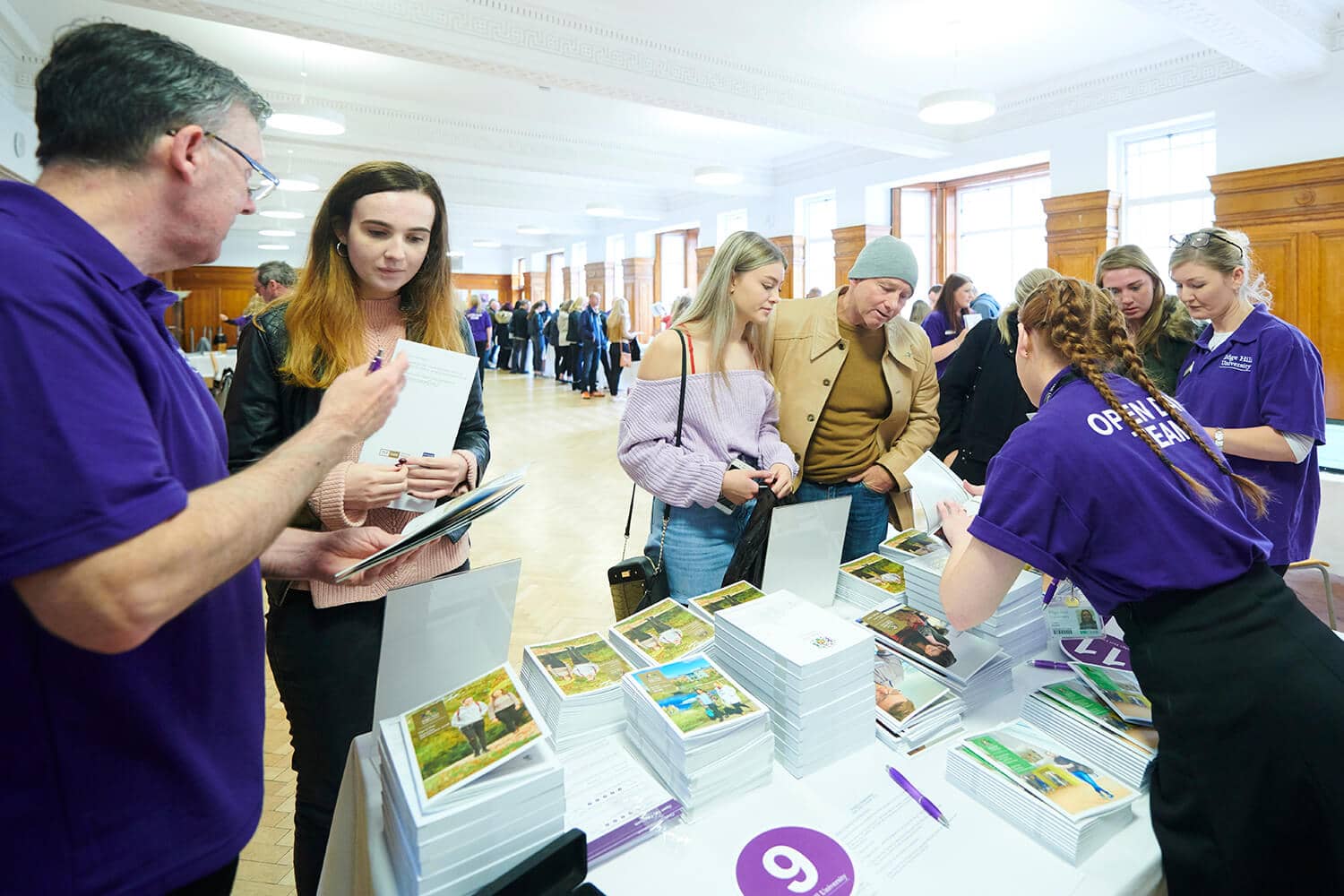
If you want to attend one of our open events held throughout the year, visit www.edgehill.ac.uk/opendays to book your place.
You will also find Edge Hill University staff at many national careers fairs and UCAS events.
Still want more?
If you have any questions you would like to ask the programme leader about this course, please contact:
- Dr Steve Van Hagen, Department of English and History, Faculty of Arts and Sciences, Edge Hill University, St Helens Road, Ormskirk, Lancashire, L39 4QP
- Tel. 01695 584228
- Email: hagens@edgehill.ac.uk
Overseas students should visit www.edgehill.ac.uk/international or email international@edgehill.ac.uk for further information.
Combinations
Joint
- BA (Hons) Creative Writing and English Literature (QW38)
- BA (Hons) Drama and English Literature (QWH4)
- BA (Hons) English Literature and Film Studies (QP3J)
- BA (Hons) English Literature and History (QV3D)
Combined
- BA (Hons) English Literature with Creative Writing (Q2W9)
- BA (Hons) English Literature with Film Studies (Q2GN)
- BA (Hons) English Literature with History (Q2V1)
Modules
The number of English Literature modules taken each year will depend on whether you are taking the subject as a Single, Major, Joint or Minor route.
Year 1
Practical Criticism (20 credits). "What does this mean? How do I think about meaning in this text?" This module will deepen your appreciation of a wide chronology of English Literature through close attention to the detail of the text. This is an introductory module which will provide you with the analytical vocabulary necessary to develop and broaden your interpretative and evaluative skills.
Critical Reading (20 credits) builds on the interpretive and evaluative skills developed in the Practical Criticism module by exploring a range of critical theories and approaches which excited literary critics and authors in America and Europe from the 1920s onwards to the present day. Their ideas help us to articulate our views and criticisms in the ongoing debate about English Literature. These approaches enhance our experience of the texts so the study of theory will be accompanied by extracts from a wide chronology of English Literature.
Introduction to Literary Periods and Genres 1 (20 credits) is a gateway to the study of periodicity and genre at degree level. Beginning with the (post)modern short story and working backwards chonologically, the module will also introduce you to the Victorian novel and Romantic poetry. You will also be introduced to an array of critical approaches to literature.
Introduction to Literary Periods and Genres 2 (20 credits) continues where its predecessor leaves off in working backwards chronologically while introducing you to the major literary periods and genres. You will study the Gothic novel, Renaissance poetry and Renaissance drama, whilst also being introduced to an array of critical approaches to literature.
Beyond Books 1 (20 credits). One of the most fundamental ways of understanding how literature functions is by considering the nature of story-telling. This module introduces you to a range of narrative forms (literature, narrative poetry, comic strips, and films) and the critical approaches appropriate to a higher understanding of how such narratives work. Beginning from straightforward concepts like the 'narrator' and the 'narratee', the module later adopts an interdisciplinary approach to highlight the contrasts and comparisons that can be drawn between different narrative media.
Beyond Books 2 (20 credits) continues the interdisciplinary approach adopted in Beyond Books 1 to explore a variety of narrative media. Subject matter includes film and film adaptations, graphic novels and interactive media in both print and electronic forms. You will be taught in a variety of ways, though there will be a greater focus on workshops and interactive sessions here than in the previous Beyond Books. Collectively, both modules will provide you with a thorough understanding of narrative and the critical discourses appropriate to its analysis and enjoyment.
Year 2
Renaissance Drama: Texts and Contexts (20 credits) explores the drama of the English Renaissance from 1450 to 1660, a period of extraordinary civil tumult and cultural change. You will evaluate the remarkable dramatic literary output of the reigns of up to ten different monarchs beginning with the Tudors. The complexity and diversity of the literature categorised under the broad term 'Renaissance' will be acknowledged and the term will be problematised as much as it is defined.
Effort will be made to explore canonical and non-canonical drama together with drama by both male and female authors. The playwrights under discussion may, for instance, include: Shakespeare, Marlowe, Middleton and Elizabeth Cary. Themes which may be examined could include monarchy, rebellion, the people, class, nationalism, religion, heresy, superstition, witchcraft, gender identity, self-fashioning, anti-feminism, proto-feminism, sexuality, and the body.
Renaissance Poetry and Prose: Texts and Contexts (20 credits) traces the development of the two key literary genres, poetry and prose narrative (including autobiography) from the English Renaissance (1450 to 1660), a period of extraordinary civil tumult and cultural change. You will evaluate the remarkable literary output of the reigns of up to ten different monarchs beginning with the Tudors.
The complexity and diversity of the literature categorised under the broad term 'Renaissance' will be acknowledged and the term will be problematised as much as it is defined. Effort will be made to explore canonical and non-canonical prose, poetry and writing by both male and female authors. These writers may, for instance, include Shakespeare, Wyatt, More, Herbert, Marvell, Milton, Mary Carleton, Anna Trapnel and the Cavalier poets. Themes which may be examined could include monarchy, rebellion, the people, class, nationalism, religion, heresy, superstition, witchcraft, gender identity, self-fashioning, anti-feminism, proto-feminism, sexuality, and the body.
The Long Eighteenth Century I: 1660-1760 (20 credits) provides an introduction to texts, authors, genres and central themes from the Restoration in 1660 until the dawn of the Romantic period one hundred years later. A typical syllabus may include an introduction to the Restoration drama of Wycherley, Etherege and Congreve and an examination of the poetry of Rochester, Dryden, Aphra Behn, Pope, Swift and Mary Leapor. You will also consider the emerging English prose novel as seen in the amatory fiction of Behn, Delariviere Manley and Eliza Haywood, and the works of Daniel Defoe, Samuel Richardson and Henry Fielding.
The Long Eighteenth Century II: 1760-1830 (20 credits) provides an introduction to the texts, authors, genres and central themes from the first stirrings of what has been traditionally perceived as the Romantic age in the 1760s until the dawn of the Victorian age seventy years later. A typical syllabus might include an introduction to such poets as Yearsley, More, Smith, Wordsworth, Coleridge, Blake, Keats, Shelley, Byron, Clare and / or Burns. You can also expect to encounter the novels of Burney, Austen, Mary Shelley and / or Walter Scott; and texts written as part of the French Revolution controversy by writers including Price, Burke, Wollstonecraft, Godwin and MacCauley.
Satire in the 'Long' Eighteenth Century (20 credits) affords an opportunity to study the works of what has traditionally been characterised as the 'Great Age of Satire', incorporating the study of prose, poetry and drama between the Restoration and the end of the Romantic period. The module will begin by situating eighteenth-century satire within its literary and cultural precedents before proceeding to focus on the style, technique, politics motives, purposes, targets and effects of a wide range of satirical texts.
Texts in Motion I (20 credits) and Texts in Motion II (20 credits) are two related modules that can be taken (ideally) together or on their own. Both modules introduce you to the phenomenon of textual adaptation and to the critical discourses appropriate for understanding that phenomenon. The modules familiarise you with a variety of narrative forms including and beyond literary fiction. Film, drama, historical documentation, sequential art and interactive media are studied to explore the varieties of adaptation practiced in both historical and contemporary contexts. Using different narrative examples, you will learn about the various facets (theoretical, aesthetic, stylistic, ideological) of the adaptation process.
Anger and After: Post-War British Drama (20 credits) gives you the opportunity to study post-war British drama - dramas written by angry young men and women who changed the English Theatre forever. The module will emphasise the diversity of practice, from the growth of kitchen-sink realism in the 1950s to the rise of experimental theatre in the 1960s and 1970s to the contemporary engagement with political and cultural issues. Where possible we will go to see a performance of a contemporary drama as part of the module.
First World War Poetry (20 credits) explores the impact of trench warfare on the form and content of war poetry, tracing changes to poetic expression that resulted from the experience of prolonged, mechanised warfare. You will gain improved skills in prosody as well as an understanding of the cultural, historical and artistic contexts of the First World War. Themes covered include war and language, the representation of trench warfare, the fragmentation of the human subject (both mental and physical), war and gender, and the home front.
Rogues' Gallery: Crime and Criminality in the Long Nineteenth Century (20 credits) explores the public fascination with crime, criminals and the law in the literature of the long nineteenth century. You will examine the representation of criminals, criminal acts and the punishment of crime in the context of the criminological and penal debates of the period. The module covers a range of literary genres associated with crime writing, including the Newgate Novel, the Sensation Novel and the detective story.
The Beat Generation (20 credits) introduces you to post World War 2 American poetic writing. Our reading will focus on a small group of 'beat' poets and their influences which produced the radical new poetry of self-definition beginning in the late 1940s and 1950s. To do this we will explore the abstract expressionism of artists like Jackson Pollock and the jazz of musicians such as Charlie Parker and Miles Davis, music known as 'bebop' which influenced the spontaneous prose and rhythms of writers such as Kerouac and Ginsberg.
Contested Masculinities (20 credits). What does it mean to be a man? What does it mean to be masculine? Is male identity something you 'do' or something you 'are'? Is contemporary masculinity in crisis? These are some of the questions that you will have an opportunity to study on this module. Each week, we will analyse a key American or English literary text in order to gain a better understanding of contemporary masculinities and trace the variable and diverse forms of masculinity within their historical and cultural contexts.
Trans-Gothic (20 credits). Encompassing Anglo-American and 'Global Gothic' traditions from the eighteenth century to the present day, this module explores representations of trans-sexualities / trans-sexual identities in Gothic poetry and prose. Each week we will scrutinise a key literary text within its historical context in order to develop an understanding of transitional genders, polymorphous sexualities and post-human identities. Drawing upon trans- and post-theories, we will examine gender and genre in transition by focusing upon a variety of sexual subjectivities - such as bisexual, pansexual, polysexual, asexual, third gender, bigender and androgyne - so as to account for Gothic 'trans' positions.
Vampire Fictions (20 credits) examines the cultural history of the vampire in poetry and prose from the eighteenth century to the present day. Focusing each week on a key literary text - from classics such as Carmilla and Dracula, to popular contemporary manifestations such as Anita Blake and Twilight - we will analyse the evolution of the vampire and what it represents within the historical and cultural context of each text studied. Adopting a range of critical lens, from Marxist readings to Postcolonial approaches, we will chart the development of the vampire as a literary figure.
Imaginary Homelands (20 credits). Some of the most interesting contemporary fiction is written by migrants and settlers who now form part of 'multicultural' Britain. This module examines the growing range of cosmopolitan literature which articulates modern global tensions, and is alert to related concerns about nation, citizenship, identity, displacement and belonging.
You will gain a knowledge of key trends in postcolonial theory in order to consider the impact of significant events such as the arrival of the 'Windrush generation' from the Caribbean and 9/11, noting how issues of national identity and ideas of homelands are culturally constructed and how they are represented and debated in the literature.
Writing The Female Body (20 credits) compares textual representations of the female body in English Literature from the Middle Ages with the literature of the present day. It looks at the suffering body and the body beautiful and explores changes and continuities in their textual representation over time using literature, media and theory.
One central aim is to reveal the extent to which contemporary attitudes to the body are part of a much larger and longer historical continuum, of which the Middle Ages are just a part. Topics which this module will debate may include body image, idealisations of the female form, brutalisation, self-brutalisation, the sexual body, the aging body, the dying body, the grotesque and the suffering body.
Writing the Supernatural (20 credits) examines the textual representation(s) of the supernatural, specifically of ghosts, haunting and the haunted, in works of English literature from the nineteenth century to the present day. You will examine three key genres: short fiction; the novella, the novel and drama; and the development of short ghost fiction. Themes will include supernatural subjects and supernatural space. Fear - the generation of terror and dread as a dramatic device, and fear as both individual terror and cultural anxiety - will be of crucial importance to the module and you will be encouraged to regard the textual constructions of the supernatural as culturally anxious (about, for example, issues of class, issues of gender, issues of race, issues of religion).
South-East Asian Novel in English (20 credits) explores recent and contemporary writing from former colonial countries such as India, Malaysia and Pakistan. You will explore this fascinating and lively area of literature, focusing on work which deals with the postcolonial legacy of the Commonwealth countries.
As well as detailed discussion of a selection of fiction, the module will enable you to develop an understanding of some of the key concepts of postcolonial theory, empowering you to produce well-grounded critiques of the ways in which these novels reflect the nature of their respective countries.
Special Author Study (20 credits). Please note, this module is also available as a level 6 module in year 3. The module focuses on the work of a single canonical author (such as Thomas Hardy or Charles Dickens) or a closely related group of authors (such as the Brontë sisters) in the light of recent critical and theoretical approaches. You will examine theories of authorship and canonicity, developing an ability to theorise the relationship between an author and his/her literary work. You will also acquire a specialist knowledge of a literary period and a major writer through an examination of the development of the author in relation to his/her historical, cultural and literary contexts.
Year 3
The Victorian Novel (20 credits) explores the rise of the novel in the Victorian period. You will study a range of canonical Victorian authors, including Charles Dickens and Elizabeth Gaskell, and analyse a number of characteristic Victorian genres such as realism, sensation fiction and the Bildungsroman. The module will also provide you with an understanding of the reading practices and the cultural context of the period.
Victorian Poetry (20 credits) introduces you to the main currents of English poetry in the Victorian period. You will study a range of Victorian poetry, including the work of Alfred Tennyson, Robert Browning, Elizabeth Barrett Browning and Christina Rossetti. You will engage with Victorian poetic theory and formal experimentation, and will also explore characteristic Victorian poetic themes such as religious doubt, social duty and gender issues.
Modernism (20 credits) explores the radical upheaval in literature at the beginning of the twentieth century. Concentrating on the key period from 1910-1930, the module examines the range of experimental, ground-breaking work produced by such figures as James Joyce, Virginia Woolf, T.S. Eliot and Ford Madox Ford. The modernists cast aside the conventions they had inherited from the Victorians and reinvented the rulebook of English Literature. Their work can be dazzling, baffling, but always rewarding. This module looks at a representative sample in order to answer the question: “what was modernism?”
The Sense of an Ending: Late Twentieth Century Literature (20 credits) looks at a range of literary texts from the second half of the twentieth century, the period when many of today's leading writers developed their art. Beginning with the aftermath of the Second World War, the module looks at a range of poetry and fiction and examines how these writers moved away from modernism to develop distinctive approaches to the representation of contemporary life. Key authors include Samuel Beckett, Basil Bunting, Anthony Burgess and Penelope Fitzgerald.
Science Fiction (20 credits). Science fiction is the premier literature of ideas; it is, perhaps, the defining literature of the twentieth century. As such, science fiction provides a fascinating subject for study, inviting readers to speculate on the nature of reality, of time, of awareness, of what makes us human. It also offers visions of new technology, of alien worlds, and of changes in relations between genders, classes, and cultures.
The module adopts a historical approach to introduce you to the wide variety of science fiction available. Not only will you learn how to read science fiction but you will also recognise how it has often been used to consider and criticise inequality and injustice in the real world.
The Short Story (20 credits) explores the nature of the short story as a distinct genre, separate to the novel and yet related to it. While the emphasis is on contemporary authors, their work is put into context in relation to their predecessors in the short story tradition. There is a particular focus on the short story's representation of time. Concepts drawn from Bakhtinian and Bergsonian theory are introduced and we will consider how stories fit together in collections and anthologies.
Life Writing in the Long Eighteenth Century (20 credits) offers an opportunity to study a wide range of biographical and auto-biographical narratives between the dawn of the Restoration and the end of the end of the Romantic period.
Focusing on both prose and poetic texts, the module investigates the nature and reasons for changes (and similarities) in conceptions of, and literary representations of, the 'self' between the beginning and the end of the period. Incorporating study both of such canonical texts as Boswell's Life of Johnson and (earlier versions of) Wordsworth's The Prelude, the module also considers works by and about a host of lesser-known, comparatively marginalised figures.
British Writers and the French Revolution (20 credits). Beginning with a lecture on historiographical approaches to the French Revolution, this module offers an interdisciplinary opportunity to study the effects upon British writers of the French Revolution and its political, social and cultural consequences over the following half century.
You will also have the chance to place a range of British writers of the day in relation to political events, with a particular focus on the political positioning of women writers of the era, on understanding the relation of radical feminism to revolutionary thought, and on an understanding of the 'novel of ideas' and its relation to Revolutionary theories.
British Telefantasy (20 credits). British science fiction and fantastic television has always displayed a close connection to British popular fiction and trends in British culture. This module examines key science fiction series - Quatermass, Doctor Who, The Prisoner, Survivors, Blake's 7, Red Dwarf and others - within their historical contexts and from a variety of critical perspectives.
You will trace recurrent themes of invasion, pollution, imprisonment and rebellion across a sixty-year period (1950-2010) whilst acknowledging British telefantasy's tendency towards apocalypticism and end-of-the-world narratives. No prior knowledge of science fiction or television studies is required.
Late-Victorian Gothic: Deviance, Decadence, Degeneration (20 credits). Are you prepared for an encounter with Count Dracula, Dr Jekyll (and Mr Hyde), and She-Who-Must-Be-Obeyed? This module charts the gothic revival of the late nineteenth century, exploring gothic fiction alongside contemporary social and cultural developments and current critical thinking. Authors studied include Oscar Wilde, R. L. Stevenson, Bram Stoker, H. Rider Haggard and Joseph Conrad.
Literature and Belief (20 credits). The literature on this module ranges across a wide chronology from biblical to twentieth century texts, from The Book of Job to D. H. Lawrence's Women in Love. The range will include an examination of poetry, prose and drama which explores huge changes of mind which cause the protagonist to wrestle with dilemmas which affect us all.
The module is divided into three parts: Perplexity; Story; Ideas. In the first part, you will study texts which start with human experience and develop into the difficulty of describing situations in which the human is disillusioned. In the second group of texts the reader can see a providential plan. This occurs because these are stories in which suffering and distress become part of a larger movement that ultimately moves towards resolution. In the last group the implications of story are articulated into patterns of thought and feeling. Here assumptions are thought out and expressed as dynamic and startling ideas.
Gothic Romanticism (20 credits) will examine Romanticism's Gothic impulse during the period 1764-1830. Each week, we will analyse key literary texts from the period - including poetry, and both prose fiction and non-fiction - alongside a theoretical issue in order to establish a critical vocabulary from which to interpret and understand Gothic's many Romantic manifestations.
By considering the historical, cultural, aesthetic and ideological background to this mode of writing, we will trace the ways in which the Gothic Romance is both a conservative and a reactionary genre, supporting and challenging our conceptions of the various dichotomies that define it.
The Shakespeare Problem (20 credits). What is a national poet? Why is Shakespeare still considered to be the pre-eminent author in the English language? What historical reasons can explain this situation and what political implications might it have?
This module addresses canonical literature but also questions the processes and validity of the canon. You will analyse the formation of a literary icon and unravel the enduring myths of natural genius associated with his name. In the course of this investigation, you will also study questions of genre in Shakespeare, paying special attention to the plays which hybridise or destabilise traditional genres, in order to examine an ongoing process of critical change.
Sexuality and Subversion (20 credits) is devoted to understanding textual representations of sexuality and sexual identity. In particular it explores the textual representation of same-sex desire, transgender and boundary-crossing sexualities in the British novel from the beginning of the twentieth century to the present day. It focuses on the British novel from 1900 to now and also incorporates an analysis of recent gender and sexuality theory.
Thematic topics which you may interrogate include sexuality, crisis and sexualised scandal, sexual/textual subversion, sexual deviance, sexual stereotyping, 'coming out' narratives, homosexuality, lesbian and gay identity, bisexuality, transgendered sexuality.
Postmodern Fiction (20 credits) will further your appreciation of recent and contemporary writing in Britain. In particular, the module focuses on fiction that challenges conventional notions of the literary text.
You will examine the major characteristics of postmodernism as expressed in recent and contemporary British fiction writing and develop your critical response to this important area of literary production. The module examines postmodernism as a phenomenon and applies its insights to a series of texts written between the emergence of postmodernism as an area of literary activity to the present day.
Literature Dissertation (20 credits) provides single and major honours students with the opportunity to study any topic of your choice in depth, developing your own ideas through individual research. The topic may be a particular interest of yours or arise from a desire to study an issue or subject in greater detail that you've encountered elsewhere in the programme.

Tags:
[?]
Bookmark with: