Explore the lives of children and young people in the UK and across the globe. Discover the knowledge and insight that a social science perspective can provide. Learn about yourself and be equipped for working with children and young people.
Every generation faces unique challenges, so the journey from childhood to adulthood is constantly changing. This course will help you to apply different perspectives – sociological, psychological, cultural, political and technological – to understand and make sense of this fast moving and changing context.
We’ll help you explore the changing situations – local, national and global, political, social and cultural – that affect the lives of children and young people, their families and communities.
Flexibility is built in to this childhood and youth studies degree, with optional modules covering critical issues such as child poverty and welfare, autism, migration, youth offending and children’s health and wellbeing. Field trips in the UK and Europe are embedded throughout the course, along with opportunities for work-based learning that will prepare you for a career in this dynamic sector.
The course has no formal written exams, so you’ll focus on different forms of coursework, presentations and case studies, developing skills and practising techniques that are highly valued by employers.
Course features
International students can apply
Learn a language option available
Sandwich year option available
Studying abroad option available
Work placement opportunity
My favourite thing about this degree is the opportunity to make a positive impact on the lives of children and young people.
How have experiences and perceptions of childhood and youth changed over time? What role does psychology play in the study of children and young people? What are the biggest challenges and issues facing professionals working with children and young people? By the end of your first year you’ll have a broad understanding of the diverse nature of childhood and youth studies, and a greater insight into your own attitudes and beliefs.
Introduction to Child Developmental and Social Psychology
Introduction to Child Developmental and Social Psychology identifies and explores the major issues and debates of relevance to early childhood studies and childhood and youth studies within the discipline of psychology. In this module you will consider the importance and impact of developmental psychology on the study of childhood and youth, and focus on cognitive development, attachment theory, personality theories and views of intelligence in psychology. You will address key perspectives in social psychology including theoretical perspectives concerning social identity and group processes, psychological explanations of aggression and attitude, and wider interpersonal influences.
Module code: SPY1126
Credits: 20
Children and Young People in Society
Children and Young People in Society explores both historical and contemporary dimensions of childhood and youth. The module introduces the idea that childhood is a social construction dependent on the history, cultural values and power structure of the society in which children live. You will consider the way in which the social, economic, political, scientific, legal and institutional contexts in which children have lived and live today shapes their experience of childhood. The module challenges some commonly held beliefs about children and the institutionalisation of childhood. It also provides a personal development programme that will develop your essential academic skills including time management, academic reading and writing, information retrieval, critical thinking and analysis.
Module code: SPY1127
Credits: 20
Introduction to Social Policy and Welfare
Introduction to Social Policy and Welfare provides an overview of some of the key areas of social policy and welfare, such as education, health, employment, poverty and child welfare. The module offers a critical introduction to key approaches to the development of social welfare policy and the political ideologies that have influenced it in historical and contemporary perspective, exploring how these approaches to the provision of welfare compare and contrast with one another. You will also discover different philosophical and ideological understandings of key concepts in social policy, including equality, rights, liberty, social justice and deservingness and how they have – and might – influence the development and implementation of contemporary social policy.
Module code: SPY1120
Credits: 20
Introduction to Sociology and Social Theory
Introduction to Sociology and Social Theory provides you with an introduction to sociology and sociological theory, answering the question 'what is sociology?' This module provides a foundation for study in Years 2 and 3. Tracing the historical development of sociology through to key contemporary sociological theorists, you'll explore early sociological thought in the context of 19th and 20th century modernisation. You'll develop confidence and understanding of the discipline and some of the key moments, individuals, and ideas associated with it. Part of this includes considering the contribution and continuing relevance of major theorists in sociology such as Karl Marx, Emilie Durkheim and Max Weber. This module also discusses early feminist and postcolonial theoretical developments.
Module code: SPY1121
Credits: 20
Working with Children, Young People and Families
Working with Children, Young People and Families introduces you to notions of professional work with children and young people including issues around inter-professional working, law and policy. The module considers issues which may arise when working with young people as a professional and begins to unpick the contrasting notions of professionalism and managerialism.
Language 1 is ideal if you want to learn a new language, or further develop your current language skills, as an integrated part of this degree. You can study French, German, Arabic, Italian, Mandarin, Japanese or Spanish (subject to minimum numbers for your preferred language). Delivered at the Edge Hill Language Centre, the module will be taught in an interactive, communicative manner, using authentic materials in the target language. Emphasis will be placed on all four areas of reading, writing, speaking and listening. You will play an active role in the weekly two-hour classes, engaging in role-plays, short conversations, videos, authentic texts and listening materials. You will also be encouraged to reflect on your own learning needs. On enrolment to the module, you will complete a language induction form and be placed into a language level group appropriate for your prior knowledge of your chosen language. Please note, while we will endeavour to accommodate varying language levels per module, this is not always possible. While you can join the module with some prior experience of your target language, you will not be able to study a language you are already fluent or proficient in.
Module code: TLC1010
Credits: 20
Exploring the Social World
Exploring the Social World offers an opportunity for you to explore your personal beliefs and attitudes towards a range of social issues. Visiting speakers will talk to you about particular issues and related social campaigns. Working in teams, you will choose a social issue to focus on and you will be introduced to basic research skills so that you can look further into them. You will be supported in collecting, describing and evaluating a range of materials and you will use your findings in order to design a leaflet and poster campaign in support of (or in opposition to) your chosen issue.
Module code: SPY1122
Credits: 20
You’ll develop your research skills by collecting and analysing information on a topic of your choice. As your knowledge grows, so will your practical experience, with the chance to do a 60-hour work placement. From youth offending to issues of race, ethnicity and discrimination, and how childhood and youth are presented in popular culture – optional modules cover a range of topics, allowing you to pick those that match your career ambitions.
Becoming a Social Researcher provides you with an important grounding in social research methods. The module gives you an overview of the fundamental aspects of social research including philosophical approaches to knowledge production, literature searching, sampling and ethics. It addresses both quantitative and qualitative approaches. You will have the opportunity to choose a topic and design, conduct and report on a piece of your own research. This will involve the use of a range of different methods including interviews and questionnaires and you will be supported in this process through the module’s seminar programme.
Module code: SPY2150
Credits: 20
Youth Studies: Key Concepts and Issues
Youth Studies: Key Concepts and Issues provides you with an understanding of the key themes, concepts, issues and debates in the field of youth studies. Starting from an historical perspective, you will look at the broader social, economic and political factors which have shaped understandings about youth and the so-called ‘youth question’ from early to late modernity. The module will then turn to contemporary debates about youth, including themes such as transition, risk, culture and social policy.
Self-Directed Study enables you to focus on a particular agreed topic or focus and explore it, with tutorial support, to produce a project-based piece of work which relates to a particular career trajectory. The project will involve addressing a social issue or problem and/or one organisation’s response (voluntary, public or private sector) to a social issue or problem. It will involve not only desk research such as library searches but information retrieval from a range of primary sources. The self-directed learning focus allows for a sense of both leading on the learning taking place and reflecting on its progress, problems and problem-solving.
Module code: SPY2155
Credits: 20
Work-based learning and Employability
Work-based learning and Employability is designed to bridge the world of higher education with the world of work. You will develop a critical understanding of the changing context of work and of social, economic and political factors shaping the labour market and contemporary patterns of employment. There will be an opportunity to apply theory and disciplinary specialist knowledge to practical experience within a work-based setting with students undertaking a 60 hour placement. You will also enhance and develop a range of transferable skills to enhance your employability.
Children, Family and the State provides you with the opportunity to explore the focus and structure of child protection and welfare services for children and young people. The module considers the complexity of the relationship between the state, the family and the child in the context of children and young people’s welfare and wellbeing. You will be given the opportunity to explore and assess key legislation and policy initiatives that focus on child welfare and the protection of children and consider their influence on practice with children and their families.
Module code: SPY2161
Credits: 20
Children’s Cultural Worlds
Children’s Cultural Worlds introduces you to some of the ways in which children experience and organise their social worlds. You will learn about a variety of children’s cultural practices from this perspective such as their play, friendships, family, sexuality, food, literature and language practices. In order to do this you will study a range of research which has taken a ‘naturalistic’ approach to children’s cultural practices. Naturalistic studies are those which seek to remain faithful to the nature of the phenomena which they investigate. In the study of human social life, this requires being faithful to how the people we study actually experience things. It involves refusing to impose our own views on other people but trying to gain an appreciation of how they look at things, how they understand things and how they organise their lives from their own points of view. This module will help you to develop this particular analytic sensibility.
Module code: SPY2158
Credits: 20
Children, Food and Sustainability
Children, Food and Sustainability examines children’s food practices, environmental issues and the links between the two. The module introduces the analysis of children’s food practices and relations with animals and the environment under the rubric of understanding connections between children, childhood and nature. Themes to be studied include food practices in schools, food poverty, children and climate change and child-animal relations. These topics provide rich areas for investigating important developments in early childhood studies including children’s agency, voice and rights, in addition to children’s health, childhood consumption and children’s ethical engagement with the natural world. The module also illuminates debates on educational philosophy and explores childhood as a time and space for democratic and ecological renewal.
Module code: SPY2159
Credits: 20
International Perspectives on Children and Families
International Perspectives on Children and Families establishes a global perspective on the study of children and young people. The module explores children’s experiences in relation to family origins, ethnicity and discrimination. A socio-cultural approach is adopted which draws on differences within the European experience, expanding to global dimensions to consider experiences in culturally different and developing societies. The aim is to examine how constructions of childhood, family and youth are shaped by interactions between cultural representations and political and economic structures in differing social contexts. You will also consider how the experiences and impact of family origins, ethnicity and discrimination vary and are dependent on these contexts.
Module code: SPY2166
Credits: 20
Promoting Equality in Childhood
Promoting Equality in Childhood provides you with an overview of strategies to promote equality and social justice for children in institutional settings. The module will explore processes of discrimination and oppression and focus on the ways in which practitioners and those working with children and families might promote equality and raise children’s awareness of issues relating to diversity and equality. You will also focus on policy and practice with those who might be considered to come from some of the most marginalised sections of society and enhance your appreciation of the importance of anti-oppressive practice in working with such children, young people and their families.
Module code: SPY2162
Credits: 20
Representations of Childhood and Popular Culture
Representations of Childhood and Popular Culture explores and analyses the ways in which childhood and youth are represented in popular culture in historical and contemporary genres. These representations will be examined in the context of popular culture about, and specifically for, children and young people. A critical approach will be adopted by drawing on theoretical perspectives including cultural theory and constructions of childhood and youth. In taking this approach, consideration will be given to representations of social divisions such as age, gender, sexuality, family origins and disability. Areas of study will include children as adventurers and heroes, children and young people in war and conflict, representations of children and young people’s experiences of education, and the globalisation of childhood.
Module code: SPY2157
Credits: 20
Doing Social Research
Doing Social Research follows on from the module SPY2150 (Becoming a Social Researcher) and provides you with a more in-depth experience of the theory and practice of social research methodology. You'll be required to undertake a small scale research project, choosing to focus on either qualitative or quantitative methods. You'll build on your existing knowledge and explore a wider range of methodologies and methods, including innovative approaches to social research and an introduction to evaluation. You'll develop your quantitative research skills and learn to enter data into SPSS, performing descriptive statistical analysis. You'll also analyse big data sets and learn a range of simple statistical measures.
Module code: SPY2153
Credits: 20
Youth Offending: Critical Perspectives
Youth Offending: Critical Perspectives provides a grounding in issues of youth offending. The module contains an introduction to policies around children, youth and crime and provides a background to current practices around the management of youth offending, in particular the issues of case and risk management. It will explore issues affecting youth offending but will place these in a critical and international context.
Module code: SPY2163
Credits: 20
Language 2
Language 2 is ideal if you want to learn a new language, or further develop your current language skills, as an integrated part of this degree. You can study French, German, Arabic, Italian, Mandarin, Japanese or Spanish (subject to minimum numbers for your preferred language). Delivered at the Edge Hill Language Centre, the module will be taught in an interactive, communicative manner, using authentic materials in the target language. Emphasis will be placed on all four areas of reading, writing, speaking and listening. You will play an active role in the weekly two-hour classes, engaging in role-plays, short conversations, videos, authentic texts and listening materials. You will also be encouraged to reflect on your own learning needs. On enrolment to the module, you will complete a language induction form and be placed into a language level group appropriate for your prior knowledge of your chosen language. Please note, while we will endeavour to accommodate varying language levels per module, this is not always possible. While you can join the module with some prior experience of your target language, you will not be able to study a language you are already fluent or proficient in.
Module code: TLC2000
Credits: 20
In your final year, you’ll get a better understanding of factors that shape working practices within careers centred around children and young people. Modules cover education, social work, health and social care and issues in professional practice more generally. Many of the modules in this year reflect staff research providing cutting edge knowledge and insight. You’ll also complete a dissertation on a topic of your choice, which could significantly boost your employability.
Dissertation provides an opportunity for you to engage in an independent study of a relevant area of social science area of your choice, supported by tutorial guidance and supervision to deliver an extended piece of writing.
Module code: SPY3140
Credits: 40
Youth Studies: Critical Perspectives
Youth Studies: Critical Perspectives takes a critical analytical approach to the contemporary ‘Youth Agenda’ and the wider social, economic and political factors shaping work with young people. The module will address issues concerning such subjects as citizenship, education, training, young people’s health, housing, youth justice, employment, transitions and more. The module is intended to provide a forum to enable you to engage with research, services, theories and practice in working with young people.
Childhood and Sexuality juxtaposes how children and young people are constructed simultaneously as desexualised or pre-sexual beings and, therefore, in need of protection and, at the same time, young people, in particular, are portrayed as sexually ‘promiscuous’ or engaged in sexual ‘risk taking behaviour’. The module introduces you to the tensions between these contradictory constructions of youth sexuality and explores the ways in which young people understand their sexuality and develop their sexual identity.
Module code: SPY3145
Credits: 20
Contemporary Theory, Policy and Practice in Education Services
Contemporary Theory, Policy and Practice in Education Services enables you to critically examine the world of children’s education. Lying at its heart is the claim that education is a political activity which confronts a range of issues to do with ideology, politics and values which in themselves function at a variety of different levels of power, status and influence. Themes of the module include the marketisation of education, the equal opportunities trap, educational philosophy, and globalisation and education. You will focus on competing discursive narratives which demonstrate the intensely political nature of education, teaching and learning.
Module code: SPY3152
Credits: 20
Critical Autism Studies
Critical Autism Studies adopts a critical approach to understanding autism and seeks to challenge the dominant medical model of neurological deficit. Rather than viewing autism as a cognitive development disability, you will be encouraged to consider it as a naturally occurring form of cognitive diversity. The module will examine the argument that autism has been constructed as a neurobiological deficit in a context of neurotypicality or cognitive normality. Understanding autism as neurodiversity opens up spaces for more positive interpretations of autistic people’s experiences, skills and identities. The module is underpinned and, in part, informed by, research by members of the programme team which is focused on areas of sexuality and autism and, specifically, what professionals and care workers should do when providing support for people whose intellectual disability or mental condition makes their consent – being informed, competent and free from coercion – legally unreliable.
Module code: SPY3144
Credits: 20
Critical Perspectives on Children’s Health and Well-being
Critical Perspectives on Children’s Health and Well-being presents you with the opportunity to explore key social, political and cultural perspectives on children’s health and wellbeing. In recent years, health programmes have focused on promoting good physical health, mental health and emotional wellbeing by encouraging children, young people and their families to develop healthy lifestyles and, in doing so, tackle health inequalities. Opportunities will be provided to reflect upon current legislation, policy and the socio-political and cultural influences that impact on the health and wellbeing of children and young people. A key feature of the module will be its emphasis on the position of children and young people’s voices in theory, policy, research and practice and their participation in the decisions that impact their lives.
Module code: SPY3153
Credits: 20
International Perspectives on Early Childhood, Education and Care
International Perspectives on Early Childhood, Education and Care investigates the way in which childhood and family are understood and shaped in different countries by policy and practice. You will compare provision and policy in different countries and develop a critical and comparative approach in order to understand the way in which what we provide for children and families in terms of education, health and social care is influenced by, and influences how, we see the place of children and the role of the family in particular societies.
Module code: SPY3156
Credits: 20
Issues of Professional Practice
Issues of Professional Practice involves a critical examination of professions, professional identity and professional practice in the context of welfare, health and education services for children, families and adults. The module will provide you with the opportunity to consider and critically analyse the meaning and development of professionalisation, frameworks for ‘best practice’ and the implications of current policy and strategies for intervention. The module will enable you to critically engage with such ideas, concepts and issues as professional power, partnership, developmentalism, inter-professional and multi-agency working, in addition to anti-oppressive, reflective and ‘critical practice’. The aim is to provide opportunities for critical analysis of the links and relationships between theory and practice and to encourage the use of learning from previous experience and learning.
Module code: SPY3147
Credits: 20
Social Work with Children, Young People and Families
Social Work with Children, Young People and Families provides you with an understanding of the role of social work in children and young people’s services. The module will examine the way that the needs of children impact on their position in family and society and how this impact affects theirs and their families/carers’ ability to navigate and articulate their experiences. The implications these features have for children and for family social work practice, relating to both safeguarding and family support roles, will be explored.
Module code: SPY3151
Credits: 20
European Field Trip
European Field Trip provides you with the opportunity to intensively study a particular society and culture through some of its contemporary issues. The module allows for the comparative cultural analysis of a different society to the one you live in, focused around some preparatory lectures and reflective sessions and an intensive study trip to that country. The focus of the study trip will be to explore both comparisons and contrasts, and use the experience of difference to explore social and cultural issues and problems.
Module code: SPY3148
Credits: 20
Work-based learning and Employability 2
Work-based learning and Employability 2 is designed to bridge the world of higher education with the world of work. You will develop a critical understanding of issues related to organisational structure, leadership and culture. There will be an opportunity to apply theory and disciplinary specialist knowledge to practical experience within a work-based setting through undertaking a 60 hour placement. You will develop your personal and professional profiles through continuous reflection on practice using student-centred learning opportunities. Throughout the module you will also develop your employability profile in preparation for career entry.
Module code: SPY3146
Credits: 20
Language 3
Language 3 enables you to build on and develop your previous language knowledge in French, German, Arabic, Italian, Mandarin or Spanish. You must have either studied the prior language module in the previous year or be able to demonstrate equivalent knowledge of your target language (though you will not be able to study a language you are already fluent or proficient in). The language levels available will be determined by the continuation of corresponding groups from the previous language module. You will gain the language skills necessary to become a more proficient user of the language. Classes will be taught in an interactive and communicative manner using authentic materials to promote meaningful communication. They will be conducted in the target language as much as possible. Emphasis will be on speaking and listening, with appropriate attention also being paid to other communication skills. Other work will include a variety of tasks which may be completed in the Language Centre.
Module code: TLC3000
Credits: 20
Where your course includes optional modules, these are to provide an element of choice within the course curriculum. The availability of optional modules may vary from year to year and will be subject to minimum student numbers being achieved. This means that the availability of specific optional modules cannot be guaranteed. Optional module selection may also be affected by timetabling requirements. Some restrictions on optional module choice or combinations of optional modules may apply.
How you'll study
The main forms of course delivery are lectures and workshop seminars, including videos, presentations and small group work. You can choose to build a national and a European field trip into your optional studies. This involves an intensive, brief period of study in London and/or a major European city such as Amsterdam or Budapest.
Timetables for your first week are normally available at the end of August prior to enrolment in September. You can expect to receive your timetable for the rest of the academic year during your first week. Please note that while we make every effort to ensure that timetables are as student-friendly as possible, scheduled teaching can take place on any day of the week. Wednesday afternoons are normally reserved for sports and cultural activities.
How you'll be assessed
Course assessments, including the use of portfolios, essays, information retrieval exercises, seminar presentations and case studies, have been creatively designed to encourage the potential of all students.
There are no formal written examinations as part of the current assessment methods on this degree.
Who will be teaching you
Our experienced staff have designed this course and our strong levels of student support ensure your time with us is an enjoyable, rewarding experience, underpinned by the extensive research activity and field experience of our team.
Our publishing and research interests include: safeguarding children and young people; childhood, youth and sexuality; the politics of childhood and young people’s rights; young people’s drug use; young people and conflict; children and young people’s mental health.
Your degree will be supplemented by a series of research seminars and other talks. These will feature academic staff and visiting guest speakers from a range of professions and organisations.
Entry criteria
Entry requirements
Typical offer 104-112 UCAS Tariff points. No specific subjects are required.
Example offers
Qualification
Requirement
A Level
BCC-BBC.
BTEC Extended Diploma (or combination of BTEC QCF qualifications)
Distinction, Merit, Merit (DMM).
T Level
Overall grade of Merit.
International Baccalaureate (IB)
We are happy to accept IB qualifications which achieve the required number of UCAS Tariff points.
Access to Higher Education Diploma
45 credits at Level 3, for example 9 credits at Distinction and 36 credits at Merit or 15 credits at Distinction and 30 credits at Merit. The required total can be attained from various credit combinations.
Please note, the above examples may differ from actual offers made. A combination of A Level and BTEC awards may also be accepted.
If you have a minimum of two A Levels (or equivalent), there is no maximum number of qualifications that we will accept UCAS points from. This includes additional qualifications such as Extended Project Qualification (EPQ), AS Levels that haven't been continued to A Level, and General Studies AS or A Level awards.
English language requirements
International students require IELTS 6.0, with a score no lower than 5.5 in each individual component, or an equivalent English language qualification.
If your current level of English is half a band, one band, or one-and-a-half bands lower, either overall or in one or two elements, you may want to consider our Pre-Sessional English course.
Should you accept an offer of a place to study with us and formally enrol as a student, you will be subject to the provisions of the regulations, rules, codes, conditions and policies which apply to our students. These are available at www.edgehill.ac.uk/studentterms.
Did you know?
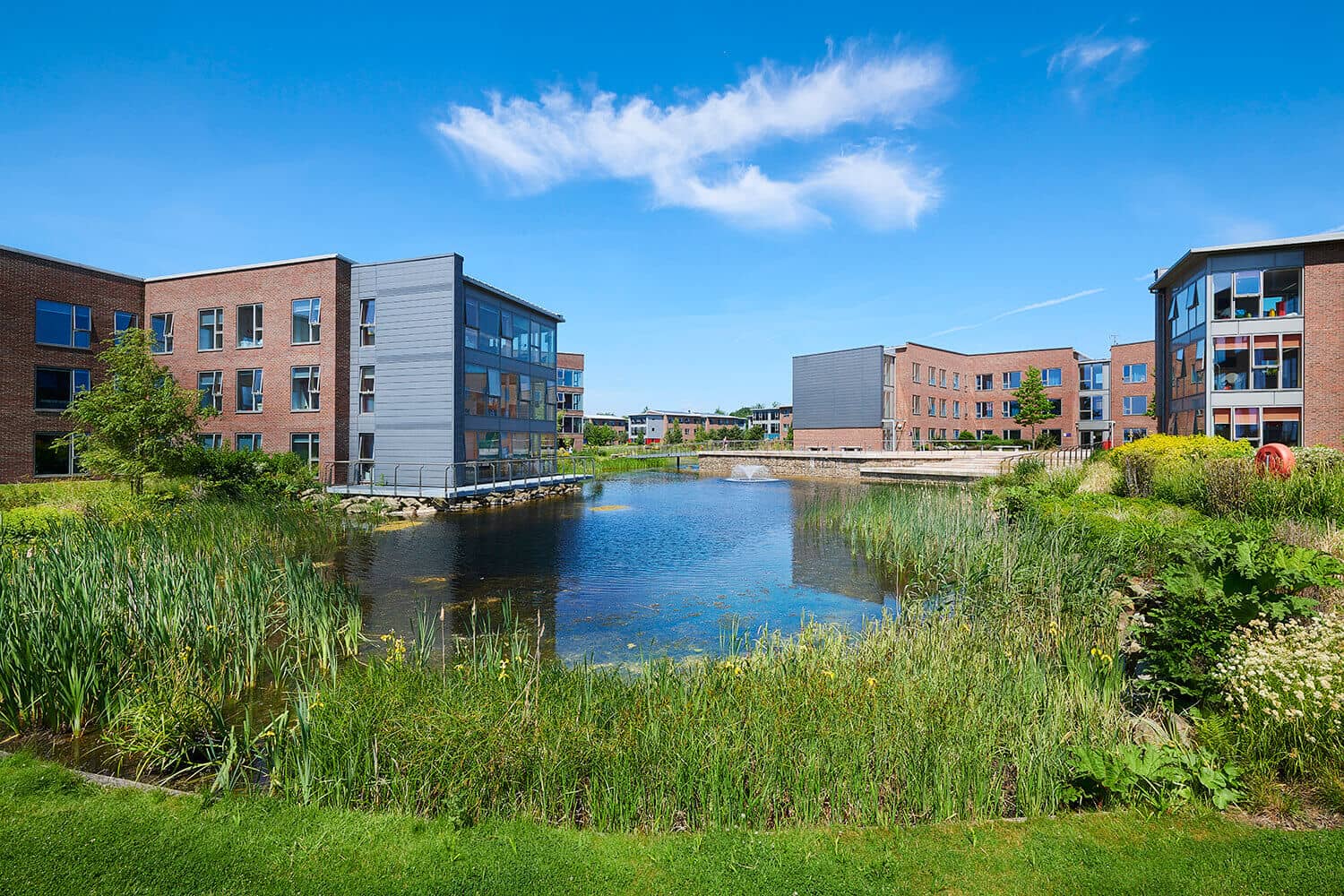
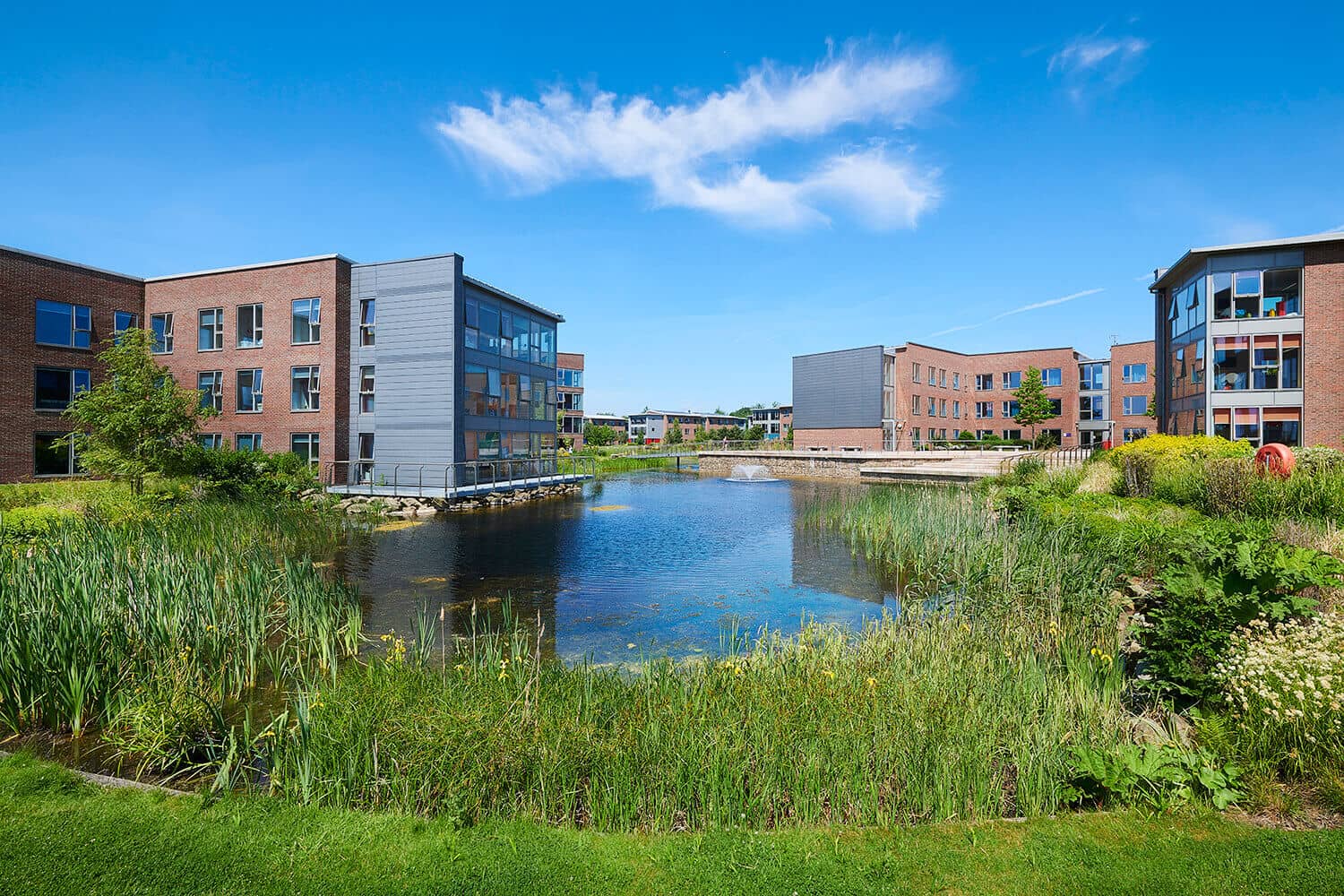
If you join a full time undergraduate degree at Edge Hill University, we will guarantee you the
offer of a room in our halls of residence for the first year of your course.
The Department of History, Geography and Social Sciences is based in the Geosciences building. The contemporary facilities combine with a friendly and supportive learning environment to ensure that your studies are a rich and rewarding experience.
The Geosciences building features a large lecture theatre, small group teaching rooms, IT facilities and smaller tutorial spaces. There is also a large social area which encourages a more informal and interactive style of learning.
EU/EEA and Swiss students who have settled or pre-settled status under the EU Settlement Scheme, as well as Irish nationals, may be eligible for the UK tuition fee rate.
Financial support
Subject to eligibility, UK students joining this course can apply for a Tuition Fee Loan from the Government to cover the full cost of tuition fees. UK students enrolling on the course may also be eligible to apply for additional maintenance loan funding to help with living costs.
Please view the relevant Money Matters guide for comprehensive information about the financial support available to eligible UK students, together with details of how to apply for potential funding.
EU/EEA and Swiss students who have settled or pre-settled status under the EU Settlement Scheme may be eligible to apply for financial support. Irish nationals can ordinarily apply to Student Universal Support Ireland (SUSI).
If you are an EU student who does not have settled or pre-settled status, or are an international student from a non-EU country, please see our international student finance pages.
Your future career
With a range of optional modules, exciting field trips in the UK and Europe, work-based learning and research opportunities, this course can be adapted to suit your interests and ambitions. It will also give you the sort of transferrable skills that employers love.
This degree is the first step on a variety of rewarding career paths. Possible roles include:
international aid worker
primary school teacher
social worker within children’s services
probation officer specialising in young offenders
Our students have gone on to work with charities such as Autism Initiatives and Salford Foundation, as well as local education authorities, social services, health and social care organisations and the probation service.
Once you’ve completed your degree in childhood and youth studies, you can continue to work towards becoming a teacher or social worker by enrolling in a PGCE teaching qualification or a Masters.
Course changes
Every effort has been made to ensure the accuracy of this information, however our courses are subject to ongoing review and development. Changing circumstances may necessitate alteration to, or the cancellation of, courses.
Changes may be necessary to comply with the requirements of professional bodies, revisions to subject benchmarks statements, to keep courses updated and contemporary, or as a result of student feedback. We reserve the right to make variations if we consider such action to be necessary or in the best interests of students.
Track changes to this course
Change of Department - 25 July 2022
With effect from 1 August 2022, the Department of Social Sciences will become the Department of History, Geography and Social Sciences. The new department will be based in the Geosciences building.


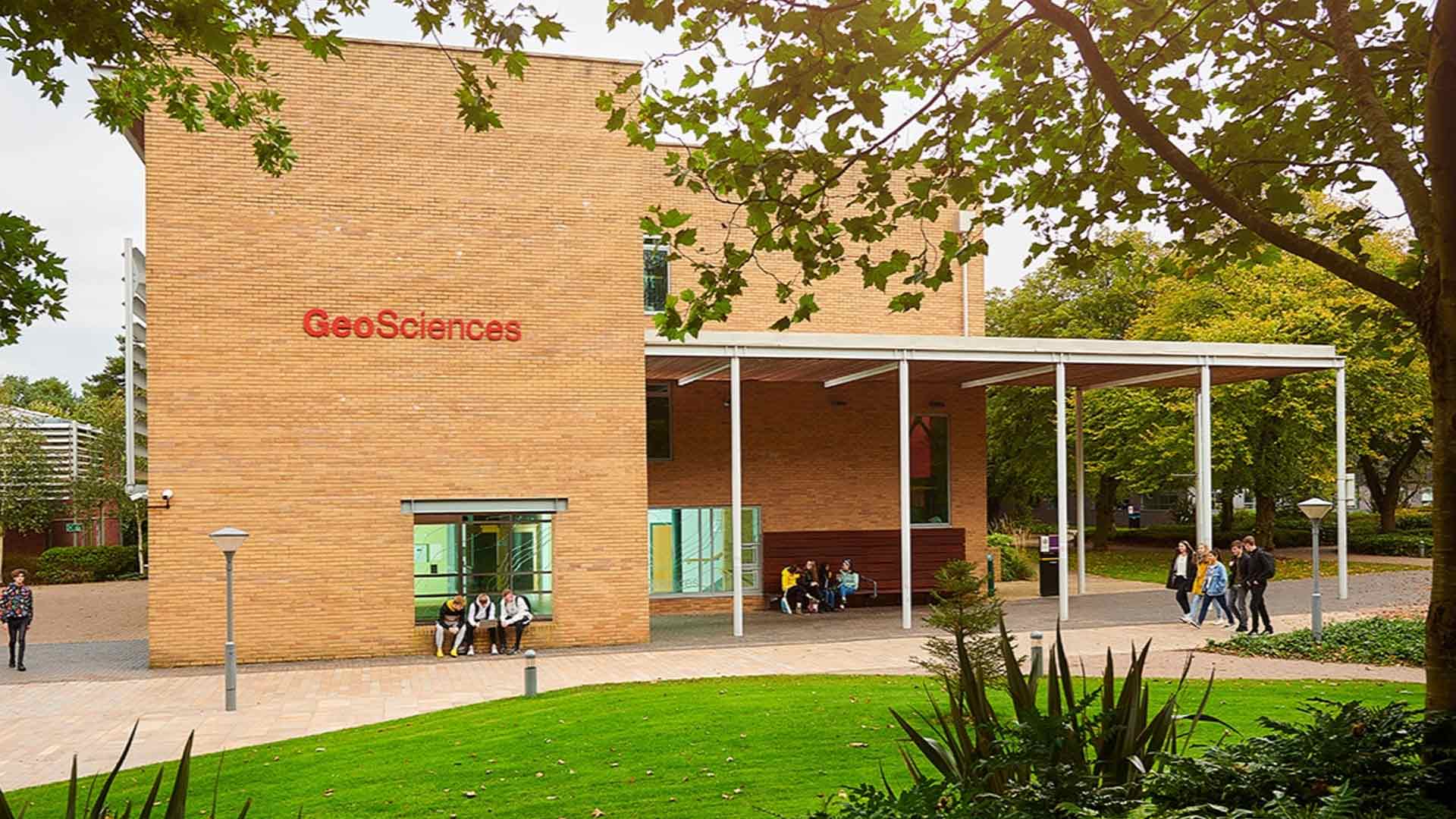 The Department of History, Geography and Social Sciences is based in the Geosciences building. The contemporary facilities combine with a friendly and supportive learning environment to ensure that your studies are a rich and rewarding experience.