Skip to content Skip to section specific navigation Edge Hill University

BSc (Hons) Accountancy

Summary 2012/13

  • Increase your employability through practical work experience from your own enterprise or with respected companies;
  • Gain exemptions from many of the main accountancy professional body educational requirements;
  • Learn from highly qualified, experienced and enthusiastic staff at the cutting edge of business research and engagement.

This course gives you the practical skills and knowledge required for a career in accountancy in an intellectually stimulating and supportive environment. At Edge Hill Business School you will benefit from the experience of highly qualified academics, whose research and engagement with the business community informs and enhances their teaching.

Campus: Ormskirk Campus, Edge Hill University
UCAS: N410
Course Type: Undergraduate Degree
Attendance & Study Mode:
3 years: Full Time
4 years: Sandwich
Start Date: September 2012

2012 Entry Requirements

280 UCAS tariff points overall, plus GCSE Mathematics at grade C or equivalent.

Details

Who is this course for?

Anyone who wants a wide-ranging, practical course which will help them gain a career in accountancy or in other areas within the business community.

What will I gain from this programme?

As well as learning the practical skills of accountancy, you will study a broad range of subjects from business law to management, designed to give you a thorough understanding of the business environment. You can test your skills as an entrepreneur in year 2 by setting up your own business with expert guidance from staff, while in year 3 you can specialise in a range of subjects - all of which will increase your employability when you graduate. When you complete your degree you will be able to apply to gain exemptions from many of the main accountancy professional body educational requirements.

How we will support you

Our state-of-the-art Business School building was opened in January 2009. Set in the heart of the campus this dynamic space is a visible testament to how much we have developed in a short space of time and complements our modern approach to teaching and learning. Full support will be provided to help you get the most from your learning experience. You will be assigned a personal tutor and there is a range of other support options available. Extensive use is made of information technology to support classroom activities.

What will I study?

In Year 1 you will be introduced to the essentials of accounting such as preparing financial statements and management information, as well as gaining an overview of key management theories. You will also study subjects important to all modern organisations such as business economics, marketing and law, as well as starting to develop your entrepeneurial skills.

Year 2 builds on the techniques and knowledge gained in Year 1, and introduces the key accounting skills of taxation and auditing. You will also study business information and communication, research skills and financial management before choosing between two work experience modules - work-based learning or graduate enterprise.

As well as developing skills in increasingly complex accounting techniques, you have the chance to undertake either a dissertation in your chosen area of interest, or an in-depth organisational study which will test your knowledge in a real business context.

How will I study?

You will study through lectures and tutorials, group exercises and on the job learning whilst on your work placement. You will also have the opportunity to learn from external business professionals who are invited to teach occasional sessions.

Placement

Work-based learning involves a period working in an external company which allows you to put your learning into practice. As well as developing your skills and future learning processes, you will have the opportunity to build relationships with potential employers and gain vital experience for your CV.

Graduate enterprise allows you to develop a business idea and put your training in entrepeneurship into practice. You will develop a range of general transferable intellectual and study skills, which are highly appropriate to a career in business, management and accountancy.

Who will be teaching me?

You will be taught by highly qualified, experienced and enthusiastic academics, who research and regularly engage within the wider business and academic environment. Staff are encouraged to specialise in particular subjects so you will benefit from a wide range of knowledge and experience.

How will I be assessed?

We will assess your vocational capability, academic critical thinking and intellectual development throughout the course. Coursework, case studies, problem-solving exercises and exams may be used and you may be assessed individually or in a group.

What are my career prospects?

You could enter accountancy or general business in the private and public sectors. The degree allows you to apply for exemptions from a range of professional bodies to gain accountant status as quickly as possible. You will be given early advice on career planning and we will help you apply for work experience.

A Great Study Environment

Edge Hill Business School is situated in the new purpose built Business and Law building close to the lakeside setting of the Western Campus at the main University site in Ormskirk. Its attractiveness outside is matched by the facilities on offer inside.

The latest, state-of-the-art IT equipment and learning spaces are complemented by supportive, approachable and understanding staff. As a member of Edge Hill Business School you will be encouraged to take an active part in the success of the Business School within the business community, throughout your programme of study and beyond.

Based in 160 acres of beautifully landscaped grounds, the Ormskirk Campus is a unique and inspirational place to study. Industry standard resources and cutting edge technology combine to make an interactive and highly advanced teaching and learning environment. Everything you could want is on one site with 25 acres of sport and leisure facilities, more than 1,000 rooms in halls of residence and fantastic modern spaces in which you can study and socialise.

The University library gives you access to thousands of books, journals, online resources and extensive PC and media provision. You'll get all the support you need to succeed, reflected in Edge Hill University being ranked in the top two in England for students' personal development, and the top three in the country for assessment and feedback, in the 2011 National Student Survey. The University is also featured in the top four in England for graduate employment.

How do I apply?

Apply online through UCAS at www.ucas.ac.uk.

See our How to Apply pages for more information on the application process and our Admissions criteria.

Fees and Finance

For academic year 2012/13, Edge Hill University will charge £9,000 for full-time BA, BSc and LLB degrees. Eligible students will not have to pay upfront for their tuition. The cost of tuition will be paid by a loan which you will only start to repay once you have finished the course and are earning over £21,000.

Eligible full-time students can also apply for a maintenance grant, subject to household income, and a non-means-tested loan to help with living costs.

Edge Hill University offers a range of scholarships for prospective full-time students. These include £2,000 Entrance Scholarships rewarding determination, commitment and achievement in creative arts, performing arts, sport and volunteering. Eligible entrants with outstanding grades are recognised through the £1,000 High Achievers Scholarship.

The University will also be offering awards, worth £3,000 in cash benefits and fee/accommodation waivers for academic year 2012/13, to eligible prospective full-time students through the National Scholarship Programme.

For more information on scholarships, including eligibility criteria for each award, visit www.edgehill.ac.uk/scholarships.

To find out more about fees, grants and loans for full-time study in academic year 2012/13, visit www.edgehill.ac.uk/undergradfees2012.

For students choosing the 4-year route, tuition fees and financial support arrangements are the same as the equivalent year of the full-time programme, with fees for the sandwich year still to be confirmed.

Please note, the above information is for UK and eligible EU students only. International students should check the fees and finance information at www.edgehill.ac.uk/internationalfees2012.

Not got the entry requirements?

Students returning to education may present their previous experience in work (paid or unpaid) to support their application.

Students with relevant study through either a professional body or appropriate academic course can apply to join the programme at an advanced stage.

If you do not have a Mathematics GCSE, or lack the required grade, you can sit an Edge Hill equivalency test to gain the equivalent qualification.

For personalised advice based on your circumstances, please contact us or come to an event.

Where can I find out more?

If you would like to receive a copy of our prospectus or be kept updated about forthcoming events, contact the Course Information, Advice and Guidance Team by emailing study@edgehill.ac.uk or calling 01695 657000.

If you want to attend one of our open events held throughout the year, visit www.edgehill.ac.uk/opendays to book your place.

You will also find Edge Hill University staff at many national careers fairs and UCAS events.

Still want more?

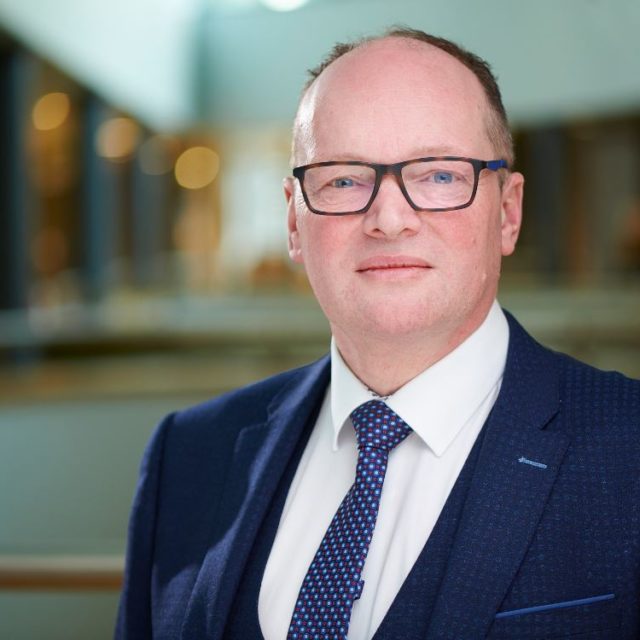
If you have any questions you would like to ask the programme leader about the course, please contact:

  • Chris Kelsall, Edge Hill Business School, Edge Hill University, St Helens Road, Ormskirk, Lancashire, L39 4QP
  • Tel: 01695 657650
  • Email: kelsallc@edgehill.ac.uk

Overseas students should visit www.edgehill.ac.uk/international or email international@edgehill.ac.uk for further information.

Modules

Year 1

BUS1000 Business Economics is an area of study that recognises that resources are scarce and that choices must be made between alternative uses. It provides an understanding of those external factors which might influence an organisation's financial situation.

BUS1001 Law for Business introduces you to the basics of English law allowing you to develop an understanding of the general legal framework within which an organisation operates. The module will also enable you to develop awareness and an understanding of common law, statute law and European law in relation to legal areas of importance to organisations.

BUS1003 Personal Development. It is important for you to be aware of the requirements of the professional bodies in addition to the transferable and professional skills required as an accountant. You will investigate and self reflect on your learning style and skills audit and present a gap analysis to be used as a learning tool to enhance the professional skills required for employability on graduation.

BUS1004 Work, Management and Organisational Behaviour covers three major themes. The first provides you with an understanding of the major developments in modern management. The second theme considers moves away from rational models where organisations became increasingly interested in developing strong corporate cultures, improving flexibility and devising HRM-type people management strategies. Contemporary issues are discussed in theme three where the emphasis is upon managing identities and the impact of globalisation.

ACC1016 Preparing Financial Statements takes you through basic double entry accounting leading to the production of a trial balance. You will then discover how to extend the trial balance to produce the required information to generate the final accounts, consisting of a balance sheet and a profit and loss account. Additionally you will develop the accounting skills required for the adjustment of accounts for accruals, bad debts, bad debt provision and VAT. The module produces accounts for a sole proprietor, partnership and introduces the notion of accounting for incorporated business.

ACC1017 Introduction to Management Accounting focuses on an area that forms a significant aspect of the accounting environment. You will be introduced to techniques that accountants use to provide effective information to the management of an organisation and develop your analytical skills. You will identify the methods used to recognise and classify costs and manage basic budgets.

Year 2

BUS 2003 Research Methods and philosophies are crucial to personal, academic and vocational development. Research methods are utilised at all levels of the degree programme and employers are increasingly looking for graduates who have specific skills, including those significantly developed through learning about methods of research. Such methods are required to undertake specific academic projects, to enhance knowledge and understanding and also, in a vocational context, to address specific business issues and practical managerial problems.

BUS2011 Financial Management and Control focuses on the importance and relevance to all organisations of management accounting theories and systems in making decisions. Management accounting could be viewed as a main mechanism used by an organisation to control, coordinate and communicate the direction and strategies of a firm. The module develops your skills acquired in year 1 in using and interpreting management accounting techniques and solutions. There is more of a focus on the underlying assumptions, potential flaws and issues with the methods, and the options that may be available to the decision maker.

BUS2012 Financial Reporting builds on the basic techniques taught in year 1 and develops knowledge and understanding of more advanced financial accounting, including consolidated reporting. You will be required to evaluate the use of these techniques and apply them in a practical context.

You need to choose 1 of the following 2 modules (elective A):

BUS2005 Graduate Enterprise. Work related learning is recognised as a key element in the provision of management programmes at undergraduate level. This module enables you to contextualise and evaluate theoretical perspectives in a practical setting. Furthermore, as careers in self-employment and small and medium sized enterprises become serious graduate destinations, it is clear that higher education has a role to play in developing the appropriate skills in order that you can capitalise on these opportunities. The module aims to develop and enhance a range of general transferable intellectual and study skills, which are highly appropriate to a career in business, management and accountancy.

BUS2006 Work Related Learning is recognised as a key element in the provision of accountancy programme at undergraduate level. This module enables you to contextualise and evaluate theoretical perspectives in a practical setting whilst at the same time providing an alternative learning environment, which informs your future learning processes and outcomes. Work place experience is increasingly seen as important in contributing to graduate employability.

You also need to choose 2 of the following 3 modules (elective B):

ACC2016 Business Law aims to encourage the development of skills of legal reasoning and managerial analysis. This module will provide you with knowledge and appreciation of the major problems of governance faced by businesses. It will enable you to identify the major principles underpinning laws and regulations and the way they reflect upon the question of how managerial decisions are reached and their impact upon the relevant business organisation. This module is designed to be highly practical and introduces you to the real world application of legal principles when applied to both private and public sector organisations.

ACC2017 Auditing and Assurance. Auditing is a key skill and an important undertaking for professional accountants. This module will introduce auditing and assurance and develop the skills involved in the audit process. You will be required to evaluate your newly acquired skills and develop a critical approach to the application of those skills to the professional environment. A wide range of transferable and intellectual skills will be delivered and assessed to allow you to gain confidence and the appropriate employability skills for the business environment.

ACC2018 Fundamentals of Taxation is a key skill and an important undertaking for professional accountants. This module will introduce the doctrine of taxation and develop the skills involved in the computation of tax for individuals and companies. You will be required to evaluate your newly acquired skills and develop a critical approach to the application of those skills to the professional environment. A wide range of transferable and intellectual skills will be delivered and assessed to promote confidence of use of the appropriate professional skills within the business environment.

Year 3

BUS 3000 Strategy and Decision Making provides an opportunity to consider how different business functions relate together in informing the development of strategy. Deciding strategic directions is about meeting choices and aspects of decision making are therefore included in the module.

BUS3001 Dissertation offers you the opportunity to further develop your academic interest in a chosen area of study. The dissertation enables you to undertake a largely independent academic research project (although you will be allocated a dissertation tutor and supported by dissertation lectures / workshops). The length of the dissertation provides the opportunity to develop your ideas in more depth and breadth than assessment patterns in other undergraduate modules require or allow.

ACC3008 Advanced Corporate Reporting aims to build on the skills, knowledge and understanding from year one and two to ensure that you will be able to exercise judgement and evaluation in corporate reporting matters and can react to current developments or new practice. There will be opportunities for you to produce complex company accounts complying with the appropriate legislation and critically evaluate the process.

You need to choose 2 of the following 3 modules (elective C):

ACC3007 Accounting for the Environment looks at issues in an area of accounting that has developed rapidly over the last few years, and has grown into an important and distinct focus for accountants. The module explores a range of the most significant concerns within the contemporary area of environmental reporting and allows you to critically engage with them.

ACC3008 Advanced Auditing and Assurance develops skills, knowledge and understanding from year two and synthesises theory and practice. You will be encouraged to examine legislation and apply the principles to audit strategies. Audit skills development in the initial stages will develop into a more critically evaluative discussion on the underpinning theory of auditing and its impact on the business environment.

ACC3009 Advanced Taxation will develop skills, knowledge and understanding and synthesise theory and practice. Taxation skills development in the initial stages will develop into a more critically evaluative discussion on the underpinning philosophy of taxation and its impact on the social and economic environment. You will be encouraged to use your recently acquired skills to challenge the doctrine of taxation for the funding of Government policy and suggest alternative models for discussion.

Please note: All modules on the BSc (Hons) Accountancy degree are 20 credit modules with the exception of the year 3 modules BUS3000 Strategy and Decision Making and BUS3001 Dissertation which carry 30 credits.

Contact

Edge Hill University
St Helens Road
Ormskirk
Lancashire
L39 4QP
United Kingdom
GEO: 53.559704; -2.87388
+44(0)1695 575171
+44(0)1695 579997

Location